

Juan Ramón Jiménez (1881–1958)
Author of Platero and I: An Andalusian Elegy
About the Author
On receiving the Nobel Prize in 1956, Juan Ramon Jimenez was praised for "his lyrical poetry, which constitutes an inspiring example in the Spanish language of spirituality and artistic purity." Jimenez's works have indeed provided inspiration for many younger Spanish poets--- Federico Garcia show more Lorca, Pedro Salinas, and Jorge Guillen among them---as well as for Latin American poets. His poetic world is both aesthetic and spiritual. Through poetry Jimenez endeavored not only to express his interior reality but also to reach the highest levels of spiritual experience. Jimenez's early work is marked by a short period of modernism followed by a rejection of it in favor of simpler forms, particularly that of traditional Spanish ballads. The turmoil and anxiety produced by his sea voyage to the United States to marry an American, Zenobia Camprubi, and their return as newlyweds began his second period. That phase was characterized by increasing subjectivity and purification of his poetry, a process furthered by Zenobia, who protected him from intrusions of the world. His use of women to symbolize the objects of his desires to know and experience reveals the influence of Gustavo Adolfo Becquer. In his final stage, he embarked on a mystical search for the absolute. His revelation was that "God desired" and "God desiring" reside within his own soul. Platero and I (1914), a poignant and charming story in poetic prose about a silver-gray donkey named Platero, is popular with children. Jimenez did not intend it for children exclusively, however, but rather as a celebration of the essence of the child, "a spiritual island fallen from heaven." (Bowker Author Biography) show less
Disambiguation Notice:
(yid) VIAF:59077345
Series
Works by Juan Ramón Jiménez
Platero y yo/ Platero and I: Trescientos Poemas (1903-1953)/ Three Hundred Poems (Sepan Cuantos) (Spanish Edition) (2000) 17 copies, 1 review
El iris magico/ The Magic Iris: Antologia Lirica / Lyrical Anthology (Cucana) (Spanish Edition) (2006) 11 copies
Penguin Modern European Poets : Juan Ramón Jiménez and Antonio Machado : selected poems (1974) — Author — 10 copies
Poesía y prosa 5 copies
Nueva antolojía poética 5 copies
Poesie 5 copies
La colina de los chopos 4 copies
Leviatán 4 copies
Cuadernos 4 copies
Sonetti e altre poesie d'amore 3 copies
Rymd : aforismer 3 copies
Samtal med Silver 3 copies
El andarín de su órbita : selección de prosa crítica / Juan Ramón Jiménez ; edición e introducción Francisco Garfias (1974) 2 copies
LIBROS DE PROSA. 1. PRIMERAS PROSAS, PLATERO Y YO, LA COLINA DE LOS CHOPOS, POR EL CRISTAL AMARILLO. (1969) 2 copies
poesias 2 copies
Poesie di Juan Ramon Jimenez 2 copies
Estío (1915) 2 copies
Paginas escogidas. 2 copies
Nueva Antologia. 2 copies
El trabajo gustoso : conferencias 2 copies
Conferencias 1 copy
Platero și eu 1 copy
Nueva Antología Poética 1 copy
Eternidades, 1916-1917 1 copy
Belleza 1 copy
Jiménez, Juan Ramón 1 copy
Españoles de Tres Mundos 1 copy
Poesía De Siempre 1 copy
Rare 1957 Platero and I, Juan Ramon Jimenez Charming Story Peon & His Donkey, HC-DJ [Hardcover] Juan Ramon Jimenez (1957) 1 copy
Libros de amor. 1 copy
Estío 1 copy
Obras selectas 1 copy
La stagione totale 1 copy
Con lừa và tôi 1 copy
Antropología poética 1 copy
Libros de Poesia Vol I 1 copy
Los máximos creadores 1 copy
OBRAS 1 copy
Pastorales 1 copy
Obras selectas II 1 copy
Obras selectas III 1 copy
Poesías y prosa 1 copy
Harmo ja minä 1 copy
Marga Fil Roësset 1 copy
El Niño 1 copy
Jiménez Selected Poems 1 copy
Opere 1 copy
Libros de Poesia 1 copy
PLATERUA DHE UNË 1 copy
Querencia americana : Juan Ramón Jiménez y José Lezama Lima : relaciones literarias y epistolario (2009) 1 copy
Siviglia. 1 copy
Eternidades 1916-1917 1 copy
Kjærleik : den einaste rosa 1 copy
Pietra e cielo 1 copy
PLATERO Y YO 156/24 E 1 copy
La soledad sonora 1 copy
Elegías 1 copy
Death of Death 1 copy
Cuadernos 1 copy
Elegías lamentables -1908- 1 copy
Libros inéditos de poesía, 1 1 copy
Libros inéditos de poesía, 2 1 copy
Pureza Negra 1 copy
Laberinto 1 copy
Voces de mi copla 1 copy
Libros inéditos de poesía 1 copy
Elegías puras y lamentables 1 copy
Laberinto 1 copy
Pastorales 1 copy
ETERNIDADES 1 copy
Eternità, pietra e cielo 1 copy
Poesie di Jimenez 1 copy
La stagione totale 1 copy
A Proverb 1 copy
Poesia 1 copy
PASTORALES 1 copy
Platero 1 copy
Προς άλλη γυμνότητα 1 copy
la colina de los chopos 1 copy
Seleccion De Verso Y Prosa 1 copy
En nygift poets dagbok 1 copy
Poesías 1 copy
Ríos que se van 1 copy
Pajinas escojidas 1 copy
Poemas esenciales 1 copy
Ο Πλατέρο κι εγώ 1 copy
Diario de un poeta 1 copy
CARTAS ANTOLÓGICAS 1 copy
Stein und Himmel. Gedichte 1 copy
Pájinas escojidas. verso 1 copy
Versos dorados 1 copy
5 poemas inéditos 1 copy
Cartas 1 copy
Associated Works
World Poetry: An Anthology of Verse from Antiquity to Our Time (1998) — Contributor — 499 copies, 2 reviews
Tagged
Common Knowledge
- Canonical name
- Jiménez, Juan Ramón
- Legal name
- Jiménez Mantecón, Juan Ramón
- Other names
- Jiménez, Juan Ramón
- Birthdate
- 1881-12-24
- Date of death
- 1958-05-29
- Gender
- male
- Education
- University of Seville
- Occupations
- poet
short story writer - Organizations
- Fundación Juan Ramón Jiménez
- Awards and honors
- Nobel Prize (Literature, 1956)
- Relationships
- Camprubí, Zenobia
- Short biography
- Fue hijo de Víctor Jiménez y Purificación Mantecón, quienes se dedicaban con éxito al comercio de vinos. Tras estudiar Bachillerato con los jesuitas en el Puerto de Santa María, comenzó la carrera de Derecho impuesta por su padre en la Universidad de Sevilla, aunque no finalizó sus estudios. Los poemas de Rubén Darío, el miembro más destacado del Modernismo en la poesía hispánica, le conmovieron especialmente en su juventud.
En 1900 publicó sus dos primeros libros de textos. La muerte de su padre en este mismo año y la ruina familiar le causaron una honda preocupación, vivida intensamente a causa de su carácter hiperestésico, y en 1901 será ingresado con depresión en un sanatorio en Burdeos, donde tuvo una aventura amorosa con la mujer de su psiquiatra. En 1905 regresa a su pueblo natal y seis años más tarde se traslada a Madrid. Hizo varios viajes a Francia y luego a Estados Unidos, donde en 1916 se casó con Zenobia Camprubí Aymar (nacida en Malgrat de Mar)
A partir de 1931, la esposa del poeta sufrirá los primeros síntomas de un cáncer que acabará con su vida. En 1936 se vio obligado a abandonar España al estallar la Guerra Civil Española. En 1946 el poeta permanece hospitalizado ocho meses a causa de otra crisis depresiva. En 1956 la Academia Sueca le otorga el Premio Nobel de Literatura en Puerto Rico, donde ha vivido gran parte de su vida en el exilio y donde trabaja como profesor en la Universidad. Tres días después, muere su esposa en San Juan. Él jamás se recuperará de esta pérdida y permanece en Puerto Rico mientras que, Don Jaime Benítez, rector del Recinto de Río Piedras de la Universidad de Puerto Rico, acepta el premio en su nombre. Juan Ramón Jiménez fallece dos años más tarde, en la misma clínica en la que había fallecido su esposa. Sus restos fueron trasladados a España.
Su Obra:
* Almas de violeta, 1900
* Ninfeas, 1900
* Rimas, 1902
* Arias tristes, 1903
* Jardines lejanos, 1904
* Elejias puras, 1908
* Elejias intermedias, 1909
* Las hojas verdes, 1909
* Elejias lamentables, 1910
* Baladas de primavera, 1910
* La soledad sonora, 1911
* Pastorales, 1911
* Poemas majicos y dolientes, 1911
* Melancolìa, 1912
* Laberinto, 1913
* Platero y yo, (Edicion reducida)1914
* Estio, 1916
* Sonetos espirituales, 1917
* Diario de un poeta reciencasado, 1917
* Platero y yo, (edicion completa) 1917
* Eternidades, 1918
* Piedra y cielo, 1919
* Segunda antolojia poética, 1922
* Poesia, 1923
* Belleza, 1923
* Cancìon, 1936
* Voces de mi copla, 1945
* La estacion total, 1946
* Romances de Coral Gables, 1948
* Animal de fondo, 1949 - Nationality
- Spain
- Birthplace
- Moguer, Spain
- Places of residence
- Moguer, Spain (birth)
Santurce, Puerto Rico, USA (death) - Place of death
- San Juan, Puerto Rico
- Burial location
- Cementerio de Jesús, Moguer, Provincia de Huelva, Andalucia, Spain
- Map Location
- Spain
- Disambiguation notice
- VIAF:59077345
Members
Discussions
1914: Juan Ramón Jiménez - Platero and I in Literary Centennials (August 2014)
Reviews
Platero and I by Spanish author and poet Juan Ramon Jimenez is a beautifully written small book about the narrator and his donkey, Platero. Together they wander and comment on the beauty of their surroundings and he events hey encounter.
Platero is considered a beautiful donkey by the narrator and becomes a symbol of tenderness, purity and innocence that the narrator uses to make his observations and confide in. In return Platero gives his master love, joy and companionship.
Instead of a show more linear story, each chapter describes a different event or thought. From the importance of bread to an illustration of a religious procession to the description of a wild flower beside the road, all of these short chapters paint a vivid picture of life in and around a small Spanish town.
Platero and I was originally published in 1914 and I found that the book still delights and amuses today. An Italian composer has written a suite of music based on these stories and in 1968 a Spanish film was made. Platero works as both a children’s book and as a book for adults. While children will delight in the adventures of a boy and his donkey, adults will appreciate the poetic writing and the rich use of symbolism. show less
Platero is considered a beautiful donkey by the narrator and becomes a symbol of tenderness, purity and innocence that the narrator uses to make his observations and confide in. In return Platero gives his master love, joy and companionship.
Instead of a show more linear story, each chapter describes a different event or thought. From the importance of bread to an illustration of a religious procession to the description of a wild flower beside the road, all of these short chapters paint a vivid picture of life in and around a small Spanish town.
Platero and I was originally published in 1914 and I found that the book still delights and amuses today. An Italian composer has written a suite of music based on these stories and in 1968 a Spanish film was made. Platero works as both a children’s book and as a book for adults. While children will delight in the adventures of a boy and his donkey, adults will appreciate the poetic writing and the rich use of symbolism. show less
A magical book that transports the reader, through the eyes of a poet, to a small town in Southern Andalucía (Spain). Jiminez writes about a life shared with his best friend: Platero a young donkey. It is a simple life in tune with nature as the two friends go about their daily business and Jiminez tells his little stories, which are imbued with colour, with the changing seasons and the characters in the town and the surrounding countryside.
The little stories take the form of vignettes show more rarely more than 300 words each and although in prose form have the feel of a sonnet. Typically they are three or four paragraphs long with the first paragraph setting the scene: introducing the main character, which might be human, or an animal or the countryside and usually referring to Platero. The second paragraph enhances the subject and tells the story; there is usually a change of direction in the third paragraph as Jiminez concludes his story with some more thoughts of his own or imagines how Platero might be feeling. Some of the stories are simple, perhaps with some humour, others can delve deeper into the imagination, with a note of sadness that lingers long after the story has finished, while some evoke a feeling of overwhelming well being. The reader travels with Jiminez and Platero feeling the colours, feeling the warmth of their friendship and feeling the world around them.
Most of the stories were published in 1914 and so describe a timeless existence before the inroads of the 20th century. There is a peace and simplicity about their lives that reaches out and makes one yearn to be part of it, least it does for me when I am at my most wistful. I am going to keep this book on my reading desk and dip into these stories when I want to revel in the special atmosphere of Jiminez prose: food for the soul perhaps, food for our lives that miss so much of what the poet tells us. A four star read. show less
The little stories take the form of vignettes show more rarely more than 300 words each and although in prose form have the feel of a sonnet. Typically they are three or four paragraphs long with the first paragraph setting the scene: introducing the main character, which might be human, or an animal or the countryside and usually referring to Platero. The second paragraph enhances the subject and tells the story; there is usually a change of direction in the third paragraph as Jiminez concludes his story with some more thoughts of his own or imagines how Platero might be feeling. Some of the stories are simple, perhaps with some humour, others can delve deeper into the imagination, with a note of sadness that lingers long after the story has finished, while some evoke a feeling of overwhelming well being. The reader travels with Jiminez and Platero feeling the colours, feeling the warmth of their friendship and feeling the world around them.
Most of the stories were published in 1914 and so describe a timeless existence before the inroads of the 20th century. There is a peace and simplicity about their lives that reaches out and makes one yearn to be part of it, least it does for me when I am at my most wistful. I am going to keep this book on my reading desk and dip into these stories when I want to revel in the special atmosphere of Jiminez prose: food for the soul perhaps, food for our lives that miss so much of what the poet tells us. A four star read. show less

Me tardé mucho en leerlo, en parte porque interrumpí muchas veces la lectura de este libro, y en parte porque estos poemas están hechos para irse leyendo a sorbos, como cualquier otra delicia.
Juan Ramón es uno de esos poetas que viven en mi corazón. Sus grafías, su estilo conmovedor, tan humano, tan sensible, tan triste siempre. Siempre logra conmoverme, hacerme pensar. Siempre logra algo en mí.
Estos sonetos son bellísimos, y algunos están dentro de mi lista de poemas favoritos show more (como "Retorno fugaz", "El corazón roto", "Rey de vanidades" y "Se entró mi corazón en esta nada", sólo por mencionar los que se me vienen a la mente).
Lectura recomendadísima a los que quieran textos breves, hermosos y que se puedan masticar por un buen rato. show less
Juan Ramón es uno de esos poetas que viven en mi corazón. Sus grafías, su estilo conmovedor, tan humano, tan sensible, tan triste siempre. Siempre logra conmoverme, hacerme pensar. Siempre logra algo en mí.
Estos sonetos son bellísimos, y algunos están dentro de mi lista de poemas favoritos show more (como "Retorno fugaz", "El corazón roto", "Rey de vanidades" y "Se entró mi corazón en esta nada", sólo por mencionar los que se me vienen a la mente).
Lectura recomendadísima a los que quieran textos breves, hermosos y que se puedan masticar por un buen rato. show less

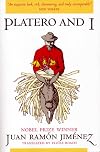
This book I took home with me from work, for no other reason than that it had a donkey on its cover. Unaware was I that this book was in fact a giant Spannish classic - only beaten in its number of translations, editions and all that by the great Don Quixote himself - and that in fact its writer Juan Ramon Jimenez is no less than a Nobel Prize winner! Had I known this, I'd have made a mental note of it, and carried on with whatever it was I was doing... But the donkey... Ha!
It's not that I show more have a particular fondness of donkeys. They're cute, and hardworking, and there's something honorable about 'em, so unlike other creatures - with the possible exception perhaps of whales and magpies... But their face/head does make a book look good. (I've one other book with a donkey on the cover in my collection: De vliegende monnik by Peter Holvoet-Hanssen, a remarkable poet but a little less remarkable as a novelist). I haven't had time to think this through thoroughly, but I think this is becuz good literature, the big L-kind, essentially has all the qualities that are generally ascribed to donkeys as well. Deep...
Platero and I then, is indeed a masterpiece. It took me a while to realize it - and so regretfully I've read the first 60 pages way too fast - like gulping down a priceless bottle of wine - but when it eventually hit me, it hit me. I laughed, I cried, I frowned - every page, and thus every poem - for it's really a book of poetry (or poetic prose) - , struck a chord in much the same way Pessoa's Book of restlessness or Proust's Recherche have done in the past. Already, I'm longing for the days when I'll reread this book, preferably somewhere in Italy or Spain or Portugal, or anywhere in South-America, Canada will do too, near a river, near a cemetery, some hills, ...
http://occamsrazorlibrary.blogspot.com/2008/01/platero-and-i.html show less
It's not that I show more have a particular fondness of donkeys. They're cute, and hardworking, and there's something honorable about 'em, so unlike other creatures - with the possible exception perhaps of whales and magpies... But their face/head does make a book look good. (I've one other book with a donkey on the cover in my collection: De vliegende monnik by Peter Holvoet-Hanssen, a remarkable poet but a little less remarkable as a novelist). I haven't had time to think this through thoroughly, but I think this is becuz good literature, the big L-kind, essentially has all the qualities that are generally ascribed to donkeys as well. Deep...
Platero and I then, is indeed a masterpiece. It took me a while to realize it - and so regretfully I've read the first 60 pages way too fast - like gulping down a priceless bottle of wine - but when it eventually hit me, it hit me. I laughed, I cried, I frowned - every page, and thus every poem - for it's really a book of poetry (or poetic prose) - , struck a chord in much the same way Pessoa's Book of restlessness or Proust's Recherche have done in the past. Already, I'm longing for the days when I'll reread this book, preferably somewhere in Italy or Spain or Portugal, or anywhere in South-America, Canada will do too, near a river, near a cemetery, some hills, ...
http://occamsrazorlibrary.blogspot.com/2008/01/platero-and-i.html show less
Lists
On Work (1)
Awards


You May Also Like


Associated Authors
Statistics
- Works
- 350
- Also by
- 8
- Members
- 3,325
- Popularity
- #7,693
- Rating
- 3.9
- Reviews
- 71
- ISBNs
- 455
- Languages
- 17
- Favorited
- 3