
Matti Yrjänä Joensuu (1948–2011)
Author of The Priest of Evil
About the Author
Series
Works by Matti Yrjänä Joensuu
Harjunpää ja heimolaiset : romaani kahdesta rikoksesta ja toisen tutkimisesta, kaikista jotka eivät näe kuvaansa poliisin kasvojen alta (1984) 26 copies
Väkivallan virkamies : dokumentaarinen romaani Helsingissä tapahtuneesta henkirikoksesta, sen tutkijasta ja ihmisestä elämän päättyessä (1976) 23 copies, 1 review
Harjunpää ja rakkauden lait : romaani rikoksesta ja muusta ; Harjunpää ja kiusantekijät : romaani rikoksesta ja maailmoista (2003) 5 copies
Harjunpää ja kiusantekijä 1 copy
Tagged
Common Knowledge
- Canonical name
- Joensuu, Matti Yrjänä
- Legal name
- Joensuu, Matti Yrjänä
- Birthdate
- 1948-10-31
- Date of death
- 2011-12-04
- Gender
- male
- Education
- poliisi
- Occupations
- rikostutkija
ylikonstaapeli - Organizations
- Helsingin poliisilaitoksen väkivaltatoimisto
- Awards and honors
- State's Literature Prize (1982)
Vuoden johtolanka prize (1985)
Vuoden johtolanka prize (1994)
Vuoden johtolanka prize (2004) - Relationships
- Harkki, Anu (Daughter)
- Nationality
- Finland
- Birthplace
- Helsinki, Finland
- Places of residence
- Helsinki, Finland
- Place of death
- Valkeakoski
- Associated Place (for map)
- Helsinki, Finland
Members
Reviews
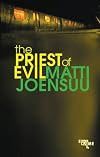
Eurocrime is really a tremendous imprint, providing some real little gems of books from a range of different cultural backgrounds. These books provide the crime reader with a glimpse into another culture. And make you realise that whilst some things are very different, more often it's the similarities that are surprising.
The things that THE PRIEST OF EVIL shows are the same in Finland, as they are where I come from, include the way that people can be invisible. Sometimes it's because of age, show more often it's age and gender combined. The other thing that seems to be guaranteed to make you invisible is doing something that discomforts others. Stand and preach, hand out pamphlets, be old, be old and female, look scruffy, or homeless or somehow "different" and you're pretty well guaranteed to slip under most people's radars. Except for other members of society also slightly on the outer. And that was the other message that came across very clearly in this book - be an outsider and you risk gravitating towards the edges, towards acceptance of any kind. Regardless of whether those edges are safe, and whether that acceptance is unconditional. Although it's not always a given and in many ways the hero's in our society (in this case the tenacious detective), are outsiders in their own right - who were drawn to a different edge.
THE PRIEST OF EVIL is quiet and contained, whilst Joensuu creates a very intimate relationship with his characters. As is the way with so many of the very good psychological style crime fiction books, there is a lot that isn't fully explained, resolved or even addressed. The reader is left to consider what it is that initiates the directions that people's lives take. show less
The things that THE PRIEST OF EVIL shows are the same in Finland, as they are where I come from, include the way that people can be invisible. Sometimes it's because of age, show more often it's age and gender combined. The other thing that seems to be guaranteed to make you invisible is doing something that discomforts others. Stand and preach, hand out pamphlets, be old, be old and female, look scruffy, or homeless or somehow "different" and you're pretty well guaranteed to slip under most people's radars. Except for other members of society also slightly on the outer. And that was the other message that came across very clearly in this book - be an outsider and you risk gravitating towards the edges, towards acceptance of any kind. Regardless of whether those edges are safe, and whether that acceptance is unconditional. Although it's not always a given and in many ways the hero's in our society (in this case the tenacious detective), are outsiders in their own right - who were drawn to a different edge.
THE PRIEST OF EVIL is quiet and contained, whilst Joensuu creates a very intimate relationship with his characters. As is the way with so many of the very good psychological style crime fiction books, there is a lot that isn't fully explained, resolved or even addressed. The reader is left to consider what it is that initiates the directions that people's lives take. show less

The short of it: I liked it and will definitely read the other books in the series.
The long of it: this book is an oldie (1987), but still a goodie. Set in Helsinki, The Stone Murders is the first in a series of three, followed by The Priest of Evil and To Steal Her Love. Timo Harjunpaa is a detective sergeant in homicide and he's seen his share of ugliness in the past. It's about to get uglier, as he's called out to investigate what seems to be another murder, but he finds the victim still show more alive yet barely clinging to life. The man has been brutally attacked -- while knocked out with a beer bottle, his assailant jumped on his chest, pounded his stomach area with a mass of heavy stones, and left him for dead. Harjunpaa gets to work on the case but has no idea what's waiting for him as he gets closer to the killer.
The Stone Murders is not really a mystery, because the criminals are revealed right away to be young men from extremely dysfunctional families and backgrounds. It is more of a police procedural, but at the same time, Joensuu interweaves into the story a brief look at the problems of 1980s Helsinki: child abuse, alcoholism, prostitution, and teen gangs that have no respect for anyone (especially the police, who fear them), to name a few. There's also a look at the police force itself -- the ridiculous bureaucracy, the lack of officers to handle the ongoing crime problems, and the ineptitude of a few who are supposed to be in charge of others. Joensuu also offers a look into Harjunpaa's personal life, which as things get worse for this particular case, becomes his safe haven.
Considering that this book is a series first, it's very well done. The characters each have a separate identity without going into overly-detailed descriptions. And every now and then Joensuu fleetingly allows the tough-guy façade of the criminals to fall away, replaced by the young and immature children that they are. Harjunpaa is a good cop, but even more, he's portrayed as a human being, with his own fears for the future of the police force, life in Helsinki, and for his family. All of this is done without ever devolving into something sappy and sentimental. The story is well paced, the plotline is quite good and believable. There were no distractions that made me want to skim, which is something I always look for in any book.
Readers of Scandinavian crime fiction will enjoy this, as will anyone who likes a good police procedural. It's definitely difficult to believe that this is Joensuu's first novel. show less
The long of it: this book is an oldie (1987), but still a goodie. Set in Helsinki, The Stone Murders is the first in a series of three, followed by The Priest of Evil and To Steal Her Love. Timo Harjunpaa is a detective sergeant in homicide and he's seen his share of ugliness in the past. It's about to get uglier, as he's called out to investigate what seems to be another murder, but he finds the victim still show more alive yet barely clinging to life. The man has been brutally attacked -- while knocked out with a beer bottle, his assailant jumped on his chest, pounded his stomach area with a mass of heavy stones, and left him for dead. Harjunpaa gets to work on the case but has no idea what's waiting for him as he gets closer to the killer.
The Stone Murders is not really a mystery, because the criminals are revealed right away to be young men from extremely dysfunctional families and backgrounds. It is more of a police procedural, but at the same time, Joensuu interweaves into the story a brief look at the problems of 1980s Helsinki: child abuse, alcoholism, prostitution, and teen gangs that have no respect for anyone (especially the police, who fear them), to name a few. There's also a look at the police force itself -- the ridiculous bureaucracy, the lack of officers to handle the ongoing crime problems, and the ineptitude of a few who are supposed to be in charge of others. Joensuu also offers a look into Harjunpaa's personal life, which as things get worse for this particular case, becomes his safe haven.
Considering that this book is a series first, it's very well done. The characters each have a separate identity without going into overly-detailed descriptions. And every now and then Joensuu fleetingly allows the tough-guy façade of the criminals to fall away, replaced by the young and immature children that they are. Harjunpaa is a good cop, but even more, he's portrayed as a human being, with his own fears for the future of the police force, life in Helsinki, and for his family. All of this is done without ever devolving into something sappy and sentimental. The story is well paced, the plotline is quite good and believable. There were no distractions that made me want to skim, which is something I always look for in any book.
Readers of Scandinavian crime fiction will enjoy this, as will anyone who likes a good police procedural. It's definitely difficult to believe that this is Joensuu's first novel. show less
A man is found, not quite dead, and the Finnish police must find the attackers. The man dies, and then another, and it's up to Detective Timo Harjunpaa to figure out how the cases are connected. Joensuu's novel is, at times, a fast paced an exciting novel about two young boys who end up at the center of a murder investigation. The story is told from two points of view, first, that of one of the boys involved and the second that of Harjunpaa. Through these, Joensuu allows us to be drawn into show more the story in such a way that surprising, if inevitable, conclusion will break our hearts. He holds nothing back, exposing us to a side of Finland rarely discussed. The Stone Murders is a sad and suspenseful book that will please any Scandinavian mystery fan, even though it's over twenty years old. Though it's sad, the story and characters are strong. I only wish my library system had more of his books. show less
I so wanted to enjoy this book, but to be honest it disappointed. No character was developed, I knew as little at the end about the supposed main character as I did at the beginning, and cared even less. And I was hoping it would bring me back to the Helsinki I love, but there too it let me down. It could have been set anywhere, nothing of Helsinki shone through. And the end, the last page, what was that about? Oh dear. I wish i could be more positive, but I can't, sorry.
Lists
Awards


You May Also Like


Associated Authors
Statistics
- Works
- 14
- Members
- 622
- Popularity
- #40,475
- Rating
- 3.1
- Reviews
- 14
- ISBNs
- 108
- Languages
- 9
- Favorited
- 1