
Lucian Randall
Author of Ginger Geezer: The Life of Vivian Stanshall
Works by Lucian Randall
Associated Works
Tagged
Common Knowledge
- Gender
- male
- Occupations
- editor
- Nationality
- United Kingdom
- Map Location
- United Kingdom
Members
Reviews
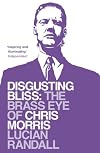
It took 83 pages before I felt engaged. The first four chapters are frustratingly leaden. I began to wonder what the point of the book was, and why I was reading it. Chris Morris is elusive. There might be a good reason for that. The bare facts of his early days don't really make for an engaging narrative. There is a sense that Randall needed to stretch the material to justify its inclusion. I Googled Randall at one point to check he was real, and not Chris Morris in disguise. Randall has show more written other biographies, but that's not to say Morris wouldn't take such measures to create a believable ruse.
The book picks up pace when it starts to document Morris' radio career and the shows that generated source material for On The Hour, The Day Today, and Brass Eye. The subject matter is handled better, and is interesting because the focus is on the technicalities of making such ground breaking shows. Morris fades into the background, the mysterious perfectionist who works best in isolation. Randall still manages to make extraordinary events, such as filming with a live tiger, seem flat and dull, however.
I don't know why all of the reviews from the time the book was first published praise it for the fluidity of the prose. I found it awkward to read at times, with clumsy links made more so because Randall clearly thought they were clever.
There's also the odd decision to refer to Morris' brother Tom in a comparative way, as though Morris' experimental satire is directly equivalent to his brother's experimental theatre. Tom Morris is reported as saying he thinks such an idea is tenuous but Randall persists in returning to it. It comes across as Randall inexplicably searching for something to link the two brothers' work without there being any relevance, and makes it seem as though Tom Morris only agreed to talk to Randall on the proviso that his work was also applauded, as if he felt insecure in some way. Randall certainly seems astonished that two men from a "scientific" family (their parents being doctors, and they having studied sciences at university) should both end up working in the arts at the experimental end of the spectrum, as though it's only possible to be one thing or the other, and as though children should always follow in parental footsteps. It's another of the distractions that jars in Randall's writing.
The book works best when it's exploring and analysing Morris' work, when it stops trying to analyse the man himself, and it only really does that effectively in the chapter about the Brass Eye Special. show less
The book picks up pace when it starts to document Morris' radio career and the shows that generated source material for On The Hour, The Day Today, and Brass Eye. The subject matter is handled better, and is interesting because the focus is on the technicalities of making such ground breaking shows. Morris fades into the background, the mysterious perfectionist who works best in isolation. Randall still manages to make extraordinary events, such as filming with a live tiger, seem flat and dull, however.
I don't know why all of the reviews from the time the book was first published praise it for the fluidity of the prose. I found it awkward to read at times, with clumsy links made more so because Randall clearly thought they were clever.
There's also the odd decision to refer to Morris' brother Tom in a comparative way, as though Morris' experimental satire is directly equivalent to his brother's experimental theatre. Tom Morris is reported as saying he thinks such an idea is tenuous but Randall persists in returning to it. It comes across as Randall inexplicably searching for something to link the two brothers' work without there being any relevance, and makes it seem as though Tom Morris only agreed to talk to Randall on the proviso that his work was also applauded, as if he felt insecure in some way. Randall certainly seems astonished that two men from a "scientific" family (their parents being doctors, and they having studied sciences at university) should both end up working in the arts at the experimental end of the spectrum, as though it's only possible to be one thing or the other, and as though children should always follow in parental footsteps. It's another of the distractions that jars in Randall's writing.
The book works best when it's exploring and analysing Morris' work, when it stops trying to analyse the man himself, and it only really does that effectively in the chapter about the Brass Eye Special. show less
Interesting but ultimately not all that illuminating... at least about Chris Morris himself. The behind the scenes descriptions of preparing comedy programmes were enlightening and new, but because there was always a sense of Morris as a character rather than a person, and a reclusive private character at that, the book felt a little like something was missing. Like the author had wanted to do a book about Morris, but as no-one close to him would talk about him, so he concentrated on the show more programmes. show less
Reasonable biography of the comedy genius. Seems to be largely based on interviews with those that have worked with Morris, perhaps predictably he wasn't interviewed as part of the author's research. While perfectly serviceable, the book doesn't reveal anything particularly surprising and the analysis of the programmes is not particularly incisive.

The focus of this study of the works of Chris Morris is primarily the first half of his career, ie. On The Hour - The Day Today - Why Bother - Brass Eye - Blue Jam - Jam - Brass Eye Special - Richard Geefe. The latter works of My Wrongs - Nathan Barley - Four Lions are given little more than cursory mentions, surprising given that this book was only published in 2010.
What I learned from this book is that Morris puts momentous effort into each of his labours; far more footage was shot than show more ever made the final cut; there were perpetual battles with the broadcasters about what could be shown, and when they put their foot down on certain scenes Morris petulantly slipped them in anyway; he inspires loyalty amongst his colleagues who attest to his kindness and generosity.
The book contains a few nuggets - the Brass Eye pilot included a wind up of Reggie Kray on the phone from Maidstone Prison, but his cronies on the outside tumbled what happened and sent a heavy round to the offices to put the frighteners on them. The dealers from whom Morris tried to score yellow bentines and clarky cats were the real deal - the film crew were genuinely scared for Morris' life.
Overall though there isn't a huge amount of new information, Morris himself did not speak to the author so it relies on quotes and comments from existing interviews and a few stories from colleagues. Its an easy read and its worth recalling the different projects Morris has been involved in and the lasting impact they have had, but this book is far from definitive. show less
What I learned from this book is that Morris puts momentous effort into each of his labours; far more footage was shot than show more ever made the final cut; there were perpetual battles with the broadcasters about what could be shown, and when they put their foot down on certain scenes Morris petulantly slipped them in anyway; he inspires loyalty amongst his colleagues who attest to his kindness and generosity.
The book contains a few nuggets - the Brass Eye pilot included a wind up of Reggie Kray on the phone from Maidstone Prison, but his cronies on the outside tumbled what happened and sent a heavy round to the offices to put the frighteners on them. The dealers from whom Morris tried to score yellow bentines and clarky cats were the real deal - the film crew were genuinely scared for Morris' life.
Overall though there isn't a huge amount of new information, Morris himself did not speak to the author so it relies on quotes and comments from existing interviews and a few stories from colleagues. Its an easy read and its worth recalling the different projects Morris has been involved in and the lasting impact they have had, but this book is far from definitive. show less
You May Also Like


Associated Authors
Statistics
- Works
- 4
- Also by
- 1
- Members
- 175
- Popularity
- #122,546
- Rating
- 3.5
- Reviews
- 9
- ISBNs
- 13
- Languages
- 2