
Victor L. Whitechurch (1868–1933)
Author of Thrilling Stories of the Railway
About the Author
Image credit: Project Gutenberg Australia
Works by Victor L. Whitechurch
Off the main road 3 copies
A downland corner 2 copies
Kyrkoherdens nya kläder 1 copy
The course of justice 1 copy
The dean and Jecinora 1 copy
If riches increase 1 copy
Associated Works
The Rivals of Sherlock Holmes: A Collection of Victorian Detective Tales (2008) — Contributor — 139 copies, 1 review
Tagged
Common Knowledge
- Legal name
- Whitechurch, Victor Lorenzo
- Birthdate
- 1868-03-12
- Date of death
- 1933-05-25
- Gender
- male
- Education
- Chichester Theological College
University of Durham - Occupations
- Churchman (Anglican Priest)
- Organizations
- Church of England
Detection Club - Relationships
- Partridge, Florence (wife)
- Short biography
- English Priest, writer and railway enthusiast.
- Nationality
- UK
- Associated Place (for map)
- UK
Members
Reviews

Victor L. Whitechurch was one of the surprisingly numerous British clergymen to write mysteries in their spare time during the Golden Age (I say 'British' because I'm not aware of any American ministers following suit). Whitechurch was best known for his humorous and clever railway detective stories, but in Murder At The College we have a standalone mystery with a foreword in which the author expresses his disapproval of thrillers that pose as mysteries, and his belief in the virtues of the show more puzzle-plot: promising, or warning, the reader that only intellectual thrills will follow. At St Oswald's College, in the university town of Exbridge, a committee of experts in art and architecture meets once a month to render judgement on applications for alterations to churches, and similar matters. This month the holder of the rooms used for the meetings, Sidney Henlow, a lecturer and classical scholar, is on holiday on the Continent, but has arranged for his colleagues to proceed as usual. They do, except that when they break for lunch, one of their number, Francis Hatton, insists on staying behind, saying he has letters to write. When the others return, ninety minutes later, Hatton is dead, stabbed... Murder At The College is indeed a solid procedural mystery, with an "impossible crime" component; one that makes some interesting points about the dangers of the police attaching themselves too quickly to one suspect or one theory of a crime. It also highlights the role often played in an investigation by sheer luck---and conversely, shows that even the most intelligent of policemen can make serious errors of judgement. It initially introduces the reader to the methodical Inspector Plestow, but the perspective of the narrative soon becomes that of his subordinate, the imaginative and energetic Detective-Sergeant Ambrose, who identifies two possible and very different motives for the murder of Francis Hatton. On one hand the dead man had made an enemy of an hot-tempered country squire by refusing permission for an (artistically ghastly) stained-glass memorial to the man's late wife; on the other, as Ambrose is surprised to learn, Hatton liked to dabble - theoretically, at least - in crime-solving. All of the initial evidence points strongly to the irascible Mr Finmere, but Ambrose is cautious about assuming too much, particularly when Hatton's notes suggest he had identified the person responsible for several recent thefts of objets d'art, including one that occurred at St Oswald's itself. The overriding question, however, is how the crime was committed at all: the investigation soon determines that the murderer had the briefest of opportunities. Furthermore, it is out of term time, and the college is nearly deserted; while witnesses make it almost impossible that an outsider could have either entered or left unseen...
How could the fellow have got out? That was the crux, after all. No one was in that bedroom---or in the room across the landing when the murder was discovered. That was quite certain. And no one had left the college without the porter knowing it after one-thirty-five. And no one had come down the stairs while the two workmen were there. Therefore, if the murderer had been hidden in the bedroom beforehand, and---as it followed---Finmere had nothing to do with the crime---the deed must have been committed in an incredibly short space of time... At the very earliest he would leave at about two-twenty, possibly a few minutes later. That would give only about ten minutes for the murderer to come in from the bedroom, stab Hatton, carefully arrange the body in the chair with the newspaper spread over it, hide---as he thought---the paper-knife in the loose earth at the foot of the stairs---go through the two quads and out of the gate before two-thirty-five. No! It was preposterous... show less
How could the fellow have got out? That was the crux, after all. No one was in that bedroom---or in the room across the landing when the murder was discovered. That was quite certain. And no one had left the college without the porter knowing it after one-thirty-five. And no one had come down the stairs while the two workmen were there. Therefore, if the murderer had been hidden in the bedroom beforehand, and---as it followed---Finmere had nothing to do with the crime---the deed must have been committed in an incredibly short space of time... At the very earliest he would leave at about two-twenty, possibly a few minutes later. That would give only about ten minutes for the murderer to come in from the bedroom, stab Hatton, carefully arrange the body in the chair with the newspaper spread over it, hide---as he thought---the paper-knife in the loose earth at the foot of the stairs---go through the two quads and out of the gate before two-thirty-five. No! It was preposterous... show less

As stories, they're pretty slight, but the author's attention to meticulous (although impossible to actually picture or tell whether it's realistic) detail about the action is an interesting feature. The main character's health system is a bit overdone but also kind of hilarious - you might think of oatmeal and lentils as health foods but Dutch cheese is an odd one - but his fourth "healthiest foods" pick is uh... macaroni???? The writing is heavily indebted to Sherlock Holmes although it show more lacks Doyle's panache.
contains 2 stories that are anti strikers so it's bad. quite a few stories are really just about the mechanics of the railway and disrupting them a bit with the background basically meaningless. he does provide diagrams for quite a few of these but it's still hard to picture show less
contains 2 stories that are anti strikers so it's bad. quite a few stories are really just about the mechanics of the railway and disrupting them a bit with the background basically meaningless. he does provide diagrams for quite a few of these but it's still hard to picture show less

As might be expected with the nature of the stories, it is necessary to pay close attention to the timing and sequence of events to appreciate the intricacies of the plots. This was an audiobook narrated by Patrick Malahide whose outstanding reading improved the stories significantly. He captured the characters and all the melodrama to perfection.
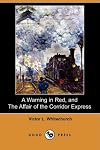
Two very short stories featuring Thorpe Hazell. Hazell is a somewhat eccentric fellow who engages in 'railway detective' work.
In the first case,he investigates the body of a man found by the side of a railway line,and proves who has murdered him by working on timetables and railway tickets.
In the second case a schoolboy is abducted from a moving train which is immediately searched. The boy has however completely disappeared without trace. Hazell soon works out what has happened and traps the show more culprits. show less
In the first case,he investigates the body of a man found by the side of a railway line,and proves who has murdered him by working on timetables and railway tickets.
In the second case a schoolboy is abducted from a moving train which is immediately searched. The boy has however completely disappeared without trace. Hazell soon works out what has happened and traps the show more culprits. show less
Lists
Awards

You May Also Like


Associated Authors
Statistics
- Works
- 42
- Also by
- 16
- Members
- 319
- Popularity
- #74,134
- Rating
- 3.5
- Reviews
- 6
- ISBNs
- 47
- Languages
- 4