
Stephen W. Kress
Author of The Bird Garden
About the Author
Stephen W. Kress is Vice-President for Bird Conservation, National Audubon Society.
Works by Stephen W. Kress
The Audubon Society Guide to Attracting Birds: Creating Natural Habitats for Properties Large and Small (1985) 62 copies, 1 review
Hummingbird Gardens (Brooklyn Botanic Garden All-Region Guide) (2000) — Editor — 41 copies, 1 review
American Museum of Natural History: Pocket Birds of North America, Eastern Region: The Ultimate Photographic Guide (DK North American Bird Guides) (2017) 26 copies
Bird Feeding Manual 1 copy
Associated Works
National Audubon Society North American Birdfeeder Handbook (1992) — Introduction, some editions — 701 copies, 3 reviews
Tagged
Common Knowledge
- Gender
- male
- Education
- The Ohio State University (BS, Zoology)
The Ohio State University (MS, Wildlife Management)
Cornell University (PhD, Environmental Education) - Occupations
- ornithologist
writer - Organizations
- National Audubon Society
Glen Helen Outdoor Education Center - Short biography
- [from Brooklyn Botanic Garden website]
Stephen W. Kress is director of the National Audubon Society's Seabird Restoration Program and manager of the Society's Maine coast seabird sanctuaries. He teaches field ornithology at the Cornell Laboratory of Ornithology, where he is a research associate. He is author of The Audubon Society Bird Garden, The Audubon Society Guide to Attracting Birds, the Golden Guide Bird Life and other publications on birds and their management. - Nationality
- USA
- Associated Place (for map)
- USA
Members
Reviews

Pete Salmansohn and Stephen W. Kress - the Audubon Society educator and Audubon Society Seabird Restoration Program director, respectively, who collaborated on the 1997 children's title, Project Puffin: How We Brought Puffins Back to Egg Rock - team up once again in this informative picture-book about six endangered avian species from around the world, and the scientists and activists working to protect and save them.
From the almost extinct black robins of New Zealand, whose numbers had show more plummeted to a staggering five (5!) left in the world, to the common murres of California, whose Devil's Slide Rock colony had been wiped out by a 1986 oil spill, the cases presented in Saving Birds: Heroes from Around the World highlight the potential for population recovery, even in cases of extreme threat. Some, such as the quetzals of Mexico, whose forest home has been threatened by local coffee-farming practices, or the black-necked cranes of China, whose winter wetland feeding grounds have (until recently) been taken over by impoverished farmers, show how human agricultural activity effects the surrounding wildlife. Others, such as the lesser kestrels of Israel, whose habitat continues to shrink, and whose fate is intimately tied to the warring peoples of that part of the world, or the rhinoceros hornbill of Malaysia, whose feathers are used in Sarawak cultural and religious ceremonies, demonstrate that even activities we might see as divorced from ecological concerns - human groups fighting one another, or practicing their traditional religions - are anything but.
In our recent discussion of ecologically-themed picture-books, in the Children's Books Group to which I belong, much was made of the fact that, in addition to educating young readers about the environmental threats facing our world, it is important to also provide hopeful and inspirational stories - to teach that something can be done, if we put our heads together. With more dire news abroad every day (the Gulf Coast oil spill, anyone?), this seems more important than ever, and Saving Birds: Heroes Around the World really fits the bill! show less
From the almost extinct black robins of New Zealand, whose numbers had show more plummeted to a staggering five (5!) left in the world, to the common murres of California, whose Devil's Slide Rock colony had been wiped out by a 1986 oil spill, the cases presented in Saving Birds: Heroes from Around the World highlight the potential for population recovery, even in cases of extreme threat. Some, such as the quetzals of Mexico, whose forest home has been threatened by local coffee-farming practices, or the black-necked cranes of China, whose winter wetland feeding grounds have (until recently) been taken over by impoverished farmers, show how human agricultural activity effects the surrounding wildlife. Others, such as the lesser kestrels of Israel, whose habitat continues to shrink, and whose fate is intimately tied to the warring peoples of that part of the world, or the rhinoceros hornbill of Malaysia, whose feathers are used in Sarawak cultural and religious ceremonies, demonstrate that even activities we might see as divorced from ecological concerns - human groups fighting one another, or practicing their traditional religions - are anything but.
In our recent discussion of ecologically-themed picture-books, in the Children's Books Group to which I belong, much was made of the fact that, in addition to educating young readers about the environmental threats facing our world, it is important to also provide hopeful and inspirational stories - to teach that something can be done, if we put our heads together. With more dire news abroad every day (the Gulf Coast oil spill, anyone?), this seems more important than ever, and Saving Birds: Heroes Around the World really fits the bill! show less

I have been a puffin lover since the day I first set foot on Skellig Michael - one of two breathtakingly beautiful (and very rocky) islands off the west coast of Ireland's Iveragh Peninsula - and saw these little "clowns of the ocean," with their chubby black and white bodies, and colorful beaks, up close and personal. I know we're not supposed to anthropomorphize the birds and beasts, but they're just so darn cute! So when I discovered that Tilbury House, one of my current publisher show more obsessions, had released a book about the return of puffins to the Maine island of Eastern Egg Rock, I thought I'd better find a copy.
Project Puffin, which is told in the first person, chronicles Stephen Kress's efforts to reintroduce puffins to the Maine coast, where they once flourished, before being killed off by Euro-American settlers. Beginning in 1973, with the help of the Canadian Wildlife Service, Kress began transferring puffin chicks from the thriving Great Island colony, eventually establishing populations on Egg Rock, as well as nearby Seal Island. Using the same methods, Kress and his team also reestablished a tern colony. Profusely illustrated with color photographs, and including a brief glossary at the rear, this is an engaging and informative book, and will be of particular interest to young bird watchers and ecologists. show less
Project Puffin, which is told in the first person, chronicles Stephen Kress's efforts to reintroduce puffins to the Maine coast, where they once flourished, before being killed off by Euro-American settlers. Beginning in 1973, with the help of the Canadian Wildlife Service, Kress began transferring puffin chicks from the thriving Great Island colony, eventually establishing populations on Egg Rock, as well as nearby Seal Island. Using the same methods, Kress and his team also reestablished a tern colony. Profusely illustrated with color photographs, and including a brief glossary at the rear, this is an engaging and informative book, and will be of particular interest to young bird watchers and ecologists. show less

This is an excellent reference for changing your landscape to one the birds will love. There are complete details on planting small orchards, for creating and maintaining orchards, ponds, or fields. There are charts of food preference, plant preference by species, nest box specs by species. This book will best be appreciated by someone who has several acres and the desire to transform it into a refuge for the birds & wildlife.
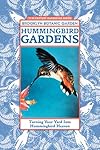
Turning Your Yard into hummingbird heaven
Lists
Must-Read Maine (2)
Awards


You May Also Like


Associated Authors
Statistics
- Works
- 20
- Also by
- 1
- Members
- 683
- Popularity
- #37,040
- Rating
- 4.1
- Reviews
- 4
- ISBNs
- 29
- Languages
- 1
- Favorited
- 1
