
Alexander Yates
Author of Moondogs: A Novel
About the Author
Works by Alexander Yates
Tagged
Common Knowledge
- Legal name
- Yates, Alexander E.
- Birthdate
- 1982-06-01
- Gender
- male
- Education
- Syracuse University (MFA)
- Nationality
- USA
- Birthplace
- Port-au-Prince, Haiti
- Places of residence
- Haiti
Mexico
Bolivia
Phillipines
Members
Reviews
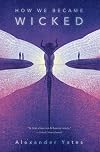
Evergreen bk award nominee 2022: A plague called "the Wickedness" has spread through the world and it's dividing the population into: "The Wicked", infected; "the True" not infected; "the Vexed" immune - spread by mosquito/dragonfly like insects called "singers". Main character Astrid has lived her entire life in a glass enclosed protected community called Goldsport close to the coastline of Maine; she and the only other teen in the community, Hank, wonder if Puffin Island, with a lighthouse show more that occasionally lights up, potentially have True residents still surviving there ...but all the adults in their lives refuse to tell them anything and forbid them from going.
THAT's just the start...this is an usual mystery/horror/dystopian novel : one, the plot and setting/world building are spooled out carefully - no wasted passages here; two, Astrid and Hank are typical teens but with family struggles (trigger alert: Hank suffers occasional harsh punishments at the hands of his father) and while the seem destined to be boyfriend/girlfriend and have "fooled around" a LOT, Astrid has recently stepped back, insisted they just be friends-and oh yeah: Astrid is unique: she's one of the Vexed. Three: a second narrator, teenager Natalie, one of the few residents on Puffin Island, comes into the storyline, and both stories are told with great pacing, rising suspense, & even a bit of macabre humor: the Wicked are strangely normally looking and speaking in all ways, EXCEPT the horrible virus has rendered them incapable of any human restraint or empathy for others. They behave like four yr olds in a nursery and cannot comprehend their actions- great "creep factor": they may speak to you cheerfully about coming into your conclave so they can "stab you in the heart and tear out your lungs"- no conniving, no subterfuge, sudden shifts. And for me, the author goes one layer more: (the title implies it) but his story subtly asks readers to consider who are truly the "wicked"- excellent thematic /character development treatment in here. Others have criticized the supporting characters' treatment, but I think author does a good job. AND (my favorite) a twist you don't see coming until the last pages...so worth it. Read this book in one day..yeah, I binged and lost a good night's sleep - it was worth it! Author hints there may be a sequel. show less
THAT's just the start...this is an usual mystery/horror/dystopian novel : one, the plot and setting/world building are spooled out carefully - no wasted passages here; two, Astrid and Hank are typical teens but with family struggles (trigger alert: Hank suffers occasional harsh punishments at the hands of his father) and while the seem destined to be boyfriend/girlfriend and have "fooled around" a LOT, Astrid has recently stepped back, insisted they just be friends-and oh yeah: Astrid is unique: she's one of the Vexed. Three: a second narrator, teenager Natalie, one of the few residents on Puffin Island, comes into the storyline, and both stories are told with great pacing, rising suspense, & even a bit of macabre humor: the Wicked are strangely normally looking and speaking in all ways, EXCEPT the horrible virus has rendered them incapable of any human restraint or empathy for others. They behave like four yr olds in a nursery and cannot comprehend their actions- great "creep factor": they may speak to you cheerfully about coming into your conclave so they can "stab you in the heart and tear out your lungs"- no conniving, no subterfuge, sudden shifts. And for me, the author goes one layer more: (the title implies it) but his story subtly asks readers to consider who are truly the "wicked"- excellent thematic /character development treatment in here. Others have criticized the supporting characters' treatment, but I think author does a good job. AND (my favorite) a twist you don't see coming until the last pages...so worth it. Read this book in one day..yeah, I binged and lost a good night's sleep - it was worth it! Author hints there may be a sequel. show less

Despite being on the cover, in the first sentence, and in the promotional blurb that caused me to pick up the book, the villainous rooster Kelog actually isn't in Moondogs very much. But that's okay, 'cause he turns out to not be very interesting. He's just an prize-fighting rooster who may or may not be supernaturally strong. It would be tempting to blame that on the fact that maybe he's just a little too weird for this literary novel, except that like so many literary novels, Moondogs show more drops in some magical realist elements seemingly just because. There's Team Ka-Pow, a crack squad of military soldiers each of whom has a magic power: one can shoot anything, one always gets shot, one turns into animals, and so on. There's a couple other characters who can cause natural disasters or have visions, too. But like Midnight's Children, the magical elements are all subordinate to a very literary story about disaffected people suffering identity crises in the modern world. There's even two vaguely impotent intellectual men who feel like stand-ins for the author's problems with masculinity.
All this grousing about magical realism and masculinity, though, is just that-- grousing-- because though I can mock or even dislike some of the premises of the novel, the whole time that I was reading it, I was enjoying myself immensely. Alexander Yates writes nice prose, depicts good characters, and never misses a good joke. What else do you need in a novel?
The unfortunate back cover blurb claims that it "challenges our conventional ideas of family and identity" and also explains something to use about Filipino culture, both of which are untrue, but that's okay. It is a novel about family, though, or maybe relationships more broadly, but once you get there, what novel isn't? Like many literary novels it depicts relationships as shaky, sometimes arbitrary constructs driven more out of selfishness than truth, but I like reading novels like that, so kudos. There's four interweaving plotlines, and the one that typefies this the most is probably the one about Monique, an officer at the American Embassy in the Philippines. Monique's husband David is an adjunct professor who is a little too wimpy for Monique's taste, so she takes up an affair, neglecting her relationships with her husband and her children. I liked this storyline a lot-- it was a good depiction of someone overcome by strong emotions but unable to express them.
There's also Benicio, a sysadmin at a high school whose mother just passed away and so he goes to the Philippines to reunite with his estranged father. Of course, his father is estranged for a reason, and he suddenly finds himself tossed from a comfortable suburban American lifestyle into attempting to navigate the powerful men that his father associated with, not to mention the powerful women-- and his father himself is nowhere to be found. Again, I enjoyed this one a lot, as Benecio discovers that he's not as good as person as he'd hoped, but rather might be the person he feared.
Howard himself appears in the book a lot less, but that's because he's been kidnapped, and there's not a whole lot you can do when you're locked in a room all the time. There were some quite funny bits, though. The last plotline is the aforementioned Task Force Ka-Pow, seen through the eyes of Efrem, the magical boy who can shoot anyone, anywhere, no matter how far off they are. Efrem starts as a wide-eyed innocent trying to serve his country, but soon discovers that the situation he's in is much darker than he'd imagined. I'm a sucker for this character type, so of course I enjoyed this plotline. Crossing all of these plotlines are Reynato Ocampo, the deadly police officer who is the star of the long-running Ocampo Justice film series, and Charlie Fuentes, the actor-turned-senator who plays him. These characters, like all of the characters in the book, are fun and effective: both larger-than-life and memorable, yet also very real and strongly characterized.
Really, this book succeeds on the basis of its characters, because the plot is minimal at best: the four plotlines don't even really connect until over halfway through the book. Mostly it's about a few big events, and how everyone reacts to these events. Those events test their relationships to the breaking points, yet everything stays together... kinda. show less
All this grousing about magical realism and masculinity, though, is just that-- grousing-- because though I can mock or even dislike some of the premises of the novel, the whole time that I was reading it, I was enjoying myself immensely. Alexander Yates writes nice prose, depicts good characters, and never misses a good joke. What else do you need in a novel?
The unfortunate back cover blurb claims that it "challenges our conventional ideas of family and identity" and also explains something to use about Filipino culture, both of which are untrue, but that's okay. It is a novel about family, though, or maybe relationships more broadly, but once you get there, what novel isn't? Like many literary novels it depicts relationships as shaky, sometimes arbitrary constructs driven more out of selfishness than truth, but I like reading novels like that, so kudos. There's four interweaving plotlines, and the one that typefies this the most is probably the one about Monique, an officer at the American Embassy in the Philippines. Monique's husband David is an adjunct professor who is a little too wimpy for Monique's taste, so she takes up an affair, neglecting her relationships with her husband and her children. I liked this storyline a lot-- it was a good depiction of someone overcome by strong emotions but unable to express them.
There's also Benicio, a sysadmin at a high school whose mother just passed away and so he goes to the Philippines to reunite with his estranged father. Of course, his father is estranged for a reason, and he suddenly finds himself tossed from a comfortable suburban American lifestyle into attempting to navigate the powerful men that his father associated with, not to mention the powerful women-- and his father himself is nowhere to be found. Again, I enjoyed this one a lot, as Benecio discovers that he's not as good as person as he'd hoped, but rather might be the person he feared.
Howard himself appears in the book a lot less, but that's because he's been kidnapped, and there's not a whole lot you can do when you're locked in a room all the time. There were some quite funny bits, though. The last plotline is the aforementioned Task Force Ka-Pow, seen through the eyes of Efrem, the magical boy who can shoot anyone, anywhere, no matter how far off they are. Efrem starts as a wide-eyed innocent trying to serve his country, but soon discovers that the situation he's in is much darker than he'd imagined. I'm a sucker for this character type, so of course I enjoyed this plotline. Crossing all of these plotlines are Reynato Ocampo, the deadly police officer who is the star of the long-running Ocampo Justice film series, and Charlie Fuentes, the actor-turned-senator who plays him. These characters, like all of the characters in the book, are fun and effective: both larger-than-life and memorable, yet also very real and strongly characterized.
Really, this book succeeds on the basis of its characters, because the plot is minimal at best: the four plotlines don't even really connect until over halfway through the book. Mostly it's about a few big events, and how everyone reacts to these events. Those events test their relationships to the breaking points, yet everything stays together... kinda. show less
 This review was written for LibraryThing Early Reviewers.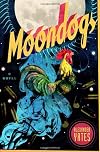
There is certainly something of magical realism here--albeit a pulpy reinterpretation--but there is also something more, something a bit more crude and raw. The story explodes with energy and intimacy, propelling the characters down a series of skewed plot lines and somehow managing to convince the reader, despite the fact that many of these characters never meet, that this is a crisp and coherent novel. This becomes most obvious in the final pages of the book, in which protagonist Benicio show more and his expatriate father Howard are finally reunited after a half decade of estrangement--only Howard dies before the two can speak, meaning that the reader can only infer the reconciliation based on the interior monologues of the characters separately. This is the kind of empathic chasm that defines the story, a certain gap between diegetic reality and reality-as-literature that ropes in reader and character alike with no small measure of violence. Language is tight and rather par for the course for young literature now, but cracks begin to show toward in the end when several instances of unbelievable dialogue and forced resolution break the general inertia of the piece.
I suspect this will appeal to others with a possible shared background as an American expatriate in east Asia, as there are a few particularly telling moments that play with these dual layers of social function and lived cultural identity. Most interestingly, the suspension of disbelief required for the more magical or pulpy elements of the text fits this idea of voluntary linguistic and social displacement perfectly, inserting a layer of literary mediation between life and its interpretation. show less
I suspect this will appeal to others with a possible shared background as an American expatriate in east Asia, as there are a few particularly telling moments that play with these dual layers of social function and lived cultural identity. Most interestingly, the suspension of disbelief required for the more magical or pulpy elements of the text fits this idea of voluntary linguistic and social displacement perfectly, inserting a layer of literary mediation between life and its interpretation. show less
This review was written for LibraryThing Early Reviewers.This book is totally nuts. There is a lot of stuff going on and it is all really, profoundly weird, and it is all happening at once, in sometimes excruciating detail but the writing is pretty amazing and even though I didn't love the story I found it really hard to put down.
Yates does a really good job of keeping the reader from getting lost in the multiple stories he's telling, which is not an easy task. I think this happens a little bit at the expense of the bigger picture, both in terms show more of the action of the novel itself and of what the novel is trying to do. It's a pretty amazing ride, but the reader is left with a kind of unsatisfying ending and the question, "What the hell just happened?"
As a result, I'm not sure what to say about this book. I couldn't put it down, and I couldn't stop thinking about it, but I also kind of didn't enjoy it, except insofar as it was fun to watch Yates weave together all the parts of the story. show less
Yates does a really good job of keeping the reader from getting lost in the multiple stories he's telling, which is not an easy task. I think this happens a little bit at the expense of the bigger picture, both in terms show more of the action of the novel itself and of what the novel is trying to do. It's a pretty amazing ride, but the reader is left with a kind of unsatisfying ending and the question, "What the hell just happened?"
As a result, I'm not sure what to say about this book. I couldn't put it down, and I couldn't stop thinking about it, but I also kind of didn't enjoy it, except insofar as it was fun to watch Yates weave together all the parts of the story. show less
This review was written for LibraryThing Early Reviewers.Lists
Awards


You May Also Like


Associated Authors
Statistics
- Works
- 3
- Members
- 304
- Popularity
- #77,405
- Rating
- 3.8
- Reviews
- 30
- ISBNs
- 19
