
Tricia Tusa
Author of Maebelle's Suitcase (Reading Rainbow Books)
About the Author
Works by Tricia Tusa
Associated Works
The End of the Beginning: Being the Adventures of a Small Snail (and an Even Smaller Ant) (2004) — Illustrator — 526 copies, 34 reviews
Tagged
Common Knowledge
- Birthdate
- 1960
- Gender
- female
- Birthplace
- Texas, USA
- Places of residence
- New York, New York, USA
New Mexico, USA - Associated Place (for map)
- USA
Members
Reviews
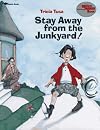
This is a gem of a book dealing with the subject of ostracization and changing the opinion of many in the community.
It only took one little girl who was visiting her Aunt for the summer who embraces a man living in the junkyard
to change the negative opinion of "Old man Crampton."
How easy it is to judge someone who doesn't seem to fit the mold of the majority, and to cast negative opinions about someone they've never met.
This is the story of Theodora who risked getting to know someone that show more everyone in the town that she met told her scary, nasty things about him. He's only moved in six months ago, but no one has visited him in that time period.
From the first day she arrives in Jasper, Texas, Theo strives to get to know the businesses and people of where her Aunt Mazel lives.
"Stay away from the junkyard!" is what she is told every time she opens the door to know a new person. Mudd Dougan at the General Store tells her the same thing! Miss Betty Anne at the bakery warned her not to set foot near that old junkyard because "the place is booby-trapped with holes so deep you could fall all the way to China!"
Walking over the hill she sees quite a breathtaking sight! Piled high, Theo didn't see junk, only interesting objects to explore. Perhaps there were treasures hidden in the huge pile of objects! And, in addition, she met Mr. Otis Compton and his pig Clarissa.
Arriving back in town with a saucepan on her head that she used as a hat, Theo cannot wait to tell everyone about the wonderful Mr. Compton and all his treasures. When she borrows Clarissa and takes him to the children in the neighborhood, the kids are excited as they all march to see the treasures of Otis Compton.
When music and laughter were heard from the junkyard, the older people say it must be stopped!!! When they reached the top of the hill they saw all the "junk" made into a beautiful work of art. They realized how wrong they were to judge and welcomed him to the community.
Small in pages, large in teaching a lesson of opening perceptions that previously were misjudged, this is a wonderful book. show less
It only took one little girl who was visiting her Aunt for the summer who embraces a man living in the junkyard
to change the negative opinion of "Old man Crampton."
How easy it is to judge someone who doesn't seem to fit the mold of the majority, and to cast negative opinions about someone they've never met.
This is the story of Theodora who risked getting to know someone that show more everyone in the town that she met told her scary, nasty things about him. He's only moved in six months ago, but no one has visited him in that time period.
From the first day she arrives in Jasper, Texas, Theo strives to get to know the businesses and people of where her Aunt Mazel lives.
"Stay away from the junkyard!" is what she is told every time she opens the door to know a new person. Mudd Dougan at the General Store tells her the same thing! Miss Betty Anne at the bakery warned her not to set foot near that old junkyard because "the place is booby-trapped with holes so deep you could fall all the way to China!"
Walking over the hill she sees quite a breathtaking sight! Piled high, Theo didn't see junk, only interesting objects to explore. Perhaps there were treasures hidden in the huge pile of objects! And, in addition, she met Mr. Otis Compton and his pig Clarissa.
Arriving back in town with a saucepan on her head that she used as a hat, Theo cannot wait to tell everyone about the wonderful Mr. Compton and all his treasures. When she borrows Clarissa and takes him to the children in the neighborhood, the kids are excited as they all march to see the treasures of Otis Compton.
When music and laughter were heard from the junkyard, the older people say it must be stopped!!! When they reached the top of the hill they saw all the "junk" made into a beautiful work of art. They realized how wrong they were to judge and welcomed him to the community.
Small in pages, large in teaching a lesson of opening perceptions that previously were misjudged, this is a wonderful book. show less

In my opinion, I would read this book to my first through fourth grade classes. Students between six to nine years of age tend to deal with change in a negative matter. At this age, students begin to have problems with their vision. New physical appearances are difficult for students to adjust to at this age. One thing I really liked about this story are the characters. Libby is a realistic character introduced in the story. When Libby decides to "run away" from home, this is not an action a show more little girl would do in reality but her daring character enlightens the story and spices things up. The silly ostrich is funny and appropriate to include in the story because students will find it interesting to see an animal wear glasses. Even though the scenario is very unrealistic, both characters bring out real emotions such as, embarrassment, frustration, and confidence, making it easy for the reader to relate to the story. The big idea of the story is for students to understand that people will change inside and out, and this is all part of growing up. Tricia Tusa wrote the story in the perspective of a young child having to wear glasses for the first time. Students will be able to relate to the same issues Libby has and the story will help students make the adjustment of change smoothly and positively. show less
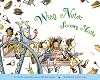
Unfortunately the note explaining "senryu" (vs. haiku) is only on the jacket. And books should be loved enough to outlive their jackets....
Anyway, these are funny. And very accessible, even to kids who think they don't like poetry. Most aren't substantial enough for me, but I did like:
Lions versus gazelles!
game of speed of game--
zebra referees
Note the word-play, and the mental imagery of the B&W striped character. But no, I have no idea why it begins with an uppercase letter and yet does not show more end with a period.
Some children will love:
City pigeons chatter
and coo--busybodies
eavesdropping
And of course I have to quote the most apt verse:
What is a senryu?
A funny poem that is
Almost haiku-ckoo show less
Anyway, these are funny. And very accessible, even to kids who think they don't like poetry. Most aren't substantial enough for me, but I did like:
Lions versus gazelles!
game of speed of game--
zebra referees
Note the word-play, and the mental imagery of the B&W striped character. But no, I have no idea why it begins with an uppercase letter and yet does not show more end with a period.
Some children will love:
City pigeons chatter
and coo--busybodies
eavesdropping
And of course I have to quote the most apt verse:
What is a senryu?
A funny poem that is
Almost haiku-ckoo show less
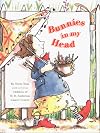
This is a project celebrating the artwork of pediatric patients at M.D. Andersen Cancer Center . It is a collaboration of volunteers, and staff members at the Children's Art Project.
A little girl notes she has bunnies in her head, white, silent, big as mountains, in search of carrots as big as trees. She likes to paint many trees of all shapes and purposes, such cold trees in the snow, and fancy Christmas trees, and trees that are bigger than she is.
Using her inspiration, brush and crayons, show more she can lead those who are willing to another world, very much different from that which we live in. It is a world far, far away, inside her head. She notes that there are furry things that roan and wear socks. Using examples of what she can draw and the inspirations that come out of her imagination, she paints her black cat, butterflies, fuzzy moths that go splat on her sweater into swiss cheese.
She dreams of flowers, and colors, lots of colors and shapes that bump each other. Her house is painted in her mind as well, and there is a circus with elephants, da dancing polar bear and lots of carnival rides -- all of this is painted as it is stored in her head.
When her head feels jumbled, she can express herself, not with words, but with her paintbrush of magic. When she becomes scared, she thinks of her crayons, and she can fly away to the stars.
Perhaps tomorrow is a word of hope. show less
A little girl notes she has bunnies in her head, white, silent, big as mountains, in search of carrots as big as trees. She likes to paint many trees of all shapes and purposes, such cold trees in the snow, and fancy Christmas trees, and trees that are bigger than she is.
Using her inspiration, brush and crayons, show more she can lead those who are willing to another world, very much different from that which we live in. It is a world far, far away, inside her head. She notes that there are furry things that roan and wear socks. Using examples of what she can draw and the inspirations that come out of her imagination, she paints her black cat, butterflies, fuzzy moths that go splat on her sweater into swiss cheese.
She dreams of flowers, and colors, lots of colors and shapes that bump each other. Her house is painted in her mind as well, and there is a circus with elephants, da dancing polar bear and lots of carnival rides -- all of this is painted as it is stored in her head.
When her head feels jumbled, she can express herself, not with words, but with her paintbrush of magic. When she becomes scared, she thinks of her crayons, and she can fly away to the stars.
Perhaps tomorrow is a word of hope. show less
Lists
Reading Rainbow (2)
Awards


You May Also Like


Associated Authors
Statistics
- Works
- 15
- Also by
- 26
- Members
- 698
- Popularity
- #36,253
- Rating
- 4.1
- Reviews
- 34
- ISBNs
- 38