
Gae Polisner
Author of The Memory of Things
About the Author
Image credit: author photo credit: Rick Kopstein
Works by Gae Polisner
Privind la stele 1 copy
Tagged
Common Knowledge
- Legal name
- Polisner, Gae
- Other names
- Miller, Gae
Polisner Miller, Gae - Birthdate
- 1964-07-22
- Gender
- female
- Education
- Boston University
Brooklyn Law School - Occupations
- lawyer
waitress
special events coordinator
babysitter
paralegal
mediator (show all 7)
writer - Agent
- Jim McCarthy, Dystel & Goderich
- Short biography
- I write young adult and contemporary fiction. My published works to date are THE PULL OF GRAVITY and THE SUMMER OF LETTING GO.
- Places of residence
- Long Island, New York, USA
- Associated Place (for map)
- New York, USA
Members
Reviews

This book was provided to me as an uncorrected digital proof by the publisher, via Edelweiss.
On the morning of September 11, 2001, sixteen-year-old Kyle Donohue watches the first twin tower come down from the window of Stuyvesant High School. Moments later, terrified and fleeing home to safety across the Brooklyn Bridge, he stumbles across a girl perched in the shadows, covered in ash, and wearing a pair of costume wings. With his mother and sister in California and unable to reach his show more father, a NYC detective likely on his way to the disaster, Kyle makes the split-second decision to bring the girl home. What follows is their story, told in alternating points of view, as Kyle tries to unravel the mystery of the girl so he can return her to her family. But what if the girl has forgotten everything, even her own name? And what if the more Kyle gets to know her, the less he wants her to go home?
The Memory of Things drew me in with its out-of-the-ordinary style. The story is told in alternating points of view, going back and forth between Kyle and The Girl. When Kyle is in the narrator role, the form is traditional, but when it switches to The Girl, the narrative changes to a more poetic form. This form perfectly suits the state of mind for the character. It allows her to convey her thoughts in a manner that is disjointed and emotional, but still coherent. As the story progresses, the reader is able to track the changes in The Girl’s emotional state through the growing cohesiveness of her narrative. I’m old enough that 9/11 doesn’t seem so distant, and it blows my mind that my stepdaughters, who will be in the class of 2020, weren’t even born when the attacks happened. I feel The Memory of Things and similar books are important for the simple fact that they can introduce younger readers to events that were pivotal in the lives of their parents, grandparents, and other adults they come in contact with. This book conveys emotion without being heartrending or morbid. On top of everything else that’s going on, in the aftermath of the attacks, Kyle has no adults to rely on, since his father is at Ground Zero helping with the rescues, and his mom is in California with his little sister. This leaves him as the only one in position to take care of his Uncle Matt, who was seriously injured in a previous accident. Having Kyle learn to not only take care of his Uncle Matt, but to see him as the same uncle he loved before he was injured, adds a complexity to his character that would not have been apparent otherwise. Because of The Girl’s “amnesia” her character is not as well-developed until later on in the story, but this is a necessary aspect of this particular story. She learns to open her heart to Kyle, and by doing so, she begins to heal herself. Her interactions with Uncle Matt are part of what helps Kyle to remember how much he loves his uncle, and how much his uncle needs him. There is so much going on in The Memory of Things, but it never feels overwhelming, it just feels real. The end is satisfying, and doesn’t feel contrived. The reader isn’t promised happily ever after, only that healing can happen if those who are hurting are open to being helped. I would recommend this book for readers 14 and older who can appreciate books that broach serious subjects. show less
On the morning of September 11, 2001, sixteen-year-old Kyle Donohue watches the first twin tower come down from the window of Stuyvesant High School. Moments later, terrified and fleeing home to safety across the Brooklyn Bridge, he stumbles across a girl perched in the shadows, covered in ash, and wearing a pair of costume wings. With his mother and sister in California and unable to reach his show more father, a NYC detective likely on his way to the disaster, Kyle makes the split-second decision to bring the girl home. What follows is their story, told in alternating points of view, as Kyle tries to unravel the mystery of the girl so he can return her to her family. But what if the girl has forgotten everything, even her own name? And what if the more Kyle gets to know her, the less he wants her to go home?
The Memory of Things drew me in with its out-of-the-ordinary style. The story is told in alternating points of view, going back and forth between Kyle and The Girl. When Kyle is in the narrator role, the form is traditional, but when it switches to The Girl, the narrative changes to a more poetic form. This form perfectly suits the state of mind for the character. It allows her to convey her thoughts in a manner that is disjointed and emotional, but still coherent. As the story progresses, the reader is able to track the changes in The Girl’s emotional state through the growing cohesiveness of her narrative. I’m old enough that 9/11 doesn’t seem so distant, and it blows my mind that my stepdaughters, who will be in the class of 2020, weren’t even born when the attacks happened. I feel The Memory of Things and similar books are important for the simple fact that they can introduce younger readers to events that were pivotal in the lives of their parents, grandparents, and other adults they come in contact with. This book conveys emotion without being heartrending or morbid. On top of everything else that’s going on, in the aftermath of the attacks, Kyle has no adults to rely on, since his father is at Ground Zero helping with the rescues, and his mom is in California with his little sister. This leaves him as the only one in position to take care of his Uncle Matt, who was seriously injured in a previous accident. Having Kyle learn to not only take care of his Uncle Matt, but to see him as the same uncle he loved before he was injured, adds a complexity to his character that would not have been apparent otherwise. Because of The Girl’s “amnesia” her character is not as well-developed until later on in the story, but this is a necessary aspect of this particular story. She learns to open her heart to Kyle, and by doing so, she begins to heal herself. Her interactions with Uncle Matt are part of what helps Kyle to remember how much he loves his uncle, and how much his uncle needs him. There is so much going on in The Memory of Things, but it never feels overwhelming, it just feels real. The end is satisfying, and doesn’t feel contrived. The reader isn’t promised happily ever after, only that healing can happen if those who are hurting are open to being helped. I would recommend this book for readers 14 and older who can appreciate books that broach serious subjects. show less
Kyle is in school on the morning of Tuesday, September 11, 2001. When the second plane hits the second tower of the World Trade Center, his school is evacuated; Kyle heads back to Brooklyn on foot, but becomes separated from his classmates, and then he sees something on the bridge. At first he thinks it's a bird, or an angel - it's got wings, after all - but it's a girl: a girl wearing costume wings, covered in ash, with no memory of who she is. Kyle brings her home with him. Uncle Matt is show more there, in his wheelchair, but Kyle's dad is a cop at Ground Zero, and his mom and sister were supposed to fly back from California today. Kyle struggles through the next few days, frantically trying to get through the jammed phone lines to reach his parents and friends, watching the news, doing laundry, taking care of Uncle Matt, wondering about the girl.
Gae Polisner captures and renders Kyle's experience with realism, including details from the attack and its aftermath: the missing posters, the TV news, the memorials with candles and flowers, the difficulty of understanding the magnitude of everything. Slowly, the girl's story comes through too: most of the book is Kyle's first person, present tense, but there are small interludes in a different font, free verse, also first person, from the girl's perspective, and she tries to keep her memories out. Eventually, however, they come back, and Kyle pieces together her shredded school ID.
Although 2001 was less than 30 years ago, this will read as historical fiction for today's teens.
See also: Hope and Other Punch Lines by Julie Buxbaum, Love is the Higher Law by David Levithan, Towers Falling by Jewel Parker Rhodes
Quotes
...I wish [Dad] would understand me better, care more about the things that matter to me... (98)
As we pass one another, our eyes catch and we exchange these sad, pathetic smiles, as if we've all lost the same friend. (115)
No wonder no one can find her. The city is full of people looking for people. (148)
"...remember how you asked me earlier how it feels, how I feel, to be me right now? To remember things and not remember?....Well, it feels like...I'm adrift, in soaking wet clothes that are too heavy with the weight of things I don't even know." (183)
"Sometimes never being ready is the best kind of ready to be." (260)
Are you okay? his eyes ask. I know that's what he wants to know.
And I guess I am. What are my choices? What else am I going to be other than okay? (264) show less
Gae Polisner captures and renders Kyle's experience with realism, including details from the attack and its aftermath: the missing posters, the TV news, the memorials with candles and flowers, the difficulty of understanding the magnitude of everything. Slowly, the girl's story comes through too: most of the book is Kyle's first person, present tense, but there are small interludes in a different font, free verse, also first person, from the girl's perspective, and she tries to keep her memories out. Eventually, however, they come back, and Kyle pieces together her shredded school ID.
Although 2001 was less than 30 years ago, this will read as historical fiction for today's teens.
See also: Hope and Other Punch Lines by Julie Buxbaum, Love is the Higher Law by David Levithan, Towers Falling by Jewel Parker Rhodes
Quotes
...I wish [Dad] would understand me better, care more about the things that matter to me... (98)
As we pass one another, our eyes catch and we exchange these sad, pathetic smiles, as if we've all lost the same friend. (115)
No wonder no one can find her. The city is full of people looking for people. (148)
"...remember how you asked me earlier how it feels, how I feel, to be me right now? To remember things and not remember?....Well, it feels like...I'm adrift, in soaking wet clothes that are too heavy with the weight of things I don't even know." (183)
"Sometimes never being ready is the best kind of ready to be." (260)
Are you okay? his eyes ask. I know that's what he wants to know.
And I guess I am. What are my choices? What else am I going to be other than okay? (264) show less

The Memory of Things by author Gae Polisner begins on the morning of September 11, 2001 as sixteen-year-old Kyle Donahue flees across the Brooklyn Bridge. He needs to get home to check on the welfare of his family: his father, a member of the Joint Terrorist Task Force who are the first to respond to a crisis like this; his mother and sister, scheduled to fly home from Los Angeles this morning; and his wheelchair bound Uncle Matt, a spinal cord injury victim, who is alone in their apartment show more with no means of escape should it be necessary. While crossing the bridge, he spies what looks like a large bird crouched against a pillar. However, as he gets closer, he discovers it is not a bird but a girl about his own age, covered with ash and, incongruously, wearing a pair of enormous white wings. He pulls her to safety but, when he can finally get her to talk, he discovers she is suffering from amnesia. He decides he has no other choice but to take her home with him.
The narration is divided between Kyle and ‘the girl’ as she is known throughout most of the story. Kyle details the events of the day as well as the emotional impact, the fear, the confusion, the horror of what has happened as well as the sacrifices, not only of first responders like his father, so many of whom sacrificed their own lives to save others, but regular people who stopped to help strangers, even as Kyle does, taking them into their own homes. The girl tells her story in free-verse giving hints of a creative background as well as reflecting her amnesia and her state of mind.
Given the background of this novel and the emotions that are impossible to separate from the tragedy, it could easily have devolved into melodrama or a manipulative tearjerker. Yet, by focusing the narrative on people who were not actually at Ground Zero but who were greatly affected by it, Polisner avoids this and instead creates a better more profound story. On the one hand, there is a sense of lost innocence as Kyle and the girl try to make sense of how this could happen while trying as best as possible to deal with the immediate and more mundane tasks. But there is also a sense of growth and community as Kyle struggles to cope with his worry about his family, to take care of his uncle, and to help the girl remember. And as the girl helps Kyle with Matt, she begins to regain her memories and to come to terms with both real and possible loss.
The Memory of Things is a surprisingly hopeful novel – it certainly doesn’t downplay the event but its focus is on the strength, resilience, and generosity of the survivors. It is an easy read but one that stays with you and although it is aimed at a YA audience, it is the kind of book than can be appreciated anyone. show less
The narration is divided between Kyle and ‘the girl’ as she is known throughout most of the story. Kyle details the events of the day as well as the emotional impact, the fear, the confusion, the horror of what has happened as well as the sacrifices, not only of first responders like his father, so many of whom sacrificed their own lives to save others, but regular people who stopped to help strangers, even as Kyle does, taking them into their own homes. The girl tells her story in free-verse giving hints of a creative background as well as reflecting her amnesia and her state of mind.
Given the background of this novel and the emotions that are impossible to separate from the tragedy, it could easily have devolved into melodrama or a manipulative tearjerker. Yet, by focusing the narrative on people who were not actually at Ground Zero but who were greatly affected by it, Polisner avoids this and instead creates a better more profound story. On the one hand, there is a sense of lost innocence as Kyle and the girl try to make sense of how this could happen while trying as best as possible to deal with the immediate and more mundane tasks. But there is also a sense of growth and community as Kyle struggles to cope with his worry about his family, to take care of his uncle, and to help the girl remember. And as the girl helps Kyle with Matt, she begins to regain her memories and to come to terms with both real and possible loss.
The Memory of Things is a surprisingly hopeful novel – it certainly doesn’t downplay the event but its focus is on the strength, resilience, and generosity of the survivors. It is an easy read but one that stays with you and although it is aimed at a YA audience, it is the kind of book than can be appreciated anyone. show less
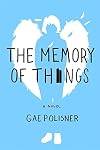
The Memory of Things/Gae Polisner On the morning of September 11, 2001, sixteen-year-old Kyle Donohue watches the first twin tower come down from the window of Stuyvesant High School. Moments later, terrified and fleeing home to safety across the Brooklyn Bridge, he stumbles across a girl perched in the shadows, covered in ash, and wearing a pair of costume wings. With his mother and sister in California and unable to reach his father, a NYC detective likely on his way to the disaster, Kyle show more makes the split-second decision to bring the girl home. What follows is their story, told in alternating points of view, as Kyle tries to unravel the mystery of the girl so he can return her to her family. But what if the girl has forgotten everything, even her own name? And what if the more Kyle gets to know her, the less he wants her to go home? The Memory of Things tells a stunning story of friendship and first love and of carrying on with our day-to-day living in the midst of world-changing tragedy and unforgettable pain—it tells a story of hope.
This story was a gorgeous tribute to 9/11 and a really sweet tale of a developing friendship between two teens surviving trauma.
I thought Polisner did an excellent job of detailing the tragedy, and it meant a lot to me simply because I was too young at the time to really appreciate the gravity of the event. I think this book can be valuable to many teens and young adults today simply for the historical context and the way she so aptly recreates the events.
The girl's sections were all written in poetry, which threatened to quickly turn me off as I need to be in a certain mindset in order to be reading lyrical prose; however, the sections were short enough that they weren't disturbing and served only to shed some mystique on her and give an entirely different picture of how a mind might work after a tragedy.
I loved that Polisner included a lot about Uganda and the events there, because it really is so easy in our Western-centric media to forget many of the terrible events happening elsewhere. Kyle's friend had come to the US as a child from Uganda and I found it subtle yet powerful how Kyle thought about his background as the story went on.
I additionally loved that Kyle's uncle was suffering from paralysis, and had gone from living a completely ordinary life and being quite a hero to needing someone to aid him with the most menial of tasks. This really demonstrated how life goes on even after a tragedy and was really powerful in showing how Kyle hated that his uncle had to go through his own personal tragedy.
This was gorgeously written. I think it's a topic that needs exploring and for that a story as such could be done aptly by many; however, Polisner has written this extraordinarily and had me feeling all of the emotions.
This story was definitely a tale of hope and despite the tears I really loved reading it.
I received a free copy of this book in exchange for an honest review.
show less
This story was a gorgeous tribute to 9/11 and a really sweet tale of a developing friendship between two teens surviving trauma.
I thought Polisner did an excellent job of detailing the tragedy, and it meant a lot to me simply because I was too young at the time to really appreciate the gravity of the event. I think this book can be valuable to many teens and young adults today simply for the historical context and the way she so aptly recreates the events.
The girl's sections were all written in poetry, which threatened to quickly turn me off as I need to be in a certain mindset in order to be reading lyrical prose; however, the sections were short enough that they weren't disturbing and served only to shed some mystique on her and give an entirely different picture of how a mind might work after a tragedy.
I loved that Polisner included a lot about Uganda and the events there, because it really is so easy in our Western-centric media to forget many of the terrible events happening elsewhere. Kyle's friend had come to the US as a child from Uganda and I found it subtle yet powerful how Kyle thought about his background as the story went on.
I additionally loved that Kyle's uncle was suffering from paralysis, and had gone from living a completely ordinary life and being quite a hero to needing someone to aid him with the most menial of tasks. This really demonstrated how life goes on even after a tragedy and was really powerful in showing how Kyle hated that his uncle had to go through his own personal tragedy.
This was gorgeously written. I think it's a topic that needs exploring and for that a story as such could be done aptly by many; however, Polisner has written this extraordinarily and had me feeling all of the emotions.
This story was definitely a tale of hope and despite the tears I really loved reading it.
I received a free copy of this book in exchange for an honest review.
show less
Lists
Awards


You May Also Like


Statistics
- Works
- 7
- Members
- 524
- Popularity
- #47,449
- Rating
- 3.9
- Reviews
- 50
- ISBNs
- 43
- Languages
- 1