
Stephanie Nolen
Author of 28: Stories of AIDS in Africa
About the Author
Stephanie Nolen is the correspondent in Africa for Toronto's Globe and Mail.
Works by Stephanie Nolen
Promised the Moon: The Untold Story of the First Women in the Space Race (2002) 93 copies, 2 reviews
Tagged
Common Knowledge
- Birthdate
- 1971-09-03
- Gender
- female
- Education
- University of King's College, Halifax, N.S. Canada
London School of Economics - Occupations
- journalist
- Organizations
- Globe and Mail
New York Times - Nationality
- Canada
- Birthplace
- Montréal, Québec, Canada
- Places of residence
- Montréal, Québec, Canada
Ottawa, Ontario, Canada
Johannesburg, South Africa
Middle East - Associated Place (for map)
- Canada
Members
Reviews
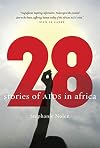
Nolen's 28: Stories of AIDS in Africa is nothing short of incredible. Her approach, her writing, and her weaving of all of the material--personal, political, medical, cultural, environmental, local and global--are nothing short of impeccable. I've read many, many books (fiction and nonfiction) related to HIV/AIDS, many of them specifically connected to Africa and/or African writers, and this book eclipses all of them in nearly every way.
Nolen tells the stories of 28 individuals in Africa, show more all affected by AIDS, in order to weave a fuller picture of the disease and the factors complicating treatment, and even acknowledgement and diagnosis. In the process, she manages to write what is not just a powerful book which illustrates in 28 chapters the lives of 28 incredibly different people, living different lives in different countries, but a book which does more to paint a complete picture of this disease and related cultural territory than any book I've seen has even suggested. Delving into history, war and conflict, birth control, sex work, religion, politics, gender roles, civil rights, poverty, cultural appropriation, trade, environmental degredation, pharmaceuticals, and education (or lack thereof), Nolen does more in this book to paint a picture of the unfolding of AIDS, and its impact, than anything else I've seen.
And, beyond that, there are 28 stories here which she tells masterfully, bringing men, women, and children to life on each page of this work, and in a way that makes the issues she addresses that much easier to understand.
It is a difficult book to read, but it is also a book full of hope and community and determination. But, as Bono is quoted on the back cover: "This is a formidable book of record... from the tiny virus, via twenty-eight individual human stories, to an entire continent. The stories will tear you apart before putting you back together, fully armed and ready to go to war..."
You might be thinking this book is a bit dated, but the truth is that this book is an incredible and timely record of the way history, disease, and a thousand complicating factors unfolded into a crisis that is still going on. And, what's more, this is a book that actively works against apathy--you cannot read this and not understand why your hands and your voice matters in this world, and at a time when apathy and 'what can I do?' are echoing across the globe, I believe that's incredibly important.
I hope you find it, read it, and then pass it on to other readers. This is the kind of book we should all be reading. show less
Nolen tells the stories of 28 individuals in Africa, show more all affected by AIDS, in order to weave a fuller picture of the disease and the factors complicating treatment, and even acknowledgement and diagnosis. In the process, she manages to write what is not just a powerful book which illustrates in 28 chapters the lives of 28 incredibly different people, living different lives in different countries, but a book which does more to paint a complete picture of this disease and related cultural territory than any book I've seen has even suggested. Delving into history, war and conflict, birth control, sex work, religion, politics, gender roles, civil rights, poverty, cultural appropriation, trade, environmental degredation, pharmaceuticals, and education (or lack thereof), Nolen does more in this book to paint a picture of the unfolding of AIDS, and its impact, than anything else I've seen.
And, beyond that, there are 28 stories here which she tells masterfully, bringing men, women, and children to life on each page of this work, and in a way that makes the issues she addresses that much easier to understand.
It is a difficult book to read, but it is also a book full of hope and community and determination. But, as Bono is quoted on the back cover: "This is a formidable book of record... from the tiny virus, via twenty-eight individual human stories, to an entire continent. The stories will tear you apart before putting you back together, fully armed and ready to go to war..."
You might be thinking this book is a bit dated, but the truth is that this book is an incredible and timely record of the way history, disease, and a thousand complicating factors unfolded into a crisis that is still going on. And, what's more, this is a book that actively works against apathy--you cannot read this and not understand why your hands and your voice matters in this world, and at a time when apathy and 'what can I do?' are echoing across the globe, I believe that's incredibly important.
I hope you find it, read it, and then pass it on to other readers. This is the kind of book we should all be reading. show less
This book did not tear me apart and make me anew, or whatever it is Bono suggests to that effect on the back cover. But I think, and suspect Nolen and most of her interviewees would agree, that that’s not the most useful response to AIDS in Africa anyway. (Like, hasn’t HIV already torn enough people apart?) Instead, what we get here is a deep and multiple picture of the epidemic, right from its beginnings (in the 1930s!) in southeastern Cameroon, as simian immunodeficiency virus passed show more from apes to humans (I always thought it was ape bites that did it, but apparently it was the practice of eating chimpanzees, still common at that time, which adds this funny atavistic thing—a lot more powerful and awful than the idea that HIV is God punishing gays or whatever is the idea that we got it from eating our closest living relatives). Then we get the emergence and horrid blossoming of “Slim,” as it was known in Uganda in the seventies, and the changes it’s wrought to African societies, and the efforts to fight it.
Nolen is quite good on a wide-angle journalist’s version of the history of the disease, but she excels at the rendering of the human stories with just enough background and context to set them off, like a cameo of a mother who died in childbirth. Some stories are long, some short, some more reporterly, some memoiristic or eulogistic, of the living and the dead and the disappeared, of friends and strangers and the great and good, like Nelson Mandela, whose conversion to HIV activism came when his son died of the disease, and whose subsequent complicated indirect struggle with his anointed successor, Thabo Mbeki, ANC comrade and the world’s premier antiretrorevisionist, could make for a magnificent slightly fictionalized psychodrama.
So we get Muhammad Ali, the Kenyan longhaul truckdriver who has slept with exactly “one hundred thousand women” and who used AIDS as an instrument to find Islam again and live right, analogous (except for the religion) to what I am trying to do with my hiatal hernia and incipient diabetes. Tigist Haile Michael, the Ethiopian child heading a household, and her brother Yohannes, who struggle to stay alive and keep it light and be kids, and she is struggling so hard to not have to resort to sex with strange men and he says if he had a million dollars he’d spend it on TVs and sportscars but as soon as she leaves the room he says he’d make it so she wouldn’t have to work anymore. Mfanimpela Thlabatse in Swaziland, the man who outlived his wife and all his children and and died at age 34. Zackie Achmat in South Africa, the AIDS activist whose brave hunger strike almost helped achieve ARV coverage in this middle-income nation and world power, one of the few that should have the capacity to address the epidemic on its own, and would have if not for human unreason. Pontiano Kaleebu, the Ugandan epidemiologist who is closer than anyone (this is c. 2007, and of course I’m layperson taking the word of another layperson) to a vaccine—the human need to derive meaning from suffering rises here, and you think wouldn’t it mean more if the greatest discovery in medicine this century was made by an African researcher. Agnes Munyiva in Kenya, one of the sex workers whose body has figured out how to combat the disease, rendering her functionally immune. Mpho in South Africa, who lived so fast and died so young, dissipated like a whirlwind, and her mum before her and her auntie and granny after her, and now nobody is left to remember the wild beauty of her life, not really, only us readers, which I imagine would be cold comfort
And people in Zambia, Lesotho, Nigeria, Congo; people who got the disease sexually, by birth, from needles, in a fight; people whose concerns are as different as those of the subsistence farmer, the special forces commando, the Anglican priest, and the hipster artist, but whose lives, suddenly, become unified by the same central fact of sickness. How do you live honestly as a sick person while not deteriorating until you become only that? It’s inspiring that that’s still so important an issue even in the face of more immediate questions like how do you stay alive at all.
What you see, again and again, is the limitless convertibility of resources, and how that sounds like a good thing, but what it really means is that damage in one area is damage in all. You’re sick. Fine. So you get drugs. But you can’t afford them because of the greedy fucking pharmaceutical companies. And if generic alternatives become available? Then you can afford those either because you can’t work because you’re too sick. Or because you have twelve kids to take care of, yours and your dead sister’s and your dead cousin’s, and some of them are sick too. Or because you can’t get a job because your country’s economy is fucked because of greedy elites and lack of civil society, in itself a result of poverty, and because of World Bank and IMF forced-liberalization measures that make it impossible to hire more people in the public sector, so there are no nurses to treat you and half the nurses are dying anyway. Or you get the ARVs but it’s still too hard to continue because your family’s disowned you and your husband broke your legs and left you for dishonouring him. Which meant you couldn’t get to the clinic. Which means you stopped taking your ARVs.
And on and on. A wound in any area of the body or psyche soul or external life prospect drains all realms, horribly. There’s a lot of talk about “integrated support” for people living with HIV and AIDS, and this book is an amazing illustration of why: because HIV/AIDS is the original integrated problem. show less
Nolen is quite good on a wide-angle journalist’s version of the history of the disease, but she excels at the rendering of the human stories with just enough background and context to set them off, like a cameo of a mother who died in childbirth. Some stories are long, some short, some more reporterly, some memoiristic or eulogistic, of the living and the dead and the disappeared, of friends and strangers and the great and good, like Nelson Mandela, whose conversion to HIV activism came when his son died of the disease, and whose subsequent complicated indirect struggle with his anointed successor, Thabo Mbeki, ANC comrade and the world’s premier antiretrorevisionist, could make for a magnificent slightly fictionalized psychodrama.
So we get Muhammad Ali, the Kenyan longhaul truckdriver who has slept with exactly “one hundred thousand women” and who used AIDS as an instrument to find Islam again and live right, analogous (except for the religion) to what I am trying to do with my hiatal hernia and incipient diabetes. Tigist Haile Michael, the Ethiopian child heading a household, and her brother Yohannes, who struggle to stay alive and keep it light and be kids, and she is struggling so hard to not have to resort to sex with strange men and he says if he had a million dollars he’d spend it on TVs and sportscars but as soon as she leaves the room he says he’d make it so she wouldn’t have to work anymore. Mfanimpela Thlabatse in Swaziland, the man who outlived his wife and all his children and and died at age 34. Zackie Achmat in South Africa, the AIDS activist whose brave hunger strike almost helped achieve ARV coverage in this middle-income nation and world power, one of the few that should have the capacity to address the epidemic on its own, and would have if not for human unreason. Pontiano Kaleebu, the Ugandan epidemiologist who is closer than anyone (this is c. 2007, and of course I’m layperson taking the word of another layperson) to a vaccine—the human need to derive meaning from suffering rises here, and you think wouldn’t it mean more if the greatest discovery in medicine this century was made by an African researcher. Agnes Munyiva in Kenya, one of the sex workers whose body has figured out how to combat the disease, rendering her functionally immune. Mpho in South Africa, who lived so fast and died so young, dissipated like a whirlwind, and her mum before her and her auntie and granny after her, and now nobody is left to remember the wild beauty of her life, not really, only us readers, which I imagine would be cold comfort
And people in Zambia, Lesotho, Nigeria, Congo; people who got the disease sexually, by birth, from needles, in a fight; people whose concerns are as different as those of the subsistence farmer, the special forces commando, the Anglican priest, and the hipster artist, but whose lives, suddenly, become unified by the same central fact of sickness. How do you live honestly as a sick person while not deteriorating until you become only that? It’s inspiring that that’s still so important an issue even in the face of more immediate questions like how do you stay alive at all.
What you see, again and again, is the limitless convertibility of resources, and how that sounds like a good thing, but what it really means is that damage in one area is damage in all. You’re sick. Fine. So you get drugs. But you can’t afford them because of the greedy fucking pharmaceutical companies. And if generic alternatives become available? Then you can afford those either because you can’t work because you’re too sick. Or because you have twelve kids to take care of, yours and your dead sister’s and your dead cousin’s, and some of them are sick too. Or because you can’t get a job because your country’s economy is fucked because of greedy elites and lack of civil society, in itself a result of poverty, and because of World Bank and IMF forced-liberalization measures that make it impossible to hire more people in the public sector, so there are no nurses to treat you and half the nurses are dying anyway. Or you get the ARVs but it’s still too hard to continue because your family’s disowned you and your husband broke your legs and left you for dishonouring him. Which meant you couldn’t get to the clinic. Which means you stopped taking your ARVs.
And on and on. A wound in any area of the body or psyche soul or external life prospect drains all realms, horribly. There’s a lot of talk about “integrated support” for people living with HIV and AIDS, and this book is an amazing illustration of why: because HIV/AIDS is the original integrated problem. show less
This is a heartwarming, terrible, unsetting but ultimately hopeful book. Yes, it accomplishes all that. These stories of 28 people affected by AIDS - most with either HIV or AIDS - gives a good history not only of the syndrome itself, but it's devistating impact on Africa in particular. It discusses (and assigns blame where due, without becoming preachy) the challenges, the failures and the victories in fighting this disease. Many of the people profiled were the brave leaders of the fight to show more make this disease known, announcing that they had it when that was just not done (it is still taboo topic in many parts of Africa) and hoping to get publicity to the disease to help others to get tested and learn how to keep themselves safe.
I've always enjoyed Stephanie Nolen's articles in Canada's Globe and Mail - even when the content was difficult to read about. I had high expectations of this book and not only did she meet them, she exceeded them 100 fold. show less
I've always enjoyed Stephanie Nolen's articles in Canada's Globe and Mail - even when the content was difficult to read about. I had high expectations of this book and not only did she meet them, she exceeded them 100 fold. show less
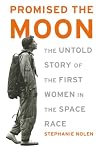
I was lucky to come across this book among the many tottering piles at my favorite used bookstore, since space/astronauts and feminist history are two of my favorite topics! I did learn quite a lot about women's role (or lack of) in the 50s/60s during the Space Race, and I experienced quite a few instances of rage at NASA and even some of the women depicted in the book because holy gender discrimination, Batman! It is interesting to read about the struggles these women went through just to show more get a chance to fly in space (they flew thousands of hours and passed the astronaut tests, in some cases better than the men) and compare that to how Sally Ride came to be the first American woman in space (her excellent biography by Lynn Sherr (Sally Ride: America's First Woman in Space) depicted a NASA finally open to gender inclusivity, yet still woefully and hilariously ignorant to how women operate - some engineers asked Ride if 100 tampons were enough for 5 days in space).
I enjoyed how detailed Nolen was in describing the women's histories and individual journeys toward being the first "lady astronaut", and the chapter devoted to the hearings on whether or not to allow women to continue taking the astronaut tests and be able to fly in space. This book was published in 2002, and I would love an updated edition that talks more about the female astronauts, scientists, and pilots now working for NASA. All in all, an interesting (if somewhat meandering) history of the first women who had aspirations to fly in space. show less
I enjoyed how detailed Nolen was in describing the women's histories and individual journeys toward being the first "lady astronaut", and the chapter devoted to the hearings on whether or not to allow women to continue taking the astronaut tests and be able to fly in space. This book was published in 2002, and I would love an updated edition that talks more about the female astronauts, scientists, and pilots now working for NASA. All in all, an interesting (if somewhat meandering) history of the first women who had aspirations to fly in space. show less
Lists
Awards


You May Also Like


Statistics
- Works
- 4
- Members
- 439
- Popularity
- #55,771
- Rating
- 4.3
- Reviews
- 11
- ISBNs
- 23
- Languages
- 3
- Favorited
- 1