

Walter Mosley
Author of Devil in a Blue Dress
About the Author
Walter Mosley was born in Los Angeles, California on January 12, 1952. He graduated from Johnson State College in Vermont. His first book, Devil in a Blue Dress, was published in 1990, won a John Creasy Award for best first novel, and was made into a motion picture starring Denzel Washington in show more 1995. He is the author of the Easy Rawlins Mystery series, the Leonid McGill Mystery series, and the Fearless Jones series. His other works include Always Outnumbered, Always Outgunned, 47, Last Days of Ptolemy Grey, and Twelve Steps toward Political Revelation. He has received numerous awards, including an O. Henry Award, the Carl Brandon Society Parallax Award, and PEN America's Lifetime Achievement Award. (Bowker Author Biography) Walter Mosley is the author of the acclaimed Easy Rawlins series of mysteries, the novels "Blue Light" and "RL's Dream", and two collections of stories featuring Socrates Fortlow, "Always Outnumbered", "Always Outgunned", for which he received the Anisfield-Wolf Award, and "Walkin' the Dog". He is a member of the board of directors of the National Book Awards and the founder of the PEN American Center's Open Book Committee. At various times in his life he has been a potter, a computer programmer, & a poet. He was born in Los Angeles & now lives in New York. (Publisher Provided) show less
Image credit: Walter Mosley on June 25, 1997 at the Guild Theatre in New York City
Series
Works by Walter Mosley
The Right Mistake: The Further Philosophical Investigations of Socrates Fortlow (2008) — Author — 224 copies, 9 reviews
Workin' on the Chain Gang: Shaking Off the Dead Hand of History (Library of Contemporary Thought) (2000) — Author — 150 copies, 1 review
The Gift of Fire / On the Head of a Pin: Two Short Novels from Crosstown to Oblivion (2012) 88 copies, 4 reviews
Black Genius: African American Solutions to African American Problems (1999) — Editor, Introduction & Contributor — 72 copies
Folding the Red Into the Black: Developing a Viable Untopia for Human Survival in the 21st Century (2016) 30 copies, 2 reviews
Black Dog {story} 2 copies
Mosley Walter 2 copies
Pet Fly {story} 1 copy
Little Brother {story} 1 copy
The Mask of Sanity 1 copy
Associated Works
All I Did Was Ask: Conversations with Writers, Actors, Musicians, and Artists (2004) — Contributor — 603 copies, 13 reviews
Dark Matter: A Century of Speculative Fiction from the African Diaspora (2000) — Contributor — 596 copies, 11 reviews
Writers on Writing: Collected Essays from the New York Times (2001) — Contributor — 479 copies, 5 reviews
The Norton Anthology of African American Literature {2nd edition} (2003) — Contributor, some editions — 282 copies, 2 reviews
Why We Write: 20 Acclaimed Authors on How and Why They Do What They Do (2013) — Contributor — 206 copies, 10 reviews
Light the Dark: Writers on Creativity, Inspiration, and the Artistic Process (2017) — Contributor — 164 copies, 5 reviews
Black Panther HC Volume 01: A Nation Under Our Feet (2017) — Introduction, some editions — 94 copies, 4 reviews
Freedom: Stories Celebrating the Universal Declaration of Human Rights (2009) — Contributor — 85 copies, 2 reviews
Black Noir: Mystery, Crime, and Suspense Fiction by African-American Writers (2009) — Contributor — 61 copies, 1 review
Shades of Black: Crime and Mystery Stories by African-American Authors (2004) — Contributor — 48 copies
The Obama Inheritance: Fifteen Stories of Conspiracy Noir (2017) — Contributor — 41 copies, 4 reviews
The Year's 25 Finest Crime and Mystery Stories: Seventh Annual Edition (1998) — Contributor — 9 copies
Left Coast Crimes: A Collection of Short Stories — Contributor — 2 copies
Tagged
Common Knowledge
- Legal name
- Mosley, Walter Ellis
- Birthdate
- 1952-01-12
- Gender
- male
- Education
- Victory Baptist day school
Alexander Hamilton High School
Goddard College
Johnson State College (BA|1977) - Occupations
- novelist
- Organizations
- Crime Writers of Color (cofounder)
- Awards and honors
- Grammy Award for Best Album Notes (2001)
Carl Brandon Society Parallax Award (2006)
New York Writers Hall of Fame (2013)
Langston Hughes Medal (2014)
National Book Foundation Medal (2020)
NAACP Image Award for Outstanding Literary Work (2007, 2009, 2014, 2021) (show all 12)
Sankofa Freedom Award (2022)
Robert Kirsch Award (2019)
Anisfield Wolf Award (1998)
Mystery Writers of America Grand Master (2016)
National Book Foundation Medal for Distinguished Contribution to American Letters (2020)
Diamond Dagger (2023) - Nationality
- USA
- Birthplace
- Los Angeles, California, USA
- Places of residence
- New York, New York, USA
- Associated Place (for map)
- USA
Members
Reviews
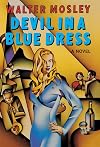
Devil in a Blue Dress introduced Walter Mosley's hero, Ezekiel (Easy) Rawlins to the reading public. A fast-flowing narrative with a story somewhat complex in a bare-bones kind of way, Mosley takes us into Raymond Chandler country - Los Angeles after the war. But this is a slightly different perspective because Easy happens to be a black man. He becomes a private-eye of sorts in order to locate a blonde French girl named Daphne Monet for a white man he doesn't quite trust. Daphne has a show more penchant for black men, and haunts the world of dusty underground bars and hole-in-the-wall jazz joints Easy knows all too well.
Finding her may not be Easy's only problem, however, as someone is out to kill him, prompting him to employ his old pal, Mouse, to watch his back while he investigates. Mouse is sharply drawn by Mosley as an amoral yet likable killer; deadly as an enemy, unequaled as a friend. Easy is portrayed by Mosley as a decent man who understands his world and his place in it, but doesn't like it one bit. Like Ross Macdonald's, Lew Archer, Easy is more comfortable being an observer of human cruelty and frailty than a participant.
Easy's attraction to the beautiful white girl, Daphne Monet, and his uneasiness about what may really be going on, underscores a complex and riveting narrative in which everyone might just have underestimated Easy. Mosley makes the larger story here not the case, but the story about a good man in a not-so-good world, trying to detach himself from it all, only to discover it is part of who he is. Mosley's "Mouse" is unforgettable, and in some respects what Hawk is to Spenser in Robert B. Parker's series.
Daphne has more to hide in this novel than just money, and its truth is the impetus for everything that happens. There is murder here, and greed, and something Easy has seen way too much of, even for a black man in post WWII Los Angeles -- sorrow. This is a fine read and a perfect introduction to Easy Rawlins. White Butterfly might be a slightly better book, in my opinion, but Devil in a Blue Dress is highly recommended to mystery fans. show less
Finding her may not be Easy's only problem, however, as someone is out to kill him, prompting him to employ his old pal, Mouse, to watch his back while he investigates. Mouse is sharply drawn by Mosley as an amoral yet likable killer; deadly as an enemy, unequaled as a friend. Easy is portrayed by Mosley as a decent man who understands his world and his place in it, but doesn't like it one bit. Like Ross Macdonald's, Lew Archer, Easy is more comfortable being an observer of human cruelty and frailty than a participant.
Easy's attraction to the beautiful white girl, Daphne Monet, and his uneasiness about what may really be going on, underscores a complex and riveting narrative in which everyone might just have underestimated Easy. Mosley makes the larger story here not the case, but the story about a good man in a not-so-good world, trying to detach himself from it all, only to discover it is part of who he is. Mosley's "Mouse" is unforgettable, and in some respects what Hawk is to Spenser in Robert B. Parker's series.
Daphne has more to hide in this novel than just money, and its truth is the impetus for everything that happens. There is murder here, and greed, and something Easy has seen way too much of, even for a black man in post WWII Los Angeles -- sorrow. This is a fine read and a perfect introduction to Easy Rawlins. White Butterfly might be a slightly better book, in my opinion, but Devil in a Blue Dress is highly recommended to mystery fans. show less
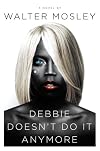
This was brutally beautiful.
It is not your usual novel, more a snapshot of how a person can react when their life gets turned upside down within a few minutes.
Mosley decided to forgo chapters which had the effect that he captured perfectly the aimless driving through the days, Debbie goes through after the death of her husband.
It is a stream of conciousness of what happened right at the moment, of how she got to this point through events in the past, of what the future might be.
But it is show more also a statement of that family is what you make out of it, that the people you feel the closest to are not those you are related to by blood but by the same kind of brokenes that you experience as well.
Mosey is really a master in writing broken and raw characters. Characters you might not feel any sympathy for at the beginning but the more the story unfolds the more you start to understand.
Debbie's / Sandy's outer shell is getting peeled back layer by layer, uncovering the deep pain and hopelessness, which made me feel for her very deeply.
The only minus point is the end, which feels a bit abrupt, not that a long drawn out explanation of what happened in the past year would have been better, but a nod to a few points would have been nice. Like did she cut everyone of her old life out or did she stay in contact with the few friends she had all that time.
Overall a touching read that makes you think not to judge people just by the outside, you never know what their story is by just looking at them. show less
It is not your usual novel, more a snapshot of how a person can react when their life gets turned upside down within a few minutes.
Mosley decided to forgo chapters which had the effect that he captured perfectly the aimless driving through the days, Debbie goes through after the death of her husband.
It is a stream of conciousness of what happened right at the moment, of how she got to this point through events in the past, of what the future might be.
But it is show more also a statement of that family is what you make out of it, that the people you feel the closest to are not those you are related to by blood but by the same kind of brokenes that you experience as well.
Mosey is really a master in writing broken and raw characters. Characters you might not feel any sympathy for at the beginning but the more the story unfolds the more you start to understand.
Debbie's / Sandy's outer shell is getting peeled back layer by layer, uncovering the deep pain and hopelessness, which made me feel for her very deeply.
The only minus point is the end, which feels a bit abrupt, not that a long drawn out explanation of what happened in the past year would have been better, but a nod to a few points would have been nice. Like did she cut everyone of her old life out or did she stay in contact with the few friends she had all that time.
Overall a touching read that makes you think not to judge people just by the outside, you never know what their story is by just looking at them. show less
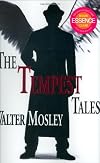
A very well-written book, both in its storyline and its lines of Socratic dialogue between Tempest Moseley and his Angel guardian, Joshua. You see, Tempest is shot by some white police officers in Harlem, around about 2008, and he goes up to be judged at the Pearly Gates. Lo and behold, his life of pilfering money from the charity box to give the money to his friends and family, or stealing an insurance card to help a terribly beaten woman get life-saving medical care are seen as grievous show more sins by Peter. And it is Peter's judgment that Tempest must go below to the realms of hell.
Tempest is not too happy about that decision and challenges. He challenges it to the point that he is thrown out of the judgment waiting line and sent back to earth with Joshua Angel to be persuaded to accept his fate. If he does not accept his fate, all of heaven and hell will be upended and cease to exist as they have done so for millennia.
And so begins a set of modern-day Socratic dialogues. Instead of walking through Athens, Angel and Tempest sit on park benches, or have coffee at Starbucks, or meet in an apartment and discuss what it is to be poor and black in Harlem. How a low-paying job can pay havoc with trying to get ahead, not just staying ahead of the landlord. How living in fear of others is a day-to-day life experience of black men. How unfair and unjust Tempest's life was, and how he committed his sins for the betterment of others, not just because he had a mean streak or needed to act out his violent rages.
The dialogue is raw, the events are timely, and the questions need some pondering. There is absolute good and evil as presented here, but sin and non-sin are questioned, as are some of the individuals who did truly horrible things and did not wind up in hell. And it begs the question: how does the lack of privilege or access to food or schools create an underclass of human beings who are otherwise shunned? And why is there now an us" and "them" mentality and how can it change? show less
Tempest is not too happy about that decision and challenges. He challenges it to the point that he is thrown out of the judgment waiting line and sent back to earth with Joshua Angel to be persuaded to accept his fate. If he does not accept his fate, all of heaven and hell will be upended and cease to exist as they have done so for millennia.
And so begins a set of modern-day Socratic dialogues. Instead of walking through Athens, Angel and Tempest sit on park benches, or have coffee at Starbucks, or meet in an apartment and discuss what it is to be poor and black in Harlem. How a low-paying job can pay havoc with trying to get ahead, not just staying ahead of the landlord. How living in fear of others is a day-to-day life experience of black men. How unfair and unjust Tempest's life was, and how he committed his sins for the betterment of others, not just because he had a mean streak or needed to act out his violent rages.
The dialogue is raw, the events are timely, and the questions need some pondering. There is absolute good and evil as presented here, but sin and non-sin are questioned, as are some of the individuals who did truly horrible things and did not wind up in hell. And it begs the question: how does the lack of privilege or access to food or schools create an underclass of human beings who are otherwise shunned? And why is there now an us" and "them" mentality and how can it change? show less
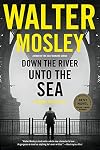
It's been quite a long time since I read a Walter Moseley book and I had not realized how far he has come as a writer.
Joe Oliver is a tormented ex-cop who was the victim of conspiracy and betrayal. Yet he has had some good luck in his life within his family and the community and even with some of the criminals he had hunted. He tries to focus on those good thing as he goes through his life as a private detective.
It's the perfect noir set up. A beautiful young woman walks into his office and show more offers him a wad of money to help a wrongly accused man (not entirely wrongly as it turns out). Then a letter arrives on Joe's desk from the woman who had entrapped him, confessing her crime and offering to help him clear his name. The two cases are not related, but Joe entangles them in his mind and heart and comes to believe that helping the victimized man will lift his own burden of victimization. He activates a network of colorful and dangerous characters and off we go into a vicious and black world of criminal New York.
In Mr. Moseley's hands, Joe is tormented by the knowledge that he was once an honest cop who was destroyed because of his honesty. Joe's honesty wasn't heroic or noble, it ruined his life and lead to the deaths of witnesses and bystanders. Joe became an animal for a while, in order to survive, because he had been an honest man.
That the two crime stories are connected only through Joe requires a double set of characters and the large cast is a bit hard to keep straight sometimes. But the pace is relentless, the action cruel, and Mr. Moseley's command of his story masterful.
I received a review copy of "Down the River unto the Sea" by Walter Mosley (Mulholland) through NetGalley.com.
Update: The New York Times reviewer last weekend did not particularly like this book. I don't agree but it is worth reading that review. show less
Joe Oliver is a tormented ex-cop who was the victim of conspiracy and betrayal. Yet he has had some good luck in his life within his family and the community and even with some of the criminals he had hunted. He tries to focus on those good thing as he goes through his life as a private detective.
It's the perfect noir set up. A beautiful young woman walks into his office and show more offers him a wad of money to help a wrongly accused man (not entirely wrongly as it turns out). Then a letter arrives on Joe's desk from the woman who had entrapped him, confessing her crime and offering to help him clear his name. The two cases are not related, but Joe entangles them in his mind and heart and comes to believe that helping the victimized man will lift his own burden of victimization. He activates a network of colorful and dangerous characters and off we go into a vicious and black world of criminal New York.
In Mr. Moseley's hands, Joe is tormented by the knowledge that he was once an honest cop who was destroyed because of his honesty. Joe's honesty wasn't heroic or noble, it ruined his life and lead to the deaths of witnesses and bystanders. Joe became an animal for a while, in order to survive, because he had been an honest man.
That the two crime stories are connected only through Joe requires a double set of characters and the large cast is a bit hard to keep straight sometimes. But the pace is relentless, the action cruel, and Mr. Moseley's command of his story masterful.
I received a review copy of "Down the River unto the Sea" by Walter Mosley (Mulholland) through NetGalley.com.
Update: The New York Times reviewer last weekend did not particularly like this book. I don't agree but it is worth reading that review. show less
Lists
to get (1)
Library TBR (1)
Page Turners (1)
Black Authors (2)
Edgar Award (1)
First Novels (1)
A Novel Cure (1)
Best Audiobooks (1)
Diverse Horror (1)
Awards


You May Also Like


Associated Authors
Statistics
- Works
- 105
- Also by
- 52
- Members
- 26,598
- Popularity
- #785
- Rating
- 3.7
- Reviews
- 833
- ISBNs
- 939
- Languages
- 16
- Favorited
- 87


