
Swami Satchidananda (1914–2002)
Author of The Yoga Sutras of Patanjali
About the Author
Image credit: Nambassa Trust and Peter Terry, http://www.nambassa.com/ (Wikipedia)
Works by Swami Satchidananda
The Living Gita: The Complete Bhagavad Gita - A Commentary for Modern Readers (1988) 131 copies, 1 review
The Breath of Life: Integral Yoga Pranayama: Step-by-Step Instructions in the Yogic Breathing Practices (2015) 8 copies
Five masters of meditation an interfaith experience [video recording] (2002) — Contributor — 2 copies
Lives of Luminaries 1 copy
Jewels of Wisdom 1 copy
The Key to Peace 1 copy
Swami Satchidananda 1 copy
The Message of Yoga 1 copy
To Know Yourself: Essential Teachings of Swami Satchidananda by Sri Swami Satchidananda (1988-12-27) 1 copy
An Evening with Swami Satchidananda: Text of a Public Lecture Delivered on December 19, 1974 (1974) 1 copy
Pearls of Wisdom 1 copy
Associated Works
Unconditional Love: How to Live With an Open Heart in a Changing World (2003) — Preface, some editions — 13 copies
Living yoga : the life and teachings of Swami Satchidananda [video recording] (2008) — Featured — 1 copy
Tagged
Common Knowledge
- Canonical name
- Satchidananda, Swami
- Other names
- Gounder, C. K. Ramaswamy (birth name)
Satchidananda, Sri Swami
Satchidananda, Yogiraj Sri Swami - Birthdate
- 1914-12-22
- Date of death
- 2002-08-19
- Gender
- male
- Occupations
- Yogi
Yoga Teacher
Spiritual Teacher
author - Organizations
- Integral Yoga
Yogaville - Relationships
- Sivananda, Swami (guru)
Chidananda, Swami (gurubhai)
Vishnudevananda, Swami (gurubhai)
Venkatesananda, Swami (gurubhai)
Krishnanada, Swami (gurubhai)
Satyananda, Swami (gurubhai) - Nationality
- India
- Birthplace
- Chettipalayam, Coimbatore, India
- Places of residence
- Chettipalayam, Coimbatore, India (birthplace)
Sivananda Ashram, Rishikesh, India
Yogaville, Buckingham, Virginia, USA - Place of death
- Chennai, Tamil Nadu, India
- Associated Place (for map)
- India
Members
Reviews
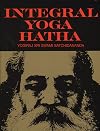
Before I start the review itself, I want to say that, as someone who hurt herself badly doing unsupervised yoga, I am emphatic in my conviction that no one should try to learn yoga from a book; some of the postures are too dangerous. Find a good teacher, at least to start, and then books can be valuable tools for refreshing your memory on postures or helping you refine old friends.
That said, I bought this book in the not too distant past because I am in a country where there is no decent show more yoga teacher of the school to which I belong and whose practices I have followed, off and on, from more than 30 years. The most popular forms of yoga in the US is, quite understandably given the culture, that of Iyengar and Ashtanga (power yoga). The latter especially emphasizes a certain urgency to performing the asanas--postures--a kind of athleticism that fits in perfectly with the predominant culture in the US. The focus is primarily on the physical,especially, in the case of Iyengar, on attaining and maintaining good health.
But yoga as taught by Sri Swami Satchidananda, whose method is known as Integral Yoga, is more traditional. This school of yoga emphasizes the more meditative function of yoga; the postures are meant to be performed slowly.
The preface of the book defines Integral Yoga, which is a combination of the 6 major types of yoga, all explained concisely. The Introduction incorporates Satchidananda's focus on health as one (but by no means the only or even principal) reason for doing yoga. On reading it, you also get a real feel for Satchidananda's basic outlook on life; not really surprisingly, he sounds a lot like Mother Teresa--her more public face, that is. The Introduction also gives advice on what to do (or not do) before, during and after yoga practice. An American with the usual life will find doing all of them a little difficult. Still, they're good guidelines; as in most such advice, I choose what seems to me to be valuable and what will fit in with my lifestyle. It's not everything but it's not nothing, either.
As in Integral Yoga classes, the main body of the book starts out with chants, in what I assume is a phoneticized Sanskrit, as well as in English.
The asana section itself is divided into eight parts; Eye Exercises; the Sun Salutation; Meditative Poses; Cultural Poses (which are the main asanas); Pranayamas (breathing exercises); Bandhas (exercises which directs and bind the energy released by the asanas); Mudras (concentration postures; Shat Kriyas (purification exercises).
Most people will be interested primarily in the Cultural Poses. All are explained simply and clearly; all have photos of Satchidananda himself performing the posture. for someone trying to refresh the memory of postures or looking for improvement, these are outstanding.
Many of he other sections are extemely useful. The eye exercises are simple and useful for maintaining the health of the eyes. You can choose the pose most comfortable for you from a variety of the meditative poses; the value is self-evident. Pranayama is outstanding for developing deep breathing; most American leading the typcial hectic life breathe too shallowly. In my opinion, the only problematical section is the Purification one; there are practices there that should not be undertaken without supervision of a trained yoga practitioner.
The appendix lists a course of study for beginners, intermediate and advanced students. I was highly amused at what Satchidananda considers "beginning" postures--I've never been able to do several of them!
If you have some knowledge and training in yoga, this book is excellent for an introduction to Integral Yoga and as a guide for practice. The layout of the book makes it easy to practice "cafeteria style"--picking and choosing what you wish to incorporate into your own practice. All in all, an excellent guidebook. show less
That said, I bought this book in the not too distant past because I am in a country where there is no decent show more yoga teacher of the school to which I belong and whose practices I have followed, off and on, from more than 30 years. The most popular forms of yoga in the US is, quite understandably given the culture, that of Iyengar and Ashtanga (power yoga). The latter especially emphasizes a certain urgency to performing the asanas--postures--a kind of athleticism that fits in perfectly with the predominant culture in the US. The focus is primarily on the physical,especially, in the case of Iyengar, on attaining and maintaining good health.
But yoga as taught by Sri Swami Satchidananda, whose method is known as Integral Yoga, is more traditional. This school of yoga emphasizes the more meditative function of yoga; the postures are meant to be performed slowly.
The preface of the book defines Integral Yoga, which is a combination of the 6 major types of yoga, all explained concisely. The Introduction incorporates Satchidananda's focus on health as one (but by no means the only or even principal) reason for doing yoga. On reading it, you also get a real feel for Satchidananda's basic outlook on life; not really surprisingly, he sounds a lot like Mother Teresa--her more public face, that is. The Introduction also gives advice on what to do (or not do) before, during and after yoga practice. An American with the usual life will find doing all of them a little difficult. Still, they're good guidelines; as in most such advice, I choose what seems to me to be valuable and what will fit in with my lifestyle. It's not everything but it's not nothing, either.
As in Integral Yoga classes, the main body of the book starts out with chants, in what I assume is a phoneticized Sanskrit, as well as in English.
The asana section itself is divided into eight parts; Eye Exercises; the Sun Salutation; Meditative Poses; Cultural Poses (which are the main asanas); Pranayamas (breathing exercises); Bandhas (exercises which directs and bind the energy released by the asanas); Mudras (concentration postures; Shat Kriyas (purification exercises).
Most people will be interested primarily in the Cultural Poses. All are explained simply and clearly; all have photos of Satchidananda himself performing the posture. for someone trying to refresh the memory of postures or looking for improvement, these are outstanding.
Many of he other sections are extemely useful. The eye exercises are simple and useful for maintaining the health of the eyes. You can choose the pose most comfortable for you from a variety of the meditative poses; the value is self-evident. Pranayama is outstanding for developing deep breathing; most American leading the typcial hectic life breathe too shallowly. In my opinion, the only problematical section is the Purification one; there are practices there that should not be undertaken without supervision of a trained yoga practitioner.
The appendix lists a course of study for beginners, intermediate and advanced students. I was highly amused at what Satchidananda considers "beginning" postures--I've never been able to do several of them!
If you have some knowledge and training in yoga, this book is excellent for an introduction to Integral Yoga and as a guide for practice. The layout of the book makes it easy to practice "cafeteria style"--picking and choosing what you wish to incorporate into your own practice. All in all, an excellent guidebook. show less
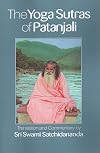
This text seems to be a transcript of a series of lectures given by Satchidananda (henceforth called "Commentator") to his students. Each verse of the Yoga-Sutra is first given in various forms (devanagari, sanskrit, english, word-by-word) and then a commentary is provided. The commentary on the final parts (i.e., three and four) is much shorter than the commentary on the first two parts.
The style is informal/anecdotal and contains a lot of rhetorical questions. The anecdotes are show more interesting/inspiring and make for a light/convenient reading. Nevertheless, some suggestions (like detachment from sensual pleasures) are everything else than light/convenient to digest, let alone, to realize.
Although, the commentary is sometimes esoteric (especially chapter 3!) I found many statements quite scientific, even from todays points of view. Although, the commentator claims not to belong to a particular religion (p.41) the text is heavily colored by the commentators apparent hinduistic background (and, of course, the hinduistic background of the underlying text).
I think, a bit more structure would have benefited the text since it would make remembering easier. show less
The style is informal/anecdotal and contains a lot of rhetorical questions. The anecdotes are show more interesting/inspiring and make for a light/convenient reading. Nevertheless, some suggestions (like detachment from sensual pleasures) are everything else than light/convenient to digest, let alone, to realize.
Although, the commentary is sometimes esoteric (especially chapter 3!) I found many statements quite scientific, even from todays points of view. Although, the commentator claims not to belong to a particular religion (p.41) the text is heavily colored by the commentators apparent hinduistic background (and, of course, the hinduistic background of the underlying text).
I think, a bit more structure would have benefited the text since it would make remembering easier. show less
Finally at least listened to the audio book version, a must read for yoga teachers. Patanjali explained yoga philosophy and related terms. It gives an intellectual knowledge of yoga philosophy. It's written about the experience of meditation and the obstacles along the way. Meditation leading into deeper experience.
(Listened to the audiobook through Audible (9.5 Hours) in 2021)
(Listened to the audiobook through Audible (9.5 Hours) in 2021)
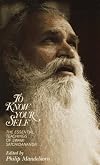
Based on the principles of Integral Yoga--living a life that is easeful, peaceful and useful - this very readable book presents the essential teachings of Sri Swami Satchidananda. It is a practical, lucid guide to peaceful living. All aspects of life--physical, mental and spiritual--are covered. Topics include "Business Yoga," "Calming the Mind," "Cosmic Consciousness," as well as "How to Stop Smoking," "How to Eat," and "How to Meditate." The presentation is light, lively and entertaining; show more the ideas, illuminating. A fountain of wisdom that readers return to again and again. show less
Lists
You May Also Like


Associated Authors
Statistics
- Works
- 47
- Also by
- 2
- Members
- 1,046
- Popularity
- #24,627
- Rating
- 4.2
- Reviews
- 13
- ISBNs
- 85
- Languages
- 2
- Favorited
- 1