
Elizabeth Van Steenwyk (1928–2021)
Author of A Traitor Among Us
About the Author
Series
Works by Elizabeth Van Steenwyk
How Kate Warne Saved President Lincoln: The Story Behind the Nation's First Woman Detective (2016) 38 copies, 3 reviews
Frontier Fever: The Silly, Superstitious-And Sometimes Sensible-Medicine of the Pioneers (1995) 12 copies
Air Shows: From Barnstormers to Blue Angels (First Books-Performances & Entertainment Series) (1998) 12 copies
The Witch Who Switched 2 copies
Three Dog Winter 1 copy
A Vote for Mr. Lincoln 1 copy
Tagged
Common Knowledge
- Canonical name
- Van Steenwyk, Elizabeth
- Legal name
- Van Steenwyk, Elizabeth Ann
- Other names
- Harler, Anne
- Birthdate
- 1928-07-01
- Date of death
- 2021-07-22
- Gender
- female
- Education
- Knox College (B.A.|1950)
- Occupations
- author
writer
children's book author
wine executive - Organizations
- International PEN
Society of Children's Book Writers
Adelaida Vineyards and Winery - Awards and honors
- Helen Keating Ott Award (1990)
Rebecca Caudill Young Readers' Book Award (1991) - Nationality
- USA
- Birthplace
- Galesburg, Illinois, USA
- Places of residence
- San Marino, California, USA
Paso Robles, California, USA - Place of death
- Paso Robles, California, USA
- Associated Place (for map)
- California, USA
Members
Reviews

Eleven-year-old Emma is used to accompanying her doctor mother when she is called out at all hours, but when a neighbor arrives Christmas Eve night with the news that a baby is coming and the doctor is needed, she resents having to spend this special time away from home. Waiting in the Van Der Meers home however, she soon realizes that the two children of the house are equally disappointed at having Christmas interrupted, and sets out to provide them with the holiday cheer they are show more missing...
Set in Nebraska in the 1880s, Prairie Christmas is the first book I have read from author Elizabeth Van Steenwyk, who appears to be quite prolific, and the third from illustrator Ronald Himler. It pairs an engaging and ultimately moving narrative with lovely pencil and watercolor artwork, capturing both the rougher conditions of that earlier time and place, and the holiday spirit that nevertheless was able to thrive there, with a little encouragement. I found myself moved by the story here, and by the implicit lesson about forgetting our own trouble through being of service to others—a message most appropriate for the time of year. I also greatly appreciated the subtle parallels to the story of the Nativity—the Christmas birth in a home that is also a stable, the arrival of neighbors with gifts for the baby—which some young people might catch, but which will certainly strike older readers. Recommended to picture book readers looking for Christmas stories with a prairie pioneer setting and/or a theme of helping others at the holidays. show less
Set in Nebraska in the 1880s, Prairie Christmas is the first book I have read from author Elizabeth Van Steenwyk, who appears to be quite prolific, and the third from illustrator Ronald Himler. It pairs an engaging and ultimately moving narrative with lovely pencil and watercolor artwork, capturing both the rougher conditions of that earlier time and place, and the holiday spirit that nevertheless was able to thrive there, with a little encouragement. I found myself moved by the story here, and by the implicit lesson about forgetting our own trouble through being of service to others—a message most appropriate for the time of year. I also greatly appreciated the subtle parallels to the story of the Nativity—the Christmas birth in a home that is also a stable, the arrival of neighbors with gifts for the baby—which some young people might catch, but which will certainly strike older readers. Recommended to picture book readers looking for Christmas stories with a prairie pioneer setting and/or a theme of helping others at the holidays. show less
How Kate Warne Saved President Lincoln: The Story Behind the Nation's First Woman Detective by Elizabeth Van Steenwyk
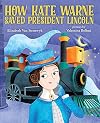
As anybody who knows me is aware, I am not a fan of picture book biographies. However, I went into this one thoroughly prepared to enjoy it, since I was excited about having more information on Kate Warne.
Unfortunately, I ended up not liking it after all, and not just because it was a picture book biography.
Kate Warne was the first female detective hired by Allan Pinkerton. She collects information at tea parties and by telling fortunes. Then the Civil War begins and Kate's work takes on a show more dangerous turn. She intercepts a plot to assassinate President Lincoln and works with Pinkerton to save the president's life. Kate Warne continued to work for Pinkerton and was publicized as the first female police detective after her death.
An author's note mentions the lack of information about Kate Warne and a few more brief notes about her life as well as a short bibliography.
While I appreciate the lack of information to work with and the limits of the picture book biography, this felt very sketchy. I was skeptical of the dialogue given to some of the characters; it definitely lent an historical fiction feel to the book. Most of all, I disliked the art. It's sweet and cute and gorgeous - and completely unsuited to the story of a woman making her way in a man's world in the gritty Civil War era. All the characters, including background characters, are pasteboard white and look about sixteen. There is a lot of vibrant colors in the dresses, something I doubt Warne would have had as a poor widow working for a pittance.
Verdict: I'm not generally a fan of picture book biographies to start with, but I felt that this one didn't even make much of an effort to be historically accurate. It's awesome to have more women in history, but I had hoped for something better. Not recommended.
ISBN: 9780807541173; Published 2016 by Albert Whitman; Borrowed from another library in my consortium show less
Unfortunately, I ended up not liking it after all, and not just because it was a picture book biography.
Kate Warne was the first female detective hired by Allan Pinkerton. She collects information at tea parties and by telling fortunes. Then the Civil War begins and Kate's work takes on a show more dangerous turn. She intercepts a plot to assassinate President Lincoln and works with Pinkerton to save the president's life. Kate Warne continued to work for Pinkerton and was publicized as the first female police detective after her death.
An author's note mentions the lack of information about Kate Warne and a few more brief notes about her life as well as a short bibliography.
While I appreciate the lack of information to work with and the limits of the picture book biography, this felt very sketchy. I was skeptical of the dialogue given to some of the characters; it definitely lent an historical fiction feel to the book. Most of all, I disliked the art. It's sweet and cute and gorgeous - and completely unsuited to the story of a woman making her way in a man's world in the gritty Civil War era. All the characters, including background characters, are pasteboard white and look about sixteen. There is a lot of vibrant colors in the dresses, something I doubt Warne would have had as a poor widow working for a pittance.
Verdict: I'm not generally a fan of picture book biographies to start with, but I felt that this one didn't even make much of an effort to be historically accurate. It's awesome to have more women in history, but I had hoped for something better. Not recommended.
ISBN: 9780807541173; Published 2016 by Albert Whitman; Borrowed from another library in my consortium show less
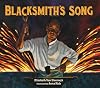
Blacksmith’s Song is a doleful rendering in beautiful art of the Underground Railroad, suggesting one way of many that messages were passed along. Our young narrator wants to tap out the blacksmith's song, to help travellers as his father does. Each day he asks, but is told 'not yet’. Each day his father looks sicker and sicker. Our narrator wonders when it will be his family's time to leave too. One day, Pa is unable to play the travelling song, so the young son takes up a hammer and show more taps it out for those waiting in the woods. Later that night, he and his parents finally leave themselves.
This is a sad tale, mournful for its topic of slavery. It brought tears to my eyes, and to the most empathic of my cubs. It prompted much discussion between all of us. The author's notes at the end gave more information about the Underground Railroad, and other ways it is speculated messages were passed along, though we really have little true idea. This is a great book to supplement teaching about the Underground Railroad.
***Many thanks to Netgalley and Myrick Marketing for providing an egalley in exchange for a fair and honest review. show less
This is a sad tale, mournful for its topic of slavery. It brought tears to my eyes, and to the most empathic of my cubs. It prompted much discussion between all of us. The author's notes at the end gave more information about the Underground Railroad, and other ways it is speculated messages were passed along, though we really have little true idea. This is a great book to supplement teaching about the Underground Railroad.
***Many thanks to Netgalley and Myrick Marketing for providing an egalley in exchange for a fair and honest review. show less
'Blacksmith's Song' by Elizabeth Van Steenwyck is a children's picture book about the Underground Railroad, more specifically, a possible way that slaves and others communicated with runaways along the route. As the author states at the end of the book, we are not sure how people on the Underground Railroad were communicated with. It could have been a specific rhythm played out along the trail such as a song, dance, or by a blacksmith working late into the night.
IN this story, a young boy show more goes to watch his father working in the forge. His father sometimes hammers a certain rhythm in the night. The boy wants to try, but his father says no. His mother finally explains about the song his father plays. It's a secret and dangerous song that could cost someone their life if the owners figure it out. The boy picks up the song from listening and he knows as his father grows weaker, that he will one day play the song and his family will eventually get their turn to run for freedom.
The story does not show the ugly side of slavery, but it gets the point across that these people are not free and wish to be. Using the illustrations by Anna Rich you can see the owners sitting and having a feast, as well as the men on horseback with their dogs out looking for escaped slaves. Depending on the age of the person reading or listening to the story, different discussions can occur regarding this time period and practice. The publisher generously provided me with a copy of this book via Netgalley. show less
IN this story, a young boy show more goes to watch his father working in the forge. His father sometimes hammers a certain rhythm in the night. The boy wants to try, but his father says no. His mother finally explains about the song his father plays. It's a secret and dangerous song that could cost someone their life if the owners figure it out. The boy picks up the song from listening and he knows as his father grows weaker, that he will one day play the song and his family will eventually get their turn to run for freedom.
The story does not show the ugly side of slavery, but it gets the point across that these people are not free and wish to be. Using the illustrations by Anna Rich you can see the owners sitting and having a feast, as well as the men on horseback with their dogs out looking for escaped slaves. Depending on the age of the person reading or listening to the story, different discussions can occur regarding this time period and practice. The publisher generously provided me with a copy of this book via Netgalley. show less
Lists
Sonlight Books (1)
Christmas Books (1)
Awards


You May Also Like


Associated Authors
Statistics
- Works
- 63
- Members
- 1,074
- Popularity
- #23,943
- Rating
- 3.7
- Reviews
- 23
- ISBNs
- 119
- Languages
- 2