
Travis S. Taylor
Author of Vorpal Blade
About the Author
Series
Works by Travis S. Taylor
Alien Invasion: The Ultimate Survival Guide for the Ultimate Attack (2011) — Author — 24 copies, 2 reviews
An Introduction to Planetary Defense: A Study of Modern Warfare Applied to Extra-Terrestrial Invasion (2006) 24 copies, 1 review
A New American Space Plan: by Travis Taylor, Ringleader of the Rocket City Rednecks (2012) 13 copies
Apogee (Ballistic) 2 copies
Cleaning Lady 1 copy
Associated Works
Tagged
Common Knowledge
- Legal name
- Taylor, Travis Shane
- Birthdate
- 1968-07-24
- Gender
- male
- Education
- University of Alabama
University of Western Sydney
University of Auburn - Organizations
- National Aeronautics and Space Administration
- Nationality
- USA
- Birthplace
- Decatur, Alabama, USA
- Places of residence
- Huntsville, Alabama, USA
- Associated Place (for map)
- Alabama, USA
Members
Reviews

If you have a nostalgic yen for a space opera with don’t-even-ask technology and lots of big, mean critters to shoot, Ringo and Taylor have you covered. The eggheads and the SEALS, now dubbed Space Marines, from Into the Looking Glass have a few shiny new recruits and an FTL starship cobbled together from some alien tech and a submarine design. It has an impressive bowsprit, so Vorpal Blade is the only possible name. Ringo knows his audience.
March Upcountry, which he co-authored with show more David Weber, is better. They steal from Xenophon—a step up from Lewis Carroll. show less
March Upcountry, which he co-authored with show more David Weber, is better. They steal from Xenophon—a step up from Lewis Carroll. show less

In the second installment of this series, the US converts a submarine into a spaceship, using the warp drive device that was conveniently given to Earth in book 1. Now that the Dreen menace is temporarily halted on Earth, the Vorpal Blade is sent out to search the nearby galaxy for signs of Dreen. This books features lots of physics, practical exploration of the dangers of early space travel, and the usual kick butt action of a John RIngo story. Light, funny, but technical and action packed show more too. I wish there was a little more exploration of the societal effects of all this new technology, but it isn't that kind of science fiction novel. show less
After confronting the Dreen invasion in Into the Looking Glass, a submarine converted into a starship launches a search of the nearby systems to make sure the Dreen aren't attacking through conventional space. Reminiscent of Voyage of the Space Beagle by way of Rambo, the book is an excellent nuts-and-bolts military science fiction tale with a slam-bang finish. As with the best of the series books, it can stand alone even as its predecessor was initially conceived as a standalone.
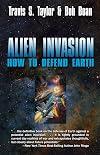
This is a thought-provoking book that has already been topical in reference to the recent report in the journal Acta Astronautica that made headlines with its claim that our pollution problem on earth might attract ETs who would destroy humanity in order to save the earth. (Sounds like someone has seen the remake of "The Day the Earth Stood Still" too many times.)
The authors of "Alien Invasion" would likely disagree. For one thing, they argue that there are plenty of ways for ET to recognize show more that earth is inhabited aside from seeing our pollution. They might actually have built a huge orbital telescope capable of visualizing the surface of the earth from thousands of light years away. It might actually be possible that an inhabited alien planet, technologically far ahead of us, has seen us just that clearly, and yet not been able to visit us because they might not be able to get around the speed-of-light speed limit; their journey to earth might take thousands of years, you see. Would we want to visit a planet, even though we knew it to be inhabited, if it took that long to get there?
"Persuasive" is the word that best describes the authors' approach to this unlikely subject. They explore and demolish arguments that pooh-pooh the possiblity of visitors ever arriving from across the great distances of space. Nature seems not to have too many one-of-a-kind phenomenon; if there are planets around our sun, there are also planets around other stars; if there are billions upon billions of stars in the universe, some of them must have inhabited planets around them just as our sun does. The authors look at the enormous distances between solar systems and conclude that it is so vast that we really need to give ET more time to discover us before we give up on him; they point out that just because something has not happened yet does not mean that it won't or that preparations for the event are unnecessary. They consider the probability that there are all kinds of ETs just as there are all kinds of stars and planets. We do not have any way of knowing what a typical intelligent lifeform is like. (We only have ourselves to go by, and that is an awfully small sample.) Some ETs might be more warlike than we are and some might be less so. Which is in the majority? The authors admit that logic only takes one so far and then all of the other variables are unknowable.
The question is, how do we prepare for the possibility that hostile ETs will some day invade earth? While special plans would have to be made by governments, the authors say that there is nothing specific to an alien invasion that the average person can do; we can only prepare for a major disaster. For you or me, preparing for a killer hurricane calls for the same action and planning that an alien invasion does. Since the odds are greater that each of us might face a natural disaster, this book sends a message that seems worthy of consideration: prepare as if ET is coming, and if he doesn't, you will be prepared for every kind of disaster.
I am beginning to read the part about warfare and how the military will have to revise a great deal of their thinking if we are to survive an alien invasion.
The authors do not assume that we will have to fight with any aliens who visit; rather they assume that if we do not have a plan for our first contact with aliens, then a war might happen by happenstance. They prescribe that we should, as a planet, develop a protocol to determine what we should do depending on how aliens present themselves to us. This, of course, should include data gathering operations so that we can detect to the best of our abilities when aliens approach. show less
The authors of "Alien Invasion" would likely disagree. For one thing, they argue that there are plenty of ways for ET to recognize show more that earth is inhabited aside from seeing our pollution. They might actually have built a huge orbital telescope capable of visualizing the surface of the earth from thousands of light years away. It might actually be possible that an inhabited alien planet, technologically far ahead of us, has seen us just that clearly, and yet not been able to visit us because they might not be able to get around the speed-of-light speed limit; their journey to earth might take thousands of years, you see. Would we want to visit a planet, even though we knew it to be inhabited, if it took that long to get there?
"Persuasive" is the word that best describes the authors' approach to this unlikely subject. They explore and demolish arguments that pooh-pooh the possiblity of visitors ever arriving from across the great distances of space. Nature seems not to have too many one-of-a-kind phenomenon; if there are planets around our sun, there are also planets around other stars; if there are billions upon billions of stars in the universe, some of them must have inhabited planets around them just as our sun does. The authors look at the enormous distances between solar systems and conclude that it is so vast that we really need to give ET more time to discover us before we give up on him; they point out that just because something has not happened yet does not mean that it won't or that preparations for the event are unnecessary. They consider the probability that there are all kinds of ETs just as there are all kinds of stars and planets. We do not have any way of knowing what a typical intelligent lifeform is like. (We only have ourselves to go by, and that is an awfully small sample.) Some ETs might be more warlike than we are and some might be less so. Which is in the majority? The authors admit that logic only takes one so far and then all of the other variables are unknowable.
The question is, how do we prepare for the possibility that hostile ETs will some day invade earth? While special plans would have to be made by governments, the authors say that there is nothing specific to an alien invasion that the average person can do; we can only prepare for a major disaster. For you or me, preparing for a killer hurricane calls for the same action and planning that an alien invasion does. Since the odds are greater that each of us might face a natural disaster, this book sends a message that seems worthy of consideration: prepare as if ET is coming, and if he doesn't, you will be prepared for every kind of disaster.
I am beginning to read the part about warfare and how the military will have to revise a great deal of their thinking if we are to survive an alien invasion.
The authors do not assume that we will have to fight with any aliens who visit; rather they assume that if we do not have a plan for our first contact with aliens, then a war might happen by happenstance. They prescribe that we should, as a planet, develop a protocol to determine what we should do depending on how aliens present themselves to us. This, of course, should include data gathering operations so that we can detect to the best of our abilities when aliens approach. show less
Awards
You May Also Like


Associated Authors
Statistics
- Works
- 31
- Also by
- 5
- Members
- 2,882
- Popularity
- #8,889
- Rating
- 3.6
- Reviews
- 64
- ISBNs
- 107
- Languages
- 1
- Favorited
- 2