
Jan Reynolds
Author of Celebrate!
About the Author
Jan Reynolds is a prizewinning photojournalist whose adventures have taken her to every livable, continent. An accomplished athlete, she is a medal-winner in World Cup biathlon and holds several high-altitude skiing and mountain climbing records. She has lectured at the National Geographic Society, show more IBM, the Sierra Club, and many explorers' clubs, universities, and schools throughout the world. Her work has been featured in the New York Times, National Geographic, Esquire, Vogue, People, and several ski and outdoor magazines, and she has appeared on the covers of Outside and Ultrasport. She is the author/photographer of several books, including the award-winning Vanishing Cultures series of children's books. She lives in Stowe, Vermont. show less
Image credit: via Lee & Low Books
Series
Works by Jan Reynolds
Only the Mountains Do Not Move: A Maasai Story of Culture and Conservation (2011) 81 copies, 7 reviews
Drop Dead Diva (Sleuthing Sisters Mystery Series #2) (Heartsong Presents Mysteries #22) (2008) 38 copies, 2 reviews
Down Home And Deadly: Sleuthing Sisters Mystery (Heartsong Presents Mysteries) (2008) 34 copies, 2 reviews
Tagged
Common Knowledge
- Gender
- female
- Education
- University of Vermont (BA|1978)
Members
Reviews
#58 in my 365 Kids Books challenge. For a fuller explanation see my review for [b:101 Amazing Facts about Australia|21332402|101 Amazing Facts about Australia (Countries of the World)|Jack Goldstein|https://i.gr-assets.com/images/S/compressed.photo.goodreads.com/books/1394253825l/21332402._SY75_.jpg|25417728] You can see all the books on their own shelf
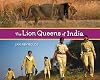
Wow, this is excellent. For one thing, Reynolds isn't presenting these women as traditionally feminine in some way, just as good at the job. show more They are calm, relaxed, confident, accurate, particularly Rashila, the focus of the work. To often women's accomplishments are dismissed, even by the women themselves, as something other than work. Compare this to [b:Cubs in the Tub: The True Story of the Bronx Zoo's First Woman Zookeeper|49659922|Cubs in the Tub The True Story of the Bronx Zoo's First Woman Zookeeper|Candace Fleming|https://i.gr-assets.com/images/S/compressed.photo.goodreads.com/books/1571695318l/49659922._SX50_SY75_.jpg|73189224] or you can wait for me to write up my review and do the comparing for you.
Too often women are trapped in a damned-if-you-do/damned-if-you-don't dilemma. Qualities and behaviors that men are praised for, and that women are explicitly encouraged to emulate, backfire in application. Dude is a maverick, a leader, a take-charge guy whereas a woman in the same position behaving in the same way is penalized for not building consensus, for being bitchy, for being pushy. Reynolds short-circuits that whole process by taking out the perception and instead just giving the impressive accomplishments of tracking, and shooting with the tranquilizer gun, lions leading to a perfect success rate in more than 1,000 rescues. Oh, and also: education of and cooperation with villagers living in and around the lion's territory, has also made the population rebound more quickly since the introduction of female rangers.
Reynolds does give a little of her own story in the book, showing the work she has put in: traveling to India to talk to the Lion Queens, to follow them, to document their experience, and to learn from them. It is empowering as the story of what one woman has accomplished despite fierce sexist opposition, and also as a story of how to talk about the work that women do. Calmly, quietly, effectively.
Library copy show less
Wow, this is excellent. For one thing, Reynolds isn't presenting these women as traditionally feminine in some way, just as good at the job. show more They are calm, relaxed, confident, accurate, particularly Rashila, the focus of the work. To often women's accomplishments are dismissed, even by the women themselves, as something other than work. Compare this to [b:Cubs in the Tub: The True Story of the Bronx Zoo's First Woman Zookeeper|49659922|Cubs in the Tub The True Story of the Bronx Zoo's First Woman Zookeeper|Candace Fleming|https://i.gr-assets.com/images/S/compressed.photo.goodreads.com/books/1571695318l/49659922._SX50_SY75_.jpg|73189224] or you can wait for me to write up my review and do the comparing for you.
Too often women are trapped in a damned-if-you-do/damned-if-you-don't dilemma. Qualities and behaviors that men are praised for, and that women are explicitly encouraged to emulate, backfire in application. Dude is a maverick, a leader, a take-charge guy whereas a woman in the same position behaving in the same way is penalized for not building consensus, for being bitchy, for being pushy. Reynolds short-circuits that whole process by taking out the perception and instead just giving the impressive accomplishments of tracking, and shooting with the tranquilizer gun, lions leading to a perfect success rate in more than 1,000 rescues. Oh, and also: education of and cooperation with villagers living in and around the lion's territory, has also made the population rebound more quickly since the introduction of female rangers.
Reynolds does give a little of her own story in the book, showing the work she has put in: traveling to India to talk to the Lion Queens, to follow them, to document their experience, and to learn from them. It is empowering as the story of what one woman has accomplished despite fierce sexist opposition, and also as a story of how to talk about the work that women do. Calmly, quietly, effectively.
Library copy show less
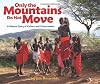
Rich photographs showcase the vitality and bold colors of the Maasai, whose traditional lifestyle and herding techniques are being altered due to weather changes and the development of formal preserves that hinder the spaces available for grazing. This joyous story of the dance between tradition and change has a welcome place in any library. The dazzling smiles - aided by a special tree branch used as a natural antiseptic toothbrush - raise important questions for American readers about show more where true joy comes from. Back matter includes a glossary and information about the author's fact-checking with experts. Highly recommended. (209) show less
tldr - Highly Recommended, especially to families with young schoolchildren, but to anyone who wants to learn more about wildlife in India.
Kudos to Reynolds for telling this concise 'story' in Rashila Vadher's own voice. After the back matter she writes a dedication: "This book was made with love and respect for Rashila Vadher, Darshana Kagada, Dinesh Sadiya, and Nalin Ramoliya. May your efforts save the Asiatic lion from extinction."
So, yeah, not OwnVoices, but not exploitive either.
I never show more even heard of Asiatic lions! And I certainly didn't realize that Indian women would be welcomed as rangers at a sanctuary. Or that the protection of the forest that led to Gir was founded about a century ago.* Also notable is that Vadher has over 1K animal rescues with 100% success rate.
I also like the matter-of-fact tone about women until just one almost throwaway statement: "We believe women make good rangers because the lion population has grown faster with female rangers working in the sanctuary. The Lion Queens are relaxed and confident around lions, and we work well with villagers." (This last is very important, as you'll read!)
*From the website: "History of Sasan Gir.
Devalia Safari Park was acknowledged as Gir National Park in 1975. It is the only national park where a large number of Asiatic Lions can be found in their natural habitat. Regardless of being ruled by the Britishers, Kings, and Nawabs prior to India’s freedom, Sasan Gir maintained its charisma. The Nawab of the princely state of Junagarh in the early 20th century “protected” and saved the lion population from getting fully disappeared." show less
Kudos to Reynolds for telling this concise 'story' in Rashila Vadher's own voice. After the back matter she writes a dedication: "This book was made with love and respect for Rashila Vadher, Darshana Kagada, Dinesh Sadiya, and Nalin Ramoliya. May your efforts save the Asiatic lion from extinction."
So, yeah, not OwnVoices, but not exploitive either.
I never show more even heard of Asiatic lions! And I certainly didn't realize that Indian women would be welcomed as rangers at a sanctuary. Or that the protection of the forest that led to Gir was founded about a century ago.* Also notable is that Vadher has over 1K animal rescues with 100% success rate.
I also like the matter-of-fact tone about women until just one almost throwaway statement: "We believe women make good rangers because the lion population has grown faster with female rangers working in the sanctuary. The Lion Queens are relaxed and confident around lions, and we work well with villagers." (This last is very important, as you'll read!)
*From the website: "History of Sasan Gir.
Devalia Safari Park was acknowledged as Gir National Park in 1975. It is the only national park where a large number of Asiatic Lions can be found in their natural habitat. Regardless of being ruled by the Britishers, Kings, and Nawabs prior to India’s freedom, Sasan Gir maintained its charisma. The Nawab of the princely state of Junagarh in the early 20th century “protected” and saved the lion population from getting fully disappeared." show less
I was surprised to see this book and I didn't hesitate to request it from NetGalley. The Maasai insist on continuing their culture despite everything and everyone and I love that about them.
When I studied Linguistics at the University of Oregon, SIL brought a Maasai over for us to learn aspects of their language. I focused on their numbering system, which is based on the livestock. I will never forget hearing the pounding in our ceiling and running up to the guy's hall to see what was going show more on and finding our Maasai friend showing his roomates how to do the Maasai leap.
I read this book with a specific picture of the their culture in my head from our friend's stories. Many of the things in the book resonated true with me. A family took the author in and showed her a lot of their life.
Some of the book is obviously "nice" keeping it kid-friendly. There is mention of cow dung used in the mud for the huts, but it is discreet compared to what I had heard, which is good. :-) She was similarly discreet regarding their food. She mentions drinking blood, but only in the Author's Note at the back. The danger of the wild African landscape is also downplayed. The women travel in groups and the men are skilled with their spears, but there are only hints at running into lions often. So, kids have a great introduction into this unique culture while adults are given more.
What I enjoyed the most is the details in the day to day life. The author captured things my friend didn't share, like how big their homes are, how big the community, just how free their livestock is to forage. The pictures show them creating bracelets and playing games and how the men stay together in a group. The author captured the every-day life.
She also highlighted how their environment has shrunk and their way of life is threatened and what they are doing to adapt. The stories that are their education have passed on a strong culture generation after generation. They continue to be fiercely their own.
I think there is a lot more that isn't shared, but this book is still a great peak into the Maasai way of life.
My Rating: 5 - Love it! show less
When I studied Linguistics at the University of Oregon, SIL brought a Maasai over for us to learn aspects of their language. I focused on their numbering system, which is based on the livestock. I will never forget hearing the pounding in our ceiling and running up to the guy's hall to see what was going show more on and finding our Maasai friend showing his roomates how to do the Maasai leap.
I read this book with a specific picture of the their culture in my head from our friend's stories. Many of the things in the book resonated true with me. A family took the author in and showed her a lot of their life.
Some of the book is obviously "nice" keeping it kid-friendly. There is mention of cow dung used in the mud for the huts, but it is discreet compared to what I had heard, which is good. :-) She was similarly discreet regarding their food. She mentions drinking blood, but only in the Author's Note at the back. The danger of the wild African landscape is also downplayed. The women travel in groups and the men are skilled with their spears, but there are only hints at running into lions often. So, kids have a great introduction into this unique culture while adults are given more.
What I enjoyed the most is the details in the day to day life. The author captured things my friend didn't share, like how big their homes are, how big the community, just how free their livestock is to forage. The pictures show them creating bracelets and playing games and how the men stay together in a group. The author captured the every-day life.
She also highlighted how their environment has shrunk and their way of life is threatened and what they are doing to adapt. The stories that are their education have passed on a strong culture generation after generation. They continue to be fiercely their own.
I think there is a lot more that isn't shared, but this book is still a great peak into the Maasai way of life.
My Rating: 5 - Love it! show less
Lists
Awards


You May Also Like


Associated Authors
Statistics
- Works
- 35
- Members
- 1,195
- Popularity
- #21,506
- Rating
- 3.7
- Reviews
- 40
- ISBNs
- 80
- Languages
- 1