

Valerie Estelle Frankel
Author of From Girl to Goddess: The Heroine’s Journey through Myth and Legend
About the Author
Valerie Estelle Frankel teaches English at Mission College and San Jose City College. The author of 75 popular culture books and more than 100 stories and essays, she lives in Sunnyvale, California.
Image credit: Valerie Estelle Frankel 2006
Series
Works by Valerie Estelle Frankel
Teaching with Harry Potter: Essays on Classroom Wizardry from Elementary School to College (2013) 40 copies, 21 reviews
The Symbolism and Sources of Outlander: The Scottish Fairies, Folklore, Ballads, Magic and Meanings That Inspired the Series (2015) 28 copies, 8 reviews
Doctor Who - The What, Where, and How: A Fannish Guide to the TARDIS-Sized Pop Culture Jam (2013) 26 copies
Who Tells Your Story?: History, Pop Culture, and Hidden Meanings in the Musical Phenomenon Hamilton (2016) 23 copies
Katniss the Cattail: An Unauthorized Guide to Names and Symbols in Suzanne Collins' The Hunger Games (2012) 21 copies, 2 reviews
Outlander's Sassenachs: Essays on Gender, Race, Orientation and the Other in the Novels and Television Series (2016) 15 copies, 3 reviews
Henry Potty and the Deathly Paper Shortage: An Unauthorized Harry Potter Parody (2008) 12 copies, 3 reviews
Harry Potter and Myth: The Legends behind Cursed Child, Fantastic Beasts, and all the Hero’s Journeys (2016) 9 copies
Choosing to be Insurgent or Allegiant: Symbols, Themes & Analysis of the Divergent Trilogy (2013) 7 copies
The Avengers Face Their Dark Sides: Mastering the Myth-Making behind the Marvel Superheroes (2015) 6 copies
The Many Faces of Katniss Everdeen: Exploring the Heroine of the Hunger Games (2013) 6 copies, 1 review
The Essential Castle: Plots, Characters, Episodes and Novels from the ABC Detective Show (2015) 5 copies
The Trans and Non-Binary Hero's Journey: Quests for Empowerment in Science Fiction and Fantasy (2024) 5 copies
Castle Loves Fandom: Celebrating the Detective Show's Quips, Homages, and Meta-Salutes (2015) 5 copies
Fourth Wave Feminism in Science Fiction and Fantasy: Volume 1. Essays on Film Representations, 2012-2019 (2019) 5 copies
Bloodsuckers on the Bayou: The Myths, Symbols, and Tales Behind HBO's True Blood (2013) 5 copies, 1 review
Wonder Women and Bad Girls: Superheroine and Supervillainess Archetypes in Popular Media (2020) 4 copies
The English Teacher's Guide to the Hamilton Musical: Symbols, Allegory, Metafiction, and Clever Language (2017) 4 copies
Star Wars Meets the Eras of Feminism: Weighing All the Galaxy’s Women Great and Small (2018) 4 copies
Symbols in Game of Thrones: The Deeper Meanings of Animals, Colors, Seasons, Food, and Much More (2014) 4 copies
Fourth Wave Feminism in Science Fiction and Fantasy: Volume 2. Essays on Television Representations, 2013-2019 (2019) 3 copies
Remember All Their Faces: A Deeper Look at Character, Gender and the Prison World of Orange Is The New Black (2015) 2 copies
Inside the Captain Marvel Film: The Comics, the Symbols, the Feminism…and Easter Eggs Too (2019) 1 copy
Orphan Black and the Heroine’s Journey: Symbols, Depth Psychology, and the Feminist Epic (2017) 1 copy
The Secrets Solved: Unraveling the Mysteries of Lemony Snicket’s A Series of Unfortunate Events (2019) 1 copy
The Catch-Up Guide to Doctor Who: Repeat Characters, Plot Arcs, Heroes, Monsters, and the Doctor All Made Clear (2014) 1 copy
Associated Works
Tagged
Common Knowledge
- Legal name
- Frankel, Valerie Estelle
- Birthdate
- 1980-08-16
- Gender
- female
- Education
- University of California, Davis (BA|English)
San Jose State University (MFA|Creative Writing) - Occupations
- professor (San Jose State University)
- Organizations
- Science Fiction and Fantasy Writers of America
SCBWI
Sff.net
PMA
Broad Universe - Short biography
- Valerie Frankel was born at an early age. In order to finance her hobbies of paper napkin collecting and library hopping, she teaches creative writing for children and teens, along with teaching Composition at San Jose State University. She does storytelling for kids and has taught most grades, from kindergarten through high school. Her many short stories appeared in the anthologies Legends of the Pendragon, In the Outposts of Beyond, and several best of the year anthologies. She’s also been published in Rosebud Magazine, The Oklahoma Review, and seventy other magazines. After earning a B.A. at UC Davis, she became the youngest person ever to receive a Master of Fine Arts in Creative Writing degree from San Jose State University, an event that has earned her only limited wealth and success. She enjoys dancing, acting, and costuming in what little remains of her spare time, and reads a novel every day, just for fun. She would have gone crazy long ago, except for her collection of singing potatoes. Many of her short stories lurk on her website, along with writing tips, games, reading lists, and an interactive fantasy kingdom especially for kids. Please visit www.calithwain.com or www.HarryPotterParody.com to begin the adventure.
- Nationality
- USA
- Places of residence
- San Jose, California, USA
- Associated Place (for map)
- California, USA
Members
Reviews
The Many Faces of Katniss Everdeen: Exploring the Heroine of the Hunger Games by Valerie Estelle Frankel

Team Katniss
(Full disclosure: I received a free copy of this book for review at the author’s invitation.)
If you’re a voracious reader of THG criticism, you might already be familiar with the work of Valerie Estelle Frankel: in addition to a short guide to The Hunger Games (Katniss the Cattail: An Unauthorized Guide to Names and Symbols in Suzanne Collins' The Hunger Games), Frankel also contributed an essay to the 2012 anthology, Of Bread, Blood and the Hunger Games: Critical Essays on show more the Suzanne Collins Trilogy (“Reflection in a Plastic Mirror”). I had the pleasure of reviewing each of these, as well as a study of Buffy the Vampire Slayer as it relates to Joseph Campbell’s model of the Hero’s Journey (Buffy and the Heroine’s Journey: Vampire Slayer as Feminine Chosen One).
In this latest book, The Many Faces of Katniss Everdeen: Exploring the Heroine of the Hunger Games, Frankel revisits and expands upon many of the ideas introduced in her previous guides and essays. In particular, Chapters 4 (“Katniss Lives the Roman Histories”), 5 (“Katniss the Hungry: Food in the Hunger Games”), and 8 (“Katniss the Mockingjay: The Power of Story and Song”) are an extension of Katniss the cattail: a more in-depth look at the names (Katniss, Gale, Peeta, Prim, Claudius Templesmith, Plutarch Heavensbee, Presidents Snow and Coin, etc.) and symbols (bread, arrows, primroses, etc.) found in The Hunger Games trilogy. Likewise, Chapter 1 (“Katniss the Reality TV Star: Reflection in a Plastic Mirror”) is reprinted from Of Bread, Blood and the Hunger Games.
But far from a rehashing of old ideas, The Many Faces of Katniss Everdeen is a fresh and insightful discussion of the major themes of the trilogy, from its criticism of our current obsession with reality television (which, coupled with our war fatigue, is especially insidious – we enjoy watching the suffering of others, but turn our backs when it happens en mass) to the execution of the film adaptation:
1 – “Katniss the Reality Star: Reflection in a Plastic Mirror” – No less enjoyable the second time around, the opening essay in this collection compares Panem to the modern-day US; the Hunger Games are an exaggerated version of our own reality television – our own bread and circuses, if you will. In this way, The Hunger Games isn’t just a future dystopia – but a present one, as well.
2 – “Katniss the Revolutionary: A Look at Dystopian Literature” – If you don’t already have a book pile a mile high, Chapter 2 will help get you there! Frankel offers a brief survey of dystopian literature that bears similarities to The Hunger Games (and in some cases, helped to inspire its author): 1984, The Lord of the Flies, Animal Farm, and Battle Royale, to name but a few. Many of these stories feature children pitted against one another, either in the absence of adults or at their behest; other times, it is a malevolent government, exercising frightening control over the citizens it’s supposed to protect. “Science fiction authors are our modern philosophers, asking the hard questions about how we conduct our lives.” (page 23) What does The Hunger Games say to you?
3 – “Katniss the Classic Warrior Woman” – Artemis, Athena, and Brunhilde – and Buffy, Xena, and Eowyn: Katniss is one in a long line of warrior women. Masculine, virginal, asexual, masters of distance weapons such as the bow, and protectors of children – Frankel discusses the shared characteristics of so many warrior women (historical, mythical, literary). Especially noteworthy is a look at the evolution of Katniss’s bow, which can be read as a reflection of her psychological state.
4 – “Katniss Lives the Roman Histories” – This chapter in particular mirrors the information found in Katniss the cattail, but with added observations pertaining to the film. Many of the names found in The Hunger Games have origins in Roman history, in particular Shakespeare’s Roman plays and Plutarch’s Lives. Our hero Katniss is a modern-day Spartacus, while “wealthy first-world readers are meant to be the spoiled Roman audience cheering for gore and blood.” (page 34)
5 – “Katniss the Hungry: Food in the Hunger Games” – In a trilogy called The Hunger Games, it should come as little surprise that food would arise as a central theme: food (or rather, the lack thereof) is used to control the masses; conversely, its waste is a symbol of social status and wealth; and it even fuels a revolution, in the form of Katniss’s nightlock berries. In the Games themselves, “food becomes her [Katniss’s] weapon and tool” – while a lifetime’s worth of deprivation has taught Katniss (in direct contrast to the spoiled Careers) to live with little and off the land, she also turns the Careers’ privilege against them, destroying their stockpiles with a single apple (page 51). From district to district, food nourishes the citizens’ souls as well as their bodies: “food is tied up in who they are.” (page 48)
6 – “Katniss and Bella: The Love Triangle and Modern Teen’s Fantasy Men” – While Frankel is careful to stress the point that The Hunger Games isn’t a romance – call it a war story, dystopian science fiction, action adventure, but never a romance! – she goes on to compare the “love triangles” present in each. As disturbingly rapey as it is, Frankel isn’t nearly as hard on Twilight as I’d like – but she does make some interesting comparisons between the different models of ideal masculinity presented in each.
7 – “Katniss, Protector of Children” – As with other YA series – Divergent, The Uglies, Wither, Gone, Feed, and Collins’ own Gregor the Overlander - The Hunger Games is one of many dystopias that depict adults as unsympathetic others: clueless dopes at best, but more often master manipulators and power-hungry warmongers. Even when they operate with the best of intentions, their morals are warped after years of post-apocalyptic living. Just a child herself, Katniss appoints herself a protector of those younger and more vulnerable than she: most notably Prim and Rue, but Katniss also tries to save the elderly Mags in the Quarter Quell, and sympathizes with the childlike Morphlings from District 6. Ultimately Katniss saves all of Panem from not one, but two bloodthirsty dictators. In the U.S., people under the age of 18 aren’t allowed to vote – “but dystopian teens can change the world.” (page 72)
8 – “Katniss the Mockingjay: The Power of Story and Song” – In the opening paragraphs, Frankel observes that “Panem is a world of stories and storytellers” (page 78): everything the government broadcasts is carefully scripted propaganda, from the daily “news” to the stories played out in the Games. (Their reality tv is no more “real” than our own.) Working within this flawed system, Katniss and Peeta become storytellers as well: in the first Games, they “sell” the story of the star-crossed lovers and, later, Katniss somewhat reluctantly assumes the role of the Mockingjay so that she may lead a revolution. Integral to this process are songs, which transmit feelings and emotions in addition to ideas and ideals; and Katniss is perhaps most likable, most human, when caught in the thrall of music.
9 – “Katniss the Teen Soldier” – In perhaps the most important chapter of The Many Faces of Katniss Everdeen, Frankel places Katniss the soldier in context: she’s not just a soldier, but a child soldier, and one of (sadly) millions that exist, in modern day, around the world. In the United States kids can be drafted to fight and kill as young as 18 years of age. As in the Games, the poor are at a distinct disadvantage: those from lower socioeconomic classes are more like to volunteer due to limited employment options or a lack of funds to continue their education. Draft exceptions also favor the wealthy and aged, as they’re more likely to have families, be enrolled in college, or able to secure a medical or psychological exemption from a doctor.
According to the stats presented by Frankel, “In three-fourths of combats today, child soldiers are fighting, sometimes as young as six. Eighty-four armed organizations in the world use children fifteen and younger in combat; 64 organizations use children twelve and under. Child soldiers are described as ‘programmed to kill’ and ‘programmed to feel little revulsion for their actions and to think of war and only war.’” (pages 94-95) They are the Career tributes – they are real, and they are victims too.
10 – “Katniss as Good Girl, Katniss as Bad Girl” – Using Jungian psychology (particularly Clarissa Pinkola Estes’ Women Who Run With the Wolves) as a jumping-off point, Frankel explores Katniss’s “shadow self.” Often forced to repress her true feelings so as not to “rock the boat” and incur the wrath of those adults in power, Katniss often “snaps” at key points, such as when she’s unable to save an innocent – and this is when her rebellious side breaks through.
11 – “Katniss the Chosen One and Theseus the Hero” – Just as Theseus, slayer of the Minotaur, followed the classic Hero’s Journey as described by Joseph Campbell, Katniss follows the Heroine’s Journey, a feminine version of this quest laid out by Frankel in From Girl to Goddess: The Heroine's Journey Through Myth and Legend. (I’m marginally familiar with the idea from her earlier book, Buffy and the Heroine's Journey.) While interesting, I’m left with the same criticism of these models that I posited in my review of Buffy and the Heroine's Journey:
“This brings me to another issue with these models: they limit gender to two distinct polar opposites, thus erasing everyone who doesn't identify as one or the other. In reality, gender (and sexuality; both models assume heterosexuality) is much more fluid than this. Why have a hero/heroine's journey? Why not just one journey for everyone, one which recognizes that we all struggle with things like parents, adolescence, romantic relationships, finding one's place in the world, etc.?
“Likewise, many readers take issue with the deeply sexist nature of these models: for example, men are equated with science and rationality, while women are connected to the natural earth and the unexplainable magic found within. While identifying ‘Mother Nature’ as a source of feminine power might seem feminist (yay girl power?), think again. What do we do with the earth: land, water, air? We colonize it. Exploit it. War over its resources. Pollute, waste, consume. Drill, mine, frack. We take and take until there's nothing left - and then we discard it and move on.
“By equating women - and, to a larger extent, nonhuman animals - with nature and the earth, we objectify them; position them as an object - an unsentient ‘it’ - ripe for oppression and exploitation. The earth is not gendered; it's no more female than it is male. To claim otherwise is to do a disservice to women everywhere.”
12 – “Katniss Onscreen” – From writing to casting, Frankel weighs the merits of the 2012 film adaptation. (At the time of this writing, Catching Fire has yet to be released.) Particularly interesting (and amusing!) are her observations about the filmmakers’ decision to expand the character of (fellow filmmaker) Seneca Crane (at the expense of Katniss, no less), transforming him from government stooge to stifled artist. Self-serving much?
Frankel gets props for going where so few authors have gone before (V. Arrow’s The Panem Companion being a notable and happy-surprise exception) – namely, the whitewashing of the film and audience reaction to dark-skinned Rue and Thresh. Unfortunately, this discussion only takes up a few pages in the final chapter, “Katniss Onscreen,” even though issues of race and class deserve a larger look – integral as they are to the story – and could easily fill an entire book. Certainly devoting a chapter to these topics wouldn’t be out of line. (For a chapter heading, may I suggest “Katniss Is Olive-Skinned,” after the tumblog of the same name?) Along these lines, it’s rather silly to praise the film as “well-cast” and “diverse” when so many of the protagonists – nay, most of District 12! – were miscast as white.
As Frankel explains, “Katniss could represent any powerless teen from Iraq to Thailand, inspired by war coverage during the time of the writing. But if she’s white, the metaphor of an oppressed young woman of color standing up to spoiled America’s greed or defying dictatorships in her homeland vanishes.” (page 137) And, shamefully, this is precisely what happens in the film.
Also problematic are discussions of Katniss’s “decision” to bear Peeta’s children: “It took five, ten, fifteen years for me to agree. But Peeta wanted them so badly. When I first felt her stirring inside of me, I was consumed with a terror that felt as old as life itself. Only the joy of holding her in my arms could tame it. Carrying him was a little easier, but not much.” (Mockingjay, page 389) Outside of a few social justice blogs on tumblr, I’ve yet to see a THG critic call this scene what it is: reproductive abuse. (Or coercion, at the very least.)
Throughout the story – and whether due to her lack of resources, the warring circumstances in which she (and most of Panem) finds herself, or her contentious relationship with her own mother - Katniss continually and loudly voices her intention to never have children of her own. She might willingly and fiercely “mother” those more vulnerable than herself, but this is a far cry from choosing to carry and birth a child in a post-war society. Even in the best of circumstances, pregnancy carries with it many complications: anemia, urinary tract infections, depression, hypertension, gestational diabetes, nausea and vomiting, even the risk of death. Politically and socially, pregnancy – even the potential thereof – has been used as a tool to control and punish women: you can see this today, for example, in right-wing attempts to prosecute women who miscarry for murder.
Conditions in District 12 were dire after the Dark Days – in many ways, it represented a developing nation – and the district was decimated during the second civil war, leveled as it was by Snow’s bombs. While it’s true that the Capitol was technologically advanced, it too suffered great damages during the conflict. Fifteen years later, it’s unlikely that Katniss’s home town has been transformed into a contemporary metropolis teeming with highly trained doctors and state-of-the-art medical facilities. More likely, she’d be giving birth in less-than-ideal conditions; should she suffer a breach birth, it’s doubtful that Peeta could rush her to the nearest hospital for care. Given these circumstances alone, Katniss’s disinterest in carrying and birthing babies is hardly surprising – growing up, it probably represented a death sentence for so many of her neighbors. (Remember too that, pre-Games, Mrs. Everdeen served as the medical caregiver for District 12. How many women do you think died in childbirth on Katniss’s kitchen table?)
By the epilogue’s account, this resistance to having children was a stance Katniss held for at least fifteen years – until her early 30s. Only after a decade and a half of nagging on Peeta’s part did she relent – she “agreed,” as though her bodily agency was up for negotiation. Yet Frankel – and other authors – laud this as a courageous choice, rather something that was at least partially thrust upon her by Peeta and Collins:
“Following the war, Katniss resists having her own children, even with no more Hunger Games. She knows that the most vulnerable will always be at risk. But she finally agrees to have them, to choose life in a world of death. She retires from the public gaze to be a mother, the greatest adventure of all. ‘Transitioning to motherhood is a brave decision, both on Katniss’s part and Suzanne Collins’s,” comments Ned Vizzini in ‘Reality Hunger: Authenticity, Heroism, and Media in the Hunger Games’ (97). She can follow her own path, not the one society has forced on her, and find healing.” (page 77)
Except that this path – motherhood – is not wholly her own; furthermore, it’s the socially acceptable path, one that most women are expected to walk, and eagerly. (And why is fatherhood not similarly described as “the greatest adventure of all” for men?) I’m by no means knocking motherhood here – it’s just not for all women. Perhaps Collins truly meant for this passage to represent hope - Katniss choosing life over death – but if this is the case, it was rather unartfully written. It reads less as an affirmation of life and more like an insidious disrespect for women’s agency and bodily autonomy.
There are other issues at play as well (for example, a lack of respect for others doesn’t exactly jibe with Peeta’s gentle nature) which suggest to me that Collins failed to fully consider the implications of these closing sentences. At the very least, she exercised little regard for how childfree women – those of us who have been told all our lives that “you’ll change your mind” – and other feminist-minded readers might interpret them. Unfortunately, there’s not enough space to delve into them all here. Suffice it to say that Katniss’s decision to have children deserves a much more critical look than it’s received to date.
(To be clear: my gripe isn’t with Katniss’s decision to have children per se, but how it was written into the story. She “agreed.” Capitulated. Allowed her will to be worn down after years of harassment, at the hands of a man who supposedly loves and respects her. Furthermore, this reversal reinforces pernicious gender stereotypes about women and motherhood, justifying the social pressures faced by women who do choose a different path, in the here and now. Not cool.)
Of course, these criticisms are not unique to The Many Faces of Katniss Everdeen; many of the guides I’ve read previously tend to be similarly problematic. That said, in her latest book, Frankel offers fresh and sometimes unique observations on Suzanne Collins’s trilogy – no small feat considering that much of this ground has already been covered, and thoroughly so. Fans of The Hunger Games will find plenty to savor here.
http://www.easyvegan.info/2013/07/08/the-many-faces-of-katniss-everdeen-by-valer... show less
(Full disclosure: I received a free copy of this book for review at the author’s invitation.)
If you’re a voracious reader of THG criticism, you might already be familiar with the work of Valerie Estelle Frankel: in addition to a short guide to The Hunger Games (Katniss the Cattail: An Unauthorized Guide to Names and Symbols in Suzanne Collins' The Hunger Games), Frankel also contributed an essay to the 2012 anthology, Of Bread, Blood and the Hunger Games: Critical Essays on show more the Suzanne Collins Trilogy (“Reflection in a Plastic Mirror”). I had the pleasure of reviewing each of these, as well as a study of Buffy the Vampire Slayer as it relates to Joseph Campbell’s model of the Hero’s Journey (Buffy and the Heroine’s Journey: Vampire Slayer as Feminine Chosen One).
In this latest book, The Many Faces of Katniss Everdeen: Exploring the Heroine of the Hunger Games, Frankel revisits and expands upon many of the ideas introduced in her previous guides and essays. In particular, Chapters 4 (“Katniss Lives the Roman Histories”), 5 (“Katniss the Hungry: Food in the Hunger Games”), and 8 (“Katniss the Mockingjay: The Power of Story and Song”) are an extension of Katniss the cattail: a more in-depth look at the names (Katniss, Gale, Peeta, Prim, Claudius Templesmith, Plutarch Heavensbee, Presidents Snow and Coin, etc.) and symbols (bread, arrows, primroses, etc.) found in The Hunger Games trilogy. Likewise, Chapter 1 (“Katniss the Reality TV Star: Reflection in a Plastic Mirror”) is reprinted from Of Bread, Blood and the Hunger Games.
But far from a rehashing of old ideas, The Many Faces of Katniss Everdeen is a fresh and insightful discussion of the major themes of the trilogy, from its criticism of our current obsession with reality television (which, coupled with our war fatigue, is especially insidious – we enjoy watching the suffering of others, but turn our backs when it happens en mass) to the execution of the film adaptation:
1 – “Katniss the Reality Star: Reflection in a Plastic Mirror” – No less enjoyable the second time around, the opening essay in this collection compares Panem to the modern-day US; the Hunger Games are an exaggerated version of our own reality television – our own bread and circuses, if you will. In this way, The Hunger Games isn’t just a future dystopia – but a present one, as well.
2 – “Katniss the Revolutionary: A Look at Dystopian Literature” – If you don’t already have a book pile a mile high, Chapter 2 will help get you there! Frankel offers a brief survey of dystopian literature that bears similarities to The Hunger Games (and in some cases, helped to inspire its author): 1984, The Lord of the Flies, Animal Farm, and Battle Royale, to name but a few. Many of these stories feature children pitted against one another, either in the absence of adults or at their behest; other times, it is a malevolent government, exercising frightening control over the citizens it’s supposed to protect. “Science fiction authors are our modern philosophers, asking the hard questions about how we conduct our lives.” (page 23) What does The Hunger Games say to you?
3 – “Katniss the Classic Warrior Woman” – Artemis, Athena, and Brunhilde – and Buffy, Xena, and Eowyn: Katniss is one in a long line of warrior women. Masculine, virginal, asexual, masters of distance weapons such as the bow, and protectors of children – Frankel discusses the shared characteristics of so many warrior women (historical, mythical, literary). Especially noteworthy is a look at the evolution of Katniss’s bow, which can be read as a reflection of her psychological state.
4 – “Katniss Lives the Roman Histories” – This chapter in particular mirrors the information found in Katniss the cattail, but with added observations pertaining to the film. Many of the names found in The Hunger Games have origins in Roman history, in particular Shakespeare’s Roman plays and Plutarch’s Lives. Our hero Katniss is a modern-day Spartacus, while “wealthy first-world readers are meant to be the spoiled Roman audience cheering for gore and blood.” (page 34)
5 – “Katniss the Hungry: Food in the Hunger Games” – In a trilogy called The Hunger Games, it should come as little surprise that food would arise as a central theme: food (or rather, the lack thereof) is used to control the masses; conversely, its waste is a symbol of social status and wealth; and it even fuels a revolution, in the form of Katniss’s nightlock berries. In the Games themselves, “food becomes her [Katniss’s] weapon and tool” – while a lifetime’s worth of deprivation has taught Katniss (in direct contrast to the spoiled Careers) to live with little and off the land, she also turns the Careers’ privilege against them, destroying their stockpiles with a single apple (page 51). From district to district, food nourishes the citizens’ souls as well as their bodies: “food is tied up in who they are.” (page 48)
6 – “Katniss and Bella: The Love Triangle and Modern Teen’s Fantasy Men” – While Frankel is careful to stress the point that The Hunger Games isn’t a romance – call it a war story, dystopian science fiction, action adventure, but never a romance! – she goes on to compare the “love triangles” present in each. As disturbingly rapey as it is, Frankel isn’t nearly as hard on Twilight as I’d like – but she does make some interesting comparisons between the different models of ideal masculinity presented in each.
7 – “Katniss, Protector of Children” – As with other YA series – Divergent, The Uglies, Wither, Gone, Feed, and Collins’ own Gregor the Overlander - The Hunger Games is one of many dystopias that depict adults as unsympathetic others: clueless dopes at best, but more often master manipulators and power-hungry warmongers. Even when they operate with the best of intentions, their morals are warped after years of post-apocalyptic living. Just a child herself, Katniss appoints herself a protector of those younger and more vulnerable than she: most notably Prim and Rue, but Katniss also tries to save the elderly Mags in the Quarter Quell, and sympathizes with the childlike Morphlings from District 6. Ultimately Katniss saves all of Panem from not one, but two bloodthirsty dictators. In the U.S., people under the age of 18 aren’t allowed to vote – “but dystopian teens can change the world.” (page 72)
8 – “Katniss the Mockingjay: The Power of Story and Song” – In the opening paragraphs, Frankel observes that “Panem is a world of stories and storytellers” (page 78): everything the government broadcasts is carefully scripted propaganda, from the daily “news” to the stories played out in the Games. (Their reality tv is no more “real” than our own.) Working within this flawed system, Katniss and Peeta become storytellers as well: in the first Games, they “sell” the story of the star-crossed lovers and, later, Katniss somewhat reluctantly assumes the role of the Mockingjay so that she may lead a revolution. Integral to this process are songs, which transmit feelings and emotions in addition to ideas and ideals; and Katniss is perhaps most likable, most human, when caught in the thrall of music.
9 – “Katniss the Teen Soldier” – In perhaps the most important chapter of The Many Faces of Katniss Everdeen, Frankel places Katniss the soldier in context: she’s not just a soldier, but a child soldier, and one of (sadly) millions that exist, in modern day, around the world. In the United States kids can be drafted to fight and kill as young as 18 years of age. As in the Games, the poor are at a distinct disadvantage: those from lower socioeconomic classes are more like to volunteer due to limited employment options or a lack of funds to continue their education. Draft exceptions also favor the wealthy and aged, as they’re more likely to have families, be enrolled in college, or able to secure a medical or psychological exemption from a doctor.
According to the stats presented by Frankel, “In three-fourths of combats today, child soldiers are fighting, sometimes as young as six. Eighty-four armed organizations in the world use children fifteen and younger in combat; 64 organizations use children twelve and under. Child soldiers are described as ‘programmed to kill’ and ‘programmed to feel little revulsion for their actions and to think of war and only war.’” (pages 94-95) They are the Career tributes – they are real, and they are victims too.
10 – “Katniss as Good Girl, Katniss as Bad Girl” – Using Jungian psychology (particularly Clarissa Pinkola Estes’ Women Who Run With the Wolves) as a jumping-off point, Frankel explores Katniss’s “shadow self.” Often forced to repress her true feelings so as not to “rock the boat” and incur the wrath of those adults in power, Katniss often “snaps” at key points, such as when she’s unable to save an innocent – and this is when her rebellious side breaks through.
11 – “Katniss the Chosen One and Theseus the Hero” – Just as Theseus, slayer of the Minotaur, followed the classic Hero’s Journey as described by Joseph Campbell, Katniss follows the Heroine’s Journey, a feminine version of this quest laid out by Frankel in From Girl to Goddess: The Heroine's Journey Through Myth and Legend. (I’m marginally familiar with the idea from her earlier book, Buffy and the Heroine's Journey.) While interesting, I’m left with the same criticism of these models that I posited in my review of Buffy and the Heroine's Journey:
“This brings me to another issue with these models: they limit gender to two distinct polar opposites, thus erasing everyone who doesn't identify as one or the other. In reality, gender (and sexuality; both models assume heterosexuality) is much more fluid than this. Why have a hero/heroine's journey? Why not just one journey for everyone, one which recognizes that we all struggle with things like parents, adolescence, romantic relationships, finding one's place in the world, etc.?
“Likewise, many readers take issue with the deeply sexist nature of these models: for example, men are equated with science and rationality, while women are connected to the natural earth and the unexplainable magic found within. While identifying ‘Mother Nature’ as a source of feminine power might seem feminist (yay girl power?), think again. What do we do with the earth: land, water, air? We colonize it. Exploit it. War over its resources. Pollute, waste, consume. Drill, mine, frack. We take and take until there's nothing left - and then we discard it and move on.
“By equating women - and, to a larger extent, nonhuman animals - with nature and the earth, we objectify them; position them as an object - an unsentient ‘it’ - ripe for oppression and exploitation. The earth is not gendered; it's no more female than it is male. To claim otherwise is to do a disservice to women everywhere.”
12 – “Katniss Onscreen” – From writing to casting, Frankel weighs the merits of the 2012 film adaptation. (At the time of this writing, Catching Fire has yet to be released.) Particularly interesting (and amusing!) are her observations about the filmmakers’ decision to expand the character of (fellow filmmaker) Seneca Crane (at the expense of Katniss, no less), transforming him from government stooge to stifled artist. Self-serving much?
Frankel gets props for going where so few authors have gone before (V. Arrow’s The Panem Companion being a notable and happy-surprise exception) – namely, the whitewashing of the film and audience reaction to dark-skinned Rue and Thresh. Unfortunately, this discussion only takes up a few pages in the final chapter, “Katniss Onscreen,” even though issues of race and class deserve a larger look – integral as they are to the story – and could easily fill an entire book. Certainly devoting a chapter to these topics wouldn’t be out of line. (For a chapter heading, may I suggest “Katniss Is Olive-Skinned,” after the tumblog of the same name?) Along these lines, it’s rather silly to praise the film as “well-cast” and “diverse” when so many of the protagonists – nay, most of District 12! – were miscast as white.
As Frankel explains, “Katniss could represent any powerless teen from Iraq to Thailand, inspired by war coverage during the time of the writing. But if she’s white, the metaphor of an oppressed young woman of color standing up to spoiled America’s greed or defying dictatorships in her homeland vanishes.” (page 137) And, shamefully, this is precisely what happens in the film.
Also problematic are discussions of Katniss’s “decision” to bear Peeta’s children: “It took five, ten, fifteen years for me to agree. But Peeta wanted them so badly. When I first felt her stirring inside of me, I was consumed with a terror that felt as old as life itself. Only the joy of holding her in my arms could tame it. Carrying him was a little easier, but not much.” (Mockingjay, page 389) Outside of a few social justice blogs on tumblr, I’ve yet to see a THG critic call this scene what it is: reproductive abuse. (Or coercion, at the very least.)
Throughout the story – and whether due to her lack of resources, the warring circumstances in which she (and most of Panem) finds herself, or her contentious relationship with her own mother - Katniss continually and loudly voices her intention to never have children of her own. She might willingly and fiercely “mother” those more vulnerable than herself, but this is a far cry from choosing to carry and birth a child in a post-war society. Even in the best of circumstances, pregnancy carries with it many complications: anemia, urinary tract infections, depression, hypertension, gestational diabetes, nausea and vomiting, even the risk of death. Politically and socially, pregnancy – even the potential thereof – has been used as a tool to control and punish women: you can see this today, for example, in right-wing attempts to prosecute women who miscarry for murder.
Conditions in District 12 were dire after the Dark Days – in many ways, it represented a developing nation – and the district was decimated during the second civil war, leveled as it was by Snow’s bombs. While it’s true that the Capitol was technologically advanced, it too suffered great damages during the conflict. Fifteen years later, it’s unlikely that Katniss’s home town has been transformed into a contemporary metropolis teeming with highly trained doctors and state-of-the-art medical facilities. More likely, she’d be giving birth in less-than-ideal conditions; should she suffer a breach birth, it’s doubtful that Peeta could rush her to the nearest hospital for care. Given these circumstances alone, Katniss’s disinterest in carrying and birthing babies is hardly surprising – growing up, it probably represented a death sentence for so many of her neighbors. (Remember too that, pre-Games, Mrs. Everdeen served as the medical caregiver for District 12. How many women do you think died in childbirth on Katniss’s kitchen table?)
By the epilogue’s account, this resistance to having children was a stance Katniss held for at least fifteen years – until her early 30s. Only after a decade and a half of nagging on Peeta’s part did she relent – she “agreed,” as though her bodily agency was up for negotiation. Yet Frankel – and other authors – laud this as a courageous choice, rather something that was at least partially thrust upon her by Peeta and Collins:
“Following the war, Katniss resists having her own children, even with no more Hunger Games. She knows that the most vulnerable will always be at risk. But she finally agrees to have them, to choose life in a world of death. She retires from the public gaze to be a mother, the greatest adventure of all. ‘Transitioning to motherhood is a brave decision, both on Katniss’s part and Suzanne Collins’s,” comments Ned Vizzini in ‘Reality Hunger: Authenticity, Heroism, and Media in the Hunger Games’ (97). She can follow her own path, not the one society has forced on her, and find healing.” (page 77)
Except that this path – motherhood – is not wholly her own; furthermore, it’s the socially acceptable path, one that most women are expected to walk, and eagerly. (And why is fatherhood not similarly described as “the greatest adventure of all” for men?) I’m by no means knocking motherhood here – it’s just not for all women. Perhaps Collins truly meant for this passage to represent hope - Katniss choosing life over death – but if this is the case, it was rather unartfully written. It reads less as an affirmation of life and more like an insidious disrespect for women’s agency and bodily autonomy.
There are other issues at play as well (for example, a lack of respect for others doesn’t exactly jibe with Peeta’s gentle nature) which suggest to me that Collins failed to fully consider the implications of these closing sentences. At the very least, she exercised little regard for how childfree women – those of us who have been told all our lives that “you’ll change your mind” – and other feminist-minded readers might interpret them. Unfortunately, there’s not enough space to delve into them all here. Suffice it to say that Katniss’s decision to have children deserves a much more critical look than it’s received to date.
(To be clear: my gripe isn’t with Katniss’s decision to have children per se, but how it was written into the story. She “agreed.” Capitulated. Allowed her will to be worn down after years of harassment, at the hands of a man who supposedly loves and respects her. Furthermore, this reversal reinforces pernicious gender stereotypes about women and motherhood, justifying the social pressures faced by women who do choose a different path, in the here and now. Not cool.)
Of course, these criticisms are not unique to The Many Faces of Katniss Everdeen; many of the guides I’ve read previously tend to be similarly problematic. That said, in her latest book, Frankel offers fresh and sometimes unique observations on Suzanne Collins’s trilogy – no small feat considering that much of this ground has already been covered, and thoroughly so. Fans of The Hunger Games will find plenty to savor here.
http://www.easyvegan.info/2013/07/08/the-many-faces-of-katniss-everdeen-by-valer... show less

I love Buffy. I love watching Buffy, reading about Buffy, taking quizzes about Buffy, all things regarding Buffy. I was prepared to love this book. I really tried very hard, but most of the things I love so much about Buffy were largely missing from this book. I can't fault an academic text for being, well, academic and totally research-y, but I'm concerned about this book's ability to connect with its audience. Who is the audience for an academic text about Buffy? I think an academic show more audience might find the subject matter, a teen-pop television show, problematic. I think the average Buffy fan would find it pretty dry and dense, as I did. So, where does this book find its fans? Buffy scholarship, just judging by the immense amount of texts devoted to analyzing the crap out of the show, is a legitimate field, but I don't know if it's large enough to supply a fervent demand for this type of book.
The content, Frankel's theory that Buffy completes the classic Hero's Journey in the first three seasons of the show, then goes on to tackle the Heroine's Journey, is extensively researched and seems legitimate. I am willing to buy Frankel's premise, although my knowledge of classic Heroines is admittedly limited. Her arguments are founded in fact and she has a mile-long bibliography to back up her assertions. She points out aspects of Buffy's character that I had never considered. What I did have a problem with is her claims that the other characters in Buffy's ensemble cast are merely shadows or facets of Buffy herself. I believe each character on the show is a full-dimensional human being, all of whom learn and grow over the series. They are not just "slices of Buffy" whose purpose is to enhance Buffy's own character.
The danger in analysis of a fictional saga or any work of fiction for that matter, is in ascribing meaning and symbolism to events, word choices, clothing choices, etc. that the author may not have ever intended. Sometimes a gray shirt is just a cute thing the wardrobe department found at a thrift store, not necessarily indicative of Buffy's incorporating both lightness and darkness into her character. Maybe it is, though. Maybe I'm wrong. However, Frankel's text struck me as, again, maybe too analytical, detailed and...research-y. show less
The content, Frankel's theory that Buffy completes the classic Hero's Journey in the first three seasons of the show, then goes on to tackle the Heroine's Journey, is extensively researched and seems legitimate. I am willing to buy Frankel's premise, although my knowledge of classic Heroines is admittedly limited. Her arguments are founded in fact and she has a mile-long bibliography to back up her assertions. She points out aspects of Buffy's character that I had never considered. What I did have a problem with is her claims that the other characters in Buffy's ensemble cast are merely shadows or facets of Buffy herself. I believe each character on the show is a full-dimensional human being, all of whom learn and grow over the series. They are not just "slices of Buffy" whose purpose is to enhance Buffy's own character.
The danger in analysis of a fictional saga or any work of fiction for that matter, is in ascribing meaning and symbolism to events, word choices, clothing choices, etc. that the author may not have ever intended. Sometimes a gray shirt is just a cute thing the wardrobe department found at a thrift store, not necessarily indicative of Buffy's incorporating both lightness and darkness into her character. Maybe it is, though. Maybe I'm wrong. However, Frankel's text struck me as, again, maybe too analytical, detailed and...research-y. show less
 This review was written for LibraryThing Early Reviewers.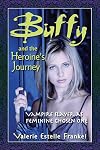
(Full disclosure: I received a free advanced review copy of this book through Library Thing’s Early Reviewer program.)
The Slayer Who Would Be Queen
A newbie Buffy fan like myself, I was super-excited when copies of Valerie Estelle Frankel’s Buffy and the Heroine's Journey: Vampire Slayer as Feminine Chosen One were offered up for review through Library Thing’s Early Reviewer program. At the time I was just finishing up Season Seven of Buffy the Vampire Slayer and picking up Season One show more of the comics, so the timing was perfect – fresh as the material was in my head.
Frankel didn’t discover the show until long after the final episode had aired; but, once she did, she was quick to devour it all: BtVS, Angel, and the comics. As she watched, she also worked on an impromptu, 100-page draft comparing Buffy’s trials and tribulations to the classic hero’s journey, as described by mythologist Joseph Campbell. Eventually her thesis grew into Buffy and the Heroine's Journey.
A “monomyth” that can be found in the great epics of every culture (see, e.g., Hercules, Luke Skywalker, Harry Potter), the Hero’s Journey takes a somewhat predictable path – beginning with the call to adventure and ending with the “freedom to live” – during the course of which the protagonist gains wisdom and self-knowledge and successfully grows into a fully integrated adult. Of course, many adventures are had along the way: the hero battles with (and triumphs over) a Dark Lord (his Shadow) who threatens the world; he meets his Princess, goddess of the forest and embodiment of the earth’s magic; and he battles monsters of all shapes and sizes. Perhaps he’s also accompanied by a trustworthy friend or two, who function as outward reflections of his inner self.
As articulated in a handy chart by Frankel, Campbell’s Hero’s Journey includes:
* World of Common Day
* Call to Adventure
* Refusal of The Call
* Supernatural Aid
* Crossing The First Threshold
* Belly of the Whale
* Road of Trials
* Meeting with The Goddess
* Woman as Temptress
* Atonement with The Father
* Apotheosis
* The Ultimate Boon
* The Refusal of the Return
* The Magic Flight
* Rescue from Within
* Return
* Master of Two Worlds
* Freedom to Live
In contrast, Frankel offers up a different – but oftentimes parallel - outline of The Heroine’s Journey:
* World of Common Day
* Call to Adventure: A Desire to Reconnect with the Feminine
* Refusal of The Call
* The Ruthless Mentor and the Bladeless Talisman
* Crossing the First Threshold: Opening One’s Senses
* Sidekicks, Trials, Adversaries
* Wedding the Animus
* Facing Bluebeard
* Sensitive Man as Completion
* Confronting the Powerless Father
* Descent into Darkness
* Atonement with the Mother
* Apotheosis through Accepting One’s Feminine Side
* Reward: Winning the Family
* Torn Desires
* The Magic Flight
* Reinstating the Family
* Power of Life and Death
* Ascension of the New Mother
As you can see, many of the points on these paths are quite similar, with nearly all of the differences hinging upon the hero’s gender. (Paging Captain Obvious!) For example, while the male hero has daddy issues (the mother being largely absent), the heroine is plagued with mommy problems – and a weak father (and/or father figure), to boot. Whereas the hero will be seduced by a woman (“Woman as Temptress”), the heroine must remain vigilant against intimate partner violence (“Facing Bluebeard”). The hero meets and falls in love with a mysterious princess/goddess who introduces him to the magic of nature, whereas the heroine must wed the animus – her dark, masculine Shadow Self.
Drawing upon the whole of Buffyverse canon – the 1992 film, seven seasons of Buffy, five seasons of Angel, and Seasons One and Eight of the comic – Frankel elucidates the ways in which Buffy’s journey functions as a “perfect example” (I’m paraphrasing) of The Heroine’s Journey. Xander (passionate, practical) and Willow (innocent, intelligent) can be read as aspects of Buffy’s self, manifested externally, which must be nurtured and protected at all costs. Giles is both a manly guardian of knowledge and a (physically) powerless father (figure; Buffy’s actual father is both powerless and largely absent from her life). Maggie Walsh and Glory are Terrible Mothers – destructive forces that Buffy must avoid succumbing to. Whereas Joyce vacillates between a Good Mother and a mother who is at best oblivious to her daughter’s needs, Tara acts as a surrogate Good Mother in the wake of Joyce’s death; after Tara is murdered, Buffy must integrate Tara’s goodness into her own psyche, so that she can care for her little sister/adopted daughter Dawn. As Buffy confronts and defeats increasingly disturbing and powerful opponents – absorbing their darkness into her Self – she matures. So do her weapons: from a common crossbow (which allows to her keep a relatively safe distance from vamps), to a masculine, army-issued rocket launcher, culminating in the ultra-powerful, ultra-ancient scythe, which helps to unleash the power of the feminine so that all women are potential slayers.
A common criticism I’ve seen in previous reviews is that Frankel’s Heroine’s Journey doesn’t differ significantly from Cambell’s Hero’s Journey – or at least not enough to merit a whole new model. Here, I have to agree – although I wonder if my limited knowledge of mythology might be at fault. Perhaps understandably (this is after all a book about Buffy!), Frankel only devotes one chapter to explaining Cambell’s model; unless you have prior knowledge of the model, all you’re left with is a bare bones sketch. Based on my limited understanding, Frankel’s model simply seems like a reflection of Cambell’s in which the gender of the hero (and, likewise, sidekicks, villains, parents, lovers, etc.) is flipped. Even so, it makes for an interesting framework from which to dissect Buffy’s journey.
This brings me to another issue with these models: they limit gender to two distinct polar opposites, thus erasing everyone who doesn’t identify as one or the other. In reality, gender (and sexuality; both models assume heterosexuality) is much more fluid than this. Why have a hero/heroine’s journey? Why not just one journey for everyone, one which recognizes that we all struggle with things like parents, adolescence, romantic relationships, finding one’s place in the world, etc.?
Likewise, many readers take issue with the deeply sexist nature of these models: for example, men are equated with science and rationality, while women are connected to the natural earth and the unexplainable magic found within. While identifying “Mother Nature” as a source of feminine power might seem feminist (yay girl power?), think again. What do we do with the earth: land, water, air? We colonize it. Exploit it. War over its resources. Pollute, waste, consume. Drill, mine, frack. We take and take until there’s nothing left – and then we discard it and move on.
By equating women – and, to a larger extent, nonhuman animals – with nature and the earth, we objectify them; position them as an object – an unsentient “it” – ripe for oppression and exploitation. The earth is not gendered; it’s no more female than it is male. To claim otherwise is to do a disservice to women everywhere.
And as for science and reason being the province of men? Please. Not even worth a rebuttal.
That said, I don’t think the sexism lies with the author (although it’s certainly possible that she believes these things; I don’t claim to know either way!), but with the models themselves. Based on centuries- (even millennia!) old stories, Cambell’s Hero’s Journey is bound to reflect existing gender biases; and, modeled as it is on Campbell’s outline, so is Frankel’s. Still, inasmuch as modern stories are influence by ancient myths and archetypes, these models persist as useful tools with which to examine contemporary pop culture narratives. Joss Whedon himself reports that he studied Cambell’s Hero’s Journey in school.
A rebuttal of the model’s sexist gender assumptions, however brief, would have been nice – but perhaps beyond the scope of this book.
If you can get around the “woman as nature, nature as woman” theme, grating as it is by chapter 13, Buffy and the Heroine's Journey is an engaging and enjoyable read. While it is an academic text, the jargon is kept to a manageable minimum. (If you studied psychology in college, many of the Jungian terms will come flooding back to you. Jungian psychology: while it makes for an intriguing mythological discussion, an analytical psychologist is the last person I’d recommend to Buffy to help treat her depression. After a Freudian psychoanalyst, that is.) Prior experience with mythology and the Hero’s Journey is helpful, but not necessary. On a scale of Ben Bella’s Smart Pop series to The Blackwell Philosophy and Pop Culture Series, I’d rate Buffy and the Heroine's Journey somewhere in the middle in terms of difficulty.
Pro tip: If you haven’t yet read the comics but would like to, you can skip the book’s final chapter without detracting from your understanding of Frankel’s theory.
http://www.easyvegan.info/2012/09/28/buffy-and-the-heroines-journey-by-valerie-e... show less
The Slayer Who Would Be Queen
A newbie Buffy fan like myself, I was super-excited when copies of Valerie Estelle Frankel’s Buffy and the Heroine's Journey: Vampire Slayer as Feminine Chosen One were offered up for review through Library Thing’s Early Reviewer program. At the time I was just finishing up Season Seven of Buffy the Vampire Slayer and picking up Season One show more of the comics, so the timing was perfect – fresh as the material was in my head.
Frankel didn’t discover the show until long after the final episode had aired; but, once she did, she was quick to devour it all: BtVS, Angel, and the comics. As she watched, she also worked on an impromptu, 100-page draft comparing Buffy’s trials and tribulations to the classic hero’s journey, as described by mythologist Joseph Campbell. Eventually her thesis grew into Buffy and the Heroine's Journey.
A “monomyth” that can be found in the great epics of every culture (see, e.g., Hercules, Luke Skywalker, Harry Potter), the Hero’s Journey takes a somewhat predictable path – beginning with the call to adventure and ending with the “freedom to live” – during the course of which the protagonist gains wisdom and self-knowledge and successfully grows into a fully integrated adult. Of course, many adventures are had along the way: the hero battles with (and triumphs over) a Dark Lord (his Shadow) who threatens the world; he meets his Princess, goddess of the forest and embodiment of the earth’s magic; and he battles monsters of all shapes and sizes. Perhaps he’s also accompanied by a trustworthy friend or two, who function as outward reflections of his inner self.
As articulated in a handy chart by Frankel, Campbell’s Hero’s Journey includes:
* World of Common Day
* Call to Adventure
* Refusal of The Call
* Supernatural Aid
* Crossing The First Threshold
* Belly of the Whale
* Road of Trials
* Meeting with The Goddess
* Woman as Temptress
* Atonement with The Father
* Apotheosis
* The Ultimate Boon
* The Refusal of the Return
* The Magic Flight
* Rescue from Within
* Return
* Master of Two Worlds
* Freedom to Live
In contrast, Frankel offers up a different – but oftentimes parallel - outline of The Heroine’s Journey:
* World of Common Day
* Call to Adventure: A Desire to Reconnect with the Feminine
* Refusal of The Call
* The Ruthless Mentor and the Bladeless Talisman
* Crossing the First Threshold: Opening One’s Senses
* Sidekicks, Trials, Adversaries
* Wedding the Animus
* Facing Bluebeard
* Sensitive Man as Completion
* Confronting the Powerless Father
* Descent into Darkness
* Atonement with the Mother
* Apotheosis through Accepting One’s Feminine Side
* Reward: Winning the Family
* Torn Desires
* The Magic Flight
* Reinstating the Family
* Power of Life and Death
* Ascension of the New Mother
As you can see, many of the points on these paths are quite similar, with nearly all of the differences hinging upon the hero’s gender. (Paging Captain Obvious!) For example, while the male hero has daddy issues (the mother being largely absent), the heroine is plagued with mommy problems – and a weak father (and/or father figure), to boot. Whereas the hero will be seduced by a woman (“Woman as Temptress”), the heroine must remain vigilant against intimate partner violence (“Facing Bluebeard”). The hero meets and falls in love with a mysterious princess/goddess who introduces him to the magic of nature, whereas the heroine must wed the animus – her dark, masculine Shadow Self.
Drawing upon the whole of Buffyverse canon – the 1992 film, seven seasons of Buffy, five seasons of Angel, and Seasons One and Eight of the comic – Frankel elucidates the ways in which Buffy’s journey functions as a “perfect example” (I’m paraphrasing) of The Heroine’s Journey. Xander (passionate, practical) and Willow (innocent, intelligent) can be read as aspects of Buffy’s self, manifested externally, which must be nurtured and protected at all costs. Giles is both a manly guardian of knowledge and a (physically) powerless father (figure; Buffy’s actual father is both powerless and largely absent from her life). Maggie Walsh and Glory are Terrible Mothers – destructive forces that Buffy must avoid succumbing to. Whereas Joyce vacillates between a Good Mother and a mother who is at best oblivious to her daughter’s needs, Tara acts as a surrogate Good Mother in the wake of Joyce’s death; after Tara is murdered, Buffy must integrate Tara’s goodness into her own psyche, so that she can care for her little sister/adopted daughter Dawn. As Buffy confronts and defeats increasingly disturbing and powerful opponents – absorbing their darkness into her Self – she matures. So do her weapons: from a common crossbow (which allows to her keep a relatively safe distance from vamps), to a masculine, army-issued rocket launcher, culminating in the ultra-powerful, ultra-ancient scythe, which helps to unleash the power of the feminine so that all women are potential slayers.
A common criticism I’ve seen in previous reviews is that Frankel’s Heroine’s Journey doesn’t differ significantly from Cambell’s Hero’s Journey – or at least not enough to merit a whole new model. Here, I have to agree – although I wonder if my limited knowledge of mythology might be at fault. Perhaps understandably (this is after all a book about Buffy!), Frankel only devotes one chapter to explaining Cambell’s model; unless you have prior knowledge of the model, all you’re left with is a bare bones sketch. Based on my limited understanding, Frankel’s model simply seems like a reflection of Cambell’s in which the gender of the hero (and, likewise, sidekicks, villains, parents, lovers, etc.) is flipped. Even so, it makes for an interesting framework from which to dissect Buffy’s journey.
This brings me to another issue with these models: they limit gender to two distinct polar opposites, thus erasing everyone who doesn’t identify as one or the other. In reality, gender (and sexuality; both models assume heterosexuality) is much more fluid than this. Why have a hero/heroine’s journey? Why not just one journey for everyone, one which recognizes that we all struggle with things like parents, adolescence, romantic relationships, finding one’s place in the world, etc.?
Likewise, many readers take issue with the deeply sexist nature of these models: for example, men are equated with science and rationality, while women are connected to the natural earth and the unexplainable magic found within. While identifying “Mother Nature” as a source of feminine power might seem feminist (yay girl power?), think again. What do we do with the earth: land, water, air? We colonize it. Exploit it. War over its resources. Pollute, waste, consume. Drill, mine, frack. We take and take until there’s nothing left – and then we discard it and move on.
By equating women – and, to a larger extent, nonhuman animals – with nature and the earth, we objectify them; position them as an object – an unsentient “it” – ripe for oppression and exploitation. The earth is not gendered; it’s no more female than it is male. To claim otherwise is to do a disservice to women everywhere.
And as for science and reason being the province of men? Please. Not even worth a rebuttal.
That said, I don’t think the sexism lies with the author (although it’s certainly possible that she believes these things; I don’t claim to know either way!), but with the models themselves. Based on centuries- (even millennia!) old stories, Cambell’s Hero’s Journey is bound to reflect existing gender biases; and, modeled as it is on Campbell’s outline, so is Frankel’s. Still, inasmuch as modern stories are influence by ancient myths and archetypes, these models persist as useful tools with which to examine contemporary pop culture narratives. Joss Whedon himself reports that he studied Cambell’s Hero’s Journey in school.
A rebuttal of the model’s sexist gender assumptions, however brief, would have been nice – but perhaps beyond the scope of this book.
If you can get around the “woman as nature, nature as woman” theme, grating as it is by chapter 13, Buffy and the Heroine's Journey is an engaging and enjoyable read. While it is an academic text, the jargon is kept to a manageable minimum. (If you studied psychology in college, many of the Jungian terms will come flooding back to you. Jungian psychology: while it makes for an intriguing mythological discussion, an analytical psychologist is the last person I’d recommend to Buffy to help treat her depression. After a Freudian psychoanalyst, that is.) Prior experience with mythology and the Hero’s Journey is helpful, but not necessary. On a scale of Ben Bella’s Smart Pop series to The Blackwell Philosophy and Pop Culture Series, I’d rate Buffy and the Heroine's Journey somewhere in the middle in terms of difficulty.
Pro tip: If you haven’t yet read the comics but would like to, you can skip the book’s final chapter without detracting from your understanding of Frankel’s theory.
http://www.easyvegan.info/2012/09/28/buffy-and-the-heroines-journey-by-valerie-e... show less
This review was written for LibraryThing Early Reviewers.Teaching with Harry Potter: Essays on Classroom Wizardry from Elementary School to College by Valerie Estelle Frankel
Something for Everyone!
(Full disclosure: I received a free copy of this book for review at the editor’s invitation.)
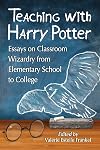
Since the debut of Harry Potter and The Philosopher's Stone in 1997, the Harry Potter franchise has generated a wealth of scholarly research. “Aca-fans” – “those who participate in academic fandom” (page 1) – scrutinize, interrogate, and critique Harry Potter creations both official and unauthorized: from J.K. Rowling’s novels to the film adaptations and show more supporting websites, to fan-made works such as fan and slash fiction – all is fair game. Such discussions often focus on themes as diverse as literature, philosophy, psychology, history, gender studies, and the law. However, Harry Potter’s place in education is a topic that has, until now, been all but neglected – as some of the writers (most notably Elisabeth C. Gumnior, who devotes an entire chapter to the subject) in Teaching with Harry Potter: Essays on Classroom Wizardry from Elementary School to College are quick to point out.
The eighteen authors who contributed to this unique collection come from a variety of backgrounds; they are parents, teachers of middle and high school students, college professors, academics, and fans. Consequently, there’s a little something for everyone here. Common to the essays is a shared enthusiasm for Harry Potter and his ability to help educate the next generation. Composition, literature, creative writing, romance languages, medieval studies, modern history, theology, science: with a little creativity and effort, the lessons found in Harry Potter – especially useful as a “global cultural reference” (page 152) - can be integrated into almost any classroom.
1 – “From Hogwarts Academy to the Hero’s Journey,” Lana A. Whited – The author compares and contrasts her experiences teaching Harry Potter to two very different audiences: 10- to 13-year-old children enrolled in Hogwarts Academy, a week-long summer enrichment class, and college sophomore literature students. An enjoyable start to this anthology, I found myself wishing I was young enough to attend Hogwarts myself, what with its Care of Magical Creatures and Defense of the Dark Arts lessons. The course sometimes even hosts a Snape impersonator in the form of Dr. Powell, a chemistry professor who brews up marshmallows and ice cream! Meanwhile, the older students examine Harry’s growth in the context of Otto Rank’s stages of the hero’s saga and Joseph Campbell’s monomyth of the hero’s journey. The author concludes that there are two ways of “knowing” literature - by the head and by the heart – and you can sometimes achieve the former by beginning with the latter.
2 – “The Nuances of Rule-Breaking,” Tenille Nowak – Some parents might be hesitant to allow their younger children to read Harry Potter, as our hero can frequently be seen breaking the rules without suffering consequences (particularly in the first three books). Nowak provides a guide to help parents and children think critically about disobedience, using a modified Socratic approach and a series of hypothetical questions focusing on rule-breaking and intent.
3 – “Harry Potter and the Child with Autism,” Denise Dwyer D’Errico – In an especially touching essay, D’Errico recounts how Harry Potter has helped her own young son with the challenges of (hyperlexic) autism.
4 – “Strange Apostle: Assessing the Conflict Between Today’s Christianity and Modern Culture,” J. Malcolm Stewart – Stewart paints a brief history of conservative Christian opposition to Harry Potter, comparing its reception to that of The Chronicles of Narnia (particularly the film adaptation of THE LION, THE WITCH AND THE WARDROBE). While both series contain magical and supernatural elements, critics employ a number of flimsy excuses in their celebration of Narnia while simultaneously indicting Harry Potter. A Sunday school teacher, the author argues that this “personal engagement” with Harry Potter is better harnessed than condemned.
5 – “Boy Wizards and Girl Scientists: Rowling’s Contributions to Science Outreach,” Kristine Larsen – Just as Harry Potter has largely been praised for getting boys (and not a few girls!) interested in reading again, so too can the series be used to engage girls in scientific pursuits. While witch Hermione comes immediately to mind, she’s not the only female role model found in the Potterverse: Sinistra, for example, can be used to challenge race and gender stereotypes about science and those who practice it. Larsen offers a number of suggestions for engaging potential students, such as hosting “star parties” at observatories and Harry Potter-themed shows at planetariums, or by showing up to a Harry Potter (or similarly themed) movie opening armed with a telescope so that you can star gaze with fellow movie-goers while waiting in line.
6 – “Two Boy Heroes (and a Sparkly Vampire) Teach the SAT,” Valerie Estelle Frankel – Editor Frankel – who also doubles as a tutor – uses Harry Potter to help foreign-born students master the English language. Rowling employs Latin roots to construct many of the spells found in HP – the same Latin roots that often appear in SAT words. Greek mythology (hello, Percy Jackson!) also comes in handy. Rather than drill her students in the traditional, tedious manner, Frankel employs board games (both store bought and homemade) to make learning fun.
7 – “Fan Fiction, Remix Culture, and the Potter Games,” Jen Scott Curwood – Fan fiction, Curwood argues, demonstrates the role of motivation in literacy development. By their own choosing, like-minded fans meet in “affinity” spaces to collaborate on projects, review each other’s work, and role play. Using Cassie’s experiences writing a choose-your-own-adventure style story for The Potter Games as a case study, the author explores the implications for educators.
8 – “The Battle to Save Australian Teen Spirituality,” Clare Diviny – Diviny investigates Harry Potter as a means for teens to explore spirituality outside of religion. Initially I’d hoped that the author’s definition of “spirituality” would be loose enough to include those of us who don’t profess a faith in some supernatural, unseen power, but still consider ourselves moral people who are connected to something greater than ourselves (in my case, other animals, human and non, and the planet we all call home). Unfortunately, a faith in the un-provable is central to Diviny’s definition of spirituality, leaving little room for heathens such as myself: “The first aspect of spirituality is a set of beliefs that forms our understanding of who we are and helps us make sense of the world around us. […] The second aspect of spirituality is a connection to a divine source which transcends our daily human life. This divine source is often characterized as a god, goddess, deity or in spiritual terms a ‘divine energy.’” (page 99)
By framing declining religiosity as a “crisis” (over which the Australian government sees fit to throw money at, much to my American, separation-of-church-and-state loving horror), irreligion and atheism are positioned as negative, undesirable traits to be avoided. Religiosity is necessarily “good” and, conversely, a lack of such is “bad” – a characterization I don’t at all appreciate. Furthermore, the author seems to view skepticism as a negative trait, rather than a necessary component of critical thinking – an oddity in a book devoted to education, don’t you think?
Additionally, Diviny pits “superficial” (i.e., engaging with technology) and “mystical” (religious rituals) practices against each other, as though the two exist on opposite ends of the same spectrum. Declining religiosity may be correlated with a greater reliance on technology, but correlation isn’t causation. Likewise, pastors can harness the power of technology to their advantage; for example, by engaging in internet outreach, broadcasting sermons, even hosting live events for those who are homebound. And not all technology usage is “superficial”: many people make and sustain meaningful friendships online. One really has little to do with the other.
Last but not least, there’s this gem: “The problem with older sacred texts like The Bible is that they are not believable for many young readers as they are not geared towards winning over a contemporary teen audience.” (page 101) Actually, I think that the “problem” with The Bible is that it purports to be true, while J.K. Rowling readily admits that Harry Potter is a work of pure fantasy. Of course The Bible isn’t “believable” – it’s a work of mythology! I’d scoff at Rowling too, if she built a religion around Harry Potter.
9 – “J.K. Rowling’s Innovative and Authoritative Online Presence,” Savannah Sharp – Rowling’s online presence – most impressively Pottermore, which Sharp praises as a new form of storytelling – gives students an excellent example of classroom collaboration, transplanted to the real/virtual world. Likewise, aspiring writers can through Rowling learn the importance of audience engagement.
10 – “Exploring eNotes.com: A Grounded Theory of Harry’s Place in Language Arts Pedagogy,” James B. Kelley – Employing “grounded theory,” Kelley examines postings about Harry Potter on the educational website eNotes.com. What do teachers have to say when they talk to students about Harry Potter, and what does this mean for scholars?
11 – “Legit Lit: Of Spells and Serious Scholarship,” J. Steve Lee – In a survey of Harry Potter-themed college credit courses, Lee reveals the breadth of HP scholarship. From simple orientation courses to those based in the sciences and humanities, and from Georgetown to Guangzhou, China, Harry Potter has found a seat in classrooms the world over.
12 – “Scribere Paedegogia: The Magical Art of Teaching Composition,” Cynthia K. O’Malley – O’Malley posits that Harry Potter is well-suited for teaching freshman composition for a number of reasons, both mechanical and literary. Harry and friends represent a cast of well-rounded characters to whose journeys freshman can relate; additionally, many of the plot points provide handy entry points to discussing weightier topics, such as race, class, gender, and dis/ability privilege.
13 – “Getting Medieval in the Classroom,” Renee Ward – While not always historically accurate, “the Harry Potter series epitomizes modern medievalism in fantasy literature.” (page 152). As such, the texts can be used to illustrate a number of concepts found in medieval studies: manuscripts, maps, bestiaries, architecture, food, medicine, and magic, to name but a few. Especially interesting is Ward’s observation that the treatment of werewolves and other beast-like creatures by the Ministry of Magic parallels that of lepers during the Middle Ages (and Animagi, ethnic Jews).
14 – “To Grow Up Blake in a Potter World: Teaching Songs of Innocence and Experience,” Whitney E. Jones Francis – Since William Blake is a difficult yet essential part of any senior-level children’s literature course, Francis uses Harry Potter to ease her students into it. With themes that become progressively darker throughout, she views the first and last books in the series as Rowling’s own books of innocence and experience. By tracing Harry’s progress from innocence to experience – and then to Blake’s third state of being, higher/organized experience – Francis is better able to engage her students with Blake’s Songs of Innocence and Experience.
15 – “Casting Lumos on Critical Cultural Studies: Gender, Hegemony and Other Social Stereotypes,” Amanda Firestone – Firestone sees Harry Potter as a way for teachers to find common ground with their students – not just superficially, as fans, but on a deeper level as well. HP can be used as an entry point to discussing constructions of gender and sexuality; for instance, the question of Dumbledore’s sexuality may result in comments rife with stereotypes, leading to an interrogation of masculinity and gender performance. Likewise, educators can introduce the concept of intersectionality (i.e., of the “big five”: gender, race, class, sexuality, and religion) by using examples from the text.
16 – “Introducing English Literature in Pakistan,” Asma Mansoor – Learning “the classics” in English Literary Studies is especially difficult for those who are simultaneously studying English as a second language. Harry Potter, then, offers an accessible bridge between the two. Mansoor explores her use of Harry Potter in teaching English Lit in Pakistan to “develop a foundational understanding of the ingredients that go into making ‘Literature’.” (page 188)
17 – “Portkey to the Scholarly Disciplines,” Elisabeth C. Gumnior – While the body of Harry Potter scholarship is growing rapidly, Gumnior identifies at least one area of neglect: namely, the use of Harry Potter in the classroom, particularly outside of literary studies, either as a teaching device or a topic of study. For those fans looking to beef up their book piles, Gumnior includes a wide survey of academic Harry Potter texts.
18 – “The Queen City Muggles: Town and Gown Go to Hogwarts,” Susan Johnston – Last but not least is Johnston’s “Queen City Muggles.” Named after a local, all-ages convention hosted by the University of Regina in Saskatchewan which was open to faculty, fans, librarians, and local writers alike (free of charge!), the essay captures the excitement and energy ignited by a shared passion for this one piece of pop culture. In the midst of a decline in reading and a corresponding crisis in the humanities, Johnston credits Harry Potter with reigniting a love of reading in young and old alike: “I felt as if I had emerged from my refuge in libraries grown ever more silent to discover that the whole world was a library.” (page 210)
She concludes: “If the humanities are to survive, they must call out in each person such habits of wonder” as those found in Harry Potter and the Queen City Muggles. Among much hand-wringing over whether Harry Potter and similar pop culture “litter” (page 197) can be allowed to share a shelf with true “literature,” Johnston cautions her fellow academics: “We mourned the vanishing culture of books, of the stories that we love, but we forget, as Chesterton says, that the public, too, has books and stories that they love. If we want them to join us, we must first join them.” (page 216)
Teaching with Harry Potter provides a multitude of avenues for doing so. The authors who contributed to this collection describe a number of examples of how they’ve harnessed the power of Harry Potter to invigorate their own classrooms and lesson plans. While they all speak to their own unique experiences, many of the ideas contained within these pages can be adapted for different age levels and subjects – or, if you’re especially ambitious, even another book or series altogether. (May I suggest Philip Pullman’s His Dark Materials? It doesn’t get enough love, imho.) The 44-page appendix includes a number of sample worksheets as well as resources for further reading – and the 11-page bibliography is bound to grow your book pile by a foot, at least.
http://www.easyvegan.info/2013/07/29/teaching-with-harry-potter-edited-by-valeri... show less
(Full disclosure: I received a free copy of this book for review at the editor’s invitation.)
Since the debut of Harry Potter and The Philosopher's Stone in 1997, the Harry Potter franchise has generated a wealth of scholarly research. “Aca-fans” – “those who participate in academic fandom” (page 1) – scrutinize, interrogate, and critique Harry Potter creations both official and unauthorized: from J.K. Rowling’s novels to the film adaptations and show more supporting websites, to fan-made works such as fan and slash fiction – all is fair game. Such discussions often focus on themes as diverse as literature, philosophy, psychology, history, gender studies, and the law. However, Harry Potter’s place in education is a topic that has, until now, been all but neglected – as some of the writers (most notably Elisabeth C. Gumnior, who devotes an entire chapter to the subject) in Teaching with Harry Potter: Essays on Classroom Wizardry from Elementary School to College are quick to point out.
The eighteen authors who contributed to this unique collection come from a variety of backgrounds; they are parents, teachers of middle and high school students, college professors, academics, and fans. Consequently, there’s a little something for everyone here. Common to the essays is a shared enthusiasm for Harry Potter and his ability to help educate the next generation. Composition, literature, creative writing, romance languages, medieval studies, modern history, theology, science: with a little creativity and effort, the lessons found in Harry Potter – especially useful as a “global cultural reference” (page 152) - can be integrated into almost any classroom.
1 – “From Hogwarts Academy to the Hero’s Journey,” Lana A. Whited – The author compares and contrasts her experiences teaching Harry Potter to two very different audiences: 10- to 13-year-old children enrolled in Hogwarts Academy, a week-long summer enrichment class, and college sophomore literature students. An enjoyable start to this anthology, I found myself wishing I was young enough to attend Hogwarts myself, what with its Care of Magical Creatures and Defense of the Dark Arts lessons. The course sometimes even hosts a Snape impersonator in the form of Dr. Powell, a chemistry professor who brews up marshmallows and ice cream! Meanwhile, the older students examine Harry’s growth in the context of Otto Rank’s stages of the hero’s saga and Joseph Campbell’s monomyth of the hero’s journey. The author concludes that there are two ways of “knowing” literature - by the head and by the heart – and you can sometimes achieve the former by beginning with the latter.
2 – “The Nuances of Rule-Breaking,” Tenille Nowak – Some parents might be hesitant to allow their younger children to read Harry Potter, as our hero can frequently be seen breaking the rules without suffering consequences (particularly in the first three books). Nowak provides a guide to help parents and children think critically about disobedience, using a modified Socratic approach and a series of hypothetical questions focusing on rule-breaking and intent.
3 – “Harry Potter and the Child with Autism,” Denise Dwyer D’Errico – In an especially touching essay, D’Errico recounts how Harry Potter has helped her own young son with the challenges of (hyperlexic) autism.
4 – “Strange Apostle: Assessing the Conflict Between Today’s Christianity and Modern Culture,” J. Malcolm Stewart – Stewart paints a brief history of conservative Christian opposition to Harry Potter, comparing its reception to that of The Chronicles of Narnia (particularly the film adaptation of THE LION, THE WITCH AND THE WARDROBE). While both series contain magical and supernatural elements, critics employ a number of flimsy excuses in their celebration of Narnia while simultaneously indicting Harry Potter. A Sunday school teacher, the author argues that this “personal engagement” with Harry Potter is better harnessed than condemned.
5 – “Boy Wizards and Girl Scientists: Rowling’s Contributions to Science Outreach,” Kristine Larsen – Just as Harry Potter has largely been praised for getting boys (and not a few girls!) interested in reading again, so too can the series be used to engage girls in scientific pursuits. While witch Hermione comes immediately to mind, she’s not the only female role model found in the Potterverse: Sinistra, for example, can be used to challenge race and gender stereotypes about science and those who practice it. Larsen offers a number of suggestions for engaging potential students, such as hosting “star parties” at observatories and Harry Potter-themed shows at planetariums, or by showing up to a Harry Potter (or similarly themed) movie opening armed with a telescope so that you can star gaze with fellow movie-goers while waiting in line.
6 – “Two Boy Heroes (and a Sparkly Vampire) Teach the SAT,” Valerie Estelle Frankel – Editor Frankel – who also doubles as a tutor – uses Harry Potter to help foreign-born students master the English language. Rowling employs Latin roots to construct many of the spells found in HP – the same Latin roots that often appear in SAT words. Greek mythology (hello, Percy Jackson!) also comes in handy. Rather than drill her students in the traditional, tedious manner, Frankel employs board games (both store bought and homemade) to make learning fun.
7 – “Fan Fiction, Remix Culture, and the Potter Games,” Jen Scott Curwood – Fan fiction, Curwood argues, demonstrates the role of motivation in literacy development. By their own choosing, like-minded fans meet in “affinity” spaces to collaborate on projects, review each other’s work, and role play. Using Cassie’s experiences writing a choose-your-own-adventure style story for The Potter Games as a case study, the author explores the implications for educators.
8 – “The Battle to Save Australian Teen Spirituality,” Clare Diviny – Diviny investigates Harry Potter as a means for teens to explore spirituality outside of religion. Initially I’d hoped that the author’s definition of “spirituality” would be loose enough to include those of us who don’t profess a faith in some supernatural, unseen power, but still consider ourselves moral people who are connected to something greater than ourselves (in my case, other animals, human and non, and the planet we all call home). Unfortunately, a faith in the un-provable is central to Diviny’s definition of spirituality, leaving little room for heathens such as myself: “The first aspect of spirituality is a set of beliefs that forms our understanding of who we are and helps us make sense of the world around us. […] The second aspect of spirituality is a connection to a divine source which transcends our daily human life. This divine source is often characterized as a god, goddess, deity or in spiritual terms a ‘divine energy.’” (page 99)
By framing declining religiosity as a “crisis” (over which the Australian government sees fit to throw money at, much to my American, separation-of-church-and-state loving horror), irreligion and atheism are positioned as negative, undesirable traits to be avoided. Religiosity is necessarily “good” and, conversely, a lack of such is “bad” – a characterization I don’t at all appreciate. Furthermore, the author seems to view skepticism as a negative trait, rather than a necessary component of critical thinking – an oddity in a book devoted to education, don’t you think?
Additionally, Diviny pits “superficial” (i.e., engaging with technology) and “mystical” (religious rituals) practices against each other, as though the two exist on opposite ends of the same spectrum. Declining religiosity may be correlated with a greater reliance on technology, but correlation isn’t causation. Likewise, pastors can harness the power of technology to their advantage; for example, by engaging in internet outreach, broadcasting sermons, even hosting live events for those who are homebound. And not all technology usage is “superficial”: many people make and sustain meaningful friendships online. One really has little to do with the other.
Last but not least, there’s this gem: “The problem with older sacred texts like The Bible is that they are not believable for many young readers as they are not geared towards winning over a contemporary teen audience.” (page 101) Actually, I think that the “problem” with The Bible is that it purports to be true, while J.K. Rowling readily admits that Harry Potter is a work of pure fantasy. Of course The Bible isn’t “believable” – it’s a work of mythology! I’d scoff at Rowling too, if she built a religion around Harry Potter.
9 – “J.K. Rowling’s Innovative and Authoritative Online Presence,” Savannah Sharp – Rowling’s online presence – most impressively Pottermore, which Sharp praises as a new form of storytelling – gives students an excellent example of classroom collaboration, transplanted to the real/virtual world. Likewise, aspiring writers can through Rowling learn the importance of audience engagement.
10 – “Exploring eNotes.com: A Grounded Theory of Harry’s Place in Language Arts Pedagogy,” James B. Kelley – Employing “grounded theory,” Kelley examines postings about Harry Potter on the educational website eNotes.com. What do teachers have to say when they talk to students about Harry Potter, and what does this mean for scholars?
11 – “Legit Lit: Of Spells and Serious Scholarship,” J. Steve Lee – In a survey of Harry Potter-themed college credit courses, Lee reveals the breadth of HP scholarship. From simple orientation courses to those based in the sciences and humanities, and from Georgetown to Guangzhou, China, Harry Potter has found a seat in classrooms the world over.
12 – “Scribere Paedegogia: The Magical Art of Teaching Composition,” Cynthia K. O’Malley – O’Malley posits that Harry Potter is well-suited for teaching freshman composition for a number of reasons, both mechanical and literary. Harry and friends represent a cast of well-rounded characters to whose journeys freshman can relate; additionally, many of the plot points provide handy entry points to discussing weightier topics, such as race, class, gender, and dis/ability privilege.
13 – “Getting Medieval in the Classroom,” Renee Ward – While not always historically accurate, “the Harry Potter series epitomizes modern medievalism in fantasy literature.” (page 152). As such, the texts can be used to illustrate a number of concepts found in medieval studies: manuscripts, maps, bestiaries, architecture, food, medicine, and magic, to name but a few. Especially interesting is Ward’s observation that the treatment of werewolves and other beast-like creatures by the Ministry of Magic parallels that of lepers during the Middle Ages (and Animagi, ethnic Jews).
14 – “To Grow Up Blake in a Potter World: Teaching Songs of Innocence and Experience,” Whitney E. Jones Francis – Since William Blake is a difficult yet essential part of any senior-level children’s literature course, Francis uses Harry Potter to ease her students into it. With themes that become progressively darker throughout, she views the first and last books in the series as Rowling’s own books of innocence and experience. By tracing Harry’s progress from innocence to experience – and then to Blake’s third state of being, higher/organized experience – Francis is better able to engage her students with Blake’s Songs of Innocence and Experience.
15 – “Casting Lumos on Critical Cultural Studies: Gender, Hegemony and Other Social Stereotypes,” Amanda Firestone – Firestone sees Harry Potter as a way for teachers to find common ground with their students – not just superficially, as fans, but on a deeper level as well. HP can be used as an entry point to discussing constructions of gender and sexuality; for instance, the question of Dumbledore’s sexuality may result in comments rife with stereotypes, leading to an interrogation of masculinity and gender performance. Likewise, educators can introduce the concept of intersectionality (i.e., of the “big five”: gender, race, class, sexuality, and religion) by using examples from the text.
16 – “Introducing English Literature in Pakistan,” Asma Mansoor – Learning “the classics” in English Literary Studies is especially difficult for those who are simultaneously studying English as a second language. Harry Potter, then, offers an accessible bridge between the two. Mansoor explores her use of Harry Potter in teaching English Lit in Pakistan to “develop a foundational understanding of the ingredients that go into making ‘Literature’.” (page 188)
17 – “Portkey to the Scholarly Disciplines,” Elisabeth C. Gumnior – While the body of Harry Potter scholarship is growing rapidly, Gumnior identifies at least one area of neglect: namely, the use of Harry Potter in the classroom, particularly outside of literary studies, either as a teaching device or a topic of study. For those fans looking to beef up their book piles, Gumnior includes a wide survey of academic Harry Potter texts.
18 – “The Queen City Muggles: Town and Gown Go to Hogwarts,” Susan Johnston – Last but not least is Johnston’s “Queen City Muggles.” Named after a local, all-ages convention hosted by the University of Regina in Saskatchewan which was open to faculty, fans, librarians, and local writers alike (free of charge!), the essay captures the excitement and energy ignited by a shared passion for this one piece of pop culture. In the midst of a decline in reading and a corresponding crisis in the humanities, Johnston credits Harry Potter with reigniting a love of reading in young and old alike: “I felt as if I had emerged from my refuge in libraries grown ever more silent to discover that the whole world was a library.” (page 210)
She concludes: “If the humanities are to survive, they must call out in each person such habits of wonder” as those found in Harry Potter and the Queen City Muggles. Among much hand-wringing over whether Harry Potter and similar pop culture “litter” (page 197) can be allowed to share a shelf with true “literature,” Johnston cautions her fellow academics: “We mourned the vanishing culture of books, of the stories that we love, but we forget, as Chesterton says, that the public, too, has books and stories that they love. If we want them to join us, we must first join them.” (page 216)
Teaching with Harry Potter provides a multitude of avenues for doing so. The authors who contributed to this collection describe a number of examples of how they’ve harnessed the power of Harry Potter to invigorate their own classrooms and lesson plans. While they all speak to their own unique experiences, many of the ideas contained within these pages can be adapted for different age levels and subjects – or, if you’re especially ambitious, even another book or series altogether. (May I suggest Philip Pullman’s His Dark Materials? It doesn’t get enough love, imho.) The 44-page appendix includes a number of sample worksheets as well as resources for further reading – and the 11-page bibliography is bound to grow your book pile by a foot, at least.
http://www.easyvegan.info/2013/07/29/teaching-with-harry-potter-edited-by-valeri... show less
Lists
Awards


You May Also Like


Associated Authors
Statistics
- Works
- 72
- Also by
- 3
- Members
- 719
- Popularity
- #35,294
- Rating
- 3.7
- Reviews
- 69
- ISBNs
- 110
- Favorited
- 1

