
Charles Taliaferro
Author of A Companion to Philosophy of Religion
About the Author
Charles Taliaferro is Professor of Philosophy at St. Olaf College.
Series
Works by Charles Taliaferro
The Cambridge Companion to Christian Philosophical Theology (2009) — Editor; Contributor — 47 copies
Evidence and Faith: Philosophy and Religion since the Seventeenth Century (2005) 31 copies, 1 review
The Ashgate Research Companion to Theological Anthropology (Ashgate Research Companions) (2015) — Editor — 22 copies
Does The Idea Of God Make Sense? : Examining the Coherence of the Divine Attributes (2002) 15 copies
Associated Works
Alice in Wonderland and Philosophy: Curiouser and Curiouser (2010) — Contributor — 250 copies, 19 reviews
The Hobbit and Philosophy: For When You've Lost Your Dwarves, Your Wizard, and Your Way (2012) — Contributor — 151 copies, 2 reviews
The Believing Primate: Scientific, Philosophical, and Theological Reflections on the Origin of Religion (2009) — Contributor — 45 copies
Cannabis - Philosophy for Everyone: What Were We Just Talking About? (2010) — Contributor — 34 copies, 1 review
The Soul Hypothesis: Investigations into the Existence of the Soul (2010) — Contributor — 32 copies, 1 review
Tagged
Common Knowledge
- Gender
- male
- Organizations
- St. Olaf College
Members
Reviews
Evidence and Faith: Philosophy and Religion since the Seventeenth Century (The Evolution of Modern Philosophy) by Charles Taliaferro
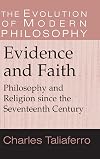
This book was an excellent, excellent survey of modern philosophy of religion, viewed with a focus toward the way philosophers have dealt with the relationship between faith and reason, but of course offering a nuanced, full-orbed picture of the philosophers it covers. It deals with all the big names and plenty of 'small names', too, starting with the Cambridge Platonists and working up to the present day. It offers coverage of thinkers from a wide variety of philosophical approaches, so it show more isn't just limited to Continental thought as so much writing is; Taliaferro is obviously quite conversant with schools of thought so different that they might as well be completely separate fields. show less
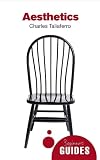
This beginner’s guide on Aesthetics by Charles Taliaferro is not only for beginners but also for all artists, writers, musician and students of philosophy interested in art and aesthetics. Why? Because the wealth of ideas, theories, examples and questions presented could keep anybody going, irrespective of their background and experience, for years and years. I say this having myself dedicated much of forty-five years to the arts, literature and the study of philosophy.
Indeed, I would go show more further – I’ve read a number of intro texts on aesthetics and judge Taliaferro’s book the very best one I’ve come across. Very clear; very accessible. As a way of providing a sample of what a reader will find, I have listed some of the philosophers and artists/artworks examined along with the types of questions posed from each of the six chapters:
1 – WHAT IS BEAUTY?
Plato and Aristotle’s idea of beauty - Homer’s Iliad - Confucius and his philosophy - John Milton’s Paradise Lost - David Hume’s ideas about taste - Iris Murdock’s thinking on the return to beauty as a prime value
What do you consider beautiful and how does this beauty become part of your life?
Is beauty by its very nature linked with goodness?
Do your friends and family take on a special beauty because you love them?
Is there anything having a higher value than beauty, things like glory or victory or moral rightness?
2 – WHAT IS A WORK OF ART?
Duchamp’s Fountain (an upside down urinal) - Picasso’s Guernica – Georg Wilhelm Friedrich Hegel - Leo Tolstoy – R. G. Collingwood – Arthur Danto
Who gets to choose or judge what’s a work of art?
Must a work of art contain an element of beauty?
What place does an artist’s expression and feeling have in creating a work of art?
What does it mean to have an aesthetic experience?
3 – ART AND MEANING
Monroe Beardsley - Dostoevsky’s The Brothers Karamazov - Lord Shiva statue – Immanuel Kant – Jacque Derrida
Does the intent of an author or artist count in the way we consider the meaning of their creation?
How does the meaning of a work change over time?
How important is the context in which we experience a work of art?
Does a work of art have an objective meaning or is meaning entirely individual and subjective?
4 – WHAT MAKES ART GOOD?
Virginia Woolf’s To the Lighthouse - C.S. Lewis - Coppola’s Apocalypse Now - Riefenstahl’s Triumph of the Will - Indian aesthetician B.N. Goswami - Edmond Burke
Is there a definite set of criteria in determining what makes art good?
How does one define creativity and imagination?
What is meant by ‘the sublime’?
What moral obligations does an author or artist have to their community and society?
5 – THE LOCATION, OWNERSHIP AND DANGERS OF THE ARTWORK
Jerrold Levinson - Robert Mapplethorpe’s photographs - Michelangelo’s David -Daniel Shapiro -André Malraux
Should modern artists have the right to borrow liberally from traditional and religious cultures?
What roll does censorship have in relation to art/writing/films/performance?
What is the difference in our experiencing a reproduction as opposed to the original?
Should we be able to copy music freely via the internet?
6 – CROSS-CULTURAL AESTHETICS
Shikibu’s The Tale of Genji - Liu Xie’s The Literary Mind and the Carving of Dragons (a highly regarded Chinese aesthetics text) - Japanese poets Saigyō Hōshi and Matsuo Bashō – Zen Gardens and Zen tea ceremonies
What links are there between aesthetics and the harmony of nature?
How familiar must we be with the artist’s culture to properly view the work of art?
What can we learn from Japanese aesthetic and the value placed on spontaneity and sincerity in works of art?
What is unique about a Zen garden? show less
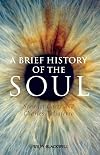
This was a clear and thorough description of the history of the philosophical arguments for and against the existence of a “soul”, from the Greeks to the present day. It is easy to forget that this is a historical overview and not a single argument. So, after careful reading from beginning to end, where the authors first mention “the Big Bang”, I was upset to realize that after all this thinking, reasoning, and discussion, it all boils down to whether you believe the Big Bang was a show more purely natural event or a purposeful act of God. Although the last chapter mentions modern day thinking, I’ll need to find something more in depth on the current state of the arguments in order to write my sequel to Perturbations Of The Reality Field. show less
This beginner’s guide on Aesthetics by Charles Taliaferro is not only for beginners but also for all artists, writers, musician and students of philosophy interested in art and aesthetics. Why? Because the wealth of ideas, theories, examples and questions presented could keep anybody going, irrespective of their background and experience, for years and years. I say this having myself dedicated much of forty-five years to the arts, literature and the study of philosophy.
Indeed, I would go show more further – I’ve read a number of intro texts on aesthetics and judge Taliaferro’s book the very best one I’ve come across. Very clear; very accessible. As a way of providing a sample of what a reader will find, I have listed some of the philosophers and artists/artworks examined along with the types of questions posed from each of the six chapters:
1 – WHAT IS BEAUTY?
Plato and Aristotle’s idea of beauty - Homer’s Iliad - Confucius and his philosophy - John Milton’s Paradise Lost - David Hume’s ideas about taste - Iris Murdock’s thinking on the return to beauty as a prime value
What do you consider beautiful and how does this beauty become part of your life?
Is beauty by its very nature linked with goodness?
Do your friends and family take on a special beauty because you love them?
Is there anything having a higher value than beauty, things like glory or victory or moral rightness?
2 – WHAT IS A WORK OF ART?
Duchamp’s Fountain (an upside down urinal) - Picasso’s Guernica – Georg Wilhelm Friedrich Hegel - Leo Tolstoy – R. G. Collingwood – Arthur Danto
Who gets to choose or judge what’s a work of art?
Must a work of art contain an element of beauty?
What place does an artist’s expression and feeling have in creating a work of art?
What does it mean to have an aesthetic experience?
3 – ART AND MEANING
Monroe Beardsley - Dostoevsky’s The Brothers Karamazov - Lord Shiva statue – Immanuel Kant – Jacque Derrida
Does the intent of an author or artist count in the way we consider the meaning of their creation?
How does the meaning of a work change over time?
How important is the context in which we experience a work of art?
Does a work of art have an objective meaning or is meaning entirely individual and subjective?
4 – WHAT MAKES ART GOOD?
Virginia Woolf’s To the Lighthouse - C.S. Lewis - Coppola’s Apocalypse Now - Riefenstahl’s Triumph of the Will - Indian aesthetician B.N. Goswami - Edmond Burke
Is there a definite set of criteria in determining what makes art good?
How does one define creativity and imagination?
What is meant by ‘the sublime’?
What moral obligations does an author or artist have to their community and society?
5 – THE LOCATION, OWNERSHIP AND DANGERS OF THE ARTWORK
Jerrold Levinson - Robert Mapplethorpe’s photographs - Michelangelo’s David -Daniel Shapiro -André Malraux
Should modern artists have the right to borrow liberally from traditional and religious cultures?
What roll does censorship have in relation to art/writing/films/performance?
What is the difference in our experiencing a reproduction as opposed to the original?
Should we be able to copy music freely via the internet?
6 – CROSS-CULTURAL AESTHETICS
Shikibu’s The Tale of Genji - Liu Xie’s The Literary Mind and the Carving of Dragons (a highly regarded Chinese aesthetics text) - Japanese poets Saigyō Hōshi and Matsuo Bashō – Zen Gardens and Zen tea ceremonies
What links are there between aesthetics and the harmony of nature?
How familiar must we be with the artist’s culture to properly view the work of art?
What can we learn from Japanese aesthetic and the value placed on spontaneity and sincerity in works of art?
What is unique about a Zen garden? show less
Awards

You May Also Like


Associated Authors
Statistics
- Works
- 26
- Also by
- 17
- Members
- 822
- Popularity
- #31,033
- Rating
- 3.9
- Reviews
- 5
- ISBNs
- 102
- Languages
- 1