
Preston M. Sprinkle
Author of Erasing Hell: What God Said About Eternity, and the Things We've Made Up
About the Author
Preston Sprinkle (PhD) is an international speaker and a New York Times bestselling author who has written a dozen books, including Embodied: Transgender Identities, the Church, and What the Bible Has to Say and People to Be Loved: Why Homosexuality Is Not Just an Issue. Preston currently serves as show more the president of the Center for Faith, Sexuality Gender, an organization that equips Christians to engage questions about faith, sexuality, and gender with theological faithfulness and courageous love. Preston also hosts the popular podcast Theology in the Raw and posts regularly on his YouTube channel Preston Sprinkle. show less
Works by Preston M. Sprinkle
Erasing Hell: What God Said About Eternity, and the Things We've Made Up (2011) 1,530 copies, 23 reviews
Embodied: Transgender Identities, the Church, and What the Bible Has to Say (2021) 224 copies, 1 review
The Faith of Jesus Christ: Exegetical, Biblical, and Theological Studies (2009) — Editor; Contributor — 124 copies, 2 reviews
Living in a Gray World: A Christian Teen’s Guide to Understanding Homosexuality (2015) 83 copies, 1 review
Paul and Judaism Revisited: A Study of Divine and Human Agency in Salvation (2013) 69 copies, 1 review
Does the Bible Support Same-Sex Marriage?: 21 Conversations from a Historically Christian View (2023) — Author — 51 copies
From Genesis to Junia: An Honest Search for What the Bible Really Says About Women in Leadership (2026) 41 copies
Grace/Truth 2.0: Five More Conversations Every Thoughtful Christian Should Have About Faith, Sexuality & Gender (2018) 17 copies
Associated Works
This World and the World to Come: Soteriology in Early Judaism (The Library of Second Temple Studies) (2011) — Contributor — 13 copies
Tagged
Common Knowledge
There is no Common Knowledge data for this author yet. You can help.
Members
Reviews
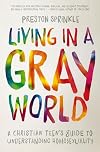
In Sprinkle's short and to-the-point book for teenagers, he explains his views on homosexuality - suggesting that although homosexual sex is a sin, Christians should show love and acceptance rather than hate, disgust, and venom. In a conversational format, Sprinkle educates the readers on the differences between being attracted to people of the same gender (homosexuality - which is not a sin in itself) and actually acting on those desires (which, according to his interpretation of certain show more Bible verses, is a sin). He also educates the readers on the nature of transgender and transsexualism.
Throughout his discussion, he asserts that although Christians should hate sin, they should not be the ones to cast stones. He points out that name-calling, or even incautious unaccepting statements, can cause great pain in a confused and vulnerable teenager - it can lead to self harm and suicide. The behavior of the Christian adults around Sprinkle's readers might show disgust, but this hatred is not becoming of a Christian and is just as sinful as the sin they are judging. Sprinkle calls his readers to love without judgement. He points out that sinners more easily change their sinful behavior if they are gently called to the church by acceptance and love. Sprinkle also addresses homosexual and transgender teens themselves - urging them to build a support network of loving and accepting people, hopefully Christians. He even provides his own contact information in case the teen can't find someone understanding to talk to.
At the end of his book, Sprinkle provides an appendix with Bible verses and discusses why these verses show that homosexual sex is a sin.
Sprinkle suggests that this book is aimed towards young teens through early twenties, though personally I feel the book was a bit to "young" for even older teens (unless they have lived a very "sheltered" life in the comfort of only a society of people with similar beliefs). Sprinkle has another book, People to be Loved, that might be more appropriate for older teens and adults, though I haven't read it.
All-in-all, I loved the message of acceptance throughout Sprinkle's book. As a person who works in a suicide hotline for teenagers, I know that there are a lot of teens out there who are just realizing they have homosexual desires. These teens can be confused, scared, and self-loathing. The reason they are self-loathing is often because of the rancor about homosexuality that they have been exposed to through a supposedly "Christian" living. But in my opinion, and apparently Sprinkle's, it is more sinful to hate and judge than it is for a person to feel something that he can not control and did not choose. Next time I deal with such a teenager I will suggest this book as a way to know that he is loved. show less
Throughout his discussion, he asserts that although Christians should hate sin, they should not be the ones to cast stones. He points out that name-calling, or even incautious unaccepting statements, can cause great pain in a confused and vulnerable teenager - it can lead to self harm and suicide. The behavior of the Christian adults around Sprinkle's readers might show disgust, but this hatred is not becoming of a Christian and is just as sinful as the sin they are judging. Sprinkle calls his readers to love without judgement. He points out that sinners more easily change their sinful behavior if they are gently called to the church by acceptance and love. Sprinkle also addresses homosexual and transgender teens themselves - urging them to build a support network of loving and accepting people, hopefully Christians. He even provides his own contact information in case the teen can't find someone understanding to talk to.
At the end of his book, Sprinkle provides an appendix with Bible verses and discusses why these verses show that homosexual sex is a sin.
Sprinkle suggests that this book is aimed towards young teens through early twenties, though personally I feel the book was a bit to "young" for even older teens (unless they have lived a very "sheltered" life in the comfort of only a society of people with similar beliefs). Sprinkle has another book, People to be Loved, that might be more appropriate for older teens and adults, though I haven't read it.
All-in-all, I loved the message of acceptance throughout Sprinkle's book. As a person who works in a suicide hotline for teenagers, I know that there are a lot of teens out there who are just realizing they have homosexual desires. These teens can be confused, scared, and self-loathing. The reason they are self-loathing is often because of the rancor about homosexuality that they have been exposed to through a supposedly "Christian" living. But in my opinion, and apparently Sprinkle's, it is more sinful to hate and judge than it is for a person to feel something that he can not control and did not choose. Next time I deal with such a teenager I will suggest this book as a way to know that he is loved. show less
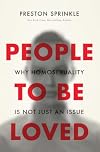
One of the better books I've read, not just about homosexuality, but period. It's remarkable how well Preston balances scholarship and empathy, covering both fronts extremely well and bringing them together in one powerful conversation. His ability to listen to and challenge "both sides" is invaluable.
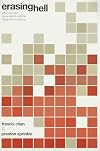
I love Francis Chan's writing style. I find him to be equal parts honest, academic, compassionate, and challenging. I don't always agree with where he lands on issues, but his writing style is sufficiently clear so that I can trace how he landed at his position.
Erasing Hell, in many ways, is a response to Rob Bell's popular (and heretical) book Love Wins, in which Bell departs from the historically Christian position on eternal damnation of the lost. This book interacts with Bell's larger show more arguments. In the first three chapters, Chan and Sprinkle cite Bell 14 times.
There is much to commend in Erasing Hell. It is thoroughly biblical, pastoral in tone, and culturally sensitive. Chapter 6 was perhaps my favorite chapter. Chan and Sprinkle bite off Romans 9, seeking to understand a God who sends people to hell. They write, "[W]e must come to a place where we can let God be God. We need to surrender our perceived right to determine what is just and humbly recognize that God alone gets to decide how He is going to deal with people" (131). The authors want us to see a big, biblical view of God. We need to stop crawfishing, and let God defend himself. "Like the nervous kid who tries to keep his friends from seeing his drunken father, I have tried to hide God at times. Who do I think I am? The truth is, God is perfect and right in all that He does. I am a fool for thinking otherwise. He does not need nor want me to 'cover' for Him. There's nothing to be covered. Everything about Him and all He does is perfect" (133). Amen, brothers!
As I mentioned earlier, I don't always agree with where Chan and Sprinkle land. They almost seem to embrace annihilationism. But, as I mentioned earlier, I can see how they arrive at their position. They even do so by examining Scripture. They write, "The debate about hell's duration is much more complex than I first assumed. While I lean heavily on the side that says it is everlasting, I am not ready to claim that with complete certainty" (86). Furthermore, they opt on the side that says the fire in hell is metaphorical, a position that I find unnecessary. "Fire is used metaphorically thought Scripture, and I agree with the host of evangelical scholars above that fire is probably not to be taken literally when it's used to describe hell" (154).
Erasing Hell is a book that evangelicals need to read. Doing so will help us stop apologizing for God's retributive actions. Our culture denies the existence of hell, not simply because it doesn't like the idea, but because it refusing to acknowledge God's sovereign rule and reign over his creation. Chan and Sprinkle help guide the discussion back to where it needs to be - the authority of Scripture. show less
Erasing Hell, in many ways, is a response to Rob Bell's popular (and heretical) book Love Wins, in which Bell departs from the historically Christian position on eternal damnation of the lost. This book interacts with Bell's larger show more arguments. In the first three chapters, Chan and Sprinkle cite Bell 14 times.
There is much to commend in Erasing Hell. It is thoroughly biblical, pastoral in tone, and culturally sensitive. Chapter 6 was perhaps my favorite chapter. Chan and Sprinkle bite off Romans 9, seeking to understand a God who sends people to hell. They write, "[W]e must come to a place where we can let God be God. We need to surrender our perceived right to determine what is just and humbly recognize that God alone gets to decide how He is going to deal with people" (131). The authors want us to see a big, biblical view of God. We need to stop crawfishing, and let God defend himself. "Like the nervous kid who tries to keep his friends from seeing his drunken father, I have tried to hide God at times. Who do I think I am? The truth is, God is perfect and right in all that He does. I am a fool for thinking otherwise. He does not need nor want me to 'cover' for Him. There's nothing to be covered. Everything about Him and all He does is perfect" (133). Amen, brothers!
As I mentioned earlier, I don't always agree with where Chan and Sprinkle land. They almost seem to embrace annihilationism. But, as I mentioned earlier, I can see how they arrive at their position. They even do so by examining Scripture. They write, "The debate about hell's duration is much more complex than I first assumed. While I lean heavily on the side that says it is everlasting, I am not ready to claim that with complete certainty" (86). Furthermore, they opt on the side that says the fire in hell is metaphorical, a position that I find unnecessary. "Fire is used metaphorically thought Scripture, and I agree with the host of evangelical scholars above that fire is probably not to be taken literally when it's used to describe hell" (154).
Erasing Hell is a book that evangelicals need to read. Doing so will help us stop apologizing for God's retributive actions. Our culture denies the existence of hell, not simply because it doesn't like the idea, but because it refusing to acknowledge God's sovereign rule and reign over his creation. Chan and Sprinkle help guide the discussion back to where it needs to be - the authority of Scripture. show less
I liked this book, and I'd probably give it more like 3.5 stars. Personally, I read it in conversation with Edward Fudge, but Chan and Sprinkle of course had a broader scope. In the theological chapters, they spent more time pushing back against Rob Bell's brand of universalism, and they actually gave annihilationism it's due on several points. At the end of the day, they landed on eternal conscious torment, held up primarily by "eternal punishment" in "eternal fire" in Matthew 25, along show more with the texts in Revelation 14 and 20. I do think they made fair points, though I also believe Fudge answers those adequately. What Chan does best, however, comes in the latter chapters, as he presses us to realize the personal impacts of hell. He stresses the sovereignty of God and the need to bend the knee to whatever He decrees. It was a much needed reminder to not leave this study on an academic shelf. show less
You May Also Like


Associated Authors
Statistics
- Works
- 24
- Also by
- 1
- Members
- 2,893
- Popularity
- #8,858
- Rating
- 4.1
- Reviews
- 35
- ISBNs
- 46
- Languages
- 5