
Annette Hess
Author of The German House
Works by Annette Hess
Tagged
Common Knowledge
- Gender
- female
Members
Reviews
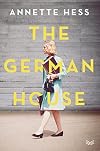
It is 1963, and in Frankfurt twenty-four-year-old Eva Bruhn is living at home with her parents, her elder sister Annegret, a paediatric nurse and her much younger brother, Stefan. Home is an apartment above The German House, a restaurant owned and run by her parents. Eva has few memories of WWII and her home city, which was left so badly bomb-damaged at the end of the war, is now prospering. Her dreams are focused on wishing for the day when her rich boyfriend, Jürgen Schoormann, will ask show more her father’s permission to propose to her, thus enabling her to move away from her family to start married life.
When the story opens she’s working as a Polish language translator for an agency, dealing mainly with contracts and business disputes. However, her rather mundane life, along with all her plans, are turned upside down when Canadian investigator, David Miller, approaches her to temporarily stand in as a translator in a war crimes trial. However, the first time she attempts to translate what a witness is saying she struggles to find the right words to describe what she is hearing and makes a number of mistakes which change the essential meaning of what he has said, so David has serious doubts about her competence and is reluctant to employ her again. However, as there is no alternative interpreter available, he reluctantly does so, but she is told that she must quickly learn the appropriate vocabulary. When she hears that this will include learning “every conceivable word for how to kill a person”, she gets her first chilling insight into the nature of the testaments she will hear during the trial. Neither her parents nor Jürgen want her to accept the position but, once she has realised the importance of what must be brought to light, she refuses to let them persuade her to turn the job down. She soon realises that everything she hears will challenge all her previously held beliefs and will change her life completely.
At the first Frankfurt Auschwitz trial, which began in December 1963, twenty-two defendants were charged, under German law, for crimes committed when they were SS officers at the camp. It is against this background that the story is set, following the naïve Eva as she gradually comes to learn of the almost incomprehensible magnitude of the horrors which were perpetrated in that camp. As she translates the testimonies of the succession of witnesses, her passion for seeing justice done and her desire to see the guilty be held to account for the crimes they committed increases. As a result, she struggles to understand her parents lack of interest in the trial, and their reluctance to talk about what they did during the war. Their determined avoidance makes her increasingly wonder just what it is they are hiding.
Eva also discovers, through the reactions of neighbours and some aspects of the media coverage, that her parents aren’t the only ones who think that there is nothing to be gained from the trial. There is a commonly held belief that whatever might have happened in the past, it should now be left there, that nothing could be gained from raking up old – and possibly false – memories. Her own conscious memories of her very young childhood are vague but, as the trial progresses, disturbing, dreamlike memories become ever-more vivid and she wonders what they signify. Memory, and the reliability, or otherwise, of an individual’s memory is a recurring theme throughout the book and I found this one of the most thought-provoking aspects of the story, especially as this is something with which we are all familiar, in the reporting of historic sex-abuse trials.
I loved the character of Eva and felt moved by her transition from being a rather naïve young woman, with limited aspirations, to being someone who was prepared to confront the past, and to stand up for what she believed in. Although she was portrayed as being prepared to act against the wishes of her family, and her boyfriend, at a time when such independence of thinking and behaviour was not the norm, there was never a moment when I found it difficult to believe in the credibility of her characterisation.
As well as Eva, I thought that each of the other characters was convincingly portrayed, with not one of them feeling superfluous to the developing story. Instead, the author’s depictions of their individual struggles to come to terms with past experiences, with current relationships and with everyday concerns, added layers of depth and enabled an exploration of a whole range of different attitudes and expectations. It’s difficult to go into any detail about what all these other characters bring to the story without spoiling the carefully controlled development of the various sub-plots, so I urge you to read this remarkable story in order to discover for yourself!
Questions about how much “ordinary” people knew about what was going on at Auschwitz, and about all the other atrocities being carried out during the Nazi regime, threaded their way through the story, challenging any claims to innocence through ignorance because it’s inconceivable that, given the scale of the imprisonment and slaughter, this could have occurred in a vacuum. The story also explored how those who were children during the war coped when they came to understand what had taken place, when they perhaps discovered that their own relatives had played a part, either by participating in the atrocities or by “turning a blind eye” to what was going on. It’s impossible to read a story like this without asking “what would I have done if I had known, or suspected what was happening, would I have been courageous enough to put myself, and my family, in danger by taking action to challenge the authorities?” However, it’s complacent to think that this questioning belongs in the past, that nothing so appalling could possibly happen today. It’s all too easy to think of any number of modern-day examples of the world still being prepared to look away, even when confronted with evidence of persecution and torture, and of minority communities being displaced. As the eighteenth-century philosopher Edmund Burke observed … “the only thing necessary for the triumph of evil is that good men do nothing”.
This is one of the most profoundly moving stories I’ve ever read and is one which I know will remain vivid in my memory for a long time to come. Even though I learnt nothing new about what happened in Auschwitz, that in no way diminished the horror of both the nature and the scale of the atrocities which were perpetrated, and of such overwhelming evidence of “man’s inhumanity to man”. I frequently found myself in tears as I read the harrowing accounts of what the survivors and their relatives had endured, the doubts which were so frequently expressed about the veracity their memories, and therefore the veracity of their testaments. Equally moving was following Eva’s distress as she realised what had happened in her country, her own family’s part in this, and then her passionate determination that the guilty should be brought to justice and that the world should listen, believe and atone.
This is an assured, beautifully written debut novel and I’m left feeling in awe of the author’s ability to combine her meticulous research into her story-telling and her cast of, mostly fictional, characters. (In her author’s note she explains how she approached this balancing act.) I think the fact that she is, amongst other things, an award-winning screenwriter, contributes to the story being such a powerfully visual one. Whether she was describing the courtroom scenes, everyday activities in the Bruhn household, Stefan playing with his toys or his little dog, service in the restaurant, or the countryside, I felt totally immersed in each scene, able to hear, see, smell and feel everything that the characters were experiencing. But, powerfully evocative as I found so much of the story, the final paragraph of Part3 had the effect of “stopping me in my tracks”. This marked the end of a visit the members of the trial team had made to Auschwitz. During their time there they had seen for themselves the conditions the victims had had to endure, had stood in the same places the victims had stood, followed the same path through the woods to the gas chamber where the victims had experienced their last moments on earth and, as they sat in the open air, reflecting on all this, they were speechless, reduced to tears. When Eva, who had been going to record the events of the day in her diary, later that night, reflected “that there were no words for this”, I was not only in floods of tears, but I also empathised completely with what she meant. And yet, words do have to be found because the world must never be allowed to forget what happens when evil is enabled to thrive.
Although there are many ways in which this is an extremely sad and disturbing story to read, I feel it’s important to say that it is not without some delightful moments of lightness and humour, many of which are provided by the mischievous young Stefan and Purzel, his pet dachshund!
A final reflection: although I did wonder, when I first started reading, how I would feel about the lack of conventional chapters (the book is divided into four parts … and in Part1 the first natural break doesn’t come until p49!) it wasn’t long before I hardly noticed the format because, feeling so engaged with the story I felt no desire whatever for any interruption to the narrative!
With thanks to NB and LibraryThing for a copy of this book in exchange for an honest review. show less
When the story opens she’s working as a Polish language translator for an agency, dealing mainly with contracts and business disputes. However, her rather mundane life, along with all her plans, are turned upside down when Canadian investigator, David Miller, approaches her to temporarily stand in as a translator in a war crimes trial. However, the first time she attempts to translate what a witness is saying she struggles to find the right words to describe what she is hearing and makes a number of mistakes which change the essential meaning of what he has said, so David has serious doubts about her competence and is reluctant to employ her again. However, as there is no alternative interpreter available, he reluctantly does so, but she is told that she must quickly learn the appropriate vocabulary. When she hears that this will include learning “every conceivable word for how to kill a person”, she gets her first chilling insight into the nature of the testaments she will hear during the trial. Neither her parents nor Jürgen want her to accept the position but, once she has realised the importance of what must be brought to light, she refuses to let them persuade her to turn the job down. She soon realises that everything she hears will challenge all her previously held beliefs and will change her life completely.
At the first Frankfurt Auschwitz trial, which began in December 1963, twenty-two defendants were charged, under German law, for crimes committed when they were SS officers at the camp. It is against this background that the story is set, following the naïve Eva as she gradually comes to learn of the almost incomprehensible magnitude of the horrors which were perpetrated in that camp. As she translates the testimonies of the succession of witnesses, her passion for seeing justice done and her desire to see the guilty be held to account for the crimes they committed increases. As a result, she struggles to understand her parents lack of interest in the trial, and their reluctance to talk about what they did during the war. Their determined avoidance makes her increasingly wonder just what it is they are hiding.
Eva also discovers, through the reactions of neighbours and some aspects of the media coverage, that her parents aren’t the only ones who think that there is nothing to be gained from the trial. There is a commonly held belief that whatever might have happened in the past, it should now be left there, that nothing could be gained from raking up old – and possibly false – memories. Her own conscious memories of her very young childhood are vague but, as the trial progresses, disturbing, dreamlike memories become ever-more vivid and she wonders what they signify. Memory, and the reliability, or otherwise, of an individual’s memory is a recurring theme throughout the book and I found this one of the most thought-provoking aspects of the story, especially as this is something with which we are all familiar, in the reporting of historic sex-abuse trials.
I loved the character of Eva and felt moved by her transition from being a rather naïve young woman, with limited aspirations, to being someone who was prepared to confront the past, and to stand up for what she believed in. Although she was portrayed as being prepared to act against the wishes of her family, and her boyfriend, at a time when such independence of thinking and behaviour was not the norm, there was never a moment when I found it difficult to believe in the credibility of her characterisation.
As well as Eva, I thought that each of the other characters was convincingly portrayed, with not one of them feeling superfluous to the developing story. Instead, the author’s depictions of their individual struggles to come to terms with past experiences, with current relationships and with everyday concerns, added layers of depth and enabled an exploration of a whole range of different attitudes and expectations. It’s difficult to go into any detail about what all these other characters bring to the story without spoiling the carefully controlled development of the various sub-plots, so I urge you to read this remarkable story in order to discover for yourself!
Questions about how much “ordinary” people knew about what was going on at Auschwitz, and about all the other atrocities being carried out during the Nazi regime, threaded their way through the story, challenging any claims to innocence through ignorance because it’s inconceivable that, given the scale of the imprisonment and slaughter, this could have occurred in a vacuum. The story also explored how those who were children during the war coped when they came to understand what had taken place, when they perhaps discovered that their own relatives had played a part, either by participating in the atrocities or by “turning a blind eye” to what was going on. It’s impossible to read a story like this without asking “what would I have done if I had known, or suspected what was happening, would I have been courageous enough to put myself, and my family, in danger by taking action to challenge the authorities?” However, it’s complacent to think that this questioning belongs in the past, that nothing so appalling could possibly happen today. It’s all too easy to think of any number of modern-day examples of the world still being prepared to look away, even when confronted with evidence of persecution and torture, and of minority communities being displaced. As the eighteenth-century philosopher Edmund Burke observed … “the only thing necessary for the triumph of evil is that good men do nothing”.
This is one of the most profoundly moving stories I’ve ever read and is one which I know will remain vivid in my memory for a long time to come. Even though I learnt nothing new about what happened in Auschwitz, that in no way diminished the horror of both the nature and the scale of the atrocities which were perpetrated, and of such overwhelming evidence of “man’s inhumanity to man”. I frequently found myself in tears as I read the harrowing accounts of what the survivors and their relatives had endured, the doubts which were so frequently expressed about the veracity their memories, and therefore the veracity of their testaments. Equally moving was following Eva’s distress as she realised what had happened in her country, her own family’s part in this, and then her passionate determination that the guilty should be brought to justice and that the world should listen, believe and atone.
This is an assured, beautifully written debut novel and I’m left feeling in awe of the author’s ability to combine her meticulous research into her story-telling and her cast of, mostly fictional, characters. (In her author’s note she explains how she approached this balancing act.) I think the fact that she is, amongst other things, an award-winning screenwriter, contributes to the story being such a powerfully visual one. Whether she was describing the courtroom scenes, everyday activities in the Bruhn household, Stefan playing with his toys or his little dog, service in the restaurant, or the countryside, I felt totally immersed in each scene, able to hear, see, smell and feel everything that the characters were experiencing. But, powerfully evocative as I found so much of the story, the final paragraph of Part3 had the effect of “stopping me in my tracks”. This marked the end of a visit the members of the trial team had made to Auschwitz. During their time there they had seen for themselves the conditions the victims had had to endure, had stood in the same places the victims had stood, followed the same path through the woods to the gas chamber where the victims had experienced their last moments on earth and, as they sat in the open air, reflecting on all this, they were speechless, reduced to tears. When Eva, who had been going to record the events of the day in her diary, later that night, reflected “that there were no words for this”, I was not only in floods of tears, but I also empathised completely with what she meant. And yet, words do have to be found because the world must never be allowed to forget what happens when evil is enabled to thrive.
Although there are many ways in which this is an extremely sad and disturbing story to read, I feel it’s important to say that it is not without some delightful moments of lightness and humour, many of which are provided by the mischievous young Stefan and Purzel, his pet dachshund!
A final reflection: although I did wonder, when I first started reading, how I would feel about the lack of conventional chapters (the book is divided into four parts … and in Part1 the first natural break doesn’t come until p49!) it wasn’t long before I hardly noticed the format because, feeling so engaged with the story I felt no desire whatever for any interruption to the narrative!
With thanks to NB and LibraryThing for a copy of this book in exchange for an honest review. show less
This book takes place in West Germany just after the end of WWII. Germany is recovering and rebuilding from air raids; the streets have been filled in with new brick and structures are re-built and livable again. The Bruhns are trying to forget the past and live in the present. Matriarch Edith Bruhn and her husband Ludwig are trying to negotiate his crippling back pain and their restaurant, young son Stefan is torn between the world he knew as a child and the modern-day, their daughter show more Annegret has some questionable habits, and Eva is amid inner turmoil over her soon-to-be husband Jürgan. Eva is 24 and living with her parents who own a restaurant on a busy --often seedy street-- and live above it. She works through a local agency as a Polish translator. Late one night she receives a phone call, while her love interest Jürgan is visiting, which requires her to go into work at a late hour. While there, Eva is exposed to a harrowing account of a Holocaust survivor. Later, her expertise is requested again since she is the only Polish translator that is available. She then finds out that what she will be working on is a huge deal, as it turns out to be one of the Auschwitz trials of 1963. She begins to dig into her work, taking pride in giving a voice to those who cannot be heard in Germany. While this is happening she also begins to sense something else growing beneath the surface that is related directly to her own family and their hushed past. At the same time, Eva is dealing with the idea of collective guilt, the burden of being German, coming-of-age, female subservience, marriage, and being a modern woman.
There is so much in this book to unpack that you could literally read it a few times and probably come away with different details each time. It just feels so richly layered and intense. There were several times when I had to go back and re-read a section of pages just to let it sink it more. Actually, when I finished the book, I went back a few pages and reread a section that was a huge turning point in the book just to make sure I got it fully (and honestly, I'm still not sure I did!). But seriously, this book is packed with so much. I really appreciated that the author used some actual text and quotes from historical documents from the first Auschwitz trial; obviously, Hess did her research and I am so appreciative of that.
As far as writing, I was really loving the way this book was done. It is divided into four sections but other than that, there are no real divisions in this book. There are no chapters in the traditional sense, which gives this book a real chronologically-important feel. It also makes this a book that you cannot put down; "just one more paragraph," will easily turn into "100 pages later." The writing in this book gives a very similar feeling as it isn't florid or beautiful per se, but quick stark and basic. It feels very cut and dry. I don't know if this is because it was translated from German or if that is how the author wanted it to feel. While I don't normally go for this and it did take me a bit to get used to and get into, it really added to the overall feeling of the book and gave it a very serious feel and tone. In the end, I really liked that since the characters are so flawed and realistic. It just made it all feel so much more real and covered in a thin layer of guilt and soot.
Hess is fantastic when it comes to creating and writing this flawed by human characters, especially when it comes to those that have blatant good and bad sides. The duality in this book, and how it manifests in multiple ways is so well done here. Whereas the story itself is a strong one, the characters are really where Hess' writing shines.
I was really intrigued by the overall treatment of the subject and the German people. I have never really learned much about WWII or the period of time directly afterward, so I had no idea what happened during denazification or even thought about how the German people dealt with what had happened. I liked that this book really got into those subjects and gave a glimpse into what it could have been like for Germans in that period of time after the war. The idea of collective guilt, in this case about the war crimes committed, is also a subject that I never thought about even though it is still a thing that happens today, probably right now. The book presents a very interesting perspective on this, especially at the end. I was so taken by the part of the book where Eva makes light of this idea and tries to address it. That scene was one of the most difficult and sad for me to read. Hess layered so much emotion into that scene that speaks beyond it and this book. There are some very heavy-hitting thoughts, realizations, and meditations in this book that come to light and should probably be discussed.
Overall, I cannot give this book anything less than 5 stars. It was brilliantly written with just enough emotion and facts to give it its own legs to stand on. There is a rich depth when it comes to characters and character plots in this book that cover a huge range. There is also a larger story here that should certainly be discussed about humanity, human nature, and what greed and evil can and has done in the past. show less
There is so much in this book to unpack that you could literally read it a few times and probably come away with different details each time. It just feels so richly layered and intense. There were several times when I had to go back and re-read a section of pages just to let it sink it more. Actually, when I finished the book, I went back a few pages and reread a section that was a huge turning point in the book just to make sure I got it fully (and honestly, I'm still not sure I did!). But seriously, this book is packed with so much. I really appreciated that the author used some actual text and quotes from historical documents from the first Auschwitz trial; obviously, Hess did her research and I am so appreciative of that.
As far as writing, I was really loving the way this book was done. It is divided into four sections but other than that, there are no real divisions in this book. There are no chapters in the traditional sense, which gives this book a real chronologically-important feel. It also makes this a book that you cannot put down; "just one more paragraph," will easily turn into "100 pages later." The writing in this book gives a very similar feeling as it isn't florid or beautiful per se, but quick stark and basic. It feels very cut and dry. I don't know if this is because it was translated from German or if that is how the author wanted it to feel. While I don't normally go for this and it did take me a bit to get used to and get into, it really added to the overall feeling of the book and gave it a very serious feel and tone. In the end, I really liked that since the characters are so flawed and realistic. It just made it all feel so much more real and covered in a thin layer of guilt and soot.
Hess is fantastic when it comes to creating and writing this flawed by human characters, especially when it comes to those that have blatant good and bad sides. The duality in this book, and how it manifests in multiple ways is so well done here. Whereas the story itself is a strong one, the characters are really where Hess' writing shines.
I was really intrigued by the overall treatment of the subject and the German people. I have never really learned much about WWII or the period of time directly afterward, so I had no idea what happened during denazification or even thought about how the German people dealt with what had happened. I liked that this book really got into those subjects and gave a glimpse into what it could have been like for Germans in that period of time after the war. The idea of collective guilt, in this case about the war crimes committed, is also a subject that I never thought about even though it is still a thing that happens today, probably right now. The book presents a very interesting perspective on this, especially at the end. I was so taken by the part of the book where Eva makes light of this idea and tries to address it. That scene was one of the most difficult and sad for me to read. Hess layered so much emotion into that scene that speaks beyond it and this book. There are some very heavy-hitting thoughts, realizations, and meditations in this book that come to light and should probably be discussed.
Overall, I cannot give this book anything less than 5 stars. It was brilliantly written with just enough emotion and facts to give it its own legs to stand on. There is a rich depth when it comes to characters and character plots in this book that cover a huge range. There is also a larger story here that should certainly be discussed about humanity, human nature, and what greed and evil can and has done in the past. show less
The German House uses the story of a young translator to examine German responses to the Frankfurt Auschwitz trials, which ran from 1963 to 1965. These occurred almost twenty years after the better-known Nuremberg trials held at the end of World War II. Life has moved on for many Germans, and there is powerful public pressure to leave the past buried. The novel was originally published in German in Germany; this is the first U.S. edition.
The story of Eva, the translator, is contrived in show more terms of the number of coincidences needed to bring together different threads—and characters—in the plot. These coincidences, however, allow exploration of the trials from multiple perspectives: both among those living in Germany during WWII and among those living there in the present day.
Somehow, Eva has grown up in Germany with little or no knowledge of the WWII death camps. While this hardly seems credible, it does allow the reader to share her gradual awakening to the extent of the horrors. The first half of the novel, when Eva is learning about the camps, moves slowly to document her gradual realization. The second half of the novel, when Eva has learned about the camps and become committed to bringing the perpetrators to justice, moves much more swiftly. The speed of plotting is directly connected to Eva's ability to trust and act on her own knowledge and adds to the the emotional experience of reading the book.
The German House is well worth reading for its exploration of a lesser-known moment in German history and for the myriad conundrums it poses about humans' ability to perceive even their worst behavior in a non-critical light.
I received a free electronic ARC of this title for review purposes. The opinions are my own. show less
The story of Eva, the translator, is contrived in show more terms of the number of coincidences needed to bring together different threads—and characters—in the plot. These coincidences, however, allow exploration of the trials from multiple perspectives: both among those living in Germany during WWII and among those living there in the present day.
Somehow, Eva has grown up in Germany with little or no knowledge of the WWII death camps. While this hardly seems credible, it does allow the reader to share her gradual awakening to the extent of the horrors. The first half of the novel, when Eva is learning about the camps, moves slowly to document her gradual realization. The second half of the novel, when Eva has learned about the camps and become committed to bringing the perpetrators to justice, moves much more swiftly. The speed of plotting is directly connected to Eva's ability to trust and act on her own knowledge and adds to the the emotional experience of reading the book.
The German House is well worth reading for its exploration of a lesser-known moment in German history and for the myriad conundrums it poses about humans' ability to perceive even their worst behavior in a non-critical light.
I received a free electronic ARC of this title for review purposes. The opinions are my own. show less
Eva Bruhns, is a young woman who becomes a translator for the Frankfurt Auschwitz Trials in 1963. She doesn’t remember the war and looks forward to marrying her finance and starting her own life. But as the trials continues, she learns more about her family’s past and their involvement during the war.
I really wanted to enjoy this story, as I am of German descent and my mother and grandmother lived not far from Frankfurt. The premise was intriguing but the book dragged on and the show more characters were not sympathetic. With no chapters, it just continued on and on with no real structure to the story. Did Eva learn anything or evolve because of what she learned? I’m not sure. Disappointed. show less
I really wanted to enjoy this story, as I am of German descent and my mother and grandmother lived not far from Frankfurt. The premise was intriguing but the book dragged on and the show more characters were not sympathetic. With no chapters, it just continued on and on with no real structure to the story. Did Eva learn anything or evolve because of what she learned? I’m not sure. Disappointed. show less
Lists
Awards


You May Also Like


Associated Authors
Statistics
- Works
- 7
- Members
- 401
- Popularity
- #60,557
- Rating
- 3.7
- Reviews
- 34
- ISBNs
- 51
- Languages
- 11