
Jack Batten
Author of Silent in an Evil Time: The Brave War of Edith Cavell
About the Author
Jack Batten and his wife, Marjorie Harris, one of Canada's leading gardening writers, bought their Annex house in 1967 and live in it to this day. He is the author of 30 books, including biographies, histories, sports books and crime novels
Image credit: photo:marjorieharris2002
Series
Works by Jack Batten
Learned Friends: A Tribute to Fifty Remarkable Ontario Advocates, 1950-2000 (2005) 6 copies, 1 review
Crang Mysteries 4-Book Bundle : Crang Plays the Ace / Straight No Chaser / Take Five / and 1 more (2016) 3 copies
Crang Mysteries 6-Book Bundle : Crang Plays the Ace / Straight No Chaser / Riviera Blues / and 3 more (2017) 2 copies
The Appleby story 1 copy
Hockey Dynasty 1 copy
Associated Works
Tagged
Common Knowledge
- Canonical name
- Batten, Jack
- Birthdate
- 1932-01-23
- Gender
- male
- Education
- University of Toronto (BA | 1954)
University of Toronto (LL.B. | 1957) - Occupations
- lawyer (1959 - 1963)
author - Organizations
- Globe and Mail
Toronto Star
Canadian Broadcasting Corporation - Awards and honors
- Norma Fleck Award for Canadian Children’s Non-Fiction (2002)
Victoria College Distinguished Alumni Award (2003) - Relationships
- Harris, Marjorie (wife)
- Short biography
- Jack Batten practised law in Toronto for four years before turning to a life of writing. He has written for all the major Canadian magazines and is the author of thirty-three books including four crime novels. Five of his nonfiction books dealt with real-life Canadian lawyers, judges, and court cases; a biography of John Robinette was among these books. Batten's books have also dealt with sports, Canadian history, and biography. He has reviewed jazz for The Globe and Mail, movies for CBC radio, and still writes a column on crime fiction for the Toronto Star. His biography of Tom Longboat won the $10,000 Norma Fleck Award for best children's nonfiction in 2002, and the book is being made into a feature film.
- Nationality
- Canada
- Birthplace
- Montréal, Québec, Canada
- Places of residence
- Toronto, Ontario, Canada
- Associated Place (for map)
- Canada
Members
Reviews

This book profiles a number of lawyers who were deemed by the author to illustrate a facet of legal practise. It is indicative of the time (1980) that none of the lawyers were female. As a young female lawyer at the time I faced my share of inequities because of my gender. I think (hope) that a similar book written now would include a number of women. However, it wouldn't include me because I left the field of law a number of years ago after slugging it out in the family law ghetto to which show more a lot of females are consigned. show less

Mostly enjoyable for the many glimpses of its setting circa 1985. Local restaurants, video rental stores, neighbourhoods awaiting gentrification. Mystery seems something of an afterthought.
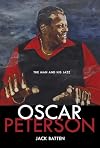
Jack Batten's fine tribute to OSCAR PETERSON, a musician he so obviously admires, will also make a great primer on jazz music for the young reader who might be just beginning to form his or her own particular musical tastes and preferences. There are many lightly documented references to the origins of jazz in the American south, particularly in the New Orleans area, as well as to its early pioneers, people like Louis Armstrong, Charlie Christian, Duke Ellington, Count Basie, Charlie 'Bird' show more Parker, Art Tatum and countless others. Batten takes the time in his narrative of Oscar's life and development as a musician, to digress just enough to give useful thumbnail biographies of many of these earlier musicians and contemporaries who influenced Peterson. He also gives well-deserved attention to Oscar's early mentor and nearly life-long manager, the jazz impressario, Norman Granz.
Peterson's early life as a poor black kid from the St. Henri ghetto of Montreal is documented too, but with a difference. His father, a railroad porter, always alloted funds from his meager earnings to provide music lessons for all his children. Oscar was the 'natural,' the one with perfect pitch who stood out from his siblings. His father also approved Oscar's dropping out of school at fifteen to pursue his musical career, since Oscar was already making good money as a musician by then in local dance bands. Many years later this gifted high-school dropout was to have countless honorary degrees bestowed on him for his musical contributions to Canada and the world of music.
While I realize that OSCAR PETERSON: THE MAN AND HIS JAZZ, is intended for a YA audience, I still found the book's near hagiographic treatment of its subject just a bit too condescending and overly simplistic. Because a man who has multiple wives (4 marriages) and several children is obviously no saint. And Peterson's occasional tantrums and self-centeredness in his dealings with promoters and other musicians - even with his closest collaborators like Ray Brown and Herb Ellis - were also, I thought, glossed over a little too easily. And the gritter details of life in jazz clubs never come up at all, other than to mention that many very talented jazz musicians' lives were cut short by drug and alcohol use, something Oscar was apparently 'never' involved in, choosing instead more wholesome off-the-job hobbies like photography. (All those wives might also imply an appreciative eye for the ladies too.)
From an adult standpoint, Batten's book is really only mildly interesting, but it is an easy read, and could certainly act as a good starting point for young people who are just discovering this wonderful kind of music. I would certainly recommend it for a high school library, or - perhaps better - display it in a prominent place in the band room. show less
Peterson's early life as a poor black kid from the St. Henri ghetto of Montreal is documented too, but with a difference. His father, a railroad porter, always alloted funds from his meager earnings to provide music lessons for all his children. Oscar was the 'natural,' the one with perfect pitch who stood out from his siblings. His father also approved Oscar's dropping out of school at fifteen to pursue his musical career, since Oscar was already making good money as a musician by then in local dance bands. Many years later this gifted high-school dropout was to have countless honorary degrees bestowed on him for his musical contributions to Canada and the world of music.
While I realize that OSCAR PETERSON: THE MAN AND HIS JAZZ, is intended for a YA audience, I still found the book's near hagiographic treatment of its subject just a bit too condescending and overly simplistic. Because a man who has multiple wives (4 marriages) and several children is obviously no saint. And Peterson's occasional tantrums and self-centeredness in his dealings with promoters and other musicians - even with his closest collaborators like Ray Brown and Herb Ellis - were also, I thought, glossed over a little too easily. And the gritter details of life in jazz clubs never come up at all, other than to mention that many very talented jazz musicians' lives were cut short by drug and alcohol use, something Oscar was apparently 'never' involved in, choosing instead more wholesome off-the-job hobbies like photography. (All those wives might also imply an appreciative eye for the ladies too.)
From an adult standpoint, Batten's book is really only mildly interesting, but it is an easy read, and could certainly act as a good starting point for young people who are just discovering this wonderful kind of music. I would certainly recommend it for a high school library, or - perhaps better - display it in a prominent place in the band room. show less
 This review was written for LibraryThing Early Reviewers.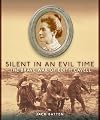
Silent in an Evil Time: The Brave War of Edith Cavell by Jack Batten is a straight forward, factual account of Nurse Edith Cavells’ life and her death in front of an execution squad of German soldiers during World War I. I had heard of her and knew that streets, parks and mountains had been named after her but I didn’t quite know how this all came about. This book describes how, as a Matron of a Belgium hospital, she helped to save the lives of hundreds Allied soldiers. She was involved show more in a secret organization that assisted soldiers who found themselves trapped behind enemy lines. Although her work put her in terrible personal danger, she gave the soldiers shelter, helped to disguise them, and assisted in finding them a safe route across the border to neutral Holland.
In October of 1915, the Germans rounded up a number of people who were helping Allied soldiers to escape and Edith Cavell was one of them. Her fate became one of the turning points in the war, after world wide revulsion was directed at Germany for her execution, the Kaiser declared that no other woman would be shot unless under his direct orders. This decree actually saved three other women that had worked in the same organization from the firing squad. Her death also brought a surge of recruits who wanted to avenge this execution.
Although the author has delivered a concise, well researched and highly readable account of the life of Edith Cavell, I never quite felt that I learned much about the inner woman. She was a very private person and certainly had no desire to be famous, yet truly deserves to be remembered as a great heroine. Among her last words were her reassurances to her family that she felt her soul was safe and at peace, and that she was glad to die for her country. show less
In October of 1915, the Germans rounded up a number of people who were helping Allied soldiers to escape and Edith Cavell was one of them. Her fate became one of the turning points in the war, after world wide revulsion was directed at Germany for her execution, the Kaiser declared that no other woman would be shot unless under his direct orders. This decree actually saved three other women that had worked in the same organization from the firing squad. Her death also brought a surge of recruits who wanted to avenge this execution.
Although the author has delivered a concise, well researched and highly readable account of the life of Edith Cavell, I never quite felt that I learned much about the inner woman. She was a very private person and certainly had no desire to be famous, yet truly deserves to be remembered as a great heroine. Among her last words were her reassurances to her family that she felt her soul was safe and at peace, and that she was glad to die for her country. show less
Lists
Awards


You May Also Like


Associated Authors
Statistics
- Works
- 40
- Also by
- 1
- Members
- 417
- Popularity
- #58,442
- Rating
- 3.4
- Reviews
- 16
- ISBNs
- 80
