
About the Author
Glenn Beck was born on February 10, 1964 in Everett, Washington. He is a radio and television host, and conservative political commentator. His nationally-syndicated radio show, The Glenn Beck Program, airs throughout the United States on Premiere Radio Networks. He has written numerous non-fiction show more books including An Inconvenient Book, Being George Washington, Control: Exposing the Truth about Guns, Miracles and Massacres: True and Untold Stories of the Making of America, and Dreamers and Deceivers: True Stories of the Heroes and Villains Who Made America, and Addicted to outrage: How thinking like a recovering addict can heal the country. His fiction books include The Christmas Sweater, The Snow Angel, Agenda 21, The Overton Window, The Eye of Moloch and Agenda 21: Into the Shadows which made the New York Times bestseller list in 2015.. His title It IS about Islam also made the New York Times bestseller list in 2015. The Immortal Nicholas was published in (2015. Liars became a New York Times bestseller in 2016. (Bowker Author Biography) show less
Series
Works by Glenn Beck
Glenn Beck's Common Sense: The Case Against an Out-of-Control Government, Inspired by Thomas Paine (2009) 1,445 copies, 26 reviews
Being George Washington: The Indispensable Man, as You've Never Seen Him (2011) 447 copies, 10 reviews
The Original Argument: The Federalists' Case for the Constitution, Adapted for the 21st Century (2011) 418 copies, 2 reviews
Miracles and Massacres: True and Untold Stories of the Making of America (2013) 409 copies, 10 reviews
Dreamer and Deceivers; True Stories of the Heroes and Villains who Built America (2014) 360 copies, 4 reviews
It IS About Islam: Exposing the Truth About ISIS, Al Qaeda, Iran, and the Caliphate (2015) 250 copies, 11 reviews
Dark Future: Uncovering the Great Reset's Terrifying Next Phase (The Great Reset Series) (2023) 50 copies
Glenn Beck Unelectable 2 copies
Glenn Beck’s Commin Sense 1 copy
Family Christmas 1 copy
The 5000 Year Leap 1 copy
The Glenn Beck Collection 1 copy
Glenn Beck's The American Crisis: An Urgent Message About the Coming Times That Will Try Men's Souls (2020) 1 copy
Arguing With Idiots 1 copy
Associated Works
The Jefferson Lies: Exposing the Myths You've Always Believed About Thomas Jefferson (2012) — Foreword — 274 copies, 7 reviews
Tagged
Common Knowledge
- Canonical name
- Beck, Glenn
- Legal name
- Beck, Glenn Edward Lee
- Birthdate
- 1964-02-10
- Gender
- male
- Education
- Sehome High School, Bellingham, Washington, USA (1982)
- Occupations
- broadcaster
- Organizations
- Premiere Radio Networks
CNN
Fox News
The Church of Jesus Christ of Latter-day Saints - Nationality
- USA
- Birthplace
- Mount Vernon, Washington, USA
- Places of residence
- New Canaan, Connecticut, USA
- Associated Place (for map)
- USA
Members
Discussions
Motion Put Forth: Glenn Beck is an Idiot in Pro and Con (April 2011)
Glenn Beck August 28, 2010 The Plan in Pro and Con (September 2010)
Glenn Beck's rally in Pro and Con (September 2010)
Reviews
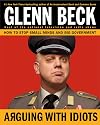
This book can be described in one word: specious.
The amount of logical fallacies and sourcing follies for ten writers and nine contributors is mind-numbing. Red herrings abound. Implying that the cherry picked comparisons are the only options. The Logic 101 fails are beyond numerous and epic.Even more frustrating is their use of an index format collection of citations at the end - makes fact checking so laborious that I gave up after the second chapter. It took too much to try to figure out show more what was cited and what was editorial. And a majority of the citations were from blogs and tabloid articles! Some from Beck's own blog... Fact-checking books like these can be a fun exercise that usually counter balances the loss of brain cells suffered by reading them, but they made it too exhausting to get even that little benefit.
He/they were so off base of two subjects I know quite a bit about: energy and health care. I was stunned at the wrong-wing rhetoric. well, not really. And the chapters on unions, presidents, economy, etc... inane and made worse by the perpetual random unrelated ad hominem pop ups saturated with sarcasm. The only chapter that had a semblance of intelligence was on education. Undermined, unfortunately, by his propensity for out-of-nowhere Pelosi-isms.
Disclosure: I thought Beck was an idiot before I read this. Arguing with Himself confirmed my opinion. show less
The amount of logical fallacies and sourcing follies for ten writers and nine contributors is mind-numbing. Red herrings abound. Implying that the cherry picked comparisons are the only options. The Logic 101 fails are beyond numerous and epic.Even more frustrating is their use of an index format collection of citations at the end - makes fact checking so laborious that I gave up after the second chapter. It took too much to try to figure out show more what was cited and what was editorial. And a majority of the citations were from blogs and tabloid articles! Some from Beck's own blog... Fact-checking books like these can be a fun exercise that usually counter balances the loss of brain cells suffered by reading them, but they made it too exhausting to get even that little benefit.
He/they were so off base of two subjects I know quite a bit about: energy and health care. I was stunned at the wrong-wing rhetoric. well, not really. And the chapters on unions, presidents, economy, etc... inane and made worse by the perpetual random unrelated ad hominem pop ups saturated with sarcasm. The only chapter that had a semblance of intelligence was on education. Undermined, unfortunately, by his propensity for out-of-nowhere Pelosi-isms.
Disclosure: I thought Beck was an idiot before I read this. Arguing with Himself confirmed my opinion. show less
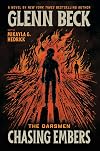
First sentence: It was the night the scales tipped decisively in the Administrator's direction. A young couple was sitting in their unit in the half-built utopian city known as "Oasis." The city was flush with the sounds of mechanical construction--crash, whizz, pop, smash. These sounds were normal in Oasis. The Tenants were hardly bothered by it anymore.
Premise/plot: Chasing Embers is a middle grade [or perhaps young young adult] dystopian novel set in a future America. Like all dystopias show more it features a bleak, dismal, unsettling, disturbing reality. Some are more subtle than others--think Twilight Zone. Others are more obviously harsh.
What should you know? There are two main characters who alternate narration. Sky and Ember. Both have grown up in Oasis--I believe--and both will have to make a tough decision--or two or three--before the close of the novel.
Ember "inherited" a forbidden book, a handwritten book I believe, that capture in bits, pieces, and spurts the past. It's a past that is purposefully forgotten and/or revised by the current powers that be. The current powers that be determine what is true and what isn't true--and mostly they err on the side of everything from the past being lies, lies, and more lies. There are a few "holdouts" who live apart, and some that live within just super cautiously. There are also fabled Oarsmen.
Sky has left Oasis and is visiting one such holdout community and is learning things in "the sticking place." All the "lies" are being taught as truth and the community is being nurtured by morals and values--being taught right from wrong, truth from lie, etc. But Sky has his doubts and cannot believe what he is seeing and hearing. Or perhaps he wants to believe but struggles to incorporate his new realizations with everything he's ever known.
Though much of the book is world-building, plenty is left mysterious--for better or worse. There will be costs to pay for "holding out" and not conforming to the powers that be, and many characters will be forced to decide if it's a cost worth paying.
My thoughts: My biggest issue with this book is the lack of understanding of HOW IMPORTANT AND ESSENTIAL character motivations are within a book--any book really, but especially a supposedly action packed dystopia. IF hard work is put into character motivation--knowing WHY characters do what they do, say what they say, choose what they choose, etc--then much can be forgiven such as info-dumping for world-building sake. Also being premise-driven. A book can be premise-driven, plot-driven and be far from character driven....and still be a compelling read IF some amount of attention is given to showing WHY.
I feel that both Sky and Ember lack ANY development when it comes to character motivation. It's a big guessing game with extremely shaky foundations as to WHY they say or do ANYTHING at any given time. Yes, it keeps readers guessing but for all the wrong reasons. I think *a little* more focus on building the characters inner worlds would help sell this one as a compelling read. show less
Premise/plot: Chasing Embers is a middle grade [or perhaps young young adult] dystopian novel set in a future America. Like all dystopias show more it features a bleak, dismal, unsettling, disturbing reality. Some are more subtle than others--think Twilight Zone. Others are more obviously harsh.
What should you know? There are two main characters who alternate narration. Sky and Ember. Both have grown up in Oasis--I believe--and both will have to make a tough decision--or two or three--before the close of the novel.
Ember "inherited" a forbidden book, a handwritten book I believe, that capture in bits, pieces, and spurts the past. It's a past that is purposefully forgotten and/or revised by the current powers that be. The current powers that be determine what is true and what isn't true--and mostly they err on the side of everything from the past being lies, lies, and more lies. There are a few "holdouts" who live apart, and some that live within just super cautiously. There are also fabled Oarsmen.
Sky has left Oasis and is visiting one such holdout community and is learning things in "the sticking place." All the "lies" are being taught as truth and the community is being nurtured by morals and values--being taught right from wrong, truth from lie, etc. But Sky has his doubts and cannot believe what he is seeing and hearing. Or perhaps he wants to believe but struggles to incorporate his new realizations with everything he's ever known.
Though much of the book is world-building, plenty is left mysterious--for better or worse. There will be costs to pay for "holding out" and not conforming to the powers that be, and many characters will be forced to decide if it's a cost worth paying.
My thoughts: My biggest issue with this book is the lack of understanding of HOW IMPORTANT AND ESSENTIAL character motivations are within a book--any book really, but especially a supposedly action packed dystopia. IF hard work is put into character motivation--knowing WHY characters do what they do, say what they say, choose what they choose, etc--then much can be forgiven such as info-dumping for world-building sake. Also being premise-driven. A book can be premise-driven, plot-driven and be far from character driven....and still be a compelling read IF some amount of attention is given to showing WHY.
I feel that both Sky and Ember lack ANY development when it comes to character motivation. It's a big guessing game with extremely shaky foundations as to WHY they say or do ANYTHING at any given time. Yes, it keeps readers guessing but for all the wrong reasons. I think *a little* more focus on building the characters inner worlds would help sell this one as a compelling read. show less
Off-putting cover (Beck posing as "book czar"), flippant title, but above average content. Most surprising thing in this book: Beck's sympathy for the U.S. Postal Service. It isn't entirely their fault. Every time they try to run the Post Office like a business, Congress steps in and says they have to do something that will lose money faster than a slasher-movie victim loses blood. Ditto Amtrak, which is forced by Congress to keep certain routes even though they lose money. This book is as show more loaded with thought-provoking facts as it is with opinion. I would only quibble with some things. For example, the first chapter is a defense of capitalism according to its title, but since the defense is necessarily against the advocacy of capitalism's replacement by socialism, it soon turns into a critique of government and its inefficiency in running itself or the economy. Fine, but the title should probably have reflected that topic. Also, at one point in this chapter Beck makes what at first sounds like a good point, that if government itself acknowledges periodically that it needs reforming (at least eleven times in the twentieth century by Beck's count) why not reform capitalism instead of declaring that it doesn't work and throwing it away? OK, except that "reforming" capitalism is precisely what has gone on and is arguably going on even now. If you think capitalism is a good idea, you don't like the kind of reform to which it has been subjected. As Beck says elsewhere in the same chapter, you can have capitalism within a socialist system, it just doesn't work very well compared to what Beck calls democratic capitalism, by which he seems to mean something closer to what most would call laissez faire.
In any case, this book is extremely readable, witty (sometimes puckishly so), and irreverent. The book is designed like a textbook for intelligent adolescents and is pretty much written at an eighth or ninth grade level. It's sidebars are faux-pasted or taped in. Some sidebars provide a quote attacking capitalism with multiple choice answers including Venezuelan Marxist Presidente Hugo Chavez but also American and Western European politicians and others. Instructively, the right attribution might turn out to be Chavez in one instance but in another instance it might turn out to be the former head of General Electric. It cannot be repeated too often that capitalists are often the worst--not to say the most insidious--promoters of socialism. (Even back in 1776, Adam Smith complained that capitalists themselves too often conspire against the free market, and Ayn Rand's "Atlas Shrugged" is an allegory about the marriage of capitalism and socialism.)
As flippant as Beck's use of the word "idiots" might seem, there actually is an ancient precedent for it: the original use of the word goes back to ancient Athens where an "idiotes" was a person who didn't believe in voting or democracy. So Beck's use of the term to mean something like a person who doesn't believe in "democratic capitalism" adheres more closely to the word's earliest definition than it does to the meaning in common parlance of a person who is simply too stupid or uniformed to deserve civil treatment. Indeed, Beck's presentation of the on-going argument between an imaginary liberal and himself gives the "idiot" the most impertinent and insulting lines while Beck's persona in the book provides fact-based counter-arguments that are sometimes quite consiliatory. Indeed, Beck sometimes performs what has been called the "Ransberger Pivot" whereby you begin to answer a flawed argument by expressing agreement with the other person's underlying concern before explaining to them that their conclusion and or solution is not as good as yours, but you make the point that your approach does take their underlying concern seriously. That is an argument of and for persuasion and not outright rejection.
Throughout the book, Beck looks at the posiitions of American presidents and eventually presents a chapter reevaluating them. His idea of arranging a "smackdown" in which presidents are put up against each other as in a play-off is funny but appears to get a bit complex. As a presidency buff myself, I look forward to this chapter, however, and so far I think Beck has it essentially right: It doesn't matter as much whether they are nominally Democrats or Republicans (or whatever, since those two labels didn't exist during the earliest history of our republic), so much as their views about whether the government is bound to observe the Constitution's constraints or else regard those constraints as an obstacle to the reorganization of the whole government-private sector relationship and seriously dilute the "private" part. That is what makes the difference between a president like Grover Cleveland, who vetoed spending bills based on his view that they were unconstitutional, and Barack Obama, who shows no sign of regarding any of his party's passed or proposed bills as exceeding the government's Constitutional authority. Both Cleveland and Obama are nominal Democrats, albeit over a century apart. show less
In any case, this book is extremely readable, witty (sometimes puckishly so), and irreverent. The book is designed like a textbook for intelligent adolescents and is pretty much written at an eighth or ninth grade level. It's sidebars are faux-pasted or taped in. Some sidebars provide a quote attacking capitalism with multiple choice answers including Venezuelan Marxist Presidente Hugo Chavez but also American and Western European politicians and others. Instructively, the right attribution might turn out to be Chavez in one instance but in another instance it might turn out to be the former head of General Electric. It cannot be repeated too often that capitalists are often the worst--not to say the most insidious--promoters of socialism. (Even back in 1776, Adam Smith complained that capitalists themselves too often conspire against the free market, and Ayn Rand's "Atlas Shrugged" is an allegory about the marriage of capitalism and socialism.)
As flippant as Beck's use of the word "idiots" might seem, there actually is an ancient precedent for it: the original use of the word goes back to ancient Athens where an "idiotes" was a person who didn't believe in voting or democracy. So Beck's use of the term to mean something like a person who doesn't believe in "democratic capitalism" adheres more closely to the word's earliest definition than it does to the meaning in common parlance of a person who is simply too stupid or uniformed to deserve civil treatment. Indeed, Beck's presentation of the on-going argument between an imaginary liberal and himself gives the "idiot" the most impertinent and insulting lines while Beck's persona in the book provides fact-based counter-arguments that are sometimes quite consiliatory. Indeed, Beck sometimes performs what has been called the "Ransberger Pivot" whereby you begin to answer a flawed argument by expressing agreement with the other person's underlying concern before explaining to them that their conclusion and or solution is not as good as yours, but you make the point that your approach does take their underlying concern seriously. That is an argument of and for persuasion and not outright rejection.
Throughout the book, Beck looks at the posiitions of American presidents and eventually presents a chapter reevaluating them. His idea of arranging a "smackdown" in which presidents are put up against each other as in a play-off is funny but appears to get a bit complex. As a presidency buff myself, I look forward to this chapter, however, and so far I think Beck has it essentially right: It doesn't matter as much whether they are nominally Democrats or Republicans (or whatever, since those two labels didn't exist during the earliest history of our republic), so much as their views about whether the government is bound to observe the Constitution's constraints or else regard those constraints as an obstacle to the reorganization of the whole government-private sector relationship and seriously dilute the "private" part. That is what makes the difference between a president like Grover Cleveland, who vetoed spending bills based on his view that they were unconstitutional, and Barack Obama, who shows no sign of regarding any of his party's passed or proposed bills as exceeding the government's Constitutional authority. Both Cleveland and Obama are nominal Democrats, albeit over a century apart. show less

Emmaline is devastated when her mother is taken away by the authorities. She is left living with Jeremy, a greasy haired, insolent teen who is her assigned partner with whom she is supposed to have a child. Set in the former US in a dystopian near future, when Emmaline was small the population was rounded up and sent to live in compounds so that nature could be preserved.
Emmaline, whose assigned job is to walk an energy producing board for hours each day, is relieved that Jeremy shows no show more interest in her and has refused to touch her. She misses her kind first partner, George, who disappeared along with her father, and their baby that was taken from her at birth to be raised with all other babies and children under 14. Fertile individuals are paired according to the whims of the authorities. In the weeks following her mother's disappearance, she comes to know David, a night guardian who starts giving her eggs to supplement her diet, and John, a friend of her parents she hadn't met before who sneaks by at night to talk with her. Gradually, Emmaline begins to question the ways of the authorities in ways beyond what her mother implied, and gradually comes to the unsettling discovery that not only is everyone not really equal, but that when people disappear it's much more dreadful than she had allowed herself to realize.
This book is a fictional look at what could happen if the UN's Agenda 21 were to be taken to the extreme. I gave it 5 stars not so much for the politics of it, but because it was well written, kept me on the edge of my seat, got me interested in Emmaline and provoked deep thought. show less
Emmaline, whose assigned job is to walk an energy producing board for hours each day, is relieved that Jeremy shows no show more interest in her and has refused to touch her. She misses her kind first partner, George, who disappeared along with her father, and their baby that was taken from her at birth to be raised with all other babies and children under 14. Fertile individuals are paired according to the whims of the authorities. In the weeks following her mother's disappearance, she comes to know David, a night guardian who starts giving her eggs to supplement her diet, and John, a friend of her parents she hadn't met before who sneaks by at night to talk with her. Gradually, Emmaline begins to question the ways of the authorities in ways beyond what her mother implied, and gradually comes to the unsettling discovery that not only is everyone not really equal, but that when people disappear it's much more dreadful than she had allowed herself to realize.
This book is a fictional look at what could happen if the UN's Agenda 21 were to be taken to the extreme. I gave it 5 stars not so much for the politics of it, but because it was well written, kept me on the edge of my seat, got me interested in Emmaline and provoked deep thought. show less
Lists
Awards


You May Also Like


Associated Authors
Statistics
- Works
- 53
- Also by
- 3
- Members
- 10,849
- Popularity
- #2,184
- Rating
- 3.6
- Reviews
- 211
- ISBNs
- 228
- Languages
- 8
- Favorited
- 5
