
Dinesh D'Souza
Author of What's So Great About Christianity?
About the Author
Dinesh D'Souza was born on April 25, 1961 in Mumbai, Maharashtra, India. He came to the U.S. in 1978 and attended Union High School in Patagonia, Arizona. He went on to Dartmouth College, where he graduated Phi Beta Kappa in English in 1983. While attending Dartmouth, he became the editor of a show more conservative monthly called The Prospect. The paper ignited controversy during D'Souza's editorship by criticizing the College's affirmative action policies. He also became known as a writer for the Dartmouth Review which was subsidized by several right-wing organizations. After Dartmouth he moved to Washington, D.C. where he was an editor of Policy Review, an influential conservative journal. In 1988 he left the magazine on to serve as an advisor in Ronald Regan's White House. He joined the American Enterprise Institute in 1989 where he was the institute's John M. Olin fellow. He has appeared on several news shows as a political commentator such as: CNN, Glen Beck, and ABC's Nightline. D'Souza's first book, Lliberal Education was published in 1991. Since then, he has written numerous bestselling political commentaries, including: America: Imagine a World Without Her, Obama's America: Unmaking the American Dream, Letters to a Young Conservative, The End of Racism, and The Big Lie: Exposing the Nazi Roots of the American Left. D'Souza's title's, Hilary's America and Death of a Nation, made the New York Times Bestseller List. (Bowker Author Biography) show less
Works by Dinesh D'Souza
United States of Socialism: Who's Behind It. Why It's Evil. How to Stop It. (2020) 195 copies, 3 reviews
Death of a Nation: Plantation Politics and the Making of the Democratic Party (2018) 155 copies, 3 reviews
The Virtue of Prosperity : Finding Values In An Age Of Techno-Affluence (2000) 140 copies, 2 reviews
Godforsaken: Bad Things Happen. Is there a God who cares? Yes. Here’s proof. (2012) 132 copies, 2 reviews
Stealing America: What My Experience with Criminal Gangs Taught Me about Obama, Hillary, and the Democratic Party (2015) 107 copies, 2 reviews
What's So Great about God: A Reasonable Defense of the Goodness of God in a World Filled with Suffering (2013) 24 copies
What's So Great About Christianity? Study Guide: Your Guide to Answering the New Athists (2009) 22 copies
2000 Mules DVD by D'Souza Media New Version with Menu Selections and Subtitles - Deluxe Edition 8 copies
The Origins Debate: Evangelical perspectives on creation, evolution, and intelligent design (Christianity Today Essentials) (2012) 8 copies, 1 review
Police State 5 copies
Reason and Faith DVD 3 copies
A verdade sobre o cristianismo : por que a religião criada por Jesus é moderna, fascinante e inquestionável (2005) 2 copies
10 Answers for Skeptics 1 copy
God on Trial: A Debate on the Existence of God (Is it Good to Believe in God, specifically the Christian God?) 1 copy, 1 review
The Catholic Classics II 1 copy
America 1 copy
Hillary's America 1 copy
2016: Obama's America - DVD 1 copy
Associated Works
Tagged
Common Knowledge
- Legal name
- D’Souza, Dinesh Joseph
- Birthdate
- 1961-04-25
- Gender
- male
- Education
- Dartmouth College
- Organizations
- Policy Review
American Enterprise Institute
Hoover Institution
AOL
Townhall
The King's College (president) - Nationality
- India
USA - Birthplace
- Mumbai, India
- Places of residence
- Mumbai, India
Washington, D.C., USA
Fairbanks Ranch, California, USA - Associated Place (for map)
- USA
Members
Discussions
ANOTHER republican scumbag eats dirt. in Pro and Con (January 2014)
Reviews
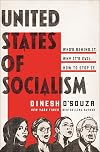
Modern polemicist Dinesh D'Souza explains why the push for socialism in the United States is bound to fail, with what seem to be reasonably steelmanned explanations of what American socialists believe. After the first third of the book, he takes some detours into memoirish reflections on the unjustness of the Deep State for bringing felony charges against him (career civil servants prosecuted his illegal campaign contributions in 2014 -- he pled guilty) and unctious flattery for Trump (Trump show more pardoned him). D'Souza concludes the book with a call to unceasingly confront the other side.
My reaction is twofold. First, D'Souza seems like a total prick. He aggressively ascribes selfish and lazy motivations to literally everyone he disagrees with. (I find ascribed motivations of all sorts to cast a bright light onto the speaker's worldview, as well as any listeners' who unthinkingly agree -- I read a lot into this.) Near the end, his passage celebrating Trump's willingness to kick other people in the shins and imploring "harder! kick him again harder!" was so graphically violent that I had to turn the audio volume down until it was over. I'm sure he'd deride me for that squeamishness. Regardless, these are not the words of someone I'd consider a good man.
On the other hand, he makes a very cogent criticism of modern leftist discourse being muddled. The only socialism that has ever worked, he notes, has been Nordic socialism that is deployed with a consistent ecumenical "we're all in this together" message. That message is in stark contrast to the divisive narrative currently being reinforced by American socialists, which leads many people to feel vilified by their peers for characteristics they never chose: their maleness, their whiteness, their straightness, their cisgenderness, their ablebodiedness, and so on. It's a legitimate and thought-provoking criticism, and it's exactly this kind of valuable take-away I was hoping to find.
If you'll enjoy 2020 American rightwing polemics, this book is for you. For others, though, this book will quickly become dated, and I doubt it's worth much time. show less
My reaction is twofold. First, D'Souza seems like a total prick. He aggressively ascribes selfish and lazy motivations to literally everyone he disagrees with. (I find ascribed motivations of all sorts to cast a bright light onto the speaker's worldview, as well as any listeners' who unthinkingly agree -- I read a lot into this.) Near the end, his passage celebrating Trump's willingness to kick other people in the shins and imploring "harder! kick him again harder!" was so graphically violent that I had to turn the audio volume down until it was over. I'm sure he'd deride me for that squeamishness. Regardless, these are not the words of someone I'd consider a good man.
On the other hand, he makes a very cogent criticism of modern leftist discourse being muddled. The only socialism that has ever worked, he notes, has been Nordic socialism that is deployed with a consistent ecumenical "we're all in this together" message. That message is in stark contrast to the divisive narrative currently being reinforced by American socialists, which leads many people to feel vilified by their peers for characteristics they never chose: their maleness, their whiteness, their straightness, their cisgenderness, their ablebodiedness, and so on. It's a legitimate and thought-provoking criticism, and it's exactly this kind of valuable take-away I was hoping to find.
If you'll enjoy 2020 American rightwing polemics, this book is for you. For others, though, this book will quickly become dated, and I doubt it's worth much time. show less
This was one of the most powerful and fascinating books I've read in a long time. There was good representation of both sides of the argument and I learned so much about why other countries and religions hate America, terrorism, and immigration. I'm generally not interested in books about government, politics, foreign policy, economics, etc. but I couldn't put this down and will probably read again but much slower with a highlighter. There were passages that just floored me as they got me show more thinking and my brain working. This should be required reading for everyone. I totally get it now. show less
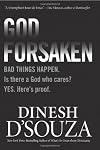
-Tyndale House Publishers has provided me with a complimentary copy of this book in exchange for an honest review-
I will admit I wasn't expecting much when I requested to review this book. But I was pleasantly surprised that it ended up being a mostly pleasant read with an engaging style, despite the topic being focused on the idea of suffering.
There are three purposes to this book, the author tells us on page 245:
1 - "to answer the atheist argument that evil and suffering in the world show more somehow contradict the idea of a God who is both omnipotent and good"
2 - "to convince both believers and unbelievers" (a term I feel to be a little inconsiderate) "that there is reason and purpose for evil and suffering"
and 3 - "to specifically address Christians who are suffering"
In fact, we are told, on page 14, that, in this book, the author proposes to "draw on remarkable advances in physics, astronomy, brain science, and biology to offer a fresh answer to the problems of evil and suffering," and on page 29 he claims to "offer a solution to the problem of evil that, to my knowledge has not been offered before. It is not a solution that displaces existing answers; it is one that complements them and integrates them into a persuasive whole, considering both the Atheist and the Christian perspective of the problem." Through the majority of the text he applies the Anthropic Principle to his arguments in attempts to prove that the existence of evil and suffering do not negate the existence of a loving, compassionate creator God worthy of love and relationship.
Granted, there were places I disagreed with the author, and even a few places I felt the author was being almost dismissive or arrogant in relation to Atheist viewpoints (like saying Atheism doesn't produce much charity, or claiming the idea of compassion as a Christian morality, even though such a virtue has been encouraged through faiths older than even the Jewish religion, references to the idea of "rejection" of God, as though belief is some sort of choice) or the few references to Islam that I found to be projecting one side of the coin, when the whole (or even majority) of adherents to the Muslim faith may not even agree with his statements. There just seemed to be an oversimplification of other beliefs or belief systems, IMO... And knowing Atheists, I'm not sure how comfortable I am with his claims that many are just "angry" with God or disappointed, that some are merely "wounded theists," because while I'm sure that this is sometimes this case, my experience hasn't proven to be the norm, and I don't feel it's my place to judge whether one truly doesn't believe, say out of a lack of evidence, or whether one is just "angry" - it also seems needed to be mentioned that one can be disgusted with or angry at the representation of the Christian religion or beliefs without being angry at God Himself. And I found the page addressing the idea that Atheists are somehow wrong for sticking their noses into religion - he compares it to the ridiculousness of someone writing books to refute the existence of unicorns, for example - and implying they should "ignore it" to be callous and disrespectful because whether or not Atheists believe in God or religion, they live in a world where they are constantly confronted with it, and should have every right to express their disbelief as any of us has to express our belief. But once he got away from that the book was an interesting one to read.
I enjoyed the scientific approach of this book (any Christian who supports the idea of evolution gains some respect in my eyes, lol), as well as the consideration of the various points of view on the topic of suffering and evil and how God relates to them. I may not agree with everything the author seems to state as his own opinion (we vary when it comes to theology as well, in ideas like the fall, the idea of taking up one's cross to follow Jesus, etc), but there were some places and theories where our thoughts did align, such as the importance of the natural laws in the universe when it comes to the development, health, and habitability of our world, the idea that God making Himself obvious would remove the choice of whether or not to believe and change the nature of our relationship with Him, etc. Even when I don't agree with him, most of the times his arguments are reasonable and don't feel quite as "cliche," in my opinion, at least. Though I do believe that some of the arguments he made don't exactly prove his points - like the idea of those in positions of suffering being more religious could have more to do with the psychology of suffering itself than with the actual existence of God, even though I do personally believe in such a Deity. As well, the idea of a moral lawgiver, just because we have morals, isn't in itself proof, as I do believe morality would have developed on it's own even without Divinity. And I disagree that a "purely evolutionary account... cannot account for a degree of human evil that radically surpasses biological necessity."
I did especially like where he touched (starting on page 82) on the idea of soul making, though, as such an idea is foundational to my personal beliefs. So the pages relating to that, even if I see it a little differently from the author, were pleasant for me.
The part I most disagreed with was the section on hell - being a Universalist myself, I disagree with his claims in regard to the history of Universalism throughout Christianity's own history.
(the history of Christian Universalism can be found here : http://christianuniversalist.org/articles/history.html)
I personally believe that looking at the original language one realizes words that the author uses himself, such as "hell" itself, and "eternal" aren't even the original meanings of the original text, and I understand the references in the Bible (for example, sulfur (brimstone), which had healing properties) to be more restorative in nature, not destructive (I'm working on a blog post about this very topic, and perhaps when I am done I will add it to this review, but there are many books out there already that address the issue), and I disagree that eternal punishment for "offenses" that last only so long could be considered just or righteous. I understand that hell is one of the largest complaints against the idea of a loving, righteous God, but I disagree with the author greatly on the subject, so such explanations on how such a thing could be justified just didn't do it for me, especially since it sounded more like an alter call than a justification, if you get what I mean...
All that aside, the book itself was interesting and engaging, and I do think that anyone interested in the idea of suffering and evil would be interested in giving it a read through. show less
I will admit I wasn't expecting much when I requested to review this book. But I was pleasantly surprised that it ended up being a mostly pleasant read with an engaging style, despite the topic being focused on the idea of suffering.
There are three purposes to this book, the author tells us on page 245:
1 - "to answer the atheist argument that evil and suffering in the world show more somehow contradict the idea of a God who is both omnipotent and good"
2 - "to convince both believers and unbelievers" (a term I feel to be a little inconsiderate) "that there is reason and purpose for evil and suffering"
and 3 - "to specifically address Christians who are suffering"
In fact, we are told, on page 14, that, in this book, the author proposes to "draw on remarkable advances in physics, astronomy, brain science, and biology to offer a fresh answer to the problems of evil and suffering," and on page 29 he claims to "offer a solution to the problem of evil that, to my knowledge has not been offered before. It is not a solution that displaces existing answers; it is one that complements them and integrates them into a persuasive whole, considering both the Atheist and the Christian perspective of the problem." Through the majority of the text he applies the Anthropic Principle to his arguments in attempts to prove that the existence of evil and suffering do not negate the existence of a loving, compassionate creator God worthy of love and relationship.
Granted, there were places I disagreed with the author, and even a few places I felt the author was being almost dismissive or arrogant in relation to Atheist viewpoints (like saying Atheism doesn't produce much charity, or claiming the idea of compassion as a Christian morality, even though such a virtue has been encouraged through faiths older than even the Jewish religion, references to the idea of "rejection" of God, as though belief is some sort of choice) or the few references to Islam that I found to be projecting one side of the coin, when the whole (or even majority) of adherents to the Muslim faith may not even agree with his statements. There just seemed to be an oversimplification of other beliefs or belief systems, IMO... And knowing Atheists, I'm not sure how comfortable I am with his claims that many are just "angry" with God or disappointed, that some are merely "wounded theists," because while I'm sure that this is sometimes this case, my experience hasn't proven to be the norm, and I don't feel it's my place to judge whether one truly doesn't believe, say out of a lack of evidence, or whether one is just "angry" - it also seems needed to be mentioned that one can be disgusted with or angry at the representation of the Christian religion or beliefs without being angry at God Himself. And I found the page addressing the idea that Atheists are somehow wrong for sticking their noses into religion - he compares it to the ridiculousness of someone writing books to refute the existence of unicorns, for example - and implying they should "ignore it" to be callous and disrespectful because whether or not Atheists believe in God or religion, they live in a world where they are constantly confronted with it, and should have every right to express their disbelief as any of us has to express our belief. But once he got away from that the book was an interesting one to read.
I enjoyed the scientific approach of this book (any Christian who supports the idea of evolution gains some respect in my eyes, lol), as well as the consideration of the various points of view on the topic of suffering and evil and how God relates to them. I may not agree with everything the author seems to state as his own opinion (we vary when it comes to theology as well, in ideas like the fall, the idea of taking up one's cross to follow Jesus, etc), but there were some places and theories where our thoughts did align, such as the importance of the natural laws in the universe when it comes to the development, health, and habitability of our world, the idea that God making Himself obvious would remove the choice of whether or not to believe and change the nature of our relationship with Him, etc. Even when I don't agree with him, most of the times his arguments are reasonable and don't feel quite as "cliche," in my opinion, at least. Though I do believe that some of the arguments he made don't exactly prove his points - like the idea of those in positions of suffering being more religious could have more to do with the psychology of suffering itself than with the actual existence of God, even though I do personally believe in such a Deity. As well, the idea of a moral lawgiver, just because we have morals, isn't in itself proof, as I do believe morality would have developed on it's own even without Divinity. And I disagree that a "purely evolutionary account... cannot account for a degree of human evil that radically surpasses biological necessity."
I did especially like where he touched (starting on page 82) on the idea of soul making, though, as such an idea is foundational to my personal beliefs. So the pages relating to that, even if I see it a little differently from the author, were pleasant for me.
The part I most disagreed with was the section on hell - being a Universalist myself, I disagree with his claims in regard to the history of Universalism throughout Christianity's own history.
(the history of Christian Universalism can be found here : http://christianuniversalist.org/articles/history.html)
I personally believe that looking at the original language one realizes words that the author uses himself, such as "hell" itself, and "eternal" aren't even the original meanings of the original text, and I understand the references in the Bible (for example, sulfur (brimstone), which had healing properties) to be more restorative in nature, not destructive (I'm working on a blog post about this very topic, and perhaps when I am done I will add it to this review, but there are many books out there already that address the issue), and I disagree that eternal punishment for "offenses" that last only so long could be considered just or righteous. I understand that hell is one of the largest complaints against the idea of a loving, righteous God, but I disagree with the author greatly on the subject, so such explanations on how such a thing could be justified just didn't do it for me, especially since it sounded more like an alter call than a justification, if you get what I mean...
All that aside, the book itself was interesting and engaging, and I do think that anyone interested in the idea of suffering and evil would be interested in giving it a read through. show less

This is a first edition, first printing, recalled copy printed August 2022. They were supposed to be pulped and it was reprinted with changes in December 2022. But, I snagged one off of eBay from some unsuspecting person. Who maybe stole it, I don't know. So, I have a rarity: an unexpurgated, recalled book.
Having not seen the documentary film that this is based on, all I can say is that the thesis, presentation, and evidence isn't wild-eyed, crazy, or outlandish. It all makes perfect sense show more and seems reasonable. Which is scary. Was it enough to swing an election? Maybe. It seems to have already happened in smaller races and just did again in September/October 2023 in Bridgeport, Connecticut. Etc. It all seems eminently reasonable. Which is scary. It's so hard to prove. And that's the problem. Read in conjunction with Mollie Hemingway's Rigged, which tells the main story of how Big Tech, Big Media, and Covid conspired to change the voting rules and put the thumb on the scale in 2020. Add this and... show less
Having not seen the documentary film that this is based on, all I can say is that the thesis, presentation, and evidence isn't wild-eyed, crazy, or outlandish. It all makes perfect sense show more and seems reasonable. Which is scary. Was it enough to swing an election? Maybe. It seems to have already happened in smaller races and just did again in September/October 2023 in Bridgeport, Connecticut. Etc. It all seems eminently reasonable. Which is scary. It's so hard to prove. And that's the problem. Read in conjunction with Mollie Hemingway's Rigged, which tells the main story of how Big Tech, Big Media, and Covid conspired to change the voting rules and put the thumb on the scale in 2020. Add this and... show less
Lists
Awards


You May Also Like


Associated Authors
Statistics
- Works
- 51
- Also by
- 2
- Members
- 6,095
- Popularity
- #4,041
- Rating
- 3.8
- Reviews
- 61
- ISBNs
- 184
- Languages
- 10
- Favorited
- 6