
Peter Hernon (2)
Author of 8.4
For other authors named Peter Hernon, see the disambiguation page.
Works by Peter Hernon
Under the Influence: The Unauthorized Story of the Anheuser-Busch Dynasty (1991) 87 copies, 1 review
Tagged
Common Knowledge
- Gender
- male
- Occupations
- journalist
- Organizations
- Chicago Tribune
- Nationality
- USA
- Associated Place (for map)
- USA
Members
Reviews

This is a grimly fascinating book, in the category of truth-is-stranger-than fiction. On January 1, 1973, a sniper began picking off police officers as they reported to duty at the "Central Lockup" in New Orleans. Then he disappeared. A week later gunfire--and just plain fire---broke out in the Downtown Howard Johnson's hotel in the same city. Police spent most of two days attempting to flush out the sniper, whose urban guerilla tactics led police to believe there were at least 2 and show more possibly 3 gunmen in the hotel. Lack of communication and coordination among the various police and fire departments made a terrifying situation even worse. Eventually a Marine helicopter "on leave" from Vietnam was called in to carry police sharpshooters above the rooftop in an attempt to find and exterminate the snipers. I watched this unfold on TV from my home across the river from New Orleans---the first time such an event had been followed live on TV as far as I can remember (long before "Cops", or OJ and the Bronco.) This account by a journalist took me right back there, and even though this time I knew how it was going to end, the suspense was maintained in the telling---it reads like a movie-thriller. Then there are the underlying social issues of racial tension, officially sanctioned discrimination, disillusioned youth, racial hatred and bureaucratic incompetence, none of which have disappeared in the 30 years since this drama played out. show less
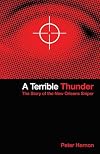
It's amazing to think one sniper could so take over a city and last so long against determined if disorganized response from police and allies. Essex's experiences of racism in the Navy are both a deadly spark and an Indictment of the institution at that time. I love a good conspiracy theory, but it really looks like Essex went over the edge, acted alone, and reports of additional sharpshooters or co- conspirators is the result of confusion and reverberating fear like aftershocks from this show more solo act of episodic and increasing acts of terrorism.
The very last chapter is too chilling to spoil here. However, you can get a feel for the threat inherent in Essex' actions in "Inner city blues (poem the siege of new orleans)" by Gil Scott-Heron, specifically the cover version he recorded on the 'Reflections' album with the rap about Essex, no the Marvin Gaye original. show less
The very last chapter is too chilling to spoil here. However, you can get a feel for the threat inherent in Essex' actions in "Inner city blues (poem the siege of new orleans)" by Gil Scott-Heron, specifically the cover version he recorded on the 'Reflections' album with the rap about Essex, no the Marvin Gaye original. show less
8.4 by Peter Hernon
Peter Hernon's earthquake-story entry, 8.4, is certainly a good way to pass a day or two - or more, if you read casually.
As with many books of its type, 8.4 is set "tomorrow," although the basic premise of 8.4 could, indeed, actually happen tomorrow, and with little or no warning. Most people know of the famous San Andreas fault, a tectonic fault that, despite its notoriety, has produced few damaging earthquakes in modern times. But most people don't know of another fault system, one buried show more under the American heartland. Called the New Madrid Seismic Zone, or NMSZ for short, this fault system last ripped open in 1811 and 1812, producing a series of temblors - the largest of which topped out at an estimated 8.4, broke windows in Philadelphia, and rang church bells in New York. Two other major quakes created untold havoc on the Mississippi River Valley - for a month, the mighty Mississippi ran backwards.
It could happen again. And, in 8.4, it does.
Hernon explores - with relative realism, although certainly a fair dose of dramatic license - the effects that would likely be seen when, not if, the New Madrid fault system wakes back up. This time, though, there's a new factor: humans might be able to do something about the problem. Enter seismologist John Atkins, who not only knows what the fault system might have in store for the region after the first big quake strikes, but also has an idea on how to stop it.
Admittedly, Hernon takes a great deal of dramatic license with his science, but this is not predominantly a science-related book. This is an action story about earthquakes, the people stuck in them, and a plan to defuse the situation. People reading this book shouldn't expect spot-on analyses of plate tectonics or earthquake dynamics. Truthfully, the entire sequence of earthquake events is based on a largely-discredited hypothetical link between sunspot activity and earthquakes. This book isn't about hard science. Rather, this book promises - and delivers - a human-centered thrill ride that is more than worth the read.
-BrowncoatLibrarian show less
As with many books of its type, 8.4 is set "tomorrow," although the basic premise of 8.4 could, indeed, actually happen tomorrow, and with little or no warning. Most people know of the famous San Andreas fault, a tectonic fault that, despite its notoriety, has produced few damaging earthquakes in modern times. But most people don't know of another fault system, one buried show more under the American heartland. Called the New Madrid Seismic Zone, or NMSZ for short, this fault system last ripped open in 1811 and 1812, producing a series of temblors - the largest of which topped out at an estimated 8.4, broke windows in Philadelphia, and rang church bells in New York. Two other major quakes created untold havoc on the Mississippi River Valley - for a month, the mighty Mississippi ran backwards.
It could happen again. And, in 8.4, it does.
Hernon explores - with relative realism, although certainly a fair dose of dramatic license - the effects that would likely be seen when, not if, the New Madrid fault system wakes back up. This time, though, there's a new factor: humans might be able to do something about the problem. Enter seismologist John Atkins, who not only knows what the fault system might have in store for the region after the first big quake strikes, but also has an idea on how to stop it.
Admittedly, Hernon takes a great deal of dramatic license with his science, but this is not predominantly a science-related book. This is an action story about earthquakes, the people stuck in them, and a plan to defuse the situation. People reading this book shouldn't expect spot-on analyses of plate tectonics or earthquake dynamics. Truthfully, the entire sequence of earthquake events is based on a largely-discredited hypothetical link between sunspot activity and earthquakes. This book isn't about hard science. Rather, this book promises - and delivers - a human-centered thrill ride that is more than worth the read.
-BrowncoatLibrarian show less
8.4 by Peter Hernon
The first half was good, great action, good suspense building, but the last half is dragging. There were also some other problems with the book, particularly the villain. I could not figure out his motives for being a villain. There didn't seem to be any payoff for doing the bad things he did. He was just in there to provide an antagonist. It totally broke my suspension of disbelief.
Awards

You May Also Like


Associated Authors
Statistics
- Works
- 5
- Members
- 370
- Popularity
- #65,127
- Rating
- 3.5
- Reviews
- 9
- ISBNs
- 97
- Languages
- 2