
Paul Harding (5) (1967–)
Author of Tinkers
For other authors named Paul Harding, see the disambiguation page.
About the Author
Paul Harding has an MFA from the Iowa Writers' Workshop and teaches creative writing at Harvard. He lives in Georgetown, Massachusetts.
Works by Paul Harding
Tagged
Common Knowledge
- Birthdate
- 1967
- Gender
- male
- Short biography
- Paul Harding graduated from the University of Massachusetts and was a drummer for the band Cold Water Flat before earning his MFA from the Iowa Writers’ Workshop. He has taught writing at Harvard and the University of Iowa. A 2010 Guggenheim fellow, Harding now lives near Boston with his wife and two sons, and is working on his second novel.
- Nationality
- USA
- Associated Place (for map)
- USA
Members
Reviews
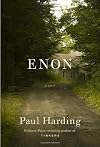
It is often said that no parent should outlive their child. When Charlie Cosby's daughter, Kate, is killed in a car accident, his life spirals into, first anger, then depression and addiction. His days are spent passed out on the couch and his nights are spent either seeking more drugs or sitting by his daughter's grave.
Enon was not an easy book to read. Author Paul Harding takes us through every drug induced dream, every humiliating encounter as Charlie seeks to deaden his grief. Like an show more alcoholic, Charlie must hit rock bottom before he can reach acceptance and begin to heal. But, like the addict he has become, there is nothing too low, too embarrassing, too sad he won't do to get his fix. Yet, all the drugs, the alcohol, the self-pity, nothing even begins to touch his grief.
I can't say I liked this book. In fact, it's not really the type of book you are supposed to like. I did, however, appreciate author Harding's descriptions of the five stages of grief and how debilitating it can be. He doesn't shy away from the realities of grief; in fact, he makes the reader wallow in it. He makes it clear that grief doesn't create heros and martyrs; it creates emotional cripples and, no matter what face is shown to the public, real grief is soggy and pathetic and more than a little self-involved. Too often, novels about grief show people who bravely soldier on keeping their feelings hidden, sort of like the way we really prefer people to act in real life and, despite our best intentions and if we're being completely honest, we all find open displays of grief a bit embarrassing, kind of like watching a drunk try to eat soup. If you're going to do it, have the courtesy to do it in the privacy of your own home where you are responsible for your own messes. And just like we want grieving people to just get over it and move on, it's hard not to feel like that towards Charlie. The reader quickly loses patience with him, finds him tiresome, selfish, and self-pitying. We want him to move on or at least show some self-restraint for our sake if not for his own.
For the most part, I found Harding's writing beautiful, almost poetic. However, there are times, especially when Charlie imagines his daughter during his many drug-induced musings, when the writing seems overwrought, over-the-top, and overly stylized. Certainly it allows the reader to better experience the effects of Charlie's opium dreams but, after awhile, it was just as mind numbing for me as it was supposed to be for Charlie. I suspect that was the intention but knowing this didn't make it easier to wade through.
Despite this criticism, I found Enon one of the best novels about grief I have ever read. And although this is a fairly short book, it is definitely not an easy read. Grief is a part of our existence, part of what makes us human but it's rare to see it portrayed with such honesty. No, I didn't really like this book but it will be a long time before I forget it. show less
Enon was not an easy book to read. Author Paul Harding takes us through every drug induced dream, every humiliating encounter as Charlie seeks to deaden his grief. Like an show more alcoholic, Charlie must hit rock bottom before he can reach acceptance and begin to heal. But, like the addict he has become, there is nothing too low, too embarrassing, too sad he won't do to get his fix. Yet, all the drugs, the alcohol, the self-pity, nothing even begins to touch his grief.
I can't say I liked this book. In fact, it's not really the type of book you are supposed to like. I did, however, appreciate author Harding's descriptions of the five stages of grief and how debilitating it can be. He doesn't shy away from the realities of grief; in fact, he makes the reader wallow in it. He makes it clear that grief doesn't create heros and martyrs; it creates emotional cripples and, no matter what face is shown to the public, real grief is soggy and pathetic and more than a little self-involved. Too often, novels about grief show people who bravely soldier on keeping their feelings hidden, sort of like the way we really prefer people to act in real life and, despite our best intentions and if we're being completely honest, we all find open displays of grief a bit embarrassing, kind of like watching a drunk try to eat soup. If you're going to do it, have the courtesy to do it in the privacy of your own home where you are responsible for your own messes. And just like we want grieving people to just get over it and move on, it's hard not to feel like that towards Charlie. The reader quickly loses patience with him, finds him tiresome, selfish, and self-pitying. We want him to move on or at least show some self-restraint for our sake if not for his own.
For the most part, I found Harding's writing beautiful, almost poetic. However, there are times, especially when Charlie imagines his daughter during his many drug-induced musings, when the writing seems overwrought, over-the-top, and overly stylized. Certainly it allows the reader to better experience the effects of Charlie's opium dreams but, after awhile, it was just as mind numbing for me as it was supposed to be for Charlie. I suspect that was the intention but knowing this didn't make it easier to wade through.
Despite this criticism, I found Enon one of the best novels about grief I have ever read. And although this is a fairly short book, it is definitely not an easy read. Grief is a part of our existence, part of what makes us human but it's rare to see it portrayed with such honesty. No, I didn't really like this book but it will be a long time before I forget it. show less
Charlie Crosby lives in a ramshackle house in the small New England town of Enon, along with his wife, Susan, and his strong-willed 13 year old daughter, Kate, who he respects and adores immensely even though he shares none of her positive traits. He dropped out of college soon after Susan became pregnant while they were students, and his meager income as a house painter supplements the money she earns as a teacher. His relationship with Kate is far stronger than the one he shares with his show more wife, who tolerates his idiosyncrasies and failures for the sake of their daughter.
Charlie's world comes crashing down on an August evening, when Kate is killed by a motorist while riding her bicycle. While Susan tries to cope with her grief and look ahead, Charlie is caught in a web of morbid anguish and self pity. Unable to deal with her emotional and physical invalid of a husband, Susan returns to her family in Minnesota, leaving Charlie alone with his ennui and angst.
The novel jumps back and forth to events of Charlie's childhood and adult life, interspersed with his memories of Kate. His life slowly unravels, as he stops working and succumbs to a deep psychological torpor while he isolates himself from his neighbors and wallows in self pity.
Enon was a disjointed patchwork of a book, with unrelated fragments set next to one another like the pieces of a puzzle that have just been dumped onto a table. The snapshots were occasionally interesting in themselves, but the lack of a unified plot and Charlie's unlikable, navel-gazing character made this a tedious and largely unenjoyable read. show less
Charlie's world comes crashing down on an August evening, when Kate is killed by a motorist while riding her bicycle. While Susan tries to cope with her grief and look ahead, Charlie is caught in a web of morbid anguish and self pity. Unable to deal with her emotional and physical invalid of a husband, Susan returns to her family in Minnesota, leaving Charlie alone with his ennui and angst.
The novel jumps back and forth to events of Charlie's childhood and adult life, interspersed with his memories of Kate. His life slowly unravels, as he stops working and succumbs to a deep psychological torpor while he isolates himself from his neighbors and wallows in self pity.
Enon was a disjointed patchwork of a book, with unrelated fragments set next to one another like the pieces of a puzzle that have just been dumped onto a table. The snapshots were occasionally interesting in themselves, but the lack of a unified plot and Charlie's unlikable, navel-gazing character made this a tedious and largely unenjoyable read. show less
 This review was written for LibraryThing Early Reviewers.
72. This Other Eden by Paul Harding
OPD: 2023
format: 214-page hardcover
acquired: April read: Dec 9-19 time reading: 8:34, 2.4 mpp
rating: 4
genre/style: contemporary fiction theme: Booker 2023
locations: Maine 1911/1912
about the author: American musician and author who grew up in Wenham, Massachusetts, north of Boston. Born 1967.
Harding uses the idea of Malaga island, whose mix-raced population was evicted in 1912, seemingly as an excuse to explore prose. He seems especially interested in mental show more textures, blending memory, environment and circumstance. His prose is masterful. A book to read with phone off, and clocks and goals and life stuff hidden away.
The story of Malaga Island is that it is just one of many rocky islands off the Maine coast, but one that was populated by squatters from several different cultures, including ex-slaves. The mixed-raced aspect left a racist-driven negative perception of the island, although the state of the community was not that different from other impoverished Maine communities. The years 1911-12 saw a coalescence of the American eugenics movement and optimistic moneyed development ideas. The island was cleared off, and all residents fared badly, many dying within a year. It was never developed.
Harding, however, did not seem to me to be especially interested in the true facts of the island. What seems to have interested him the most was forced reflection on a 100 years of settlement coming to nothing, a requiem of sorts. This is a slow book and demands patience. The reader stands in place a lot. Not a fun read. But beautifully done.
2023
https://www.librarything.com/topic/354226#8323343 show less
OPD: 2023
format: 214-page hardcover
acquired: April read: Dec 9-19 time reading: 8:34, 2.4 mpp
rating: 4
genre/style: contemporary fiction theme: Booker 2023
locations: Maine 1911/1912
about the author: American musician and author who grew up in Wenham, Massachusetts, north of Boston. Born 1967.
Harding uses the idea of Malaga island, whose mix-raced population was evicted in 1912, seemingly as an excuse to explore prose. He seems especially interested in mental show more textures, blending memory, environment and circumstance. His prose is masterful. A book to read with phone off, and clocks and goals and life stuff hidden away.
The story of Malaga Island is that it is just one of many rocky islands off the Maine coast, but one that was populated by squatters from several different cultures, including ex-slaves. The mixed-raced aspect left a racist-driven negative perception of the island, although the state of the community was not that different from other impoverished Maine communities. The years 1911-12 saw a coalescence of the American eugenics movement and optimistic moneyed development ideas. The island was cleared off, and all residents fared badly, many dying within a year. It was never developed.
Harding, however, did not seem to me to be especially interested in the true facts of the island. What seems to have interested him the most was forced reflection on a 100 years of settlement coming to nothing, a requiem of sorts. This is a slow book and demands patience. The reader stands in place a lot. Not a fun read. But beautifully done.
2023
https://www.librarything.com/topic/354226#8323343 show less
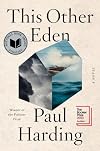
I am often not drawn to books on the Booker prize list, but the subject of this one caught my eye. It's loosely based on a real place, Malaga Island. In Harding's novel, the island is Apple Island, settled in the late 1700s by a motley group of people who find there way there over the 1800s - a mix of escaped slaves, Penobscot Native Americans, the Irish, and others. They aren't exactly thriving when a pastor from the mainland starts visiting them. They are hungry, cold, uneducated by modern show more standards, one of them lives in a tree, there has been a lot of inter-marry in a small genetic pool. But even so, the pastor, Michael Diamond, finds glimmers of greatness - a girl who learns Latin with ease and a young man with real artistic talent.
But, the island draws the attention of the government and they decide it's time to civilize this island. It doesn't take much imagination to guess what will happen to the residents.
I liked this. It has a memorable cast of characters. I also liked how it flipped my view of the island. Really, at the beginning I was not impressed with how these people were living. They were in poor health, practically starving, one living in a tree! But by the end, I was convinced they had it right, and the life they'd built there was one they should be allowed to continue.
Recommended. show less
But, the island draws the attention of the government and they decide it's time to civilize this island. It doesn't take much imagination to guess what will happen to the residents.
I liked this. It has a memorable cast of characters. I also liked how it flipped my view of the island. Really, at the beginning I was not impressed with how these people were living. They were in poor health, practically starving, one living in a tree! But by the end, I was convinced they had it right, and the life they'd built there was one they should be allowed to continue.
Recommended. show less
Lists
To Read: (1)
Fiction For Men (1)
Must-Read Maine (1)
Awards


You May Also Like


Associated Authors
Statistics
- Works
- 3
- Members
- 5,614
- Popularity
- #4,420
- Rating
- 3.5
- Reviews
- 368
- ISBNs
- 113
- Languages
- 12
- Favorited
- 3
