
Eli Clare
Author of Exile & Pride: Disability, Queerness and Liberation
About the Author
Eli Clare is a poet, essayist, activist, and the author of Exile and Pride: Disability, Queerness, and Liberation, also published by Duke University Press, and The Marrow's Telling: Words in Motion. He speaks regularly at conferences, community events, and colleges across the United States and show more Canada about disability, queer and trans identities, and social justice, and his writing has appeared in numerous periodicals and anthologies. Clare lives in the Green Mountains of Vermont and can be found online at www.eliclare.com. show less
Image credit: Eli Clare
Works by Eli Clare
Associated Works
From the Inside Out: Radical Gender Transformation, FTM and Beyond (2004) — Contributor — 164 copies, 2 reviews
Tagged
Common Knowledge
- Canonical name
- Clare, Eli
- Birthdate
- 1964
- Gender
- male
- Nationality
- USA
- Places of residence
- Vermont, USA
- Associated Place (for map)
- Vermont, USA
Members
Reviews
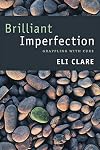
In this (dare I say) brilliant book, author Eli Clare examines the notion of "cure"--"the deeply held belief that body-minds considered broken need to be fixed" (back cover)--in the context of queer and disability theory. Well-written, relatable, and not too hard to read, despite the heavy subject matter.
However, I suspect the author engages with special pleading when he gives himself a pass for "fixing" his gender dysphoria (or attaining "body-mind rightness") by having his breasts removed.
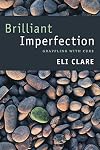
This was so, so, so fucking good. Clare does so much in such little space, drawing all these narratives and ways of thinking together, and it's so challenging to think about cure alongside all the tensions he highlights. He also delves into so many areas of thought to pull it all together--obviously disability studies and crip theory, but also environmental studies and history and all of it is so thoughtful and written with so much obvious care. I'm going to be chewing on this book for a show more long time, and definitely need a copy of my own so I can return to it as frequently as I want. It's also a book I want to share with so many other people. Just so, so good (and might be available through your local public library system--the copy I read was!) show less
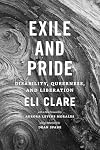
Clearly a seminal work for a reason; Clare is so insightful, and so doggedly determined to hold onto and sit in places of tension in ways that are really productive and honestly also inviting. The first half, focusing on the sites of his childhood and the tensions between environmental protection and economic possibility for those living there, is insightful and has been foundational I'm sure for thinking about the binaries of queer life. The second half is similarly productive as Clare show more explores the lines and boundaries of his own life, and where pride and witness overlap and rub together. There's obviously a lot to chew on here, and the work is so insightful and thoughtful; every part has been clearly worked over with a lot of care.
I will say I think if you've read other stuff around crip culture and queerness, you may feel like there's not much new here; Clare's work has been so heavily cited (for good reason!) that ymmv on how familiar all of this feels/if it truly feels new. I think obviously you should still read it if you haven't, but it's something to keep in mind when you're approaching the text. show less
I will say I think if you've read other stuff around crip culture and queerness, you may feel like there's not much new here; Clare's work has been so heavily cited (for good reason!) that ymmv on how familiar all of this feels/if it truly feels new. I think obviously you should still read it if you haven't, but it's something to keep in mind when you're approaching the text. show less
I learned of this book from a friend over a decade ago, but for whatever reason, it has taken me awhile to pick it up.
Eli Clare is an activist and writer. He grew up in rural coastal Oregon, and is a survivor of sexual abuse. He has cerebral palsy, and is transgendered.
This book was first published in 1999. It explores the intersection of queerness, disability, and rural community.
As someone who grew up in a rural setting, and who has had many of my friends move away urban centers, the first show more thing that struck me about the book is the way Clare's diagnosis of demographic and political trends was prophetic and spot on in describing some of the deepest issues in the United States today. There are other scholars who have spoken to some of these trends, such as Colin Woodard in his "American Nations," which articulates that polarization has increased, rather than decreased, over the past century. But Clare does a much better job describing some of the ways this shift has occurred. Clare points out that, in rural communities, there are pressures to maintain basic human decency (although there are exceptions to this), because you're going to keep seeing your neighbors for years to come, and need to find ways to live with them. In urban communities, there isn't this pretext; rather, there is anonymity, so people can treat strangers terribly, resting assured that, in all likelihood, they will never see them again. Although the book doesn't get into this as it was written before the tech boom, this trend mirrors the disfunction of many online communities, and tensions around identity, pseudonymity, and anonymity.
On the other hand, Clare did spend a chunk of life in urban queer settings, as this queer community wasn't available to him in his rural home. Many of my childhood friends that have move away to urban centers have left for similar reasons, due to what they might call the parochial tendencies of rural places. But, as Anand Giridharadas spells out in his recent book, "The Persuaders," it has been exactly this attitude—move to where I can find like minded people, as opposed to making friends with the people of my place—that has resulted in a total breakdown of politics in the United States. Clare articulates these tensions.
When it comes to the disability theme of the book, this is something I know less about. Clare begins by articulating that disability is a condition in relationship with societal norms. Someone in a wheelchair is disabled if there are only stairs, but if there are ramps and elevators and the places they go are accessible, their condition is no longer a disability.
Clare also speaks about how he has known nothing other than his condition of cerebral palsy, and doesn't wish for a cure. Although, in this text, Clare doesn't get much deeper into the issue than this, such a sentiment pushes up against the mindset of efficiency in Western Culture. If we get a little further into the subject, we come around to the question, "what is the point of life?" From this perspective, it becomes more challenging to put someone that is differently abled at the bottom of a societal hierarchy, as these differences give them capacities that are different than others, and might actually add to the richness of perspective in a community. That said, I'm just starting to wrap my head around these issues, so I won't venture further on the topic at this moment.
In summary, "Exile and Pride" is a classic text, and has likely shaped the nature of the discourse on intersectionality over recent decades. If you're looking for a place to start with some of these issues, Clare provides an excellent entry point. show less
Eli Clare is an activist and writer. He grew up in rural coastal Oregon, and is a survivor of sexual abuse. He has cerebral palsy, and is transgendered.
This book was first published in 1999. It explores the intersection of queerness, disability, and rural community.
As someone who grew up in a rural setting, and who has had many of my friends move away urban centers, the first show more thing that struck me about the book is the way Clare's diagnosis of demographic and political trends was prophetic and spot on in describing some of the deepest issues in the United States today. There are other scholars who have spoken to some of these trends, such as Colin Woodard in his "American Nations," which articulates that polarization has increased, rather than decreased, over the past century. But Clare does a much better job describing some of the ways this shift has occurred. Clare points out that, in rural communities, there are pressures to maintain basic human decency (although there are exceptions to this), because you're going to keep seeing your neighbors for years to come, and need to find ways to live with them. In urban communities, there isn't this pretext; rather, there is anonymity, so people can treat strangers terribly, resting assured that, in all likelihood, they will never see them again. Although the book doesn't get into this as it was written before the tech boom, this trend mirrors the disfunction of many online communities, and tensions around identity, pseudonymity, and anonymity.
On the other hand, Clare did spend a chunk of life in urban queer settings, as this queer community wasn't available to him in his rural home. Many of my childhood friends that have move away to urban centers have left for similar reasons, due to what they might call the parochial tendencies of rural places. But, as Anand Giridharadas spells out in his recent book, "The Persuaders," it has been exactly this attitude—move to where I can find like minded people, as opposed to making friends with the people of my place—that has resulted in a total breakdown of politics in the United States. Clare articulates these tensions.
When it comes to the disability theme of the book, this is something I know less about. Clare begins by articulating that disability is a condition in relationship with societal norms. Someone in a wheelchair is disabled if there are only stairs, but if there are ramps and elevators and the places they go are accessible, their condition is no longer a disability.
Clare also speaks about how he has known nothing other than his condition of cerebral palsy, and doesn't wish for a cure. Although, in this text, Clare doesn't get much deeper into the issue than this, such a sentiment pushes up against the mindset of efficiency in Western Culture. If we get a little further into the subject, we come around to the question, "what is the point of life?" From this perspective, it becomes more challenging to put someone that is differently abled at the bottom of a societal hierarchy, as these differences give them capacities that are different than others, and might actually add to the richness of perspective in a community. That said, I'm just starting to wrap my head around these issues, so I won't venture further on the topic at this moment.
In summary, "Exile and Pride" is a classic text, and has likely shaped the nature of the discourse on intersectionality over recent decades. If you're looking for a place to start with some of these issues, Clare provides an excellent entry point. show less
Lists
Awards


You May Also Like


Associated Authors
Statistics
- Works
- 6
- Also by
- 4
- Members
- 761
- Popularity
- #33,428
- Rating
- 4.3
- Reviews
- 10
- ISBNs
- 16
- Languages
- 1
- Favorited
- 1