
John Dickinson (2) (1962–)
Author of The Cup of the World
For other authors named John Dickinson, see the disambiguation page.
John Dickinson (2) has been aliased into John G. H. Dickinson.
Series
Works by John Dickinson
Works have been aliased into John G. H. Dickinson.
Tagged
Common Knowledge
- Legal name
- Dickinson, John Geoffrey Hyett
- Birthdate
- 1962-06
- Gender
- male
- Education
- St Paul's School, London, England, UK
University of Oxford (Trinity College) - Occupations
- civil servant (Ministry of Defence)
novelist - Relationships
- Dickinson, Peter (father)
- Nationality
- UK
- Birthplace
- London, England, UK
- Places of residence
- Painswick, Gloucestershire, England, UK
Devon, England, UK
Brussels, Belgium
London, England, UK
Hampshire, England, UK - Associated Place (for map)
- England, UK
Members
Reviews
We by John Dickinson
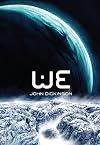
When starting an SF novel, I think it a good sign if the first chapter is so well imagined and well written that it could stand alone as a short story. Obviously it can't continue at that level of density, but the experience of a man suddenly removed from the ever-present and almost omniscient World Ear network is arrestingly told. He then has to come to terms with the claustrophobic world of a remote base with only four inhabitants, and a mysterious influence which corrupts their radio show more signals to Earth. Is his predecessor as telemetry expert really dead?
And why would Earth bother to have a manned station on the moon of a gas giant so remote that it takes eight years to travel there, and adaptation so dramatic that the researchers can never hope to return? I asked this question early in my reading: Paul Munro, dutiful servant of the World Ear, doesn't think to consider it until further through the book, and the answer is bound up with the developing ideas in this subtle novel, which questions the nature of human choice and the future social effect of world-encompassing information networks. If the Internet became sentient, what would it do next? How would you feel if you had been left out, or worse, cut out after being a part of it?
There are moments when the pace falters, and the ending is a little low-key, but not unreasonably so, given the scenario, and on the whole I think this is an excellent book.
MB 3-ii-2011 show less
And why would Earth bother to have a manned station on the moon of a gas giant so remote that it takes eight years to travel there, and adaptation so dramatic that the researchers can never hope to return? I asked this question early in my reading: Paul Munro, dutiful servant of the World Ear, doesn't think to consider it until further through the book, and the answer is bound up with the developing ideas in this subtle novel, which questions the nature of human choice and the future social effect of world-encompassing information networks. If the Internet became sentient, what would it do next? How would you feel if you had been left out, or worse, cut out after being a part of it?
There are moments when the pace falters, and the ending is a little low-key, but not unreasonably so, given the scenario, and on the whole I think this is an excellent book.
MB 3-ii-2011 show less
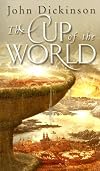
This book is amazing. Absolutely amazing.
The only problem is that I hated it. Or rather I hated where the plot went though I understood and excepted it. So, honestly, my motivations are completely selfish and I imagine the majority of people do not feel this way.
I'm normally not completely baffled by the direction plots take but this book is pretty much what I call the ultimate plot twist. Maybe I just read it at a strange time in my life but I don't ever remember feeling like this with a show more book before or after. So the plot was intricate and beautiful as was the writing. Absolutely gorgeous words on every single freaking page. Dickinson is a gift. That is really the only thing I can say. And this was the reason why the plot twist worked so well. You know normally, a character tells you things but you can sense that they're making a mistake. Well, I was COMPLETELY sold. It's amazing what he manages to do but you should see for yourself. Actually. show less
The only problem is that I hated it. Or rather I hated where the plot went though I understood and excepted it. So, honestly, my motivations are completely selfish and I imagine the majority of people do not feel this way.
I'm normally not completely baffled by the direction plots take but this book is pretty much what I call the ultimate plot twist. Maybe I just read it at a strange time in my life but I don't ever remember feeling like this with a show more book before or after. So the plot was intricate and beautiful as was the writing. Absolutely gorgeous words on every single freaking page. Dickinson is a gift. That is really the only thing I can say. And this was the reason why the plot twist worked so well. You know normally, a character tells you things but you can sense that they're making a mistake. Well, I was COMPLETELY sold. It's amazing what he manages to do but you should see for yourself. Actually. show less

Phaedra, only child of the Warden of Trant, refuses all suitors, both for fear of dying in childbirth and for love of a man she has met only in dreams. When the king's son courts her, her dream-lover comes to take her away, and proves to be the mysterious and ill-famed lord of the province across the inland sea. Her elopement is the trigger for war, and she hardly knows who to trust, who will betray her, or who she must betray next.
Not an ordinary fantasy. The world setup is nothing unusual show more - a continent with an inland sea, ringed with provinces & city-states, unstable politics and a king holding on by the fingernails. But the rulers came in ships, and there were aboriginal people, so there's a conflict rarely examined. The hillmen (shades of Kipling perhaps?) have a mythology involving a Great Mother, quite different from the near-Christianity of Phaedra's people. Phaedra is not an entirely sympathetic character, somewhat cold and self-centred (also only 15 in the first chapter) but with an inner core of toughness and endurance. What really stands out is how much of the story is what happens at home while the battles and raids and treaties are happening elsewhere, and how much of the intrigue and discovery is Phaedra's story and coming of age. show less
Not an ordinary fantasy. The world setup is nothing unusual show more - a continent with an inland sea, ringed with provinces & city-states, unstable politics and a king holding on by the fingernails. But the rulers came in ships, and there were aboriginal people, so there's a conflict rarely examined. The hillmen (shades of Kipling perhaps?) have a mythology involving a Great Mother, quite different from the near-Christianity of Phaedra's people. Phaedra is not an entirely sympathetic character, somewhat cold and self-centred (also only 15 in the first chapter) but with an inner core of toughness and endurance. What really stands out is how much of the story is what happens at home while the battles and raids and treaties are happening elsewhere, and how much of the intrigue and discovery is Phaedra's story and coming of age. show less
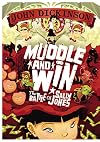
Sally is good, but being good is hard and as they say, the reward for digging the best hole is a bigger shovel. Heaven knows this, and they know if a single demon can get in her head he could do a lot of damage, so they have a host of angels waiting to stop any demons.
Hell is in trouble, special agent after special agent has been defeated by these angels and therefore proved to be useless. The boss has to be seen to do something, so his boss won't decide he's useless as well (You REALLY show more don't want to be seen as useless when your bosses are demons) and this is where Muddlespot comes in. Technically he is only a re animated wart, whose only job is to be a cleaner in Pandemonium, and is actually leading a surprisingly blameless life. The thing is, he succeeds where the other special agents have failed. Then all hell (and heaven) breaks loose.
I truly enjoyed this book, and its opening was without fault. Dickinson has an interesting and engaging writing style, his characters are fun, and I was really impressed by some of his satirical descriptions. But the ending left a lot to be desired. It felt like the point Dickinson trying to make wasn't fully developed and explored, and I didn't find the climax that climactic.
Still this is a good book, and worth a read, but not brilliant. show less
Hell is in trouble, special agent after special agent has been defeated by these angels and therefore proved to be useless. The boss has to be seen to do something, so his boss won't decide he's useless as well (You REALLY show more don't want to be seen as useless when your bosses are demons) and this is where Muddlespot comes in. Technically he is only a re animated wart, whose only job is to be a cleaner in Pandemonium, and is actually leading a surprisingly blameless life. The thing is, he succeeds where the other special agents have failed. Then all hell (and heaven) breaks loose.
I truly enjoyed this book, and its opening was without fault. Dickinson has an interesting and engaging writing style, his characters are fun, and I was really impressed by some of his satirical descriptions. But the ending left a lot to be desired. It felt like the point Dickinson trying to make wasn't fully developed and explored, and I didn't find the climax that climactic.
Still this is a good book, and worth a read, but not brilliant. show less
Lists
Awards


You May Also Like


Associated Authors
Statistics
- Works
- 6
- Members
- 382
- Popularity
- #63,244
- Rating
- 3.3
- Reviews
- 16
- ISBNs
- 80
- Languages
- 1