
Michael Jordan (2) (1941–)
Author of Encyclopedia of Gods
For other authors named Michael Jordan, see the disambiguation page.
Works by Michael Jordan
Ceremonies for Life: Birth and Naming Rituals, Marriage and Commitment Celebrations, Remembrance Ceremonies (2001) 16 copies
Spirit of the East: Hinduism, Buddhism, Jainism, Taoism, Confucianism, Shinto, Zen (2003) 8 copies, 1 review
A Guide to Wild Plants : The Edible and Poisonous Species of the Northern Hemisphere (1976) 6 copies
The Encyclopedia of Gods 2 copies
Tagged
Common Knowledge
- Birthdate
- 1941
- Gender
- male
- Education
- London University (Natural Sciences)
- Occupations
- television presenter
- Nationality
- UK
- Birthplace
- Lancashire, England, UK
- Places of residence
- Devon, England, UK
- Associated Place (for map)
- England, UK
Members
Reviews
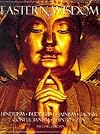
Can the whole of Eastern thought fit between these covers? Hardly.
Still, this book is an intricately woven and delightfully readable quest through Eastern thought. This is not a dry, scholarly recitation. Instead, like the philosophy he writes about, author Michael Jordan takes the middle ground. He manages to touch on the breadth of Eastern thinking while taking occasional plunges to its depths for a story or quote from the sacred texts.
Jordan begins at the beginning revealing the cacophony show more of gods and goddesses whose mercurial qualities make up the religion and rituals of India, Japan and China. He even touches art, architecture and skills of various sects. Jordan covers modern Eastern communities, but there is a strange bent towards Britain and no mention of the huge Buddhist and Zen groups in the United States.
There is an excellent section on Jainism, a short, light chapter on Confucius and even several references to Zen. Jordan really shines when he writes about myths and gods, both of which he has written about before.
There is a breadth to what is missing as well. There exists a massive array of delightful Hindu myths that barely get mentioned. There is a rich vein of Zen koans and stories that are bypassed, and there is little exploration of the connections between East and West.
This breadth comes with a cost. It is like trying to train a chef merely by handing him recipes. There needs to be more substance, more depth. Reading this book is as disappointing as finding that the Mona Lisa had only been painted on a postage stamp. Readers are left to wonder if there should be more or is this truly the gist of Eastern wisdom? show less
Still, this book is an intricately woven and delightfully readable quest through Eastern thought. This is not a dry, scholarly recitation. Instead, like the philosophy he writes about, author Michael Jordan takes the middle ground. He manages to touch on the breadth of Eastern thinking while taking occasional plunges to its depths for a story or quote from the sacred texts.
Jordan begins at the beginning revealing the cacophony show more of gods and goddesses whose mercurial qualities make up the religion and rituals of India, Japan and China. He even touches art, architecture and skills of various sects. Jordan covers modern Eastern communities, but there is a strange bent towards Britain and no mention of the huge Buddhist and Zen groups in the United States.
There is an excellent section on Jainism, a short, light chapter on Confucius and even several references to Zen. Jordan really shines when he writes about myths and gods, both of which he has written about before.
There is a breadth to what is missing as well. There exists a massive array of delightful Hindu myths that barely get mentioned. There is a rich vein of Zen koans and stories that are bypassed, and there is little exploration of the connections between East and West.
This breadth comes with a cost. It is like trying to train a chef merely by handing him recipes. There needs to be more substance, more depth. Reading this book is as disappointing as finding that the Mona Lisa had only been painted on a postage stamp. Readers are left to wonder if there should be more or is this truly the gist of Eastern wisdom? show less

The dustjacket blurb describes Encyclopedia of Gods author Michael Jordan as a “writer and broadcaster” and notes he spent nine years researching the book. If he had spent a couple of days of those nine years adding references, it might have been a useful work. As it is, we get a listing of the deities (I’ll take 2500 on faith; I’m not going to count them) and a few sentences on each, but usually no clue as to where to go for more information. For “major” gods, Jordan sometimes show more provides a “literary” source – for example, Theogeny for Zeus – but if you’re interested in learning more about (say) Lauka Mate, the Latvian god of agriculture, you’re out of luck.
There are a few tantalizing descriptions – for example, Niruktipratisamvit is a Buddhist deity of etymological analysis. Aztec mythology continues to be confoundingly creepy; Coatilicue is headless; has claws for hands and feet; wears a necklace of hands, hearts, and skulls; has a skirt of snakes, and two snakes rising from her decapitated neck; has thirteen leather cords hanging down her back, covered with snails (nice touch, those snails); and feeds on human corpses. She’s the goddess of florists. If she’s the goddess of florists, I wonder what the Aztec goddess of psychotic torturers looks like; probably a fluffy bunny.
About the only thing this might be useful for is as a reference for a D&D cosmology, or something similar; not recommended otherwise. show less
There are a few tantalizing descriptions – for example, Niruktipratisamvit is a Buddhist deity of etymological analysis. Aztec mythology continues to be confoundingly creepy; Coatilicue is headless; has claws for hands and feet; wears a necklace of hands, hearts, and skulls; has a skirt of snakes, and two snakes rising from her decapitated neck; has thirteen leather cords hanging down her back, covered with snails (nice touch, those snails); and feeds on human corpses. She’s the goddess of florists. If she’s the goddess of florists, I wonder what the Aztec goddess of psychotic torturers looks like; probably a fluffy bunny.
About the only thing this might be useful for is as a reference for a D&D cosmology, or something similar; not recommended otherwise. show less
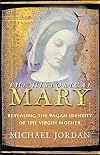
Very insightful. I enjoyed reading about the history of early Christianity and the rise in the worship of the Virgin Mary especially as a former Catholic. I used to be a Daughter of Mary as a girl and always thought in the back of my mind that she was like the Goddesses in the mythology I read about. I never saw it written more clearly as to how her devotion was negative to women as well. Definitely makes me want to read up more on the subject.
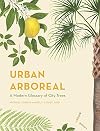
Urban Arboreal by Michael Jordan and Kelly Louise Judd takes a look at the many trees that share our cities and suburbs. Humans need trees. We need them to live. We need them as our connection point to nature. Our ancestors came from the forests. They were our first home, and most people do better for having trees around, even if it's only on lawns or verges, or sidewalk beds. This little book is a modern compendium of those trees able to flourish in a city environment. Nearly 100 different show more trees are mentioned. Each tree has an info page and a page of full-colour print plates. It was neat to read about the individual trees, with their interesting facts. The pictures were pretty cool too, and gave the book an old-timey feel. Recommended for urban landscapes, nature lovers, and dendrophiles.
***Many thanks to Netgalley and Quarto Publishing for providing an egalley in exchange for a fair and honest review. show less
***Many thanks to Netgalley and Quarto Publishing for providing an egalley in exchange for a fair and honest review. show less
Lists
Trees (1)
You May Also Like


Statistics
- Works
- 28
- Members
- 1,319
- Popularity
- #19,487
- Rating
- 3.6
- Reviews
- 14
- ISBNs
- 131
- Languages
- 12