
David Thomas (3) (1959–)
Author of Ostland
For other authors named David Thomas, see the disambiguation page.
David Thomas (3) has been aliased into Tom Cain.
Works by David Thomas
Works have been aliased into Tom Cain.
Tagged
Common Knowledge
- Legal name
- Thomas, David William Penrose
- Other names
- Cain, Tom (pseudonym)
- Birthdate
- 1959-01-17
- Gender
- male
- Occupations
- journalist
- Nationality
- UK
- Associated Place (for map)
- UK
Members
Reviews
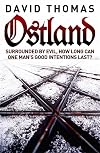
Any book that discusses the Holocaust and those who implemented it invariably touches on the question of how good people could end up acting in such a cold-blooded manner. The answers are as varied as the number of books that exist about this topic, but the search for an understandable answer does not cease. Ostland is one more exploration of this topic as it discusses the background of one Georg Heuser and his rise from up-and-coming police detective to mass murderer on the Eastern show more Front.
Told in the guise of trial preparations, the story flips back and forth between Georg’s first-person narrative and the efforts of lawyer Paula Siebert to amass evidence against Georg for his trial twenty years later. As is often the case, the two stories are unequal. Paula’s discoveries and frustrations are not nearly as absorbing as Georg’s experiences. Readers will find themselves speeding through those short chapters of Paula’s in order to get back to Georg’s more disturbing ones. This does not mean that those scenes involving Paula’s efforts are less important than those told by Georg. In fact, there is an interesting message that arises from the court case itself – one that Paula and the readers are slow to discover. However, it is Georg’s experiences in Minsk that will draw a reader’s attention.
The idea of guilt for Nazi war criminals is always a tricky one. Does following orders automatically excuse one’s behavior or is there a fundamentally human requirement to challenge orders that are so basically wrong? Ostland does not attempt to answer such questions but lays out Georg’s case methodically and unemotionally in an effort for readers to draw their own conclusions. It starts with his rise to detective and his introduction to real-world police procedures and culminates in his Minsk leadership. Throughout his story, readers get the full gamut of Nazi atrocities as seen through the eyes and experienced through the mind of an ambitious young man anxious to make a name for himself and conditioned to follow orders to the letter without question and without fail.
Ostland, in spite of using as much real-life evidence as possible, never sets out to indict Heuser for his crimes nor to critique Siebert on her preparations. Instead, it forces readers to evaluate each piece of evidence on their own, to judge based on Georg’s state of mind, as presented in the novel with fictional license, as well as on the facts. It also requires readers to extrapolate their deductions based on Georg’s story and apply them to the entire German populace. That Heuser epitomizes the quintessential Nazi soldier is neither here nor there as his attitude towards leadership and rules is as much cultural as it is personal, thereby further complicating the issue of guilt.
As horrific as one imagines it will be given its subject matter, Ostland is still a compelling read for the picture it paints of a world gone mad by war and hate. It makes no excuses for what happened but serves to offer up a warning that it is easy to fall into the trap of following orders. It raises questions about individual responsibility versus the collective good and does so in a way that requires readers to stop and reflect. In such a mad world in which the rules plainly flout common sense, there are no easy answers, nor can there be. However, taking the time to think and assess is one step towards avoiding future atrocities because it forces readers to answer the tough questions before they become reality. To that end, Ostland provides a chilling reminder of not only what occurred during the Nazi regime but also that guilt, in such instances, is never as black and white as one likes to think it will be. show less
Told in the guise of trial preparations, the story flips back and forth between Georg’s first-person narrative and the efforts of lawyer Paula Siebert to amass evidence against Georg for his trial twenty years later. As is often the case, the two stories are unequal. Paula’s discoveries and frustrations are not nearly as absorbing as Georg’s experiences. Readers will find themselves speeding through those short chapters of Paula’s in order to get back to Georg’s more disturbing ones. This does not mean that those scenes involving Paula’s efforts are less important than those told by Georg. In fact, there is an interesting message that arises from the court case itself – one that Paula and the readers are slow to discover. However, it is Georg’s experiences in Minsk that will draw a reader’s attention.
The idea of guilt for Nazi war criminals is always a tricky one. Does following orders automatically excuse one’s behavior or is there a fundamentally human requirement to challenge orders that are so basically wrong? Ostland does not attempt to answer such questions but lays out Georg’s case methodically and unemotionally in an effort for readers to draw their own conclusions. It starts with his rise to detective and his introduction to real-world police procedures and culminates in his Minsk leadership. Throughout his story, readers get the full gamut of Nazi atrocities as seen through the eyes and experienced through the mind of an ambitious young man anxious to make a name for himself and conditioned to follow orders to the letter without question and without fail.
Ostland, in spite of using as much real-life evidence as possible, never sets out to indict Heuser for his crimes nor to critique Siebert on her preparations. Instead, it forces readers to evaluate each piece of evidence on their own, to judge based on Georg’s state of mind, as presented in the novel with fictional license, as well as on the facts. It also requires readers to extrapolate their deductions based on Georg’s story and apply them to the entire German populace. That Heuser epitomizes the quintessential Nazi soldier is neither here nor there as his attitude towards leadership and rules is as much cultural as it is personal, thereby further complicating the issue of guilt.
As horrific as one imagines it will be given its subject matter, Ostland is still a compelling read for the picture it paints of a world gone mad by war and hate. It makes no excuses for what happened but serves to offer up a warning that it is easy to fall into the trap of following orders. It raises questions about individual responsibility versus the collective good and does so in a way that requires readers to stop and reflect. In such a mad world in which the rules plainly flout common sense, there are no easy answers, nor can there be. However, taking the time to think and assess is one step towards avoiding future atrocities because it forces readers to answer the tough questions before they become reality. To that end, Ostland provides a chilling reminder of not only what occurred during the Nazi regime but also that guilt, in such instances, is never as black and white as one likes to think it will be. show less
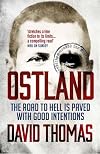
A chilling book in every possible way. Based on real people and events, it left me very disturbed.
Set in Nazi Germany during WWll, the protagonist is a young German who has just graduated from Berlin's police academy where he was top student and gained all the honours.
He is sent to work with the Berlin Murder Squad which is led by a very famous detective. The squad are in the thick of a complex situation as they try to track down a serial killer. Heuser, a rather earnest young man but with show more his heart in the right place, is determined to make his mark, he is a stickler for being loyal and obedient and for following the rules. Thanks to hard work, and some luck the Kripo get their man.
Thus far the book is an interesting but traditional police crime novel. Then the focus suddenly shifts and darkens when thanks to having helped catch the killer he is given promotion and sent to work in 'Ostland' a huge area of Russia which Germany has conquered, and which the German leadership intend to be populated with good German volk once it has been cleared. Heuser assumes he will be helping to set up a police system there.
However, when he arrives it is quickly made clear to him that what is actually going on there is the killing of Jews in large numbers. Because Russia had far more Jews in their population than Germany or Austria ever did, the numbers to be 'dealt' with are huge. He is horrified and unsure as to how he should proceed, but little by little his humanity is stripped away from him as it is with all the other German officers and men sent to the area.
It is as though this evil is a deadly virus which overcomes them all.
This is not the 'Final Solution' of the big industrial scale Concentration camps such as Austwizch or Bergen-Belsen, they have no gas chambers to speed the hideous demands of their superiors to kill all the Jews delivered to them.
The killing is close up and personal, every Jew has to be shot. Thousands and thousands and thousands of them. Heuser becomes almost inured to what he is doing, and the reader watches aghast as a decent young man slides inexorably into becoming a monster in what is a relatively short time.
There is a parallel story running through the book, that of a young German lawyer who, in the 1960s is set to gathering evidence for the criminal prosecution of Heuser and the other surviving officers who were at Minsk. Heuser has led a blameless life since the war, and she is finding it hard to get any evidence to bring him to trial. Finally he is tried and the outcome is surprising.
All through these sections of the book, which are nothing like as dramatic or gripping like Heuser's tale of his time in Ostland, I was asking myself - what would I have done? could I be sure I would not sink into the pit of hell that the Nazi regime created? could it happen in Britain, or the USA? Big questions.
What I had to keep reminding myself was that all the situations - and indiviuals - in this book really did exist and they really did do these frightful things
This book is very strong meat, and some readers would undoubtedly find it upsetting. show less
Set in Nazi Germany during WWll, the protagonist is a young German who has just graduated from Berlin's police academy where he was top student and gained all the honours.
He is sent to work with the Berlin Murder Squad which is led by a very famous detective. The squad are in the thick of a complex situation as they try to track down a serial killer. Heuser, a rather earnest young man but with show more his heart in the right place, is determined to make his mark, he is a stickler for being loyal and obedient and for following the rules. Thanks to hard work, and some luck the Kripo get their man.
Thus far the book is an interesting but traditional police crime novel. Then the focus suddenly shifts and darkens when thanks to having helped catch the killer he is given promotion and sent to work in 'Ostland' a huge area of Russia which Germany has conquered, and which the German leadership intend to be populated with good German volk once it has been cleared. Heuser assumes he will be helping to set up a police system there.
However, when he arrives it is quickly made clear to him that what is actually going on there is the killing of Jews in large numbers. Because Russia had far more Jews in their population than Germany or Austria ever did, the numbers to be 'dealt' with are huge. He is horrified and unsure as to how he should proceed, but little by little his humanity is stripped away from him as it is with all the other German officers and men sent to the area.
It is as though this evil is a deadly virus which overcomes them all.
This is not the 'Final Solution' of the big industrial scale Concentration camps such as Austwizch or Bergen-Belsen, they have no gas chambers to speed the hideous demands of their superiors to kill all the Jews delivered to them.
The killing is close up and personal, every Jew has to be shot. Thousands and thousands and thousands of them. Heuser becomes almost inured to what he is doing, and the reader watches aghast as a decent young man slides inexorably into becoming a monster in what is a relatively short time.
There is a parallel story running through the book, that of a young German lawyer who, in the 1960s is set to gathering evidence for the criminal prosecution of Heuser and the other surviving officers who were at Minsk. Heuser has led a blameless life since the war, and she is finding it hard to get any evidence to bring him to trial. Finally he is tried and the outcome is surprising.
All through these sections of the book, which are nothing like as dramatic or gripping like Heuser's tale of his time in Ostland, I was asking myself - what would I have done? could I be sure I would not sink into the pit of hell that the Nazi regime created? could it happen in Britain, or the USA? Big questions.
What I had to keep reminding myself was that all the situations - and indiviuals - in this book really did exist and they really did do these frightful things
This book is very strong meat, and some readers would undoubtedly find it upsetting. show less
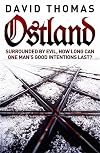
February 1941, wartime Berlin. Brilliant, idealistic young detective Georg Heuser joins the Murder Squad in the midst of the biggest manhunt the city has ever seen. A serial killer is slaughtering women on S-Bahn trains and leaving their battered bodies by the tracks. Heuser must confront evil eye-to-eye as he helps track down the murderer.
July 1959, peacetime West Germany: a pioneering young lawyer, Paula Siebert, is the sole woman in a federal unit investigating men who have committed show more crimes of unimaginable magnitude and horror. Their leader has just been arrested. His name is Georg Heuser. Siebert is sure of his guilt. But one question haunts her: how could a once decent man have become a sadistic monster?
The answer lies in the desolate wastes of the Russian Front, the vast landmass conquered by Hitler’s forces… the new empire the Nazis call Ostland.
Based on an extraordinary true story, Ostland is a gripping detective thriller, a harrowing account of the Holocaust and a thought-provoking examination of the capacity for sin that lurks in every human soul.
Similar in theme to [bc:The Kindly Ones|3755250|The Kindly Ones|Jonathan Littell|https://d202m5krfqbpi5.cloudfront.net/books/1347999215s/3755250.jpg|2916549]The Kindly Ones by Jonathan Littell this book deserves better than its clichéd thriller cover. Ostland is a book of two parts; the first half is what you are expecting, a hunt for a serial killer and a rather disturbing one at that. Then at about the halfway point the narrative takes an unexpected turn and the real story begins.
The second half tells of one good man’s descent into evil through the brutalising effects of the Holocaust. Heuser slowly changes from a Berlin policeman who wanted to protect the innocent and uphold justice into mass murdering Nazi. The first person approach does allow you glimpses of what turned a decent man into a monster.
I did prefer The Kindly Ones but Ostland packs a powerful punch that stays with the reader for a long time show less
July 1959, peacetime West Germany: a pioneering young lawyer, Paula Siebert, is the sole woman in a federal unit investigating men who have committed show more crimes of unimaginable magnitude and horror. Their leader has just been arrested. His name is Georg Heuser. Siebert is sure of his guilt. But one question haunts her: how could a once decent man have become a sadistic monster?
The answer lies in the desolate wastes of the Russian Front, the vast landmass conquered by Hitler’s forces… the new empire the Nazis call Ostland.
Based on an extraordinary true story, Ostland is a gripping detective thriller, a harrowing account of the Holocaust and a thought-provoking examination of the capacity for sin that lurks in every human soul.
Similar in theme to [bc:The Kindly Ones|3755250|The Kindly Ones|Jonathan Littell|https://d202m5krfqbpi5.cloudfront.net/books/1347999215s/3755250.jpg|2916549]The Kindly Ones by Jonathan Littell this book deserves better than its clichéd thriller cover. Ostland is a book of two parts; the first half is what you are expecting, a hunt for a serial killer and a rather disturbing one at that. Then at about the halfway point the narrative takes an unexpected turn and the real story begins.
The second half tells of one good man’s descent into evil through the brutalising effects of the Holocaust. Heuser slowly changes from a Berlin policeman who wanted to protect the innocent and uphold justice into mass murdering Nazi. The first person approach does allow you glimpses of what turned a decent man into a monster.
I did prefer The Kindly Ones but Ostland packs a powerful punch that stays with the reader for a long time show less

Any book that contains the full text of Bilko's monologue from 'Bilko gets some sleep' ("It all came out in Freud's debate with Spinoza many years ago in Budapest...") deserves praise. Seargeant Bilko is now something of a forgotten classic (the film remake starring Steve Martin is best ignored) and its DVD appearances seem fleeting (at least in the UK - odd, because it played in late-night repeats on the BBC for nearly forty years, and came up fresh every time), so this book is essential show more reading for all Bilko fans. That this book went through two impressions in the year of publication shows that the demand was there. show less
Lists
Awards

You May Also Like
Associated Authors
Statistics
- Works
- 15
- Members
- 346
- Popularity
- #69,042
- Rating
- 3.6
- Reviews
- 7
- ISBNs
- 376
- Languages
- 11