
Paul Collins (3) (1940–)
Author of The Birth of the West: Rome, Germany, France, and the Creation of Europe in the Tenth Century
For other authors named Paul Collins, see the disambiguation page.
About the Author
Historian and broadcaster Paul Collins is the author of eleven books on religion, the environment, and history including Papal Power: A Proposal for Change in Catholicism's Third Millennium, God's Earth: Religion as if Matter Really Mattered, and Upon This Rock: The Popes and Their Changing Role. show more He lives in Canberra, Australia. show less
Works by Paul Collins
The Birth of the West: Rome, Germany, France, and the Creation of Europe in the Tenth Century (2013) 210 copies, 5 reviews
Absolute Power: How the Pope Became the Most Influential Man in the World (2018) 34 copies, 2 reviews
Hell's gates: the terrible journey of Alexander Pearce, Van Diemen's Land Cannibal (2002) 28 copies, 1 review
The Modern Inquisition: Seven Prominent Catholics and Thier Struggle with the Vatican (2002) 14 copies
Tagged
Common Knowledge
- Birthdate
- 1940-08-12
- Gender
- male
- Education
- Harvard University (MA, Theology)
Australian National University (PhD, History) - Occupations
- priest
- Short biography
- [from author's website]
Paul Collins is an historian, broadcaster and writer. A Catholic priest for thirty-three years, he resigned from the active priestly ministry in 2001 due to a dispute with the Vatican over his book Papal Power (1997).
Collins has authored seventeen books and is known as a commentator on Catholicism and the papacy. He also has a strong interest in ethics, environmental and population issues.
Collins has a Master's degree in theology from Harvard University and a Doctorate of Philosophy in history from the Australian National University. He lives in Canberra, Australia. - Nationality
- Australia
- Birthplace
- Richmond, Victoria, Australia
- Places of residence
- Canberra, Australian Capital Territory, Australia
- Associated Place (for map)
- Australia
Members
Reviews
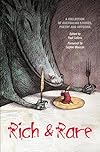
Rich & Rare (Anthology)
Paul Collins (ed)
Publisher: Ford Street Publishing
Format: Paperback Demographic: Upper primary and above
RRP: $24.95 ISBN: 9781925272116
Reviewer: Tim Harris
Quality short story anthologies can be a rare delicacy these days. It is well then that Ford St has published Rich & Rare: A Collection of Australian Stories, Poetry and Artwork, a delightful smorgasbord of Aussie talent that's sure to have something for any reader to enjoy. Whatever your poison, be it side-bursting show more comedy, edge-of-your-seat action, drama that hits you right in the guts, delectable mysteries or sweet slice-of-life style pieces, this anthology has it. While many of the themes are particularly relevant for younger readers, the vast majority of these stories have enough depth and subtlety to satisfy palates both old and young. This combination of relevance to younger readers along with plenty of complexity to pick apart makes these stories as appropriate for classroom use as they are for general enjoyment.
The collection includes some very powerful pieces, such as 'The Bravest Person I Know' by Archimede Fusillo which is at once both heart-breaking and heart-warming. Also moving is 'I Can't Sleep' by Tracey Hawkins, which paints a vivid portrait of a family tearing itself apart.
After heavy pieces such as these, the comedic works come as welcome relief. The best of these include Leigh Hobbs' 'A Writer's Morning', which is greatly enhanced by his illustrations and far too relatable for this recently reformed student, and Michael Pryor's 'Magic for Sale', an extremely relatable fantasy parody which normalises the fantastic and suggests that the more things change, the more they stay the same.
There's some great non-parodic fantasy too, such as Paul Collins' 'The Black Sorrows' which makes interesting use of a deadline and other thriller elements to force the protagonist out of her comfort zone and raise the stakes of the adventure. Paul O'Sullivan contributes an illustration for most of the pieces, and his artwork for this story in particular really helps to convey the nature of the angel Wind. In 'The Green Boy', Kirsty Murray presents a whimsical, Gaimanesque story in which she explores the idea that there could be, or perhaps should be, more to this world than we see and know in a heartwarmingly bizarre tale about friendship.
Doug Macleod mixes in a strong dose of silliness with the creepier elements of his ghost story 'The Ghost in the Stereoscope'. His characterisation is great, and the story does a good job of exploring its preoccupation with the past, memories, secrets and the relations these things hold with the present. Sean McMullen's 'The Time Machine' is another piece in which the past, memories and legacies are key concerns. With its themes of illusion and the nature of reality along with the mystical weight of the dreams it relates, there's a lot for VCE English students studying the 'Whose Reality?' context to sink their teeth into.
The anthology also contains some interesting poetry. It ends very appropriately with Sherryl Clark's poem 'Story World', which really captures the allure of stories and the adventures they take us on to far away places.
For an overview of some of Australia's most promising talent and a delectable array of short fiction, Rich & Rare really hits the spot. With something for everyone, I would recommend this anthology for anyone who appreciates a good tale and reads for the joy of it. show less
Paul Collins (ed)
Publisher: Ford Street Publishing
Format: Paperback Demographic: Upper primary and above
RRP: $24.95 ISBN: 9781925272116
Reviewer: Tim Harris
Quality short story anthologies can be a rare delicacy these days. It is well then that Ford St has published Rich & Rare: A Collection of Australian Stories, Poetry and Artwork, a delightful smorgasbord of Aussie talent that's sure to have something for any reader to enjoy. Whatever your poison, be it side-bursting show more comedy, edge-of-your-seat action, drama that hits you right in the guts, delectable mysteries or sweet slice-of-life style pieces, this anthology has it. While many of the themes are particularly relevant for younger readers, the vast majority of these stories have enough depth and subtlety to satisfy palates both old and young. This combination of relevance to younger readers along with plenty of complexity to pick apart makes these stories as appropriate for classroom use as they are for general enjoyment.
The collection includes some very powerful pieces, such as 'The Bravest Person I Know' by Archimede Fusillo which is at once both heart-breaking and heart-warming. Also moving is 'I Can't Sleep' by Tracey Hawkins, which paints a vivid portrait of a family tearing itself apart.
After heavy pieces such as these, the comedic works come as welcome relief. The best of these include Leigh Hobbs' 'A Writer's Morning', which is greatly enhanced by his illustrations and far too relatable for this recently reformed student, and Michael Pryor's 'Magic for Sale', an extremely relatable fantasy parody which normalises the fantastic and suggests that the more things change, the more they stay the same.
There's some great non-parodic fantasy too, such as Paul Collins' 'The Black Sorrows' which makes interesting use of a deadline and other thriller elements to force the protagonist out of her comfort zone and raise the stakes of the adventure. Paul O'Sullivan contributes an illustration for most of the pieces, and his artwork for this story in particular really helps to convey the nature of the angel Wind. In 'The Green Boy', Kirsty Murray presents a whimsical, Gaimanesque story in which she explores the idea that there could be, or perhaps should be, more to this world than we see and know in a heartwarmingly bizarre tale about friendship.
Doug Macleod mixes in a strong dose of silliness with the creepier elements of his ghost story 'The Ghost in the Stereoscope'. His characterisation is great, and the story does a good job of exploring its preoccupation with the past, memories, secrets and the relations these things hold with the present. Sean McMullen's 'The Time Machine' is another piece in which the past, memories and legacies are key concerns. With its themes of illusion and the nature of reality along with the mystical weight of the dreams it relates, there's a lot for VCE English students studying the 'Whose Reality?' context to sink their teeth into.
The anthology also contains some interesting poetry. It ends very appropriately with Sherryl Clark's poem 'Story World', which really captures the allure of stories and the adventures they take us on to far away places.
For an overview of some of Australia's most promising talent and a delectable array of short fiction, Rich & Rare really hits the spot. With something for everyone, I would recommend this anthology for anyone who appreciates a good tale and reads for the joy of it. show less
Although I rate this book at five starts out of five, I did not like this book. There is too much in it that is disturbing, even downright painful, for a person who has lived his 83 years as a struggling yet continuous member. Still, I can give five stars on the scholarship and conclusions. I would recommend it to anyone who would like to know more about the Catholic Church, as it exists now. Sadly, from my own readings, I cannot find much that I would think of as error or even prejudice. show more based on my other readings.
Mr. Collins places a blame of sorts on the 225 year trend of imperialism in the men who have been elected pope. Yet, even as he does this, and correctly so in my opinion, he also describes a church government, the Curia, as fractured and almost beyond control. The Catholic Church is usually seen through the lense of the current Pope yet no one person can admiinister an organization of over a billion members. What is frustrating to a casual observer is that men come to the papacy and seemingly do nothing about the government of the church. Why don't popes come into office, like for instance a new president of the United States, and replace all of the heads of the departments and agencies?
Somewhat hesitantly, I'll offer the opinion a new pope simply doesn't have the talent pool from which to select his principle helpers. Perhaps the most important position, after the pope himself, is the Secretary of State. Yet it is a foregone conclusion that to be Secretary of State of the Catholic Church, one must have served in the Church's diplomatic corps. Such an incestuous situation presents an obvious conflict between the new pope and the secretariat. Popes come and go but the secretariat remains.
One might argue that it is good that there are those who will argue with the pope. As a human being, he cannot be right all the time. And then there is that pesky fact of sin. Catholics have long expected the clergy to be saintly even as they speak and act critically toward the local pastor. The sin of a priest or bishop is magnified beyond the ability of a human to be good. But there is also the issue that priest and bishop functions at the mundane level of a business person and at the bigger-than-life position as arbiter of sinful behavior and lack of love of God. In this sort of environment, it is little wonder that the human sinfulness of priests and bishops is magnified. It isn't that a priest or bishop cannot be a good person but it is an example of the pervasiveness of evil in the world. The devil does exist, and let no one claim they have never been tempted to the limit of their ability to resist..
The elephant in any discussion of the Catholic Church is infallibility. As a practical or every-day matter, it really is a non-issue. It has only been used once since it was Defined at Vatican Council I (Definition of the Doctrine of the Assumption which had already been held by Catholics for centuries). But it is the mere existance of this doctrine around which many of the Church's problems revolve. Obviously, such a doctrine can only be held at the highest level. In support or defense of the doctrine, the Papacy has been elevated way out of proportion. Just imagine the weight this doctrine must lay on the shoulders of a man elected pope. No man should have to bear such a burden. It must be possible to admit a mistake of self or a predessor without having the roof cave in. And, because of the insidiousness of human nature, there are all those who surround the pope who will lay claim to that damnable infallibility as if it wraps those near the pope in a protective cloak..
I have not yet read the last chapter of Mr. Collins' book because that is where his prescriptions undoubtedly rest. I wanted to do this review based on what he has reported. He admits he has felt the sting of the Vatican's CDFand he seems to be placing great trust in Pope Francis being able to successfully manage the church. In that regard, I, too, pray for Francis Ad multos annos. But I also ask that Francis mimic Benedict XVI at the right time. show less
Mr. Collins places a blame of sorts on the 225 year trend of imperialism in the men who have been elected pope. Yet, even as he does this, and correctly so in my opinion, he also describes a church government, the Curia, as fractured and almost beyond control. The Catholic Church is usually seen through the lense of the current Pope yet no one person can admiinister an organization of over a billion members. What is frustrating to a casual observer is that men come to the papacy and seemingly do nothing about the government of the church. Why don't popes come into office, like for instance a new president of the United States, and replace all of the heads of the departments and agencies?
Somewhat hesitantly, I'll offer the opinion a new pope simply doesn't have the talent pool from which to select his principle helpers. Perhaps the most important position, after the pope himself, is the Secretary of State. Yet it is a foregone conclusion that to be Secretary of State of the Catholic Church, one must have served in the Church's diplomatic corps. Such an incestuous situation presents an obvious conflict between the new pope and the secretariat. Popes come and go but the secretariat remains.
One might argue that it is good that there are those who will argue with the pope. As a human being, he cannot be right all the time. And then there is that pesky fact of sin. Catholics have long expected the clergy to be saintly even as they speak and act critically toward the local pastor. The sin of a priest or bishop is magnified beyond the ability of a human to be good. But there is also the issue that priest and bishop functions at the mundane level of a business person and at the bigger-than-life position as arbiter of sinful behavior and lack of love of God. In this sort of environment, it is little wonder that the human sinfulness of priests and bishops is magnified. It isn't that a priest or bishop cannot be a good person but it is an example of the pervasiveness of evil in the world. The devil does exist, and let no one claim they have never been tempted to the limit of their ability to resist..
The elephant in any discussion of the Catholic Church is infallibility. As a practical or every-day matter, it really is a non-issue. It has only been used once since it was Defined at Vatican Council I (Definition of the Doctrine of the Assumption which had already been held by Catholics for centuries). But it is the mere existance of this doctrine around which many of the Church's problems revolve. Obviously, such a doctrine can only be held at the highest level. In support or defense of the doctrine, the Papacy has been elevated way out of proportion. Just imagine the weight this doctrine must lay on the shoulders of a man elected pope. No man should have to bear such a burden. It must be possible to admit a mistake of self or a predessor without having the roof cave in. And, because of the insidiousness of human nature, there are all those who surround the pope who will lay claim to that damnable infallibility as if it wraps those near the pope in a protective cloak..
I have not yet read the last chapter of Mr. Collins' book because that is where his prescriptions undoubtedly rest. I wanted to do this review based on what he has reported. He admits he has felt the sting of the Vatican's CDFand he seems to be placing great trust in Pope Francis being able to successfully manage the church. In that regard, I, too, pray for Francis Ad multos annos. But I also ask that Francis mimic Benedict XVI at the right time. show less
This is a great book. The only reason I do not it give it5 stars is because it, as so many books about the church, fails to mention any role for the Holy Spirit. It is well and good to speak about the Popes as strong or weak, shy or outgoing but there seems always to be a case that the church is run only by men, and even then that those men are venal, stupid, scoundrel, or saint. The strongest evidence of the movement of the Holy Spirit is that the Church has survived for two thousand years show more in spite of everything.
That said, I believe Collins has done a great service. There is always much to be learned from history if only to not do the same stupid things over and over. Whether 1799 is THE lowest point in the history of the Catholic Church is open to debate. It clearly was a point that marked a change in direction.
Before considering prescriptions for the future health of the Catholic Church, one needs to ask the question: If the Pope has become the most influential man in the world, is it true, and, if it is true, what's wrong with that? Collins quotes Lord Acton's famous statement of power corrupts and absolute power corrupts absolutely. It is left to the reader to draw his or her own conclusions, as it is in this book.
Has the papacy always been as good as it could be? Absolutely not. Has it been exercised always for the good of the Church? Seemingly, not; but absolutely -- well, that's a question for the ages. Has the papacy been a force for good in the world? To the extent it is not a military power or an economic force, the papacy gets a pass; but if it is measured as moral force, well not so much. show less
That said, I believe Collins has done a great service. There is always much to be learned from history if only to not do the same stupid things over and over. Whether 1799 is THE lowest point in the history of the Catholic Church is open to debate. It clearly was a point that marked a change in direction.
Before considering prescriptions for the future health of the Catholic Church, one needs to ask the question: If the Pope has become the most influential man in the world, is it true, and, if it is true, what's wrong with that? Collins quotes Lord Acton's famous statement of power corrupts and absolute power corrupts absolutely. It is left to the reader to draw his or her own conclusions, as it is in this book.
Has the papacy always been as good as it could be? Absolutely not. Has it been exercised always for the good of the Church? Seemingly, not; but absolutely -- well, that's a question for the ages. Has the papacy been a force for good in the world? To the extent it is not a military power or an economic force, the papacy gets a pass; but if it is measured as moral force, well not so much. show less
The Birth of the West: Rome, Germany, France, and the Creation of Europe in the Tenth Century by Paul Collins
This theme of this book -- that the 10th century saw the birth of European culture -- is right there in the title. That's helpful, because as the book gets underway there is a barrage of information about the period, but no indication of what it all means. As some reviewers have noted, it's tough to see the forest for the trees. Things improve later on, as the focus moves out and around Europe, and as key figures emerge. In that process, some really interesting information emerges -- the key show more role of the Saxon state, the early date at which Greek learning became available in Europe, and the pathetic state of the papacy. Nonetheless, this remains more a descriptive than an analytic work. Also, some of the author's interpretations seem to me to be shaped by a specific world view: anyone's are, of course, but it does seem to me that he rather underrates Islamic culture. Be that as it may, this ends up being a very interesting read about a period that does not usually get much notice. Would suggest, along with it, "God's Crucible" by David Lewis. It covers a longer period (in both directions) but discusses some of the same issues. show less
Awards

You May Also Like


Statistics
- Works
- 19
- Members
- 495
- Popularity
- #49,935
- Rating
- 3.9
- Reviews
- 9
- ISBNs
- 476
- Languages
- 7