

Stephen White (3) (1945–)
Author of The Bolshevik Poster
For other authors named Stephen White, see the disambiguation page.
About the Author
Stephen White is the James Bryce Professor of Politics, a Senior Research Associate of the School of Central and East European Studies at Glasgow University, and a Visiting Professor at the Institute of Applied Politics in Moscow. White graduated from Trinity College Dublin with degrees in history show more and political science, and then completed a PhD in Soviet studies at Glasgow - including an exchange year at Moscow State University - and a DPhil in politics at Wolfson College Oxford. He was elected a Fellow of the British Academy in 2010. Stephen White is the author of numerous articles and books on Soviet and Russian politics. (Bowker Author Biography) show less
Series
Works by Stephen White
Politics and the Ruling Group in Putin's Russia (Studies in Central and Eastern Europe) (2008) 2 copies
New Directions in Soviet History (International Council for Central and East European Studies) (1991) 2 copies
Tagged
Common Knowledge
Members
Reviews
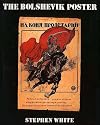
This may look like a coffee-table book of early Soviet poster art, but it is actually much more than that. It is a study of poster art used in popular propagandising in the short period 1917-1920, the period when the Bolsheviks had seized power and then had to defend their gains against foreign intervention. It is highly academic, yet quite readable. It actually starts with an account of 17th- and 18th century woodcuts, known as 'lubok', which themselves echoed the tradition and techniques show more of the icon painters. These 'lubok' established a tradition of the circulation of unofficial broadsides on religious, folkloric or political themes, intended for an audience where literacy could not be assumed. Through the 19th and early 20th centuries, these became more widespread and technically sophisticated. By the time of the October Revolution, these were an essential part of the Bolshevik's mass communication and education strategy.
Stephen White was able to visit some of the best collections of Soviet posters in the USA, Europe and the Soviet Union. (One wonders what has become of the collections in Moscow that he visited.) He writes detailed accounts of the artists who worked on these posters and the ways in which they were used. Many of these posters were part of a series called "Windows"; they were produced by shock cadres of artists and printers who could react to the latest news from the war front and have hundreds of posters on the streets in a few hours' work. These would be fly-posted in any prominent location, and got their name of "Windows" because empty shops were an ideal target.
The period under review is very narrow, as after 1920 and the end of the civil war and the Russo-Polish War, the emphasis turned to posters on economic and social issues; also, a degree of central control began to be exercised rather than leaving the production to semi-autonomous agencies and cadres. Posters also had to compete with revived commercial posters as Lenin's "New Economic Policy" took hold, putting advertising posters back on the streets.
The author devotes a lot of space to analysing the artwork, themes and execution of the subjects, and comparing these with artistic themes of the period generally, He also describes some late revival of the specifically agitprop styles of poster during the Second World War (or 'Great Patriotic War' as it is known in Russia). A number of these posters echoed the spirit and form of the earlier, Bolshevik posters, though they were produced under very different conditions, both physical (improved materials) and political (the over-riding importance of the Stalinist cult of personality).
Anyone just wanting a collection of Russian posters will be perfectly happy with this book, although there is a lot of text in it. But reading that text will give a very detailed - but far from dry - account of the fervour of the artistic life in the turmoil of Bolshevik Russia. show less
Stephen White was able to visit some of the best collections of Soviet posters in the USA, Europe and the Soviet Union. (One wonders what has become of the collections in Moscow that he visited.) He writes detailed accounts of the artists who worked on these posters and the ways in which they were used. Many of these posters were part of a series called "Windows"; they were produced by shock cadres of artists and printers who could react to the latest news from the war front and have hundreds of posters on the streets in a few hours' work. These would be fly-posted in any prominent location, and got their name of "Windows" because empty shops were an ideal target.
The period under review is very narrow, as after 1920 and the end of the civil war and the Russo-Polish War, the emphasis turned to posters on economic and social issues; also, a degree of central control began to be exercised rather than leaving the production to semi-autonomous agencies and cadres. Posters also had to compete with revived commercial posters as Lenin's "New Economic Policy" took hold, putting advertising posters back on the streets.
The author devotes a lot of space to analysing the artwork, themes and execution of the subjects, and comparing these with artistic themes of the period generally, He also describes some late revival of the specifically agitprop styles of poster during the Second World War (or 'Great Patriotic War' as it is known in Russia). A number of these posters echoed the spirit and form of the earlier, Bolshevik posters, though they were produced under very different conditions, both physical (improved materials) and political (the over-riding importance of the Stalinist cult of personality).
Anyone just wanting a collection of Russian posters will be perfectly happy with this book, although there is a lot of text in it. But reading that text will give a very detailed - but far from dry - account of the fervour of the artistic life in the turmoil of Bolshevik Russia. show less
Awards

You May Also Like


Associated Authors
Statistics
- Works
- 34
- Members
- 292
- Popularity
- #80,151
- Rating
- 3.6
- Reviews
- 1
- ISBNs
- 623
- Languages
- 12