
John Egerton (1) (1935–2013)
Author of Speak Now Against The Day: The Generation Before the Civil Rights Movement in the South
For other authors named John Egerton, see the disambiguation page.
About the Author
John Egerton was born on June 14, 1935. He received an undergraduate degree from the University of Kentucky after serving two years in the Army and then went into public relations. He moved to Nashville, Tennessee in 1965 to work for the Southern Education Reporting Service, which monitored show more integration efforts following the Supreme Court's decision in Brown v. Board of Education. The job led to a prolific career filled with newspaper jobs, magazine assignments and books. His first book, A Mind to Stay Here, was published in 1970. During his lifetime, he wrote 10 historical and literary books and contributed to several more as a writer and editor. His other works include The Americanization of Dixie: The Southernization of America and Southern Food: At Home, on the Road, in History. He won the Robert F. Kennedy Book Award for Speak Now Against the Day: The Generation Before the Civil Rights Movement in the South and the Lillian Smith Book Award for Generations: An American Family. He was the co-creator of the documentary A Child Shall Lead Them, about the desegregation of Nashville's schools. He co-founded the Southern Foodways Alliance, dedicated to Southern food and culture. He died of an apparent heart attack on November 21, 2013 at the age of 78. (Bowker Author Biography) show less
Image credit: John Egerton in Nashville
Works by John Egerton
Speak Now Against The Day: The Generation Before the Civil Rights Movement in the South (1994) 157 copies, 1 review
Visions Utopia: Nashoba, Rugby, Ruskin, New Communities (Tennessee Three Star Books) (1977) 35 copies, 1 review
Associated Works
Smokehouse Ham, Spoon Bread, and Scuppernong Wine: The Folklore and Art of Southern Appalachian Cooking (1998) — Foreword, some editions — 180 copies, 2 reviews
Tagged
Common Knowledge
- Legal name
- Egerton, John Walden
- Birthdate
- 1935-06-14
- Date of death
- 2013-11-21
- Gender
- male
- Education
- University of Kentucky
- Occupations
- journalist
- Organizations
- United States Army
Southern Education Reporting Service
Southern Foodways Alliance (Co-Founder) - Nationality
- USA
- Birthplace
- Atlanta, Georgia, USA
- Places of residence
- Cadiz, Kentucky, USA
- Place of death
- Nashville, Tennessee, USA
- Associated Place (for map)
- USA
Members
Reviews
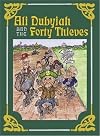
Ali Dubyiah and the Forty Thieves, a Parable of the Reign of George W. Fratbush
Recently while attending the annual meeting of the Southern Historical Association, I happened to stop by a booth belonging to New South Books. As I browsed through the mostly academic books on display, my eyes caught sight of a small volume that looked much like a child’s book of fairy tales. The title, Ali Dubyiah and the Forty Thieve*, and the amusing picture on the cover, a cartoon of George W. Bush and his show more gang, made me smile. I could not resist picking it up and thumbing through its pages. What I discovered was a fairy tale, or fable, that went something like this:
Once upon a time in a land known as “America” a tribal ruler by the name of George W. Fratbush, leader of the Publicans, was declared Ruler of the American Empire after an intense struggle with Prince Al Bore, leader of the Sinners. The whole nation waited with bated breath as the two contestants fought for the honor of leading the world’s greatest nation into the new millennium. The outcome remained in doubt until the nation’s highest judicial authority chaired by Sir William Inquest declared, by a margin of just one vote, that Fratbush was the winner, despite the fact that the majority of the people had indicated their support for Prince Al Bore.
Following his coronation, complete with blessings from the nation’s religious leaders, many of whom were members of the Publicans, George II, or “Dub’-yuh” as his friends called him, left his home in the western territories to take up residence in the nation’s capital. No longer would he spend his leisurely days clearing underbrush on his ranch. Encouraged by a close following of sycophants, Fratbush began to believe he was called by Providence to usher in a new world order. Many felt that he was driven in no small part by the desire to avenge the defeat and humiliation of his father, the ineffectual former King George Wimpbush, by King Zip.
King Zip was a territorial leader known locally as “Willie Bubba.” Bubba defeated Wimpbush by speaking positively of the nation’s greatness and promising eight unbroken years of progressive reforms. Thus was King Wimpbush’s reign limited to only four years, rather than the expected eight. King Zip served his allotted eight years, but they were less than glorious. His efforts at reform alienated the rich, while a brief moment of moral weakness that became known as “Zippergate” brought down upon him the wrath of a powerful Publican faction known as the Pharisees.
Very little was expected from Fratbush. Even family members admitted that the lad was intellectually challenged. Much of his early life was in the company of youthful friends who spent their time in drunken revelry. In a moment of weakness, what Fratbush would later often refer to as his “Damascus moment,” young George Dubyiah underwent a religious conversion. This existential experience would later assure him of support from many of the nation’s most popular clerics, especially Mulla Pat (“God is on line one.”) and Mulla Jerry “Teletubby.”
King Fratbush’s rule would have warranted only a mention in an outline of America’s history, if it were not for Osama bin Hiden and the event forever remembered as “Nine-Eleven.” The two were more than causally related. Osama bin Hiden, like Dubyiah, was a rebellious son born to privilege. Indeed, the Bushes and bin Hidens were known to each other. And, like Dubyiah, Osama underwent a religious conversion. But unlike Dubyiah, who became a follower of Jesus of Nazareth, Osama became a follower of the prophet Muhammad, some of whose followers believed in spreading the prophet’s teachings by violence.
Osama was the alleged mastermind behind the Nine-Eleven incident. In a brazen act of terrorism, Osama’s operatives skyjacked commercial airliners loaded with innocent passengers and crashed them into the Twin Towers in New York City and the Pentagon in Washington, D.C., killing thousands of civilians. Not since the Japanese attack on Pearl Harbor on December 7, 1941, a day that shall live in infamy, had Americans suffered such a blow to their pride. Never again would they feel safe and secure behind two oceans. Would any nation in the world continue to live in awe of American power?
Osama bin Hiden and Nine-Eleven raised George “Dubyiah” Fratbush from among the ranks of America’s most harmless rulers to what he liked to call himself, a “war president.” In a moment, Fratbush saw himself as another Lincoln, Wilson, or FDR, a courageous leader of a beleaguered but free people in a war for the survival of Western Civilization, threatened once again by hordes of barbarians riding out of the deserts of the Middle East.
No one close to Fratbush ever suspected that he was capable of such heroism. Fortunately, or unfortunately as it turned out for America and the world, Fratbush was but the man out front for a cabal of much more intelligent and sinister characters who had followed him to Washington, D.C. Among them were Dick Chaingang, Donald Rumsfailed, Paul Werewolf, John Sackcloth, and Karl “Babyface” Machiavroelli. Historians still disagree as to who was the “Brain” behind the Fratbush rule, whether it was “Bullseye” Dick or Babyface Karl. They, together with others of similar character, would become known to history as “The Forty Thieves,” and the eight years of Dubyiah’s rule in Washington would be remembered as the reign of Ali Dubyiah and the Forty Thieves.
Unfortunately for America and the world community, the eight-year reign of Ali Dubyiah and his Forty Thieves proved to be the most disastrous period in American history. It marked the end of America’s moral leadership in the world community and the beginning of the decline of America as a world power. Once his reign ended and the Sinners returned to power, Fratbush spent his remaining years clearing underbrush and mending fences in self-exile on his western ranch. To the end of his life, he could never understand why God and the American people let him down, or “whatever became of Osama bin Hiden?”
Ali Dubyiah and the Forty Thieves: A Contemporary Fable is very entertaining bit of short fiction that is not only humorous but also a very perceptive and witty analysis of how the Bush machine, together with its ideological comrades, was able to mislead a sizable portion of the American electorate for eight tragic years.
The author, John Egerton, is an independent journalist and author of more than fifteen books. For this analysis of the George W. Bush administration, Egerton chose to employ political satire, or “political science fiction,” and present his findings in the form of a fable drawn from the “recently discovered journals of Ibrahim Barzouni.” The time is somewhere in the distant future, when the “American Empire” is but a memory, much as the Iranian world of The Thousand and One Nights is to the reader. Edgerton said that he meant for the book to be a “cautionary tale.” Written and published while George W. Bush was still in office (2006), Edgerton’s fable appears from the vantage point of 2009/2010 to be rather uncanny.
I have but two regrets about Ali Dubyiah and the Forty Thieves. The first is that I did not know of it until three years after it was first published. The second is that Mr. Edgerton has not seen fit, at least not yet, to provide us with an updated edition, or at least publish more of Ibrahim Barzouni’s journals.
*John Edgerton, Ali Dubyiah and the Forty Thieves: A Contemporary Fable (Montgomery, AL: New South Books, 2006), 144 pp. show less
Recently while attending the annual meeting of the Southern Historical Association, I happened to stop by a booth belonging to New South Books. As I browsed through the mostly academic books on display, my eyes caught sight of a small volume that looked much like a child’s book of fairy tales. The title, Ali Dubyiah and the Forty Thieve*, and the amusing picture on the cover, a cartoon of George W. Bush and his show more gang, made me smile. I could not resist picking it up and thumbing through its pages. What I discovered was a fairy tale, or fable, that went something like this:
Once upon a time in a land known as “America” a tribal ruler by the name of George W. Fratbush, leader of the Publicans, was declared Ruler of the American Empire after an intense struggle with Prince Al Bore, leader of the Sinners. The whole nation waited with bated breath as the two contestants fought for the honor of leading the world’s greatest nation into the new millennium. The outcome remained in doubt until the nation’s highest judicial authority chaired by Sir William Inquest declared, by a margin of just one vote, that Fratbush was the winner, despite the fact that the majority of the people had indicated their support for Prince Al Bore.
Following his coronation, complete with blessings from the nation’s religious leaders, many of whom were members of the Publicans, George II, or “Dub’-yuh” as his friends called him, left his home in the western territories to take up residence in the nation’s capital. No longer would he spend his leisurely days clearing underbrush on his ranch. Encouraged by a close following of sycophants, Fratbush began to believe he was called by Providence to usher in a new world order. Many felt that he was driven in no small part by the desire to avenge the defeat and humiliation of his father, the ineffectual former King George Wimpbush, by King Zip.
King Zip was a territorial leader known locally as “Willie Bubba.” Bubba defeated Wimpbush by speaking positively of the nation’s greatness and promising eight unbroken years of progressive reforms. Thus was King Wimpbush’s reign limited to only four years, rather than the expected eight. King Zip served his allotted eight years, but they were less than glorious. His efforts at reform alienated the rich, while a brief moment of moral weakness that became known as “Zippergate” brought down upon him the wrath of a powerful Publican faction known as the Pharisees.
Very little was expected from Fratbush. Even family members admitted that the lad was intellectually challenged. Much of his early life was in the company of youthful friends who spent their time in drunken revelry. In a moment of weakness, what Fratbush would later often refer to as his “Damascus moment,” young George Dubyiah underwent a religious conversion. This existential experience would later assure him of support from many of the nation’s most popular clerics, especially Mulla Pat (“God is on line one.”) and Mulla Jerry “Teletubby.”
King Fratbush’s rule would have warranted only a mention in an outline of America’s history, if it were not for Osama bin Hiden and the event forever remembered as “Nine-Eleven.” The two were more than causally related. Osama bin Hiden, like Dubyiah, was a rebellious son born to privilege. Indeed, the Bushes and bin Hidens were known to each other. And, like Dubyiah, Osama underwent a religious conversion. But unlike Dubyiah, who became a follower of Jesus of Nazareth, Osama became a follower of the prophet Muhammad, some of whose followers believed in spreading the prophet’s teachings by violence.
Osama was the alleged mastermind behind the Nine-Eleven incident. In a brazen act of terrorism, Osama’s operatives skyjacked commercial airliners loaded with innocent passengers and crashed them into the Twin Towers in New York City and the Pentagon in Washington, D.C., killing thousands of civilians. Not since the Japanese attack on Pearl Harbor on December 7, 1941, a day that shall live in infamy, had Americans suffered such a blow to their pride. Never again would they feel safe and secure behind two oceans. Would any nation in the world continue to live in awe of American power?
Osama bin Hiden and Nine-Eleven raised George “Dubyiah” Fratbush from among the ranks of America’s most harmless rulers to what he liked to call himself, a “war president.” In a moment, Fratbush saw himself as another Lincoln, Wilson, or FDR, a courageous leader of a beleaguered but free people in a war for the survival of Western Civilization, threatened once again by hordes of barbarians riding out of the deserts of the Middle East.
No one close to Fratbush ever suspected that he was capable of such heroism. Fortunately, or unfortunately as it turned out for America and the world, Fratbush was but the man out front for a cabal of much more intelligent and sinister characters who had followed him to Washington, D.C. Among them were Dick Chaingang, Donald Rumsfailed, Paul Werewolf, John Sackcloth, and Karl “Babyface” Machiavroelli. Historians still disagree as to who was the “Brain” behind the Fratbush rule, whether it was “Bullseye” Dick or Babyface Karl. They, together with others of similar character, would become known to history as “The Forty Thieves,” and the eight years of Dubyiah’s rule in Washington would be remembered as the reign of Ali Dubyiah and the Forty Thieves.
Unfortunately for America and the world community, the eight-year reign of Ali Dubyiah and his Forty Thieves proved to be the most disastrous period in American history. It marked the end of America’s moral leadership in the world community and the beginning of the decline of America as a world power. Once his reign ended and the Sinners returned to power, Fratbush spent his remaining years clearing underbrush and mending fences in self-exile on his western ranch. To the end of his life, he could never understand why God and the American people let him down, or “whatever became of Osama bin Hiden?”
Ali Dubyiah and the Forty Thieves: A Contemporary Fable is very entertaining bit of short fiction that is not only humorous but also a very perceptive and witty analysis of how the Bush machine, together with its ideological comrades, was able to mislead a sizable portion of the American electorate for eight tragic years.
The author, John Egerton, is an independent journalist and author of more than fifteen books. For this analysis of the George W. Bush administration, Egerton chose to employ political satire, or “political science fiction,” and present his findings in the form of a fable drawn from the “recently discovered journals of Ibrahim Barzouni.” The time is somewhere in the distant future, when the “American Empire” is but a memory, much as the Iranian world of The Thousand and One Nights is to the reader. Edgerton said that he meant for the book to be a “cautionary tale.” Written and published while George W. Bush was still in office (2006), Edgerton’s fable appears from the vantage point of 2009/2010 to be rather uncanny.
I have but two regrets about Ali Dubyiah and the Forty Thieves. The first is that I did not know of it until three years after it was first published. The second is that Mr. Edgerton has not seen fit, at least not yet, to provide us with an updated edition, or at least publish more of Ibrahim Barzouni’s journals.
*John Edgerton, Ali Dubyiah and the Forty Thieves: A Contemporary Fable (Montgomery, AL: New South Books, 2006), 144 pp. show less
Speak Now Against The Day : The Generation Before the Civil Rights Movement in the South by John Egerton
3701. Speak Now Against the Day The Generation Before the Civil Rights Movement in the South, by John Egerton (read 18 Feb 2003) When I read this book I said: I am euphoric over how much I enjoyed this book, especially the final part. The author considers the civil rights movement from FDR's election in 1932 till May 17, 1954, the day Brown v. Board of Education was handed down. This is a stupendous book and while at times I felt much was treading well-trodden ground, and at times the show more account of the efforts of groups seeking to end segregation was overly heavy in discussing individuals of little present force, the book reads effortlessly and pleasantly. Egerton was born in Atlanta in 1935, but grew up in Cadiz, Tripp County, Kentucky, and occasionally he tells what he was doing and thinking--a nice touch which I appreciated. Some of the Book recalled my reading of Simple Justice by Kluger but most of the book is before that book. (I did note a few minor errors: Huey Long was elected Senator in 1930, so it is wrong to say (on page 16) that he rode into the Senate on FDR's coattails. On page 32 "Joining them after the 1932 election would be Huey Long, James F. Byrnes, John H. Bankhead..." All three were elected to the Senate in 1930, NOT 1932. On page 56 it is stated that Tom Connolly took part in the 1922 filibuster against the anti-lynching bill, but he did not enter the Senate till 1929. On page 80 it is stated that Tom Watson "held sway" in the Senate when FDR was Assistant Secretary of the Navy but Watson did not enter the Senate till 1921 and FDR was not Assistant Secretary any more then. On page 105 it is stated that there was only one black Representative until "after World War II" but Adam Clayton Powell entered Congress on Jan 4, 1945--when World War II was still going on. Herman Talmadge did not "defeat" Walter George. as is stated on page 581--George did not run for re-election in 1956.) Egerton quotes Faulkner: "We speak now against the day when our Southern people who will resist to the last these inevitable changes in social relations, will, when they have been forced to accept what they at one time might have accepted with dignity and good will, will say: 'Why didn't someone tell us this before? Tell us this in time?'" show less
Visions of Utopia : Nashoba, Rugby, Ruskin, and the "new communities" in Tennessee's past by John Egerton

The subtitle of this little book is Nashoba, Rugby, Ruskin, and the "New Communities' in Tennessee's Past and it is a short treatment of three communities based on Utopian ideals that were attempted in the 1800's. While all three failed there were interesting aspects to each and they form a chapter in Tennessee's history that I knew nothing about prior to reading Egerton's book. The book also has maps, drawings and photographs that help illustrate the various locales discussed. Recommended show more for those interested in Tennessee history. show less

This book is a combination of travel log, cookbook, and some other stuff. Besides the overviews, the main part of the book contains:
Eating Out: Southern Food in Restaurants
Eating In: Southern food at home
Conclusion: "An Elegant Sufficiency"
The bibliography contained in this book is worth the price of the book. The quotes in the sidebars are wonderful. My only quarrel, and it's not really one, is that the author stops short of Texas in his discussion of BBQ. I've sent to roster of restaurants show more to traveling friends. show less
Eating Out: Southern Food in Restaurants
Eating In: Southern food at home
Conclusion: "An Elegant Sufficiency"
The bibliography contained in this book is worth the price of the book. The quotes in the sidebars are wonderful. My only quarrel, and it's not really one, is that the author stops short of Texas in his discussion of BBQ. I've sent to roster of restaurants show more to traveling friends. show less
Awards


You May Also Like


Associated Authors
Statistics
- Works
- 18
- Also by
- 4
- Members
- 657
- Popularity
- #38,399
- Rating
- 4.1
- Reviews
- 7
- ISBNs
- 21
- Languages
- 1
- Favorited
- 2
