
Diane Williams (1) (1946–)
Author of Fine, Fine, Fine, Fine, Fine
For other authors named Diane Williams, see the disambiguation page.
Works by Diane Williams
Associated Works
Literature: An Introduction to Fiction, Poetry, and Drama (1995) — Editor, some editions — 1,011 copies, 7 reviews
A Convergence of Birds: Original Fiction and Poetry Inspired by Joseph Cornell (2001) — Contributor — 207 copies, 2 reviews
Tagged
Common Knowledge
- Birthdate
- 1946
- Gender
- female
- Nationality
- USA
- Places of residence
- New York, New York, USA
- Associated Place (for map)
- New York, USA
Members
Reviews
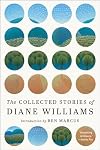
"...this is not literature. This is espionage" (197).
"...I have storyish ideas, but no story in me" (457).
After finishing this omnibus of Diane Williams's flash-fiction collections, reading and re-reading Ben Marcus's eloquent introduction, and scanning through reviewers' comments, it seems to me that what these stories do is stimulate us to primarily speculate. Williams stimulates not analysis or criticism of her work, but rather attempts to explain what it is like to read the work. Not show more necessarily a bad thing, but I tire of work that attempts to implode traditional writing (i.e. to subvert storytelling). It has its place, of course, but how many different ways can one produce work that is chiefly about breaking the rules? But perhaps this sort of prose is about awakening readers from a slumber: "When you know how it will turn out, you feel tired" (202).
So, that said, what was this like for me? Most of the time you get the feeling she is talking about something else. Williams takes Hemingway's advice--show, don't tell--to the extreme and gives us enough clues to spin or own stories. It's sort of like people-watching in a crowded space. The narrator flits from one person to another, oscillating between first- and third-person, weaving threads between strangers. The opening and closing sentences drop you in the middle of something. "Claudette's Head" is one of the more lucid stories and, I think, may rival "Hills Like White Elephants": "I am terrified I will be found out" (26).
Certain excerpts shine, however, dropped in at far-flung intervals though they are. "Their infant, who can understand their language better than his own, is listening" (156). "Many time a person seems fairly satisfied already but is so unsuspecting" (240). "I am one of those who keeps expecting the dark heart of human desire to be revealed to me" (268). "Living can provide a sense that everything has already happened" (283).
Many of the "stories" are strands of lingual matter, confounding logic. This reminds me of Gertrude Stein, exemplified by the Williams story "The Idea of Counting." Perhaps both are too avant for my guard, in which case maybe the point is to reveal more about myself than about the work. show less
"...I have storyish ideas, but no story in me" (457).
After finishing this omnibus of Diane Williams's flash-fiction collections, reading and re-reading Ben Marcus's eloquent introduction, and scanning through reviewers' comments, it seems to me that what these stories do is stimulate us to primarily speculate. Williams stimulates not analysis or criticism of her work, but rather attempts to explain what it is like to read the work. Not show more necessarily a bad thing, but I tire of work that attempts to implode traditional writing (i.e. to subvert storytelling). It has its place, of course, but how many different ways can one produce work that is chiefly about breaking the rules? But perhaps this sort of prose is about awakening readers from a slumber: "When you know how it will turn out, you feel tired" (202).
So, that said, what was this like for me? Most of the time you get the feeling she is talking about something else. Williams takes Hemingway's advice--show, don't tell--to the extreme and gives us enough clues to spin or own stories. It's sort of like people-watching in a crowded space. The narrator flits from one person to another, oscillating between first- and third-person, weaving threads between strangers. The opening and closing sentences drop you in the middle of something. "Claudette's Head" is one of the more lucid stories and, I think, may rival "Hills Like White Elephants": "I am terrified I will be found out" (26).
Certain excerpts shine, however, dropped in at far-flung intervals though they are. "Their infant, who can understand their language better than his own, is listening" (156). "Many time a person seems fairly satisfied already but is so unsuspecting" (240). "I am one of those who keeps expecting the dark heart of human desire to be revealed to me" (268). "Living can provide a sense that everything has already happened" (283).
Many of the "stories" are strands of lingual matter, confounding logic. This reminds me of Gertrude Stein, exemplified by the Williams story "The Idea of Counting." Perhaps both are too avant for my guard, in which case maybe the point is to reveal more about myself than about the work. show less
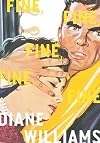
This collection of flash fictions is like conceptual art in language, using the grammar, idioms, stereotypes, etc. we all know, but in unlikely and at times surreal combinations. If you read it for sense, you'll be frustrated; if you read it for pleasure and what it shows about our field of references in language and culture, you may well enjoy it as much as I did.
This is a concept I find so interesting - a book full of tiny, individual 1-2 page long stories, all unrelated to each other. Some of these are 5 star material, insightful, funny, emotionally rich with genius prose. Others are written in a way that I just didn't understand. 2 pages is not a lot of space to include details, but some were so sparse with them that I found it legitimately difficult to follow the action.
All of these mini-stories had the vibe that they were coming from another show more time as well - instead of them feeling contemporary, I felt as if they were all taking place in the 50s or 60s. Perhaps that's just Williams aesthetic but I really enjoyed it. Overall, I think I would have LOVED these stories had I seen them as they were originally printed in Harpers and such (in small, individual doses). Reading the collection of them really makes the sub-par ones stand out. show less
All of these mini-stories had the vibe that they were coming from another show more time as well - instead of them feeling contemporary, I felt as if they were all taking place in the 50s or 60s. Perhaps that's just Williams aesthetic but I really enjoyed it. Overall, I think I would have LOVED these stories had I seen them as they were originally printed in Harpers and such (in small, individual doses). Reading the collection of them really makes the sub-par ones stand out. show less
Got halfway through the book. I -wanted- to like it,it had a cool cover, it had interesting blurbs on the back, including one from my beloved Lydia Davis. They’re tiny stories, 2 or 3 pages each, which is a style I like from Davis. But I read quite a few of these stories and they just didn’t do anything for me. There were always parts that didn’t make sense, and not in an interesting way, just confusing (at least for me). I tried reading the stories more slowly and to be open to hidden show more meanings or references- no dice. I’m sure there is some value to this writing, she gets a lot of good reviews. But it doesn’t work for me. show less
Lists
Awards


You May Also Like


Associated Authors
Statistics
- Works
- 24
- Also by
- 9
- Members
- 559
- Popularity
- #44,692
- Rating
- 3.6
- Reviews
- 18
- ISBNs
- 51
- Languages
- 2