
Michael Schmidt (1) (1947–)
Author of Lives of the Poets
For other authors named Michael Schmidt, see the disambiguation page.
About the Author
Michael Schmidt is the editor of PN Review, which he established in 1972; the founder and editorial director of Carcanet Press, which publishes poetry and fiction; and the director of the writing school at Manchester Metropolitan University in Manchester, England.
Image credit: Arvon Foundation
Series
Works by Michael Schmidt
The Harvill Book of Twentieth-century Poetry in English (Harvill Press Editions) (1999) 59 copies, 2 reviews
John Keats; Shelley; Clare 1 copy
PN Review 180 1 copy
Associated Works
Birds, Beasts and Flowers!: Poems (A Black Sparrow Book) (1982) — Afterword, some editions — 165 copies, 4 reviews
Answering Back: Living Poets Reply to the Poetry of the Past (2007) — Contributor — 118 copies, 1 review
Buzz Words: Poems About Insects (Everyman's Library Pocket Poets Series) (2021) — Contributor — 56 copies
Tagged
Common Knowledge
- Birthdate
- 1947-03-02
- Gender
- male
- Education
- Harvard University
University of Oxford (Wadham College) - Occupations
- poet
novelist
critic
publisher
Professor of Poetry
anthologist - Organizations
- Carcanet Press (founder)
Glasgow University - Awards and honors
- Order of the British Empire (Officer, 2006)
Royal Society of Literature (Fellow) - Nationality
- UK
- Birthplace
- Mexico City, Mexico
- Places of residence
- Mexico City, Mexico
Glasgow, Scotland, UK
England, UK
USA - Associated Place (for map)
- UK
Members
Reviews

Gilgamesh is the first literary classic we possess, reaching back at least into the third millennium BC. First revealed by the decipherment of clay tablets in the 1870s, it is a classic with none of the cultural pedigree of Virgil or Homer. Schmidt is no expert in the language or culture of the Mesopotamian cultures which produced Gilgamesh (although he is not ignorant of these) and leaves such matters to the experts of Assyriology. Schmidt is, however, a novelist, poet, historian and show more translator who is alive to how we receive and interpret works of literature, and this is the focus of his discussion of Gilgamesh: how we moderns have translated, represented and received Gilgamesh.
Schmidt holds Andrew George, the preeminent British Assyriologist and Gilgamesh translator, in high regard and it was my pleasure to read my 1999 Penguin Classics edition and translation of Gilgamesh by George as I read Schmidt. This helped me appreciate the discussion by Schmidt which returns constantly to issues of how we can appreciate a work so removed in time and culture from us, with no history of reception (unlike the Greek and Roman classics). We want to call it an “epic”, but this reads back into second millennium BC Mesopotamia a literary genre that would not emerge for another 1000 years. Gilgamesh is rather, for him, sui generis.
The book is also alive to issues of poetry and translation. Specifically, Schmidt is concerned with how we do or do not iron out the literary peculiarities of such ancient poetry, for poetry is a matter of words on the line. He compares how translators and re-tellers chose some words or phrases over another, and how they expand or contract expressions. And what of repetition, which makes Gilgamesh more akin to the Old Testament than anything with which we are more comfortable? What role did this play? Not, suggests Schmidt, as a feature of oral poetry. For him, Gilgamesh is pre-eminently a written artefact. His appreciation of Philip Terry’s 2018 idiosyncratic retelling of Gilgamesh, Dictator, is especially provocative but fruitful in noting how Terry chooses words and uses language.
Schmidt also makes us alive to the fragmentary and provisional nature of the text. The text of Gilgamesh is drawn from clay tablets found around Mesopotamia and even as far afield as Anatolia and the Levant. He notes how translators such as George must piece together such a disparate jigsaw, filling in blanks in one text with lines from another. Can we use texts from 2000 BC to fill gaps in texts from 640 BC? Nevertheless, unlike the Greco-Roman classics, Gilgamesh, although incomplete, is constantly being recovered in archaeological digs, in plunder and despoiling, and on the shelves of museums as they are finally translated.
At 165 pages, Gilgamesh: the Life of a Poem is a short book and accessible for anyone with an interest in the ancient Middle East. Schmidt is an engaging writer and invites the reader to contemplate how we relate to the foreignness of the past. show less
Schmidt holds Andrew George, the preeminent British Assyriologist and Gilgamesh translator, in high regard and it was my pleasure to read my 1999 Penguin Classics edition and translation of Gilgamesh by George as I read Schmidt. This helped me appreciate the discussion by Schmidt which returns constantly to issues of how we can appreciate a work so removed in time and culture from us, with no history of reception (unlike the Greek and Roman classics). We want to call it an “epic”, but this reads back into second millennium BC Mesopotamia a literary genre that would not emerge for another 1000 years. Gilgamesh is rather, for him, sui generis.
The book is also alive to issues of poetry and translation. Specifically, Schmidt is concerned with how we do or do not iron out the literary peculiarities of such ancient poetry, for poetry is a matter of words on the line. He compares how translators and re-tellers chose some words or phrases over another, and how they expand or contract expressions. And what of repetition, which makes Gilgamesh more akin to the Old Testament than anything with which we are more comfortable? What role did this play? Not, suggests Schmidt, as a feature of oral poetry. For him, Gilgamesh is pre-eminently a written artefact. His appreciation of Philip Terry’s 2018 idiosyncratic retelling of Gilgamesh, Dictator, is especially provocative but fruitful in noting how Terry chooses words and uses language.
Schmidt also makes us alive to the fragmentary and provisional nature of the text. The text of Gilgamesh is drawn from clay tablets found around Mesopotamia and even as far afield as Anatolia and the Levant. He notes how translators such as George must piece together such a disparate jigsaw, filling in blanks in one text with lines from another. Can we use texts from 2000 BC to fill gaps in texts from 640 BC? Nevertheless, unlike the Greco-Roman classics, Gilgamesh, although incomplete, is constantly being recovered in archaeological digs, in plunder and despoiling, and on the shelves of museums as they are finally translated.
At 165 pages, Gilgamesh: the Life of a Poem is a short book and accessible for anyone with an interest in the ancient Middle East. Schmidt is an engaging writer and invites the reader to contemplate how we relate to the foreignness of the past. show less
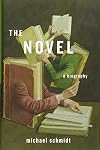
Should I confess to being underwhelmed by Schmidt's well-praised volume? It is an admirable achievement but one that left me cold. In surveying the novel from its early proto-novel stages to the present day, he encompasses a wide variety of readers, but I'm uncertain about target audience or purpose. Especially in the first half, chapters offer potted biographies of noted (and sometimes forgotten) authors, along with anecdotes and ruminations on their books. But it feels like each chapter is show more a handful of Guardian thinkpieces mashed together in book form, without any broader structure. The title is misleading, perhaps that's the problem: this is not a biography of the novel, but rather a tour of people who've written novels. Those are two very different things.
I have a university degree in this stuff, and write about books myself, so I felt I was too educated to gain much from Schmidt's writing. Although the latter half of the book was more engaging to me, his thoughts seemed more personal than academic, more introductory than investigative. At the other end of the spectrum, though, Schmidt is prone to referencing other authors, plots, or characters out of context, and it is clear that he is writing for a learned audience. So I would not recommend this book to the young student wanting to discover how the novel has evolved. This leads me to think the best place for this volume is the university library, where individual chapters can be read by those interested in specific subject matters. I echo some of the smart reviews already on Goodreads that this book is evidently brilliant, but it would make a lot more sense if we were in Schmidt's head. He often writes comments that he sees as self-evident, but which need a bit of convincing for the lay reader.
Also, a pet peeve which may have biased me against this book: Schmidt has chosen not to cite his references. I accept that I am an extremist, a lover of indices and footnotes. But even if he didn't want to have cumbersome annotations everywhere, he could have gone with the pop-academic form of endnotes that reference back to the page numbers even though there is no corresponding number on the main page. Simply put, when every chapter contains numerous anecdotes and much gossip about the authors and the books, it's even more vital that we know where this came from. We can look up obvious book quotes ourselves if we must, but critical comments (reporting when a modern author said something about an older author, for instance) and salacious biography need to be cited. I say this not as a stickler (although I am) but because anyone keen enough to read through a 1,200 page book on novelists as diverse as Fanny Burney and Martin Amis is giong to need to track down many of the quotes and passing comments. Please! show less
I have a university degree in this stuff, and write about books myself, so I felt I was too educated to gain much from Schmidt's writing. Although the latter half of the book was more engaging to me, his thoughts seemed more personal than academic, more introductory than investigative. At the other end of the spectrum, though, Schmidt is prone to referencing other authors, plots, or characters out of context, and it is clear that he is writing for a learned audience. So I would not recommend this book to the young student wanting to discover how the novel has evolved. This leads me to think the best place for this volume is the university library, where individual chapters can be read by those interested in specific subject matters. I echo some of the smart reviews already on Goodreads that this book is evidently brilliant, but it would make a lot more sense if we were in Schmidt's head. He often writes comments that he sees as self-evident, but which need a bit of convincing for the lay reader.
Also, a pet peeve which may have biased me against this book: Schmidt has chosen not to cite his references. I accept that I am an extremist, a lover of indices and footnotes. But even if he didn't want to have cumbersome annotations everywhere, he could have gone with the pop-academic form of endnotes that reference back to the page numbers even though there is no corresponding number on the main page. Simply put, when every chapter contains numerous anecdotes and much gossip about the authors and the books, it's even more vital that we know where this came from. We can look up obvious book quotes ourselves if we must, but critical comments (reporting when a modern author said something about an older author, for instance) and salacious biography need to be cited. I say this not as a stickler (although I am) but because anyone keen enough to read through a 1,200 page book on novelists as diverse as Fanny Burney and Martin Amis is giong to need to track down many of the quotes and passing comments. Please! show less
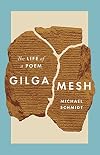
What a fantastic book this is, the perfect introduction to that strange, one of the oldest narrative texts we know (the oldest fragments date from the end of the 3rd millennium BCE). I read the Gilgamesh story for the first time 25 years ago in a heavily edited version and then it didn't mean much to me, it seemed like a hero story like there are dime a dozen. But the past five months I read a great amount of studies on ancient Mesopotamian history, and a few of the ancient stories of that show more time, and that made me reconsider.
Schmidt convinced me of the enormous value and the unique quality of the Gilgamesh story., especially in its more coherent ‘Standard Babylonian’ version, composed at the end of the 2nd millennium. Another strong point of this book is that Schmidt zooms in on the different and often very diverging translations (in English). Quite a few of them take great liberty with the historical and textual reality of the story. Especially the translation of N.K. Sandars, dating from 1960 but still popular, is the culprit: she deliberately distorted the story to give it more dramatic power. His preference is clearly for the rather extensive, very academic translation by Andrew George (versions in 1999, 2003 and 2016), although I suspect that it will be too detailed for the average reader. In any case: this is a gem of a book, about a gem of a story! More extensive review in my History account on Goodreads : https://www.goodreads.com/review/show/4918492711 show less
Schmidt convinced me of the enormous value and the unique quality of the Gilgamesh story., especially in its more coherent ‘Standard Babylonian’ version, composed at the end of the 2nd millennium. Another strong point of this book is that Schmidt zooms in on the different and often very diverging translations (in English). Quite a few of them take great liberty with the historical and textual reality of the story. Especially the translation of N.K. Sandars, dating from 1960 but still popular, is the culprit: she deliberately distorted the story to give it more dramatic power. His preference is clearly for the rather extensive, very academic translation by Andrew George (versions in 1999, 2003 and 2016), although I suspect that it will be too detailed for the average reader. In any case: this is a gem of a book, about a gem of a story! More extensive review in my History account on Goodreads : https://www.goodreads.com/review/show/4918492711 show less
Michael Schmidt sweeping, erudite, humorous, and sympathetic survey of the novel is even more magnificent than his early history of poetry. It is a long book (over 1100 pages) and some will find his quirky prose off-putting, but overall he is a companionable (even garrulous) guide through book-length fictions. It must be noted that this is largely a history of the novel in English; perhaps a dozen non-English novelist receive full treatment, although many are mentioned in passing when their show more influence is felt by authors in English. With a few quirky exceptions coverage is basically chronological, with novelists grouped together by style, concerns or School. Coverage is remarkably comprehensive. Schmidt normally gives several pages to major authors and perhaps a bit less to also-rans. Usually one or two books are singled out for a paragraph or two of analyses (the choice of books thus treated is often not the one(s) you might expect). Assessments are scrupulously fair, and Schmidt has a remarkable ability to guide us to the rewards an author has to offer, while warning us what we'll have to accept as givens when reading her/him. Only in a few cases involving mid-20th century writers does he lose his generally tolerant amiability. This book joins Malcolm Bradbury's two surveys of the American an British novel as essential on my fiction reference shelf. show less
Awards


You May Also Like


Associated Authors
Statistics
- Works
- 49
- Also by
- 7
- Members
- 1,590
- Popularity
- #16,227
- Rating
- 3.9
- Reviews
- 23
- ISBNs
- 198
- Languages
- 6
- Favorited
- 1