
Diana Norman (1) (1933–2011)
Author of A Catch of Consequence
For other authors named Diana Norman, see the disambiguation page.
Diana Norman (1) has been aliased into Ariana Franklin.
Series
Works by Diana Norman
Works have been aliased into Ariana Franklin.
Associated Works
Works have been aliased into Ariana Franklin.
Tagged
Common Knowledge
- Other names
- Franklin, Ariana (nom-de-plume)
- Birthdate
- 1933-08-25
- Date of death
- 2011-01-27
- Gender
- female
- Occupations
- journalist
novelist
biographer - Awards and honors
- Ellis Peters Historical Dagger (2007)
CWA Dagger in the Library (2010) - Relationships
- Norman, Barry (husband)
- Short biography
- Novelist Diana Norman also uses the pen name Ariana Franklin for her mystery novels.
- Nationality
- UK
- Birthplace
- London, England, UK
- Places of residence
- Hertfordshire, England, UK
- Place of death
- Datchworth, Hertfordshire, England, UK
- Associated Place (for map)
- England, UK
Members
Reviews
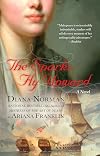
Am I being punished? Is it too much to ask of historical fiction that more than one, 'safe' perspective be presented? Diana Norman's novel, the last of three, is a European-History-by-Numbers affair worthy of Hollywood, belabouring under the author's many politically correct rants. The standard plot ('plucky' heroine ventures into danger to rescue those she loves) skips from soapbox to soapbox - slavery, female suffrage, equality ... I believe vegetarianism was even thrown in for good show more measure. Mrs Norman is far from subtle, and employs heroine Philippa to comment on the injustice every other paragraph: 'rights' and 'women' are her definitive articles. Stock characters occasionally play the devil's advocate - Makepeace 'Missus' Hedley promotes the usual cliches and jokes about Irishmen until she falls in love with one, and Ffoulkes the nobleman is shown as impotent and ridiculous for daring to suggest that he and his League rescue people and not privilege.
Andrew Ffoulkes is a character 'borrowed' from the Scarlet Pimpernel series by Baroness Orczy, but it is a mere passing nod: Orczy's Ffoulkes is a good and sensible man, putting his friends first, whereas Norman's parody, suitably bumped up the peerage from baronet to baron, is a mere figurehead and love interest for the tedious heroine ('as headstrong as Makepeace had ever been; and as freedom loving'. No strings on this puppet.)
Diana Norman's scale of humanity runs something like this, from top to bottom: Irish women, women, Irish men, working men, republican men, aristocratic men raised by Makepeace or fighting for women's rights, ethnic minorities, actors, aristocrats. All those possessed of wealth or a title, unless they use this unfair advantage to support the 'cause du jour', are selfish, spineless and useless, but may be used for comic relief. Any men who don't recognise that women are superior, and will gain the right to vote in a hundred or so years, are bullies; men who let women and Irishmen rescue them have potential.
The social history lecture delivered as a subtext drags the action and the characters down; dialogue and introspection are peppered with feminist, middle-class diatribes about the sad state of eighteenth century England; even the French Revolution at its most bloodthirsty and brutal is to be applauded as a sort of political 'no pain, no gain'. A patronising subplot is made of the emanicpation of slaves, merely to show how liberal Makepeace and her daughter are - the instant conversion to the cause of most of London after an am-dram production in a disused theatre is ironically undermined by Makepeace's Irish lover presenting her with a slave mother and child *as a gift*, but at least Mrs Norman can say she set that wrong to rights.
A light narrative style and colourful characters - bar Philippa - are drowned out by the constant tubthumping of the author, and I'm only glad that I didn't buy the first two books in the Makepeace trilogy. show less
Andrew Ffoulkes is a character 'borrowed' from the Scarlet Pimpernel series by Baroness Orczy, but it is a mere passing nod: Orczy's Ffoulkes is a good and sensible man, putting his friends first, whereas Norman's parody, suitably bumped up the peerage from baronet to baron, is a mere figurehead and love interest for the tedious heroine ('as headstrong as Makepeace had ever been; and as freedom loving'. No strings on this puppet.)
Diana Norman's scale of humanity runs something like this, from top to bottom: Irish women, women, Irish men, working men, republican men, aristocratic men raised by Makepeace or fighting for women's rights, ethnic minorities, actors, aristocrats. All those possessed of wealth or a title, unless they use this unfair advantage to support the 'cause du jour', are selfish, spineless and useless, but may be used for comic relief. Any men who don't recognise that women are superior, and will gain the right to vote in a hundred or so years, are bullies; men who let women and Irishmen rescue them have potential.
The social history lecture delivered as a subtext drags the action and the characters down; dialogue and introspection are peppered with feminist, middle-class diatribes about the sad state of eighteenth century England; even the French Revolution at its most bloodthirsty and brutal is to be applauded as a sort of political 'no pain, no gain'. A patronising subplot is made of the emanicpation of slaves, merely to show how liberal Makepeace and her daughter are - the instant conversion to the cause of most of London after an am-dram production in a disused theatre is ironically undermined by Makepeace's Irish lover presenting her with a slave mother and child *as a gift*, but at least Mrs Norman can say she set that wrong to rights.
A light narrative style and colourful characters - bar Philippa - are drowned out by the constant tubthumping of the author, and I'm only glad that I didn't buy the first two books in the Makepeace trilogy. show less

Although this was an VERY long historical novel and (it took me over a month to finish it), I loved every minute of it. Diana Norman takes a spin off Restoration actress Margaret Hughes and creates a fascinating portrait of London under Charles II, James II, and William and Mary. The novel is peppered with characters drawn from life: poet and playwright Aphra Behn, who becomes a close friend of the main character; Prince Rupert, to whom she becomes mistress; the Earl of Rochester, one of her show more patrons; the actor Thomas Betterton; General John Churchill, poet John Dryden, and many more.
The novel begins when Penitence Hurd, a 17-year old Puritan born in the colonies, arrives in London. Circumstances have caused her to flee her home and go in search of her aunt, the black sheep of the family. Penitence is dismayed to learn that her aunt runs the Cock and Bull, a flourishing brothel, but, having no place else to go, she agrees to stay and work as a seamstress. The story takes off as the Great Plague of 1666 begins to decimate the neighborhood. As it follows the twists and turns of Penitence's life, it takes us to the stage and the court; to the Somerset countryside and Newgate prison; through the decadent reign of Charles II, the Bloody Assizes that followed Monmouth's rebellion, and the Glorious Revolution. It's a huge landscape, but Norman's wonderful eye for detail and her indomitable main character make the journey through it so worth the effort.
Norman is a new author to me. Unfortunately, she has passed away, but she left a treasury of novels over the years, both under her own name and her pen name, Ariana Franklin. (The 'Mistress of the Art of Death' series was published under that name; I'm less interested in this mystery series.) Although Norman's novels are often referred to as Historical Romances--and there is a slight romance woven into the storyline here that gets put on hold for 20 years but wraps up in the end--, it's the thrilling, solid history that shines through The Vizard Mask]. I can't wait to read more of Diana Norman's work! show less
The novel begins when Penitence Hurd, a 17-year old Puritan born in the colonies, arrives in London. Circumstances have caused her to flee her home and go in search of her aunt, the black sheep of the family. Penitence is dismayed to learn that her aunt runs the Cock and Bull, a flourishing brothel, but, having no place else to go, she agrees to stay and work as a seamstress. The story takes off as the Great Plague of 1666 begins to decimate the neighborhood. As it follows the twists and turns of Penitence's life, it takes us to the stage and the court; to the Somerset countryside and Newgate prison; through the decadent reign of Charles II, the Bloody Assizes that followed Monmouth's rebellion, and the Glorious Revolution. It's a huge landscape, but Norman's wonderful eye for detail and her indomitable main character make the journey through it so worth the effort.
Norman is a new author to me. Unfortunately, she has passed away, but she left a treasury of novels over the years, both under her own name and her pen name, Ariana Franklin. (The 'Mistress of the Art of Death' series was published under that name; I'm less interested in this mystery series.) Although Norman's novels are often referred to as Historical Romances--and there is a slight romance woven into the storyline here that gets put on hold for 20 years but wraps up in the end--, it's the thrilling, solid history that shines through The Vizard Mask]. I can't wait to read more of Diana Norman's work! show less

I fought this book like it was a wild bear. But for some reason I just could not weather it. About halfway through I folded and gave up the ghost. Odd because I adore all the authors other work. This just fell flat for me. I understand the story and how a puritan from New England who is tossed into Reformation England could be polarized. The book is well very written and intelligent. But not very engaging. The characters did nothing for me. They came across exactly as the writer wanted them show more to be. Dirty, self-centered Londoners in the midst of plague and self absorption. show less
Impressive in scope, the Vizard Mask by Diana Norman tells the story of Penitence Hurd, a young Puritan woman, who arrives in England from Massachusetts in the year of 1664, just a scant few months before the outbreak of the massive plague that was to bring London to its knees. This is a huge, gratifying book that captures the flavor of Restoration England, and paints a particularly vivid picture of what London life was like during this time.
Arriving penniless, and searching for a unknown show more aunt, Penitence is horrified when her search leads her to a house of ill-repute. Destitute, she has no chose but to stay, although only in the capacity of kitchen drudge and seamstress for the prostitutes. Cursed with a stutter, Penitence struggles to find a different line of work and leave the whorehouse, but by now the plague has taken a firm hold of the slums of London and soon she finds herself under quarantine for forty days. Her attic room is across the way from rooms rented by an actor, Henry King, and he teaches her to correct her stutter by wearing a Vizard Mask that allows her to hide behind, The author based her main character on a little known actress and she gives her many adventures that allow her to be in the middle of most events that occurred in Restoration England. Her life story carries her from the depths of the slums to the throne room itself.
My only complaint with this book was it’s length. At over 700 pages, I found my attention wandering a bit in places and I think this story would have been helped by paring it down to about 600 pages. That said, The Vizard Mask was a richly detailed historical fiction read that delivered a very memorable story. show less
Arriving penniless, and searching for a unknown show more aunt, Penitence is horrified when her search leads her to a house of ill-repute. Destitute, she has no chose but to stay, although only in the capacity of kitchen drudge and seamstress for the prostitutes. Cursed with a stutter, Penitence struggles to find a different line of work and leave the whorehouse, but by now the plague has taken a firm hold of the slums of London and soon she finds herself under quarantine for forty days. Her attic room is across the way from rooms rented by an actor, Henry King, and he teaches her to correct her stutter by wearing a Vizard Mask that allows her to hide behind, The author based her main character on a little known actress and she gives her many adventures that allow her to be in the middle of most events that occurred in Restoration England. Her life story carries her from the depths of the slums to the throne room itself.
My only complaint with this book was it’s length. At over 700 pages, I found my attention wandering a bit in places and I think this story would have been helped by paring it down to about 600 pages. That said, The Vizard Mask was a richly detailed historical fiction read that delivered a very memorable story. show less
Lists
Awards

You May Also Like
Associated Authors
Statistics
- Works
- 15
- Also by
- 1
- Members
- 1,086
- Popularity
- #23,653
- Rating
- 4.0
- Reviews
- 26
- ISBNs
- 92
- Languages
- 3
- Favorited
- 4