
Andy Miller (1)
Author of The Year of Reading Dangerously: How Fifty Great Books Saved My Life
For other authors named Andy Miller, see the disambiguation page.
Works by Andy Miller
Associated Works
Tagged
Common Knowledge
Members
Reviews
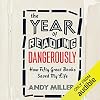
Indulge me as I tell you how I came to Andy Miller and this book of literary criticism, literary memoir, and family memoir.
In one of my local second-hand bookstores I came across Anita Brookner, The Misalliance. I had seen her mentioned with other authors I admire, Barbara Pym and Alison Lurie, but hadn’t read her. I tweeted at Levi Stahl (@levistahl), a book guy I trust at the University of Chicago Press, for guidance: “Do you have a take on Anita Brookner?” He passed the buck: “I show more trust Andy Miller (@i_am_mill_i_am) a lot, and he says says Brookner is tops.” Not knowing anything about Miller other than that Levi Stahl trusted him, I proceeded with The Misalliance, and was not disappointed.
(Backing up one step further, I found Levi because he follows the Twitter account where I tweet out bits from Louis Auchincloss books as I read them, @AuchinclossL. I noticed because I get a little thrill when real literary-types and writers follow that account. Levi had most recently led me to Craig Brown’s excellent Ma’am Darling: 99 Glimpses of Princess Margaret (2017)—I mean, he didn’t discover it or anything and it won wide acclaim and awards, but I only landed on it because of Levi.)
So later I circle back to figure out the deal of this heretofore-unknown-to-me but apparently eminently trustworthy Andy Miller, and I find that he co-hosts a podcast called Backlisted, which I quickly realize is the best books podcast there is. This is because it’s not about current books, nor classics, but is instead focused mostly on underappreciated 20th century novels and memoirs, which are very much my bag, as discussed by knowledgeable and entertaining hosts and guests. I recommend it.
And I recommend this book. The premise is that notwithstanding, or perhaps owing to, his work as a professional book man (at various times a retail seller, editor, and writer), his reading habits had fallen off in favor of Sudoku on the train and parenting a small boy. He fortifies his resolve and draws up a List of Betterment consisting of books about which in the past he has bluffed about having read, and then reads them over the course of a year. That’s really his only criteria for the list: that he’s pretended to have read it and realizes that he really should read it. It’s not a prescriptive list of classics (though of course it is heavy with those, including Moby Dick and Anna Karenina, as they are most frequently the ones through which we bluff.) There are also cult favorites like A Confederacy of Dunces. One of the bad ones, The Da Vinci Code, is included because he’s been so comfortable slagging on it unread that, in his new-found spirit of honesty about books, he feels that he really ought to give a go. And a few idiosyncratic choices, like Julian Cope’s Krautrocksampler: One Head's Guide to the Great Kosmische Musik—1968 Onwards (1995). Many of them can safely be skipped, which he concedes. (You shouldn’t need it, but still I warn you off Bukowski.)
The result is a hilarious and thoughtful exploration of how art, just as much as lived experience, makes us who we are.
I’ve recently been using the Backlisted podcast episode list to guide my trawling through the used bookstores. Check it out. show less
In one of my local second-hand bookstores I came across Anita Brookner, The Misalliance. I had seen her mentioned with other authors I admire, Barbara Pym and Alison Lurie, but hadn’t read her. I tweeted at Levi Stahl (@levistahl), a book guy I trust at the University of Chicago Press, for guidance: “Do you have a take on Anita Brookner?” He passed the buck: “I show more trust Andy Miller (@i_am_mill_i_am) a lot, and he says says Brookner is tops.” Not knowing anything about Miller other than that Levi Stahl trusted him, I proceeded with The Misalliance, and was not disappointed.
(Backing up one step further, I found Levi because he follows the Twitter account where I tweet out bits from Louis Auchincloss books as I read them, @AuchinclossL. I noticed because I get a little thrill when real literary-types and writers follow that account. Levi had most recently led me to Craig Brown’s excellent Ma’am Darling: 99 Glimpses of Princess Margaret (2017)—I mean, he didn’t discover it or anything and it won wide acclaim and awards, but I only landed on it because of Levi.)
So later I circle back to figure out the deal of this heretofore-unknown-to-me but apparently eminently trustworthy Andy Miller, and I find that he co-hosts a podcast called Backlisted, which I quickly realize is the best books podcast there is. This is because it’s not about current books, nor classics, but is instead focused mostly on underappreciated 20th century novels and memoirs, which are very much my bag, as discussed by knowledgeable and entertaining hosts and guests. I recommend it.
And I recommend this book. The premise is that notwithstanding, or perhaps owing to, his work as a professional book man (at various times a retail seller, editor, and writer), his reading habits had fallen off in favor of Sudoku on the train and parenting a small boy. He fortifies his resolve and draws up a List of Betterment consisting of books about which in the past he has bluffed about having read, and then reads them over the course of a year. That’s really his only criteria for the list: that he’s pretended to have read it and realizes that he really should read it. It’s not a prescriptive list of classics (though of course it is heavy with those, including Moby Dick and Anna Karenina, as they are most frequently the ones through which we bluff.) There are also cult favorites like A Confederacy of Dunces. One of the bad ones, The Da Vinci Code, is included because he’s been so comfortable slagging on it unread that, in his new-found spirit of honesty about books, he feels that he really ought to give a go. And a few idiosyncratic choices, like Julian Cope’s Krautrocksampler: One Head's Guide to the Great Kosmische Musik—1968 Onwards (1995). Many of them can safely be skipped, which he concedes. (You shouldn’t need it, but still I warn you off Bukowski.)
The result is a hilarious and thoughtful exploration of how art, just as much as lived experience, makes us who we are.
I’ve recently been using the Backlisted podcast episode list to guide my trawling through the used bookstores. Check it out. show less
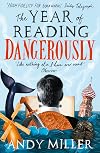
Affecting, funny, quirky chronicle of a year spent reading books one’s pretended to have already read, or felt like they have. Miller peppers the text with jokey footnotes and asides, and manages to convey a good deal about himself and why some of the books worked for him while others didn't. A lovely read; I finished it in 24 hours and want to start again.
The Year of Reading Dangerously: How Fifty Great Books (and Two Not-So-Great Ones) Saved My Life by Andy Miller
A failed and woefully misguided attempt at engaging with literature. I really don't understand why the author thought this book was a good idea. On the face of it, it seems accessible enough: a man realises he doesn't read enough as he feels he ought to and so creates a list of books to read, then writes about his journey through them. Worth a blog, maybe, but only a book if you're somebody important or you can write something special.
Andy Miller, unfortunately, is neither. None of his show more observations are particularly insightful or entertaining, and often disappointingly perfunctory. You get the feeling that he is only reading so that he can write about them. Nothing is spontaneous or natural, and there is the sort of laboured, self-referential quirkiness that characterises all books of this type. Perhaps that is the only sort of 'humour' that is safe enough to be greenlit by a publisher's marketing department nowadays – it seems to be everywhere and is uniformly ineffective. This is before you even get to the fact that Andy Miller is often writing about Andy Miller than about books; it is remarkable just how much of The Year of Reading Dangerously is about his personal likes and daily routine, his favourite music as a teenager, and his bland middle-class life. It's an inoffensive existence but there's no reason we should be interested in it. Miller is quite irritatingly entitled; he has a good job, an understanding wife and a young son, and yet complains throughout about the lack of fulfilment in his life. He has no idea what it is to really need a book in your life, something so right that it stops you from falling into a pit.
As for the books themselves, they are treated appallingly. "I had trained myself to be good at reading again," he writes on page 249, when in fact all he has done is complete a checklist. I certainly don't see how they 'saved his life', as the subtitle suggests. There is something unseemly about bragging about books, whether you've read them or not; reading should be a solitary activity, even private, and yet you cannot escape the feeling that whenever Miller reads a book on his list, it is not about looking for insight or even entertainment, but how he can trade his relationship with the book for social kudos. The books are digested as content, as consumables; as Sudokus to be tackled and then discarded so that he can hit a word count for his manuscript. It is perhaps fitting, then, that his own contribution to the world's library proves just as disposable to us as the vast majority of his booklist does to him. It is all terribly conceited and middle-class, not so much about 'saving his life' as about saving face. Far from reading dangerously, this is a disappointing account of a year of reading fearfully, haphazardly, superficially. show less
Andy Miller, unfortunately, is neither. None of his show more observations are particularly insightful or entertaining, and often disappointingly perfunctory. You get the feeling that he is only reading so that he can write about them. Nothing is spontaneous or natural, and there is the sort of laboured, self-referential quirkiness that characterises all books of this type. Perhaps that is the only sort of 'humour' that is safe enough to be greenlit by a publisher's marketing department nowadays – it seems to be everywhere and is uniformly ineffective. This is before you even get to the fact that Andy Miller is often writing about Andy Miller than about books; it is remarkable just how much of The Year of Reading Dangerously is about his personal likes and daily routine, his favourite music as a teenager, and his bland middle-class life. It's an inoffensive existence but there's no reason we should be interested in it. Miller is quite irritatingly entitled; he has a good job, an understanding wife and a young son, and yet complains throughout about the lack of fulfilment in his life. He has no idea what it is to really need a book in your life, something so right that it stops you from falling into a pit.
As for the books themselves, they are treated appallingly. "I had trained myself to be good at reading again," he writes on page 249, when in fact all he has done is complete a checklist. I certainly don't see how they 'saved his life', as the subtitle suggests. There is something unseemly about bragging about books, whether you've read them or not; reading should be a solitary activity, even private, and yet you cannot escape the feeling that whenever Miller reads a book on his list, it is not about looking for insight or even entertainment, but how he can trade his relationship with the book for social kudos. The books are digested as content, as consumables; as Sudokus to be tackled and then discarded so that he can hit a word count for his manuscript. It is perhaps fitting, then, that his own contribution to the world's library proves just as disposable to us as the vast majority of his booklist does to him. It is all terribly conceited and middle-class, not so much about 'saving his life' as about saving face. Far from reading dangerously, this is a disappointing account of a year of reading fearfully, haphazardly, superficially. show less
The Year of Reading Dangerously: How Fifty Great Books (and Two Not-So-Great Ones) Saved My Life by Andy Miller
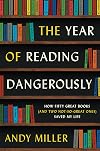
A book about books...reading about reading. There is something redundantly appealing about that for me. It helps that Miller is an enjoyable read and his enthusiasm comes through. Often, though, in this book, I fail to grasp the "why" of the enthusiasm. Some of his favorites I've not read, and I am challenged to understand why they evoke so much in him...Anna Karenina? Middlemarch? The droning tome Moby Dick???
I clearly have no intention of reading many of his "Betterment" books, so I am show more more than happy to "read" them vicariously here. Although, The Essential Silver Surfer sounds mighty intriguing. After all, I'm currently 5/6 through The Complete Calvin and Hobbes! Still, he calls my attention to a few others.
I used to read Jerry Pournelle's column Chaos Manor in Byte magazine because when he reviewed products, he told the reader what the reality was: difficulty with cables, drivers, installer, great/not so great customer service, function as promised or better, whatever. In some ways, Miller is similar to Pournelle, but with these books he read. Like giving up on Of Human Bondage (though he eventually forced himself to finish it.) I have a hard time giving up on a book, and feel guilty when I do, but it's a personal guilt that I can ignore. I do keep a "set aside unfinished" list, just in case I change my mind, as I have on occasion.
My rating of this book grew in the reading of it. At first, "It was okay." Then, "I liked it." By the time I finished, I was at five stars. Why? Simply, I connected. That in itself is a very,very rare thing. I can't explain...I just did.
Maybe because of
Or
Or, in response to a particularly vile sentence he read in one of his Year's books:
And, with respect to blogging, this:
I, too, find it chore sometimes. But when I read this:
I realized a big "whoa" moment for me...something I intuitively knew but didn't think of myself. Incongrously, I like some really bad stuff, very likely because of an encounter "at an impressionable age", and yet I am quite unforgiving of similar when encountering at my current skeptical age.
So Miller gets five stars for making me think, making me rethink, making me chuckle, and providing a connection. I don't know that other readers will see it the same way, but this is my review, my opinion, and in the end, my enjoyment of a book. It might be the beer talking (Sierra Nevada Narwhal, a premier Imperial Stout weighing in at a more than respectable 10.2% ABV, at the moment), but I would likely argue the contrary. show less
I clearly have no intention of reading many of his "Betterment" books, so I am show more more than happy to "read" them vicariously here. Although, The Essential Silver Surfer sounds mighty intriguing. After all, I'm currently 5/6 through The Complete Calvin and Hobbes! Still, he calls my attention to a few others.
I used to read Jerry Pournelle's column Chaos Manor in Byte magazine because when he reviewed products, he told the reader what the reality was: difficulty with cables, drivers, installer, great/not so great customer service, function as promised or better, whatever. In some ways, Miller is similar to Pournelle, but with these books he read. Like giving up on Of Human Bondage (though he eventually forced himself to finish it.) I have a hard time giving up on a book, and feel guilty when I do, but it's a personal guilt that I can ignore. I do keep a "set aside unfinished" list, just in case I change my mind, as I have on occasion.
My rating of this book grew in the reading of it. At first, "It was okay." Then, "I liked it." By the time I finished, I was at five stars. Why? Simply, I connected. That in itself is a very,very rare thing. I can't explain...I just did.
Maybe because of
How can this list be taken seriously when it finds no place for my favourite authors or at least those writers I consider indispensable?
Or
As a child, reading is something you do while you are waiting for life to begin. As a parent, however, if you are lucky and you seize your chance, you can be part of it too.
Or, in response to a particularly vile sentence he read in one of his Year's books:
What was the purpose of interrogating the total ugliness of this sentence publicly? It was transparently, self-evidently terrible. Just reading it made me feel as if I had been half-slammed, half-caressed in the brain with a gratuitously offensive and ineptly articulated metaphor.
And, with respect to blogging, this:
Maybe for some readers keeping a blog expedited the thought process. I’m sorry to say I found it a distraction and, as time went on, a chore.
I, too, find it chore sometimes. But when I read this:
Perhaps if I had encountered Dean Moriarty – another restless wanderer with grammar issues – at an impressionable age I could have been more forgiving of On the Road.
I realized a big "whoa" moment for me...something I intuitively knew but didn't think of myself. Incongrously, I like some really bad stuff, very likely because of an encounter "at an impressionable age", and yet I am quite unforgiving of similar when encountering at my current skeptical age.
So Miller gets five stars for making me think, making me rethink, making me chuckle, and providing a connection. I don't know that other readers will see it the same way, but this is my review, my opinion, and in the end, my enjoyment of a book. It might be the beer talking (Sierra Nevada Narwhal, a premier Imperial Stout weighing in at a more than respectable 10.2% ABV, at the moment), but I would likely argue the contrary. show less
Lists
You May Also Like


Associated Authors
Statistics
- Works
- 3
- Also by
- 1
- Members
- 931
- Popularity
- #27,576
- Rating
- 3.4
- Reviews
- 45
- ISBNs
- 26
- Languages
- 2