
David Christian (1) (1946–)
Author of Origin Story: A Big History of Everything
For other authors named David Christian, see the disambiguation page.
About the Author
David Christian is a Distinguished Professor of History at Macquarie University and director of the university's Big History Institute. He cofounded the Big History Project with Bill Gates, and his Coursera MOOCs are popular around the world. He has delivered keynotes at major international show more conferences, including the Davos World Economic Forum, and his TED Talk has been viewed nearly ten million times. He is the author of numerous books and articles. show less
Image credit: David Christian
Works by David Christian
A History of Russia, Central Asia and Mongolia. Volume 1: Inner Eurasia from Prehistory to the Mongol Empire (1998) 75 copies
A History of Russia, Central Asia and Mongolia. Volume II: Inner Eurasia from the Mongol Empire to Today, 1260 - 2000 (2018) 26 copies
Scales 1 copy
What is Big History ? 1 copy
How Did Everything Begin ? 1 copy
Associated Works
Tagged
Common Knowledge
- Legal name
- Christian, David Gilbert
- Birthdate
- 1946-12-08
- Gender
- male
- Education
- University of Oxford (PhD|1974)
University of Western Ontario - Occupations
- historian
- Organizations
- Macquarie University
San Diego State University
Australian Academy of the Humanities
Royal Holland Society of Sciences and Humanities
World History Association - Nationality
- USA
- Birthplace
- Brooklyn, New York, USA
- Places of residence
- England, UK
Nigeria
Australia
Ontario, Canada
Members
Discussions
In the middle of Maps of Time in History at 30,000 feet: The Big Picture (September 2014)
Maps of Time by David Christian - Samantha_Kathy tutoring sjmccreary in 75 Books Challenge for 2012 (June 2012)
Reviews
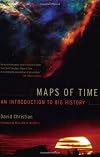
I hardly know where to begin with this book, because it gathers so many threads and gives the reader so many directions to think about and investigate. I’ve taken the last year to read a couple of chapters a month, and I still find myself going back over some of the observations and connections made and seeing the world around me in different ways.
David Christian is probably the best-known teacher of Big History, and this book is possibly the Bible of the field. Big History looks at ALL show more of history, from the Big Bang to modern life and its trajectory, as one area of study encompassing all fields of scientific and historical research. This book approaches our present by beginning with the formation of the universe, through the development of galaxies and our solar system, our sun, and our planet, and then life itself. As the narrative moves forward in time the history slows down, so that life on Earth, especially human life, is examined in more detail. A major focus is the impact of humanity on the pace of natural changes to the planet and other species (most obviously in climate change and species extinctions), but much of Christian’s emphasis is on the extraordinary swiftness of the evolution of humanity itself and consideration of whether we can survive our success. The last chapter takes an admittedly weak stab at forecasting the future, but the rest of the book is a treasure trove. show less
David Christian is probably the best-known teacher of Big History, and this book is possibly the Bible of the field. Big History looks at ALL show more of history, from the Big Bang to modern life and its trajectory, as one area of study encompassing all fields of scientific and historical research. This book approaches our present by beginning with the formation of the universe, through the development of galaxies and our solar system, our sun, and our planet, and then life itself. As the narrative moves forward in time the history slows down, so that life on Earth, especially human life, is examined in more detail. A major focus is the impact of humanity on the pace of natural changes to the planet and other species (most obviously in climate change and species extinctions), but much of Christian’s emphasis is on the extraordinary swiftness of the evolution of humanity itself and consideration of whether we can survive our success. The last chapter takes an admittedly weak stab at forecasting the future, but the rest of the book is a treasure trove. show less
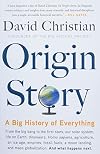
I was in love with Big History before it was formally inaugurated by David Christian with his influential book Maps of Time: An Introduction to Big History in 2004. Christian espoused a view of history that I’d unknowingly held since a small child: that a history that starts with written language is a very small one; that one that begins with the human career is only slightly larger. That a human-centric history is in fact parochial.
Though Christian’s work has motivated an academic show more discipline, he was far from the first nor only exponent of its essentials. A very abbreviated list, if you’re a lumper and not a splitter, might include Alexander von Humboldt, Carl Sagan, William McNeill, and Jared Diamond. Big history has since become incorporated into many high school curricula, influenced by Bill Gates who was so gobsmacked that he founded the Big History Project in collaboration with Christian as a worldwide effort to promote the teaching of the subject.
Big History is history writ large. It encompasses all we know about the past, starting with the Big Bang, through the formation of galaxies, solar systems, our planet Earth, the origin and evolution life on Earth, human evolution, and eventually the human spread around the globe and human society. It seeks universal patterns of explanation and is by nature necessarily multidisciplinary.
Origin Story is Christian’s updated account of this discipline, and his claim is that Big History represents a modern creation story, a secular creation story. In this way of seeing things, a species-wide narrative of our origins is still being elaborated, is continuing to unfold. But its elements are visible. And if we are able to make the transition to a sustainable future — far from certain as, human conflict aside, 10,000 years of unguided human geoengineering careen toward a global environmental confrontation — our descendants may well tell much the same story. show less
Though Christian’s work has motivated an academic show more discipline, he was far from the first nor only exponent of its essentials. A very abbreviated list, if you’re a lumper and not a splitter, might include Alexander von Humboldt, Carl Sagan, William McNeill, and Jared Diamond. Big history has since become incorporated into many high school curricula, influenced by Bill Gates who was so gobsmacked that he founded the Big History Project in collaboration with Christian as a worldwide effort to promote the teaching of the subject.
Big History is history writ large. It encompasses all we know about the past, starting with the Big Bang, through the formation of galaxies, solar systems, our planet Earth, the origin and evolution life on Earth, human evolution, and eventually the human spread around the globe and human society. It seeks universal patterns of explanation and is by nature necessarily multidisciplinary.
Origin Story is Christian’s updated account of this discipline, and his claim is that Big History represents a modern creation story, a secular creation story. In this way of seeing things, a species-wide narrative of our origins is still being elaborated, is continuing to unfold. But its elements are visible. And if we are able to make the transition to a sustainable future — far from certain as, human conflict aside, 10,000 years of unguided human geoengineering careen toward a global environmental confrontation — our descendants may well tell much the same story. show less
Is the written historical record enough to explain the history of civilization? David Christian would argue that it isn't, Maps of Time is a condensed, single volume argument based on his introductory lectures on the topic of “Big History”. Big History as defined by Christian is the history of everything on the largest possible scale, from the beginning of the universe to its bitter end. By this definition Big History covers not only the written record, but also prehistory and even show more prehuman history. To begin his tour of Big History, Christian starts his introduction with the Big Bang and the evolution of the universe and solar system; slowly drilling down into smaller timescales to examine the formation and development of complex societies. The concluding chapters of Maps of Time speculates what is to come in the near future (100 years), the intermediate future (a few million years), and the distance future (billions of years) until the universe ultimately runs down. A large undertaking for any researcher looking to form a single coherent story of our past, present, and future based on empirical study rather than dogmatic ideas from the past.
Using a combination of modern science and up-to-date theories of history Christian aims to construct what he calls “a modern creation myth”. The author is an academic historian, so the science presented in the book is pretty basic and introductory, but he has made the effort to convey the material accurately and concise enough to be understood by the general public. The rest of the story (thesis) is really a series of snapshots and large-scale patterns throughout history. So, no one subject is covered in much detail. By looking at the large-scale patterns of history, Christian argues, that we are better able to understand how society has come into its current state of being. Something that is often missed when looking at specific events in history (i.e. the fall of Rome). What was really interesting about this, was that Christian choose to frame the story of human progress with all that it entails, in a creation myth. Although radically different from traditional creation myths, he is still seeking a way make sense of the complex world around us.
However, in contrast with most traditional creation stories, this modern creation myth does not view complex entities as better or worse than less complex entities. The story simply relates the increase in the level of complexity over the course of time. Complexity is just a consequence of progress, that for one reason or another is undertaken by a species or a society when faced with competition for resources. It's the differential progress throughout the world that has shaped our histories and fueled the present. The ebb and flow of time does not favor any particular culture. It is the choices and often competitive needs that ultimately controls the destiny of whole regions. As a consequence of this ever-increasing complexity have come unforeseen impacts to society and the environment, which leads to conflict, innovation, and transition from one social and political system to another. With each transition comes new interdependence and the need for new methods of organization.
In many ways Maps of Time is a successful re-telling of human history, in other ways many readers may find it disappointing. For me personally, the provided what I was looking for, a sense of the big picture, an outline and context to help me put things into a larger perspective. However, it fails on one crucial point as a modern creation myth. Early on the book Christian states that “creation myths provide universal coordinates within which people can imagine their own existence, and find a role in the larger scheme of things. Creation myths are powerful because they speak to our deep spiritual, psychic, and social need for a place and sense of belonging.” Christian is able to deliver a scientifically and historically accurate narrative of our basic history that fulfills our intellectual curiosity, but fails to satisfy our deep spiritual and social needs. Our species needs to feel as though we are privileged, that this oasis in space is special to us and to us alone. The cold facts of science and history destroy the self-centered notion that we are the center of the universe. For the a modern creation myth to be complete it needs to answer the question of where we belong on deeper philosophical and psychological reasons. Maybe that's too much to ask of just one book. show less
Using a combination of modern science and up-to-date theories of history Christian aims to construct what he calls “a modern creation myth”. The author is an academic historian, so the science presented in the book is pretty basic and introductory, but he has made the effort to convey the material accurately and concise enough to be understood by the general public. The rest of the story (thesis) is really a series of snapshots and large-scale patterns throughout history. So, no one subject is covered in much detail. By looking at the large-scale patterns of history, Christian argues, that we are better able to understand how society has come into its current state of being. Something that is often missed when looking at specific events in history (i.e. the fall of Rome). What was really interesting about this, was that Christian choose to frame the story of human progress with all that it entails, in a creation myth. Although radically different from traditional creation myths, he is still seeking a way make sense of the complex world around us.
However, in contrast with most traditional creation stories, this modern creation myth does not view complex entities as better or worse than less complex entities. The story simply relates the increase in the level of complexity over the course of time. Complexity is just a consequence of progress, that for one reason or another is undertaken by a species or a society when faced with competition for resources. It's the differential progress throughout the world that has shaped our histories and fueled the present. The ebb and flow of time does not favor any particular culture. It is the choices and often competitive needs that ultimately controls the destiny of whole regions. As a consequence of this ever-increasing complexity have come unforeseen impacts to society and the environment, which leads to conflict, innovation, and transition from one social and political system to another. With each transition comes new interdependence and the need for new methods of organization.
In many ways Maps of Time is a successful re-telling of human history, in other ways many readers may find it disappointing. For me personally, the provided what I was looking for, a sense of the big picture, an outline and context to help me put things into a larger perspective. However, it fails on one crucial point as a modern creation myth. Early on the book Christian states that “creation myths provide universal coordinates within which people can imagine their own existence, and find a role in the larger scheme of things. Creation myths are powerful because they speak to our deep spiritual, psychic, and social need for a place and sense of belonging.” Christian is able to deliver a scientifically and historically accurate narrative of our basic history that fulfills our intellectual curiosity, but fails to satisfy our deep spiritual and social needs. Our species needs to feel as though we are privileged, that this oasis in space is special to us and to us alone. The cold facts of science and history destroy the self-centered notion that we are the center of the universe. For the a modern creation myth to be complete it needs to answer the question of where we belong on deeper philosophical and psychological reasons. Maybe that's too much to ask of just one book. show less
Big History is becoming a familiar concept. Since it was launched in the 1990s by the Dutchman Fred Spier and in Australia by David Christian himself, it has taken on a life of its own. Christian first summed up his way of looking at history "on a large scale" in 2004 in his "Maps of Time," which was an impressive book. Since then, variants and additions have been published by himself, but also by many others. Big History also has become a separate discipline within the academic world, with show more its own institutes and journals (not to confound with ‘Global History’). And the movement was especially impacted by the enthusiasm with which Bill Gates and his Foundation endorsed this approach, which resulted, among other things, into a comprehensive package of didactic material that historians and others can use in education.
The great merit of Big History is that human history is fitted into that of the universe, an extreme bird's eye view that allows to see the broad lines and thus distinguish the important from the secondary. David Christian does this in this book with much more emphasis than in his first ones. The relative place of man in the universe is constantly emphasized, while at the same time highlighting the enormous impact of human activity on the own planet. The book is much more didactic and therefore more accessible than ‘Maps of Time’ (although there are certainly tough passages, with a lot of jargon).
But over the years Big History has also received a lot of criticism. As said before, the extreme bird's eye view has its advantages, but it ignores the ultra-contingent character of historical evolutions. Christian tries to compensate for this by constantly underlining the complex convergence of coincidence and necessity, highlighting the importance of emergent phenomena and unexpected feedback loops. But, of course, a glimpse into the history of the universe from such a great distance inevitably gets a certain deterministic undertone, as if everything went as it should have gone.
A second major criticism of Big History is that the emphasis is a little too much on the physics-cosmological approach: a lot of time is spent on sketching the origin and development of the universe, of our solar system, of life on earth and so on , and that is clearly at the expense of human history. In this book, for example, mankind only appears halfway through, so that human history is limited to a few rough lines of evolution. The criticism is correct, of course, but - as said - it is precisely the merit of Big History that it places human history in that broader context.
A final criticism is that Big History is implicitly based on a form of belief in progress. David Christian doesn't even make a secret of it. Like many physicists, he expresses his fascination for the impressive process of evolution that our universe has gone through, in an ascending line of increasing complexity. And he immediately emphasizes how fascinating it is that in our age we have obtained a reliable picture of that evolution through science (in contrast to religious and other creation myths). "Because it is based on a global heritage of thoroughly controlled knowledge and information, and because it is the first genesis of human societies and cultures from all over the world." Big History exudes the unshakable belief in the cumulative progression of knowledge and insight through science, with a specific emphasis on the connecting and overarching elements. Christian is well aware of how much that positive perspective has faltered in our recent time period, precisely because of the enormous possibilities that man has acquired to intervene in his environment, even to annihilate that environment. Hence the very pedantic tone in the epilogue, with a call to change tack, but also with a strong belief in technological possibilities.
I can only recommend reading this book, although it has some tough chapters, and you have to deal with the caveats I mentioned above. But Christian has managed to summarize his "universal" history in a very engaging way. See also my review in my History-alias on Goodreads: https://www.goodreads.com/review/show/2581107640. show less
The great merit of Big History is that human history is fitted into that of the universe, an extreme bird's eye view that allows to see the broad lines and thus distinguish the important from the secondary. David Christian does this in this book with much more emphasis than in his first ones. The relative place of man in the universe is constantly emphasized, while at the same time highlighting the enormous impact of human activity on the own planet. The book is much more didactic and therefore more accessible than ‘Maps of Time’ (although there are certainly tough passages, with a lot of jargon).
But over the years Big History has also received a lot of criticism. As said before, the extreme bird's eye view has its advantages, but it ignores the ultra-contingent character of historical evolutions. Christian tries to compensate for this by constantly underlining the complex convergence of coincidence and necessity, highlighting the importance of emergent phenomena and unexpected feedback loops. But, of course, a glimpse into the history of the universe from such a great distance inevitably gets a certain deterministic undertone, as if everything went as it should have gone.
A second major criticism of Big History is that the emphasis is a little too much on the physics-cosmological approach: a lot of time is spent on sketching the origin and development of the universe, of our solar system, of life on earth and so on , and that is clearly at the expense of human history. In this book, for example, mankind only appears halfway through, so that human history is limited to a few rough lines of evolution. The criticism is correct, of course, but - as said - it is precisely the merit of Big History that it places human history in that broader context.
A final criticism is that Big History is implicitly based on a form of belief in progress. David Christian doesn't even make a secret of it. Like many physicists, he expresses his fascination for the impressive process of evolution that our universe has gone through, in an ascending line of increasing complexity. And he immediately emphasizes how fascinating it is that in our age we have obtained a reliable picture of that evolution through science (in contrast to religious and other creation myths). "Because it is based on a global heritage of thoroughly controlled knowledge and information, and because it is the first genesis of human societies and cultures from all over the world." Big History exudes the unshakable belief in the cumulative progression of knowledge and insight through science, with a specific emphasis on the connecting and overarching elements. Christian is well aware of how much that positive perspective has faltered in our recent time period, precisely because of the enormous possibilities that man has acquired to intervene in his environment, even to annihilate that environment. Hence the very pedantic tone in the epilogue, with a call to change tack, but also with a strong belief in technological possibilities.
I can only recommend reading this book, although it has some tough chapters, and you have to deal with the caveats I mentioned above. But Christian has managed to summarize his "universal" history in a very engaging way. See also my review in my History-alias on Goodreads: https://www.goodreads.com/review/show/2581107640. show less
Lists
Awards


You May Also Like


Associated Authors
Statistics
- Works
- 19
- Also by
- 1
- Members
- 1,874
- Popularity
- #13,739
- Rating
- 3.9
- Reviews
- 38
- ISBNs
- 107
- Languages
- 12
- Favorited
- 1

