
Martin Jones (1)
Author of The Molecule Hunt: Archaeology and the Search for Ancient DNA
For other authors named Martin Jones, see the disambiguation page.
About the Author
Martin Jones is the first holder of the George Pitt-Rivers Professorship of Archaeological Science at Cambridge University and was chairman of the international Ancient Biomolecules Initiative research program.
Works by Martin Jones
Associated Works
Tagged
Common Knowledge
- Canonical name
- Jones, Martin
- Gender
- male
- Occupations
- Professor of Archaeological Science
- Organizations
- Ancient Biomolecules Initiative
- Nationality
- UK
- Associated Place (for map)
- UK
Members
Reviews

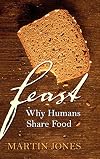
There are a lot of writers now who take a topic like this and make it highly entertaining and informative. This is not one of them. I got through the whole thing, but it was more like dry toast than the moist sweet bread on the cover. The last chapter takes us from original fire hearth, through dining table (a fairly recent development for the common family) and has us crouching around the virtual hearth of the TV set again, while the dining table is relegated to holding written materials. show more We are eating TV dinners, of course. Disappointing. show less
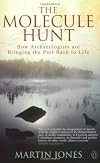
Journal Entry 12 by winggypsysmomwing from Winnipeg, Manitoba Canada on Thursday, August 09, 2007
This book has not been rated.
I''m almost finished this book and I hope to get it in the mail before we leave town tonight.
This was a fascinating book for me. When I was a kid I read everything I could get my hands on about archaeology but sort of left it behind when I started working for a living. I did actually volunteer one summer at a dig at the Forks (where the Red and Assiniboine Rivers show more meet in Winnipeg) and, although I didn''t find anything too interesting, some other people did find artifacts.
I especially found the chapter about food, especially wheat, interesting as I work in wheat research. My area of expertise is not molecular biology but I''m familiar with the techniques. DNA fingerprinting is used frequently to distinguish varieties.
I have come across three articles in newspapers during the week I''ve been reading this book that call into question some of the findings covered in this book. I''m including one "Europeans more Asian than African, researchers say" when I send this book on. I don''t know if I paid attention to these articles because I was reading this book or if there are just a lot of them now but obviously this is a hot topic. Thanks for sending it around bigcurlyoz. I''ve already recommended it to someone. show less
This book has not been rated.
I''m almost finished this book and I hope to get it in the mail before we leave town tonight.
This was a fascinating book for me. When I was a kid I read everything I could get my hands on about archaeology but sort of left it behind when I started working for a living. I did actually volunteer one summer at a dig at the Forks (where the Red and Assiniboine Rivers show more meet in Winnipeg) and, although I didn''t find anything too interesting, some other people did find artifacts.
I especially found the chapter about food, especially wheat, interesting as I work in wheat research. My area of expertise is not molecular biology but I''m familiar with the techniques. DNA fingerprinting is used frequently to distinguish varieties.
I have come across three articles in newspapers during the week I''ve been reading this book that call into question some of the findings covered in this book. I''m including one "Europeans more Asian than African, researchers say" when I send this book on. I don''t know if I paid attention to these articles because I was reading this book or if there are just a lot of them now but obviously this is a hot topic. Thanks for sending it around bigcurlyoz. I''ve already recommended it to someone. show less
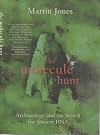
In the last three or so decades, modern scientific advances have led to a revolution in archaeology, arguable with the most significant change due to the use of biochemistry to shed more light on long standing questions.
In this enjoyable and informative book, Martin Jones show how the use of molecular analysis techniques has revealed information previously assumed to be indeterminate. Martin Jones takes a look as such diverse subjects as the origins of plant cultivation, the origins of show more animal husbandry, population movements, the plague, family ancestry, species ancestry, neanderthals, mummies, detailed mundane details of past lives and a host of other interesting subjects. This book also provides an interesting insight into how bioarchaeology got started and how it developed over the past decades to its current form as practiced today.
The book could be improved by including diagrams, photographs or any type of illustration. I'm fairly sure, that since the book's publication in 2001, additional discoveries and techniques have been made. An updated version or sequel to this book would be welcome. show less
In this enjoyable and informative book, Martin Jones show how the use of molecular analysis techniques has revealed information previously assumed to be indeterminate. Martin Jones takes a look as such diverse subjects as the origins of plant cultivation, the origins of show more animal husbandry, population movements, the plague, family ancestry, species ancestry, neanderthals, mummies, detailed mundane details of past lives and a host of other interesting subjects. This book also provides an interesting insight into how bioarchaeology got started and how it developed over the past decades to its current form as practiced today.
The book could be improved by including diagrams, photographs or any type of illustration. I'm fairly sure, that since the book's publication in 2001, additional discoveries and techniques have been made. An updated version or sequel to this book would be welcome. show less
Lists
Awards

You May Also Like


Associated Authors
Statistics
- Works
- 4
- Also by
- 4
- Members
- 262
- Popularity
- #87,813
- Rating
- 3.6
- Reviews
- 4
- ISBNs
- 69
- Languages
- 1