
Alex Harris (1) (1988–)
Author of Do Hard Things: A Teenage Rebellion Against Low Expectations
For other authors named Alex Harris, see the disambiguation page.
Works by Alex Harris
Rebelutia 2 copies
Do Hard Things {video} 1 copy
Tagged
Common Knowledge
- Legal name
- Harris, Alex J.
- Birthdate
- 1988-10-28
- Gender
- male
- Education
- Patrick Henry College
- Occupations
- lawyer
- Relationships
- Harris, Brett (brother)
Harris, Joshua (brother) (1)
Harris, Gregg (father)
Harris, Shannon (ex-sister-in-law) - Nationality
- USA
- Birthplace
- Portland, Oregon, USA
- Places of residence
- Denver, Colorado, USA
- Associated Place (for map)
- USA
Members
Reviews
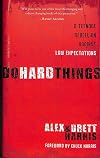
I'm fourteen, so when I first read this book I was expecting it to be written for teenagers. It's written for the world. Alex and Brett Harris challenge you to move outside of your comfort zone and overcome the sluggish habits of discontentment and laziness. If you want to change the world around you or find a purpose for your life...read this book!
I opened this book with a lot of reservation. Being the jaded, read-it-all, know-it-all college student who just left what seemed to be the Harris' overly focused audience (by turning 20), I wasn't sure how much I could get out of this book.
While I still think their focus might have been somewhat limiting, this apathy of low expectation seems to be infecting our entire populace, I can also see why the deliberate focus on teens shines an even stronger light on an even darker blind spot for a show more lot of people.
I also felt a little more removed from a percent of the content, especially early on, because of how politically involved the twins have been and how they used that for a lot of their examples. They balanced out a lot of their political examples, however, in the end; over all, I would have to admit that in the end their examples are even fairly gender balanced, which is another point that they could have missed.
Finally, the best point of this book is that YES I have been feeling exactly what they say in this book for the past few years of my life, and instead of finding this book ridiculously boring, I devoured it in two or three days! Not only was it enormously encouraging to me (I am not alone), but it also inspired me in a lot of ways to challenge myself and others around me who are not fulfilling our full potential. show less
While I still think their focus might have been somewhat limiting, this apathy of low expectation seems to be infecting our entire populace, I can also see why the deliberate focus on teens shines an even stronger light on an even darker blind spot for a show more lot of people.
I also felt a little more removed from a percent of the content, especially early on, because of how politically involved the twins have been and how they used that for a lot of their examples. They balanced out a lot of their political examples, however, in the end; over all, I would have to admit that in the end their examples are even fairly gender balanced, which is another point that they could have missed.
Finally, the best point of this book is that YES I have been feeling exactly what they say in this book for the past few years of my life, and instead of finding this book ridiculously boring, I devoured it in two or three days! Not only was it enormously encouraging to me (I am not alone), but it also inspired me in a lot of ways to challenge myself and others around me who are not fulfilling our full potential. show less
Today, a teenager is considered a “good kid” if he gets good grades, gets into a good college, and stays out of trouble. In a culture where the perceived norm for high school students is drugs and detentions, making the honor roll is an accomplishment worthy of a bumper sticker. But the sad reality is that at many schools even the honors classes are so dumbed down that merely showing up and turning in all the work gets you an A. So if a student gets straight A’s, plays a sport and show more joins a club he is considered top-notch. And if he regularly attends church, well…that is even better.
Alex and Brett Harris (yes, the younger brothers of Joshua Harris, and yes, that Joshua Harris) have noticed this trend. They have noticed that teenagers are consumed by low expectations, and by and large have bought the myth that reaching a bar knee-high is something to be proud of.
The Harris brothers point out that this expectation of worthlessness has produced years of wasted potential. In their book, Do Hard Things, they expose this culture of mediocrity as the teenager’s enemy. They make it clear that the victims in this are teens who squander their first opportunities in life to excel—to do things that count for eternity.
Where did this culture come from? They blame the myth of adolescence (a term Al Mohler and Rick Holland have been using for years). They assault the idea that there should a be a time period between being a kid and being an adult, and that in that fictional time period it is acceptable to squander your years staying out of trouble, instead of seizing them to serve God. The first way the myth gets teens to waste their life is by convincing them that being above average is actually something to be proud of. Excellence is defined by getting good grades in easy classes, and if the grades are to hard, at least trying to get good grades should be sufficient. The second way, the Harris brothers say, is by getting teens to be known for what they don’t do, rather than what they do. “Tim doesn’t do drugs or get in trouble at school—what a good boy he is!”
This book is refreshing because it is unlike most other books written for teens; it challenges them with real challenges. It challenges the both the myth and the culture of mediocrity the myth creates. And it encourages teens to try things at which they might very well fail. In this vei it reminds me of John Piper’s Don’t Waste Your Life.
The Harris brothers are 19, and they write for a teenage audience. I heard someone say that this book would be suitable for adults to read, but I’m not sure how the Harris brothers would take that. After all, the point of the book is that teenagers need to grow up and act like adults. If culture has set the bar too low for adults too, well that almost misses the point of what the Harris brothers are trying to say. They are not calling teens to rise to the level of the average adult—they are calling teens to excellence.
The most helpful part of the book for me was the examples of hard things the authors give. There are five categories of hard things given, and while I won’t give you the list here, I will tell you that they range from making your bed and working out consistently to ending childhood poverty in Africa. The most common example the book gives, and some might find this the book’s most obvious weakness, is political activism. The Harris brothers themselves worked on a campaign for a state supreme court candidate, and the longest example in the book is about a girl who ran a county-wide election in Colorado.
The appendix of the book is an explanation of how the Gospel fits into this call to do hard things, and it is very evangelistic. I would have liked to see the Gospel at the front end, and I would have liked to see them show in each section how the call to follow Christ fits in with the overall message to teens. But this is a minor concern, and the book is replete with Scripture passages and allusions, so it is not as if they were trying to obscure the Christian message. I just wish it would have been more integrated to the theme.
I would recommend this book be given high school students, and the younger the better. It could be a good graduation gift, but at that point the thrust of the book would already be in a person’s rear-view mirror. It is more suited for freshman. Those who read it will be challenged to escape the trappings of modern-American adolescent-mediocrity.
Finally, the Harris brothers have a website, www.therebelution.com, which is an excellent source of information and forums for Christian teens. It is worth exploring, and youth pastors especially will mind much that is helpful there.
. show less
Alex and Brett Harris (yes, the younger brothers of Joshua Harris, and yes, that Joshua Harris) have noticed this trend. They have noticed that teenagers are consumed by low expectations, and by and large have bought the myth that reaching a bar knee-high is something to be proud of.
The Harris brothers point out that this expectation of worthlessness has produced years of wasted potential. In their book, Do Hard Things, they expose this culture of mediocrity as the teenager’s enemy. They make it clear that the victims in this are teens who squander their first opportunities in life to excel—to do things that count for eternity.
Where did this culture come from? They blame the myth of adolescence (a term Al Mohler and Rick Holland have been using for years). They assault the idea that there should a be a time period between being a kid and being an adult, and that in that fictional time period it is acceptable to squander your years staying out of trouble, instead of seizing them to serve God. The first way the myth gets teens to waste their life is by convincing them that being above average is actually something to be proud of. Excellence is defined by getting good grades in easy classes, and if the grades are to hard, at least trying to get good grades should be sufficient. The second way, the Harris brothers say, is by getting teens to be known for what they don’t do, rather than what they do. “Tim doesn’t do drugs or get in trouble at school—what a good boy he is!”
This book is refreshing because it is unlike most other books written for teens; it challenges them with real challenges. It challenges the both the myth and the culture of mediocrity the myth creates. And it encourages teens to try things at which they might very well fail. In this vei it reminds me of John Piper’s Don’t Waste Your Life.
The Harris brothers are 19, and they write for a teenage audience. I heard someone say that this book would be suitable for adults to read, but I’m not sure how the Harris brothers would take that. After all, the point of the book is that teenagers need to grow up and act like adults. If culture has set the bar too low for adults too, well that almost misses the point of what the Harris brothers are trying to say. They are not calling teens to rise to the level of the average adult—they are calling teens to excellence.
The most helpful part of the book for me was the examples of hard things the authors give. There are five categories of hard things given, and while I won’t give you the list here, I will tell you that they range from making your bed and working out consistently to ending childhood poverty in Africa. The most common example the book gives, and some might find this the book’s most obvious weakness, is political activism. The Harris brothers themselves worked on a campaign for a state supreme court candidate, and the longest example in the book is about a girl who ran a county-wide election in Colorado.
The appendix of the book is an explanation of how the Gospel fits into this call to do hard things, and it is very evangelistic. I would have liked to see the Gospel at the front end, and I would have liked to see them show in each section how the call to follow Christ fits in with the overall message to teens. But this is a minor concern, and the book is replete with Scripture passages and allusions, so it is not as if they were trying to obscure the Christian message. I just wish it would have been more integrated to the theme.
I would recommend this book be given high school students, and the younger the better. It could be a good graduation gift, but at that point the thrust of the book would already be in a person’s rear-view mirror. It is more suited for freshman. Those who read it will be challenged to escape the trappings of modern-American adolescent-mediocrity.
Finally, the Harris brothers have a website, www.therebelution.com, which is an excellent source of information and forums for Christian teens. It is worth exploring, and youth pastors especially will mind much that is helpful there.
. show less
The Harris brothers are challenging everything this culture believes about teenagers. Through their book and website they have started a movement called "The Rebelution". It is a call for teens to do hard things and rebel against low expectations. Most teens today are hardly expected to do chores, let alone make a mark on the world, but the Harris twins argue that teens are in a very unique place and time to tackle big things. Using real life examples of themselves and teens around the show more world, Alex and Brett encourage teens to get up and make a difference. Some examples include leading political campaigns, providing housing for low-income families, feeding the homeless...all in BIG ways, by people under 17 years old. A true call to action for teens and young adults, and an inspiration for any age. Well written; presents the whys and hows, and real-life stories. A must read! show less
You May Also Like


Associated Authors
Statistics
- Works
- 5
- Members
- 2,829
- Popularity
- #9,063
- Rating
- 4.1
- Reviews
- 17
- ISBNs
- 44
- Languages
- 6
