
Peter Nichols (1)
Author of A Voyage for Madmen
For other authors named Peter Nichols, see the disambiguation page.
About the Author
Peter Nichols was born in 1950 in New York City. He has worked in advertising and as a screenwriter, and a shepherd in Wales, and he has sailed alone across the Atlantic. He divides his time between Europe and the United States. Peter Nichols is the author of the national bestseller A Voyage for show more Madmen and two other books, Sea Change: Alone Across the Atlantic in a Wooden Boat, a memoir, and the novel Voyage to the North Star. He has taught creative writing at NYU in Paris and Georgetown University, and presently teaches at Bowdoin College. He is lives in Maine with his wife and son. show less
Works by Peter Nichols
Associated Works
Maybe Baby: 28 Writers Tell the Truth About Skepticism, Infertility, Baby Lust, Childlessness, Ambivalence, and How They Made the Biggest Decision of Their Lives (2006) — Contributor — 133 copies, 4 reviews
Tagged
Common Knowledge
- Birthdate
- 1950
- Gender
- male
- Nationality
- USA
- Places of residence
- New York, USA
Washington, D.C., USA - Associated Place (for map)
- USA
Members
Reviews
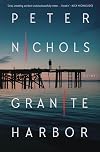
Granite Harbor is an unusual book. The premise is interesting but like a lot of other books: small town, missing teenagers, possible serial killer. Sounds good but nothing unique, nothing that grabs you . . . until you read a couple of chapters and realize you are already completely immersed. Author Peter Nichols fills this story with people surprisingly fascinating and different than expected, situations and events that you don’t see coming, and so many twists and turns and shocks that show more you won’t want to put it down until the mystery is solved, the killer is identified.
Alex Brangwen is one of those unexpectedly fascinating people. An Englishman who was a novelist when a whirlwind romance and marriage brought him to the United States and eventually to Granite Harbor. Things are a little different than those early days, though. Novelist: failed. Marriage: failed. Alex is now Granite Harbor’s sole detective. He shares a daughter, Sophie, with his ex. They get along well enough to co-parent, but once Morgana realized she wasn’t married to a soon-to-be-famous novelist she returned to her high society self without Alex. Loving Maine, never even considering leaving Sophie, Alex became a policeman and then a detective. He’s content – well, content enough anyway. And now it’s his job to solve this crime and make sure no more teenagers are taken and murdered.
Isabel Dorr is also a single parent, to son Ethan. Widowed eleven years ago, she’s still stuck in grief and losing her husband and Ethan’s father has been difficult on them both. Difficulties at work for Isabel, at school for Ethan. They’re making do, but barely. There was at one time a little spark, a barely started what-if relationship between Alex and Isabel but things got complicated and it ended.
Granite Harbor is so good, so compelling, that to say much more about the plot would introduce major spoilers. The Granite Harbor Living History Settlement as well as some rough, wooded country of Maine plays a major role – and some of the people, some of what goes on, is nothing short of weird. Once the killings start the story takes off and you just have to hang on. It’s one of those books so full of suspense your brain is churning, trying to figure out who the murderer is and how to prevent the next murder from happening. At the start, you can read a couple of chapters and put the book aside, but at some point your brain goes from merely churning to frantically churning. So many suspects to worry about. And even once you learn who the killer is, instead of calming down, your brain becomes even more frantic, because now you have to warn the potential next victims: Go! Run! Hide! What? What can you tell them? How can you tell them? Everything will be okay, though, won’t it? Your favorite characters will live happily ever after, won’t they? Well, maybe a little trauma, but they will be alive and breathing. Not dead. Or will they? And you absolutely cannot put this book down anymore.
The characters are so well drawn. Alex is complex, Isabel is heartbreaking, especially when she “sees” things that terrify her. Supporting cast is varied with a multitude of secrets. The words, the pace, the plot: excellent.
Thanks to Celadon Books for providing an advance copy of Granite Harbor via NetGalley. As always, I am proud and happy to be a Celadon Reader because their selection of books is the absolute best. Peter Nichols has written a suspenseful, startling, satisfying book that I thoroughly enjoyed and recommend without hesitation. I voluntarily leave this review; all opinions are my own. show less
Alex Brangwen is one of those unexpectedly fascinating people. An Englishman who was a novelist when a whirlwind romance and marriage brought him to the United States and eventually to Granite Harbor. Things are a little different than those early days, though. Novelist: failed. Marriage: failed. Alex is now Granite Harbor’s sole detective. He shares a daughter, Sophie, with his ex. They get along well enough to co-parent, but once Morgana realized she wasn’t married to a soon-to-be-famous novelist she returned to her high society self without Alex. Loving Maine, never even considering leaving Sophie, Alex became a policeman and then a detective. He’s content – well, content enough anyway. And now it’s his job to solve this crime and make sure no more teenagers are taken and murdered.
Isabel Dorr is also a single parent, to son Ethan. Widowed eleven years ago, she’s still stuck in grief and losing her husband and Ethan’s father has been difficult on them both. Difficulties at work for Isabel, at school for Ethan. They’re making do, but barely. There was at one time a little spark, a barely started what-if relationship between Alex and Isabel but things got complicated and it ended.
Granite Harbor is so good, so compelling, that to say much more about the plot would introduce major spoilers. The Granite Harbor Living History Settlement as well as some rough, wooded country of Maine plays a major role – and some of the people, some of what goes on, is nothing short of weird. Once the killings start the story takes off and you just have to hang on. It’s one of those books so full of suspense your brain is churning, trying to figure out who the murderer is and how to prevent the next murder from happening. At the start, you can read a couple of chapters and put the book aside, but at some point your brain goes from merely churning to frantically churning. So many suspects to worry about. And even once you learn who the killer is, instead of calming down, your brain becomes even more frantic, because now you have to warn the potential next victims: Go! Run! Hide! What? What can you tell them? How can you tell them? Everything will be okay, though, won’t it? Your favorite characters will live happily ever after, won’t they? Well, maybe a little trauma, but they will be alive and breathing. Not dead. Or will they? And you absolutely cannot put this book down anymore.
The characters are so well drawn. Alex is complex, Isabel is heartbreaking, especially when she “sees” things that terrify her. Supporting cast is varied with a multitude of secrets. The words, the pace, the plot: excellent.
Thanks to Celadon Books for providing an advance copy of Granite Harbor via NetGalley. As always, I am proud and happy to be a Celadon Reader because their selection of books is the absolute best. Peter Nichols has written a suspenseful, startling, satisfying book that I thoroughly enjoyed and recommend without hesitation. I voluntarily leave this review; all opinions are my own. show less

A nice, straightforward summary of the notorious 1968 singlehanded Round-the-World race. It doesn't add a huge amount to the several other first- and second-hand accounts of the race I have read, but Nichols does make an effort to provide a bit of perspective (giving modern readers some idea why the British and French public of the time were so hungry for this kind of pointless heroic exploit, for instance).
The viewpoint Nichols adopts is that of someone who has done a bit of ocean sailing show more but not so much that he takes it for granted. This allows him, without sounding either too patronising or too technical, to explain the special features of long-distance cruising anno 1968 in such a way that they make sense to the average modern weekend sailor. From a "helicopter view" forty years on, we might conclude that what set Moitessier and Knox-Johnson apart from the others was that they were using boats in which they had already successfully made long voyages, whilst the others were either not so experienced or in untried purpose-built boats (in Crowhurst's case both). Nichols goes a bit deeper than this, and looks in detail at how the technical features of the boats and the psychological state of the sailors affected their chances of success (although of course luck and weather played a big part too). I found it particularly interesting how much the information (or absence of information) they had about the progress of their rivals affected all the participants.
Probably a good book to read if you haven't yet read La longue route and The strange voyage of Donald Crowhurst, but a bit redundant if you already have. show less
The viewpoint Nichols adopts is that of someone who has done a bit of ocean sailing show more but not so much that he takes it for granted. This allows him, without sounding either too patronising or too technical, to explain the special features of long-distance cruising anno 1968 in such a way that they make sense to the average modern weekend sailor. From a "helicopter view" forty years on, we might conclude that what set Moitessier and Knox-Johnson apart from the others was that they were using boats in which they had already successfully made long voyages, whilst the others were either not so experienced or in untried purpose-built boats (in Crowhurst's case both). Nichols goes a bit deeper than this, and looks in detail at how the technical features of the boats and the psychological state of the sailors affected their chances of success (although of course luck and weather played a big part too). I found it particularly interesting how much the information (or absence of information) they had about the progress of their rivals affected all the participants.
Probably a good book to read if you haven't yet read La longue route and The strange voyage of Donald Crowhurst, but a bit redundant if you already have. show less
I knew nothing about the (in)famous 1968-69 Sunday Times Golden Globe Race, but wow this book delivers. Not only a great story, with incredible characters, the author is master sailor who puts things in context. For example. he doesn't just say the boat "heaved too", he explains what it is, why it has fallen out of favor, why it was important in this race, etc.. you learn a lot about long-distance small-boat blue-ocean voyaging, technically and psychologically. It reminds me of long-distance show more lightweight hiking, or climbing rope-free, sports with a natural purity. If I remember anything it will be that every boat is unique, as is every captain, and storm - these complexities make it nearly impossible to prepare for every eventuality. A person can learn to sail their entire lives, yet still come across unexpected and deadly challenges. I suspect the most successful have the ability to be flexible and try new things without resorting to "rules", but also know when to play straight. Good life lessons generally. Anyway, super-impressed and hope to read some of the memoirs this book is based on. show less
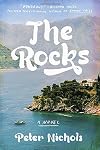
I have fallen in love with las Islas Baleares again. The first time was with Chopin and his lady love. This time with the characters who ebb and flow from them with the tides. There are several romances in this novel that are celebrated with humor, love, hate and disgust, anguish and tragedy. The chapters are written from present time to beginning which caused me to need to read this book quickly. A lapse in time of reading it would cause confusion. Sex is treated as a casual incidence. show more Having money is taken for granted. Changing partners is expected. An ode to the Bohemian life is achieved. It's a pleasant summer read. My thanks to the author and Penguin's First to Read program for a complimentary copy. show less
Lists
Awards


You May Also Like


Associated Authors
Statistics
- Works
- 10
- Also by
- 1
- Members
- 1,922
- Popularity
- #13,397
- Rating
- 3.8
- Reviews
- 81
- ISBNs
- 155
- Languages
- 6