
David Hill (1) (1942–)
Author of See Ya, Simon
For other authors named David Hill, see the disambiguation page.
About the Author
David Hill lives in Los Angeles & Mississippi. "Sacred Dust" won the Commonwealth Club of California First Work of Fiction award. (Publisher Provided) David Hill is the author of First to the Top: Sir Edmund Hillary's Amazing Everest Adventure whcih made the New Zealand Best Seller List in 2015. show more (Bowker Author Biography) show less
Works by David Hill
Stepping up 2 copies
Giving the Bird 1 copy
Associated Works
Tagged
Common Knowledge
- Birthdate
- 1942-06-24
- Gender
- male
- Education
- Victoria University of Wellington, New Zealand
Iowa Writers' Workshop - Occupations
- teacher
journalist
reviewer
playwright
children's writer - Awards and honors
- Robert Lord Writers Cottage Residency ( [2003])
Margaret Mahy Medal (2005)
Prime Minister's Award for Literary Achievement (Fiction|2021) - Short biography
- For New Zealand children's writer David Hill - follow Storylines link where there is an updated bibliography. http://www.storylines.org.nz/author_d...
- Nationality
- New Zealand
- Birthplace
- Napier, New Zealand
- Places of residence
- New Plymouth, New Zealand
- Associated Place (for map)
- New Zealand
Members
Reviews
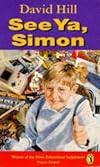
Nathan and Simon are best mates. They share interests in soccer, their pretty classmates, and the local paper’s idiotic headlines. But there is something they don’t share: Simon has muscular dystrophy and is confined to a wheelchair. Nathan relates their experiences together, and sometimes apart—at school, visiting Simon at home, and in the hospital. He is honest about all the good and bad points he notices about having a disability, and also about the reality of Simon’s approaching show more death.
This is an appealing story with realistic, everyday characters. The classroom scenes could be reproduced in any high school in the country, and the breakfast-table argument about who does what chore will be equally familiar. But there is always a shadow cast by Simon’s condition – the thing which makes this story not just another predictable teenage drama.
Although this is primarily a story about Simon, as told by Nathan, their family members are significant parts of the story, too. There are ongoing jokes about Nathan’s sister – Fiona the Moaner – and her enthusiasm for drawing. Simon’s older sister Kirsti also features in the story, with Nathan frequently commenting how good it is for his reputation to be seen talking to a school senior. Accordingly, the reader has the opportunity to identify with many different perspectives on what’s happening with Simon.
Throughout his narration, Nathan maintains a sense of humour. Mostly he shares his jokes with Simon, but the reader also gets to know what’s going on in Nathan’s head with regard to those he’s observing, and many of these observations are recorded in ways that are bound to raise a smile. This is one reason why, despite the subject matter, this is a far from depressing book.
In a sense the main subject of this novel is the end of Simon’s life. As Nathan puts it, early on in the book: “Simon’s my best friend, and sometime in the next year or two years, he’s going to die.” The story concludes on the day before the funeral. However, it would be inaccurate to say that the story is about Simon’s death: rather, it is a celebration of the friendship the two boys share, and an eye-opener regarding the prejudices and difficulties faced by young people with disabilities.
I would strongly recommend this book to all readers who are prepared to get to know characters like Simon as friends; and who can, with Nathan, say, “I’m proud I knew him, and I’ll never forget him.” show less
This is an appealing story with realistic, everyday characters. The classroom scenes could be reproduced in any high school in the country, and the breakfast-table argument about who does what chore will be equally familiar. But there is always a shadow cast by Simon’s condition – the thing which makes this story not just another predictable teenage drama.
Although this is primarily a story about Simon, as told by Nathan, their family members are significant parts of the story, too. There are ongoing jokes about Nathan’s sister – Fiona the Moaner – and her enthusiasm for drawing. Simon’s older sister Kirsti also features in the story, with Nathan frequently commenting how good it is for his reputation to be seen talking to a school senior. Accordingly, the reader has the opportunity to identify with many different perspectives on what’s happening with Simon.
Throughout his narration, Nathan maintains a sense of humour. Mostly he shares his jokes with Simon, but the reader also gets to know what’s going on in Nathan’s head with regard to those he’s observing, and many of these observations are recorded in ways that are bound to raise a smile. This is one reason why, despite the subject matter, this is a far from depressing book.
In a sense the main subject of this novel is the end of Simon’s life. As Nathan puts it, early on in the book: “Simon’s my best friend, and sometime in the next year or two years, he’s going to die.” The story concludes on the day before the funeral. However, it would be inaccurate to say that the story is about Simon’s death: rather, it is a celebration of the friendship the two boys share, and an eye-opener regarding the prejudices and difficulties faced by young people with disabilities.
I would strongly recommend this book to all readers who are prepared to get to know characters like Simon as friends; and who can, with Nathan, say, “I’m proud I knew him, and I’ll never forget him.” show less

In Scotland in 1886, a family boards a ship for New Zealand and a better life. The family settles, becomes friends with a local Maori family and as the generations pass the two families become intertwined. Each chapter introduces us to a new generation and we see their lives played out against the background of New Zealand history until we finish in 2018.
Written by accomplished children's author, David Hill, this book is a superbly well-written introduction to New Zealand history wrapt up in show more a compelling family saga. Events such as the Napier earthquake, World War I and II, Women's Suffrage, the Tangiwai disaster and the Springbok tour all feature in this book but never take over from the main story of the two families. Each character is distinct and memorable and although each chapter introduces a new character, the stories of the earlier characters are continued. A family tree at the beginning helps the reader keep track of all the relationships while a map of the area adds interest. This book is a great read for children 10 and up and would be an excellent read-aloud from a slightly earlier age. show less
Written by accomplished children's author, David Hill, this book is a superbly well-written introduction to New Zealand history wrapt up in show more a compelling family saga. Events such as the Napier earthquake, World War I and II, Women's Suffrage, the Tangiwai disaster and the Springbok tour all feature in this book but never take over from the main story of the two families. Each character is distinct and memorable and although each chapter introduces a new character, the stories of the earlier characters are continued. A family tree at the beginning helps the reader keep track of all the relationships while a map of the area adds interest. This book is a great read for children 10 and up and would be an excellent read-aloud from a slightly earlier age. show less

A very good story that is full of adventure, risk, and well written internal conflict with the main character. You easily feel part of the action.

This is a gripping story of two brothers' involvement in World War I. Whilst William eagerly enlists in 1914, his brother Edmund is a conscientious objector and refuses to fight. The story follows both brothers as they go their different ways only to both encounter the reality of WWI trench warfare.
David Hill paints an accurate picture of war without sensationalising it or dwelling on horrific scenes. Both WIliam and Edmund are well-drawn, rounded characters and the minor chracters are show more equally believable. This book would appeal to tweens who enjoy war and/or historical stories and would make an ideal introduction to anyone studying WWI. show less
David Hill paints an accurate picture of war without sensationalising it or dwelling on horrific scenes. Both WIliam and Edmund are well-drawn, rounded characters and the minor chracters are show more equally believable. This book would appeal to tweens who enjoy war and/or historical stories and would make an ideal introduction to anyone studying WWI. show less
Lists
Awards


Journey to Tangiwai : the diary of Peter Cotterill, Napier, 1953 (#18) (Winner – Junior Fiction (age range from 7 years to 13 years) – 2004)
Speed King: Burt Munro, The World's Fastest Indian (Winner – Non-fiction (age range from 3 years to 18 years) – 2017)
You May Also Like


Associated Authors
Statistics
- Works
- 67
- Also by
- 2
- Members
- 638
- Popularity
- #39,509
- Rating
- 4.0
- Reviews
- 30
- ISBNs
- 333
- Languages
- 9