
David R. Montgomery (1) (1961–)
Author of Dirt: The Erosion of Civilizations
For other authors named David R. Montgomery, see the disambiguation page.
About the Author
David R. Montgomery is a MacArthur Fellow and professor of geomorphology at the University of Washington. His books include Dirt and The Hidden Half of Nature (cowritten with his wife, Anne Bikl).
Works by David R. Montgomery
Tagged
Common Knowledge
- Canonical name
- Montgomery, David R.
- Other names
- Montgomery, David Richard
- Birthdate
- 1961-09-07
- Gender
- male
- Education
- University of California, Berkeley (PhD|Geomorphology)
- Occupations
- geomorphologist
university professor - Organizations
- University of Washington
- Nationality
- USA
- Associated Place (for map)
- USA
Members
Reviews
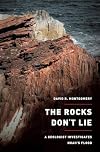
For some reason, there was something about the structure of Montgomery's sentences that was giving me a hard time getting into a reading groove. Then, on the road-trip to and from Kansas this winter, I started reading this aloud to Andrew, and from then on I was in love.
So, it's no secret that literal "scientific" readings of Genesis make me cranky. I've read a lot of refutations of young-Earth creationism from a biology/evolution point of view. And of course some of those have incorporated show more a little bit of geology -- usually the fossil record, with a tiny bit of tectonic plate theory thrown in. But my understanding of radiometric dating was kind of hazy, and my understanding of how different rocks are forms was stuck at a fourth-grade level. Plus, I've heard many times that the presence of flood stories in almost every culture was an overwhelming argument for the existence of a massive, worldwide flood in Earth's history. So a book subtitled A Geologist Investigates Noah's Flood? I knew I had to read it.
This is not a skewering of the creationist position (though that happens a few times along the way.) It's far more interesting than that. It is a story of the history of geology, and how the positions of both the scientists and religious leaders were shaped by the search for evidence of Noah's flood. The form of the story so closely parallels the development of biology & the theory of evolution -- starting out with scientists who were also men of God -- looking to better understand "God's other book," nature, in order to better understand God. Only the names and specific discoveries have changed.
And happily, I feel like I have a much better grasp of those discoveries. A more concrete understanding of sedimentary and metamorphic rocks. A much better understanding of radiometric dating. And a new favorite trump card for any literalist debate: mammoths.
Oh! And the quotes! Montgomery pulls the best quotes from Galileo, Thomas Paine, even Saint Augustine!
Fabulous. show less
So, it's no secret that literal "scientific" readings of Genesis make me cranky. I've read a lot of refutations of young-Earth creationism from a biology/evolution point of view. And of course some of those have incorporated show more a little bit of geology -- usually the fossil record, with a tiny bit of tectonic plate theory thrown in. But my understanding of radiometric dating was kind of hazy, and my understanding of how different rocks are forms was stuck at a fourth-grade level. Plus, I've heard many times that the presence of flood stories in almost every culture was an overwhelming argument for the existence of a massive, worldwide flood in Earth's history. So a book subtitled A Geologist Investigates Noah's Flood? I knew I had to read it.
This is not a skewering of the creationist position (though that happens a few times along the way.) It's far more interesting than that. It is a story of the history of geology, and how the positions of both the scientists and religious leaders were shaped by the search for evidence of Noah's flood. The form of the story so closely parallels the development of biology & the theory of evolution -- starting out with scientists who were also men of God -- looking to better understand "God's other book," nature, in order to better understand God. Only the names and specific discoveries have changed.
And happily, I feel like I have a much better grasp of those discoveries. A more concrete understanding of sedimentary and metamorphic rocks. A much better understanding of radiometric dating. And a new favorite trump card for any literalist debate: mammoths.
Oh! And the quotes! Montgomery pulls the best quotes from Galileo, Thomas Paine, even Saint Augustine!
Fabulous. show less
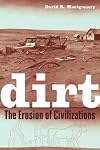
"Historians blame many culprits for the demise of once flourishing cultures: disease, deforestation, and climate change to name a few... Time and again, social and political conflicts undermined societies once there were more people to feed than the land could support. The history of dirt suggests that how people treat their soil can impose a life span on civilizations." (pg 3)
Add "soil abuse" to your list of societal ills that threaten civilization. David R. Montgomery has written a show more fascinating history of civilizations that have destroyed the soil they used to produce their food. From the ancient societies of the Middle East to Europe to South America to the American South and Midwest to islands in the South Pacific... it's a sobering history. It's also very detailed and comprehensive, and reminds me of more well-known books like [b:Guns, Germs, and Steel|1842|Guns, Germs, and Steel The Fates of Human Societies|Jared Diamond|https://images.gr-assets.com/books/1453215833s/1842.jpg|2138852] and [b:1491|39020|1491 New Revelations of the Americas Before Columbus|Charles C. Mann|https://images.gr-assets.com/books/1545238592s/39020.jpg|38742] in how thoroughly it treats lengthy periods of history.
Soil is often seen erroneously as a commodity that cannot be used up. The problem is that the surface layer where food is able to grow takes a very long time to produce from weathering of rock below. When forest cover is removed and the ground is plowed, the soil is exposed to the elements and subject to erosion. When it is over-farmed for quick return "cash crops" and the nutrients are depleted, it no longer produces food. In the past, those societies either moved on to other farmable lands or died out. But occasionally societies developed methods of replenishing the nutrients and were able to last for 1,000 years or more on the same land.
This book has the feel of a textbook, but is still very readable and understandable rather than feeling dense. It's not for the home gardener who wishes to better care for the home soil, but rather a warning to societies and governments that there's a limit to our dirt.
"The underlying problem is confoundingly simple: agricultural methods that lose soil faster than it is replaced destroy societies." (pg 241-2) show less
Add "soil abuse" to your list of societal ills that threaten civilization. David R. Montgomery has written a show more fascinating history of civilizations that have destroyed the soil they used to produce their food. From the ancient societies of the Middle East to Europe to South America to the American South and Midwest to islands in the South Pacific... it's a sobering history. It's also very detailed and comprehensive, and reminds me of more well-known books like [b:Guns, Germs, and Steel|1842|Guns, Germs, and Steel The Fates of Human Societies|Jared Diamond|https://images.gr-assets.com/books/1453215833s/1842.jpg|2138852] and [b:1491|39020|1491 New Revelations of the Americas Before Columbus|Charles C. Mann|https://images.gr-assets.com/books/1545238592s/39020.jpg|38742] in how thoroughly it treats lengthy periods of history.
Soil is often seen erroneously as a commodity that cannot be used up. The problem is that the surface layer where food is able to grow takes a very long time to produce from weathering of rock below. When forest cover is removed and the ground is plowed, the soil is exposed to the elements and subject to erosion. When it is over-farmed for quick return "cash crops" and the nutrients are depleted, it no longer produces food. In the past, those societies either moved on to other farmable lands or died out. But occasionally societies developed methods of replenishing the nutrients and were able to last for 1,000 years or more on the same land.
This book has the feel of a textbook, but is still very readable and understandable rather than feeling dense. It's not for the home gardener who wishes to better care for the home soil, but rather a warning to societies and governments that there's a limit to our dirt.
"The underlying problem is confoundingly simple: agricultural methods that lose soil faster than it is replaced destroy societies." (pg 241-2) show less
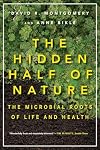
Soil fascinates me. I'm not a scientist or a biologist, but ecology is one of my passions, and the role of soil - the source of plant life and health, rejuvenated by organic matter and critters, essential to agriculture and healthy food, able to sequester carbon, so tied in to the whole web of life - is vastly interesting to me.
I read this book because I'm a fan of David Montgomery's other science books for general audiences, and was interested to learn more about he and his wife rejuvenated show more their Seattle yard's and created a garden. (I'm also a Seattleite who has a yard full of soil that needs some help.)
I didn't initially realize when I picked up the book that it was also about our internal microbiome. The advances in our understanding of our gut flora in recent years are amazing, and I recently read a book on this exact topic. So although the book wasn't always the most riveting read for my bus commute (it's nonfiction, after all), I did find it all very interesting.
What I really loved about this book was the comparison and connections drawn between gardens and human digestive systems. Both are full of microbiology that, in large part, is helpful (extracts nutrients, keeps pests at bay) and feeding the microbiome is best for health and balance. I've been pursuing my own dietary changes for 4-5 years now, incrementally, and this book gave me a new area to focus on: how to feed my internal micro-allies.
The garden analogy made my own internal system make more sense to me. The gut is the root. Mind blown. Highly recommended. show less
I read this book because I'm a fan of David Montgomery's other science books for general audiences, and was interested to learn more about he and his wife rejuvenated show more their Seattle yard's and created a garden. (I'm also a Seattleite who has a yard full of soil that needs some help.)
I didn't initially realize when I picked up the book that it was also about our internal microbiome. The advances in our understanding of our gut flora in recent years are amazing, and I recently read a book on this exact topic. So although the book wasn't always the most riveting read for my bus commute (it's nonfiction, after all), I did find it all very interesting.
What I really loved about this book was the comparison and connections drawn between gardens and human digestive systems. Both are full of microbiology that, in large part, is helpful (extracts nutrients, keeps pests at bay) and feeding the microbiome is best for health and balance. I've been pursuing my own dietary changes for 4-5 years now, incrementally, and this book gave me a new area to focus on: how to feed my internal micro-allies.
The garden analogy made my own internal system make more sense to me. The gut is the root. Mind blown. Highly recommended. show less

Montgomery introduces us to the basic concepts of soil science, and then starts a tour of soil usage over the ages. He highlights ancient civilizations in the Old and New Worlds and what we know of their agricultural practices— and calls out erosion, soil depletion, salinization, and desertification as consequences that facilitated the downfall of their nations. (This is not a how-it-really-happened crank history book; he’s just asserting that a failure to conserve soil resources show more weakened them.) He also notes which ones figured out the right techniques of conservation and how they were able to persist much longer.
The problems extend to recent history as well: he calls out bad practices in the past few centuries all over the world and provides ample information about what went right and wrong. Under normal geological conditions, soil is created very slowly, and shortsighted agriculture can strip it away far faster than it can be created normally. But there are alternatives to just plowing up soil, planting a monoculture, and using industrial fertilizer to make up for using up the soil, and he explains them— including many techniques used in organic farming (though he also calls out industrial organic farming as just as unhealthy). Montgomery’s bottom line is that we need better mechanisms than short-term markets to provide proper incentives to take care of the soil (he believes this is a sensible place for government to intervene), and that the right techniques will vary with each patch of soil; there is no one-size-fits-all answer, but there is a big toolkit of agroecology that every farmer should have available. The alternative is using up in human time a resource that can only be replenished in geological time: a sure route to the downfall of our own global civilization. show less
The problems extend to recent history as well: he calls out bad practices in the past few centuries all over the world and provides ample information about what went right and wrong. Under normal geological conditions, soil is created very slowly, and shortsighted agriculture can strip it away far faster than it can be created normally. But there are alternatives to just plowing up soil, planting a monoculture, and using industrial fertilizer to make up for using up the soil, and he explains them— including many techniques used in organic farming (though he also calls out industrial organic farming as just as unhealthy). Montgomery’s bottom line is that we need better mechanisms than short-term markets to provide proper incentives to take care of the soil (he believes this is a sensible place for government to intervene), and that the right techniques will vary with each patch of soil; there is no one-size-fits-all answer, but there is a big toolkit of agroecology that every farmer should have available. The alternative is using up in human time a resource that can only be replenished in geological time: a sure route to the downfall of our own global civilization. show less
Lists
Awards


You May Also Like


Statistics
- Works
- 6
- Members
- 1,108
- Popularity
- #23,191
- Rating
- 4.0
- Reviews
- 31
- ISBNs
- 51
- Languages
- 4
