
Brian Murphy (1)
Author of The Root of Wild Madder: Chasing the History, Mystery, and Lore of the Persian Carpet
For other authors named Brian Murphy, see the disambiguation page.
About the Author
Image credit: Brian Murphy (1)
Works by Brian Murphy
The Root of Wild Madder: Chasing the History, Mystery, and Lore of the Persian Carpet (2005) 198 copies, 2 reviews
81 Days Below Zero: The Incredible Survival Story of a World War II Pilot in Alaska's Frozen Wilderness (2015) 163 copies, 8 reviews
Adrift: A True Story of Tragedy on the Icy Atlantic and the One Who Lived to Tell about It (2018) 74 copies, 7 reviews
Tagged
Common Knowledge
Members
Reviews
The Root of Wild Madder: Chasing the History, Mystery, and Lore of the Persian Carpet by Brian Murphy
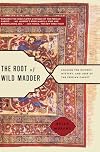
There are plenty of dry histories of Persian carpet making, and sterile picture books of Persian carpets, but too often they fail to do justice to their topic. That’s not a surprising problem for anyone trying to unravel an ancient art form that has survived millennia. No book can truly capture the essence, for example, of a Persian Carpet made by hand by a family in a remote village hundreds of years ago. But Brian Murphy’s book The Root of the Wild Madder comes as close as you’re show more likely to get in an English language account.
Persian carpets have inspired the imagination of people around the world for 2500 years. Their origins are shrouded in the creative mists of an ancient people. Their descendants today speak of the interplay between the carpets’ sacred and artistic language with Persian poetry and spirituality. A carpet is a sacred medium that gives a glimpse into those creative mists of many centuries past. At the very least, the carpets represent a deep cultural labyrinth using exquisite aesthetic organizing principles that are unique. Carpets have a rich and textured history to match their rich and textured ingredients.
In this book, the author set out on a journey across Iran to discover the beauty of Persian Carpets, to learn more about the history of carpet-making from the people most intimate with it, and to meet people who today still make carpets by hand, stirring the dye, weaving one knot at a time.
The book is nonfiction, every word is a literal account of the author’s travels, encounters, observations, and experiences, but written in an artistic novelistic form that is hard to put down.
The book gives you an exciting travelogue. You meet fascinating carpet makers and traders. Friends of the author take him to the edge of the world where nothing has changed in a thousand years. Back in the cities, you’ll wander through mazes of carpet bazaars, where secret deals are made in back alleys between savvy merchants. You’ll have tea with village families crouched around a loom weaving carpets while discussing philosophy. You will discover fields of wild madder, whose root produces the famous Persian red dye, under two-ton stone grinding wheels.
The book highlights the blending of the art of carpets with the art of ancient poets such as Hafez, and spiritual insights into the meaning behind the art. It also explains interesting technical facts, such as the importance of knots per square inch, debates on chemical versus natural dyes, the abrash of varying hues, the warp and weft of wool thread versus cotton, inside look at wholesale and retail channels, even economic and political history of the carpet industry.
The book covers every angle of the Persian Carpet phenomenon, mostly through conversations with a compelling cast of characters met throughout the back rooms, cities, villages, and countryside of Iran. The author takes a lot of risks, with some personal danger, on his journey. He has done his research and brings a wealth of knowledge to inform his experiences throughout his travels.
Perhaps most important, he is open to new exposures, which he generously shares as they change his outlook in many ways. You won’t want the book to end. But when it does, you are left with a gift: a new appreciation for this unique practical art form and its culture. I highly recommend Brian Murphy’s magical immersion into a lost civilization through its mystical art of handmade carpets. show less
Persian carpets have inspired the imagination of people around the world for 2500 years. Their origins are shrouded in the creative mists of an ancient people. Their descendants today speak of the interplay between the carpets’ sacred and artistic language with Persian poetry and spirituality. A carpet is a sacred medium that gives a glimpse into those creative mists of many centuries past. At the very least, the carpets represent a deep cultural labyrinth using exquisite aesthetic organizing principles that are unique. Carpets have a rich and textured history to match their rich and textured ingredients.
In this book, the author set out on a journey across Iran to discover the beauty of Persian Carpets, to learn more about the history of carpet-making from the people most intimate with it, and to meet people who today still make carpets by hand, stirring the dye, weaving one knot at a time.
The book is nonfiction, every word is a literal account of the author’s travels, encounters, observations, and experiences, but written in an artistic novelistic form that is hard to put down.
The book gives you an exciting travelogue. You meet fascinating carpet makers and traders. Friends of the author take him to the edge of the world where nothing has changed in a thousand years. Back in the cities, you’ll wander through mazes of carpet bazaars, where secret deals are made in back alleys between savvy merchants. You’ll have tea with village families crouched around a loom weaving carpets while discussing philosophy. You will discover fields of wild madder, whose root produces the famous Persian red dye, under two-ton stone grinding wheels.
The book highlights the blending of the art of carpets with the art of ancient poets such as Hafez, and spiritual insights into the meaning behind the art. It also explains interesting technical facts, such as the importance of knots per square inch, debates on chemical versus natural dyes, the abrash of varying hues, the warp and weft of wool thread versus cotton, inside look at wholesale and retail channels, even economic and political history of the carpet industry.
The book covers every angle of the Persian Carpet phenomenon, mostly through conversations with a compelling cast of characters met throughout the back rooms, cities, villages, and countryside of Iran. The author takes a lot of risks, with some personal danger, on his journey. He has done his research and brings a wealth of knowledge to inform his experiences throughout his travels.
Perhaps most important, he is open to new exposures, which he generously shares as they change his outlook in many ways. You won’t want the book to end. But when it does, you are left with a gift: a new appreciation for this unique practical art form and its culture. I highly recommend Brian Murphy’s magical immersion into a lost civilization through its mystical art of handmade carpets. show less
Adrift: A True Story of Tragedy on the Icy Atlantic and the One Who Lived to Tell about It by Brian Murphy
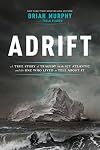
January, 1856. Captain Alexander Kelley is sailing the packet ship John Rutledge from Liverpool to New York, completing his first transatlantic voyage as a captain. He leaves his wife behind in Liverpool as the voyage will be rough given the time of year, and promises to pick her up in the spring when they can return to New York together. It is a promise he will break. After 35 days at sea on February 20th, 1856, The John Rutledge struck an iceberg in the Atlantic and sank. 13 survivors show more boarded life boats. Nine days later, the only survivors were one crew member and the ship's log book.
A disaster tale such as this one is even more emotional when it's a true story. Murphy weaves the story of the fate of the John Rutledge with great skill. It chilled me to the bone thinking about the few survivors floating in open boats in the freezing cold elements, only to die. And the many emigrants from Ireland -- men, women and children seeking a better life -- who never made it off the ship. I had to watch two Disney movies after I finished this book to get the sad, emotional thoughts out of my head. Those poor people....and what a horrible, lonely way to die.
In his introduction to the book, the author says: "Scores of ships -- carrying tens of thousands of passengers and crew -- met a similar fate in the Atlantic before twentieth-century advances in communications technology enabled better advance notice on looming ice fields and approaching storms. The names of some lost ships are remembered. So are a few of the prominent figures that perished at sea. But almost totally forgotten are the others who went down with them: emigrants, seamen, travelers, merchants and envoys. Entire families. Young men and women striking out for a new life. Children too young to grasp the dangers of an Atlantic crossing. They are the anonymous dead. The sea is good at swallowing lives without a trace." It happened that way for so many.....dreams of a new life over so quickly...and now nobody even remembers their names or anything about them. I thought about each and every one of them as I read this book.
A book that can elicit a profound emotional response in a reader is well written. This book sucked me into the story of this doomed ship and kept my total attention from start to finish. I felt an emotional tie to the people I knew were going to die. Brian Murphy is a skilled story-teller. Excellent book. Heart-breaking story. Anyone who enjoys adventure stories, historical tales or the sea will love this book. It's hard to read -- the outcome is bleak. But I'm glad a skilled writer told their story. Those who crossed the ocean before the age of modern communications and safety precautions were taking a huge risk. So many were lost. I'm glad that some are still remembered.
I have a son in the Navy and even though I am not really a religious person, I thought of this naval hymn while reading this story:
For Those In Peril On The Sea
Eternal Father, strong to save,
Whose arm doth bind the restless wave,
Who bidd’st the mighty ocean deep
Its own appointed limits keep;
O hear us when we cry to Thee,
For those in peril on the sea!
O Saviour, Whose almighty word
The winds and waves submissive heard,
Who walkedst on the foaming deep,
And calm amid its rage didst sleep:
O hear us when we cry to Thee
For those in peril on the sea!
O Sacred Spirit, who didst brood
Upon the chaos dark and rude,
Who bad’st its angry tumult cease,
And gavest light, and life, and peace:
O hear us when we cry to Thee
For those in peril on the sea!
O Trinity of love and power,
Our brethren shield in danger’s hour;
From rock and tempest, fire and foe,
Protect them wheresoe’er they go;
And ever let there rise to Thee
Glad hymns of praise from land and sea.
**I voluntarily read a review copy of this book from Perseus Books/DeCapo Press via NetGalley. All opinions expressed are entirely my own.** show less
A disaster tale such as this one is even more emotional when it's a true story. Murphy weaves the story of the fate of the John Rutledge with great skill. It chilled me to the bone thinking about the few survivors floating in open boats in the freezing cold elements, only to die. And the many emigrants from Ireland -- men, women and children seeking a better life -- who never made it off the ship. I had to watch two Disney movies after I finished this book to get the sad, emotional thoughts out of my head. Those poor people....and what a horrible, lonely way to die.
In his introduction to the book, the author says: "Scores of ships -- carrying tens of thousands of passengers and crew -- met a similar fate in the Atlantic before twentieth-century advances in communications technology enabled better advance notice on looming ice fields and approaching storms. The names of some lost ships are remembered. So are a few of the prominent figures that perished at sea. But almost totally forgotten are the others who went down with them: emigrants, seamen, travelers, merchants and envoys. Entire families. Young men and women striking out for a new life. Children too young to grasp the dangers of an Atlantic crossing. They are the anonymous dead. The sea is good at swallowing lives without a trace." It happened that way for so many.....dreams of a new life over so quickly...and now nobody even remembers their names or anything about them. I thought about each and every one of them as I read this book.
A book that can elicit a profound emotional response in a reader is well written. This book sucked me into the story of this doomed ship and kept my total attention from start to finish. I felt an emotional tie to the people I knew were going to die. Brian Murphy is a skilled story-teller. Excellent book. Heart-breaking story. Anyone who enjoys adventure stories, historical tales or the sea will love this book. It's hard to read -- the outcome is bleak. But I'm glad a skilled writer told their story. Those who crossed the ocean before the age of modern communications and safety precautions were taking a huge risk. So many were lost. I'm glad that some are still remembered.
I have a son in the Navy and even though I am not really a religious person, I thought of this naval hymn while reading this story:
For Those In Peril On The Sea
Eternal Father, strong to save,
Whose arm doth bind the restless wave,
Who bidd’st the mighty ocean deep
Its own appointed limits keep;
O hear us when we cry to Thee,
For those in peril on the sea!
O Saviour, Whose almighty word
The winds and waves submissive heard,
Who walkedst on the foaming deep,
And calm amid its rage didst sleep:
O hear us when we cry to Thee
For those in peril on the sea!
O Sacred Spirit, who didst brood
Upon the chaos dark and rude,
Who bad’st its angry tumult cease,
And gavest light, and life, and peace:
O hear us when we cry to Thee
For those in peril on the sea!
O Trinity of love and power,
Our brethren shield in danger’s hour;
From rock and tempest, fire and foe,
Protect them wheresoe’er they go;
And ever let there rise to Thee
Glad hymns of praise from land and sea.
**I voluntarily read a review copy of this book from Perseus Books/DeCapo Press via NetGalley. All opinions expressed are entirely my own.** show less
81 Days Below Zero: The Incredible Survival Story of a World War II Pilot in Alaska's Frozen Wilderness by Brian Murphy
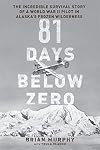
The author mentions a critical fact right at the beginning: Leon was interviewed several times (newspapers, etc.) following his ordeal, but then spent the rest of his avoiding the subject.
The first consequence: This means that the sum autobiographical knowledge of the incident is the length of a few newspaper stories. All else in this 250 page book is tangential. I am not turned away by stories with many informative asides. One of my favorite historical disaster accounts, Deep Down Dark by show more Hector Trobár, reads this way. However, in 81 Days Below Zero, the relevance of the tangents is not sufficient, and they also create a vast asymmetry beside the actual marketed contents of the story. In sum, you will be scouring this 250 page book (8 hour audiobook) for a newspaper clipping of information. That's simply not an acceptable product for a journalist.
The second consequence: The text never explicitly delineates the true from the speculative. (Portions of this book I listened via audiobook: if there were any visible blocks quotes etc. that I missed, please do correct me). The reader has no clue which aspects of this story are faithful accounts, and which are wholly fabricated.
Therefore, all together, there is simply zero reason to read this book as opposed to the published records of the day. A book that contributes nothing (perhaps even less than nothing, i.e., potentially introducing falsehoods into the narrative) is impressive to create, but nevertheless deeply disappointing. show less
The first consequence: This means that the sum autobiographical knowledge of the incident is the length of a few newspaper stories. All else in this 250 page book is tangential. I am not turned away by stories with many informative asides. One of my favorite historical disaster accounts, Deep Down Dark by show more Hector Trobár, reads this way. However, in 81 Days Below Zero, the relevance of the tangents is not sufficient, and they also create a vast asymmetry beside the actual marketed contents of the story. In sum, you will be scouring this 250 page book (8 hour audiobook) for a newspaper clipping of information. That's simply not an acceptable product for a journalist.
The second consequence: The text never explicitly delineates the true from the speculative. (Portions of this book I listened via audiobook: if there were any visible blocks quotes etc. that I missed, please do correct me). The reader has no clue which aspects of this story are faithful accounts, and which are wholly fabricated.
Therefore, all together, there is simply zero reason to read this book as opposed to the published records of the day. A book that contributes nothing (perhaps even less than nothing, i.e., potentially introducing falsehoods into the narrative) is impressive to create, but nevertheless deeply disappointing. show less
Adrift : a true story of tragedy in the icy Atlantic- and the one man who lived to tell about it by Brian Murphy
I found this book very moving and quite fascinating. The narrative is well-paced and the characters seemed wholly believable. The book is carefully researched and eye-opening. I appreciated the attempts on the part of the authors to be sensitive to the ways in which history often leaves out the voices of women, people of color and the poor and the efforts to provide those viewpoints. We need more books that make the effort to recognize that our world is made up of many different viewpoints, show more not just those of the White male. show less
You May Also Like


Statistics
- Works
- 4
- Members
- 496
- Popularity
- #49,830
- Rating
- 3.7
- Reviews
- 19
- ISBNs
- 94
- Languages
- 1