
Helen Ashton (1) (1891–1958)
Author of Bricks and Mortar
For other authors named Helen Ashton, see the disambiguation page.
Works by Helen Ashton
Belinda Grove 4 copies
Hornets' nest 3 copies
Joanna 2 copies
Dust over the ruins, by Helen Ashton 2 copies
Joanna at Littlefold 2 copies
The lost captain 2 copies
The hedge of thorns 1 copy
I had a sister : a study of Mary Lamb, Dorothy Wordsworth, Cavoline Herschel, Cassandra Austen 1 copy
Pierrot in town 1 copy
Tagged
Common Knowledge
- Legal name
- Jordan, Helen Rosaline Ashton
- Other names
- Ashton, Helen
- Birthdate
- 1891
- Date of death
- 1958
- Gender
- female
- Education
- London Hospital Medical College (1916 - 1921)
- Occupations
- nurse
medical practitioner - Relationships
- Jordan, Arthur (husband)
- Short biography
- Born in Kensington, London, Helen Ashton was the daughter of Emma Burnie and Arthur Jacob Ashton, KC, Recorder of Manchester. Her brother was Sir Leigh Ashton, director of the Victoria and Albert Museum.[1][2]
She wrote her first novel in 1913, Pierrot In Town,.[2] During World War I, she nursed as a VAD, and over the course of the war she wrote three novels. After the war, Ashton studied medicine, qualifying from the London Hospital in 1921 and graduating MB, BS in 1922.[1] Ashton was then house physician at Great Ormond Street Hospital until she married Arthur Jordan, a barrister, in 1927.
After her marriage, Ashton retired from medicine but continued to write. Over 43 years she published 26 books, which included several literary biographies, such as I Had A Sister (written with Katharine Davies in 1937 - a study of Mary Lamb, Dorothy Wordsworth, Caroline Herschel and Cassandra Austen), William and Dorothy (1938), and Parson Austen's Daughter (1949) amongst others. Her first major fictional success was Doctor Serocold (1930) in which she was able to draw upon her medical knowledge. Also included amongst her fictional works were Bricks and Mortar (1932), republished in 2004 by Persephone Books, and Yeoman's Hospital (1944), on which the 1951 film White Corridors was based. (Wikipedia) - Nationality
- England
UK - Birthplace
- Kensington, London, England, UK
- Places of residence
- Kensington, London, England, UK
Gloucestershire, England, UK
Grays Inn, London, England, UK - Associated Place (for map)
- England, UK
Members
Reviews

"He was an architect, and very much in love with his profession"
By sally tarbox on 19 Jan. 2014
Format: Paperback
I couldn't put this down from page 1, where we are introduced to pleasant, enthusiastic young Martin Lovell, off on a visit to Rome where he can indulge his passion for architecture. But at the guest-house he encounters the redoubtable Lady Stapleford, a widow in straitened circumstances, resolved in marrying off her pretty but non-academic daughter Letty:
' "Now I don't believe", show more said Lady Stapleford with deceptive candour, "in keeping young people waiting about after they've made up their minds to marry each other...It would be extremely selfish of me", said the judge's widow, who did not mean to incur the expense of a London wedding, or risk the sobering effect of a change of scene and the likelihood of a young man's inconstancy.'
The novel then covers the next forty years; the married life of two such different characters, Martin's unabating interest in his subject, children, an interfering mother-in-law... Beautifully written, with a very moving ending. show less
By sally tarbox on 19 Jan. 2014
Format: Paperback
I couldn't put this down from page 1, where we are introduced to pleasant, enthusiastic young Martin Lovell, off on a visit to Rome where he can indulge his passion for architecture. But at the guest-house he encounters the redoubtable Lady Stapleford, a widow in straitened circumstances, resolved in marrying off her pretty but non-academic daughter Letty:
' "Now I don't believe", show more said Lady Stapleford with deceptive candour, "in keeping young people waiting about after they've made up their minds to marry each other...It would be extremely selfish of me", said the judge's widow, who did not mean to incur the expense of a London wedding, or risk the sobering effect of a change of scene and the likelihood of a young man's inconstancy.'
The novel then covers the next forty years; the married life of two such different characters, Martin's unabating interest in his subject, children, an interfering mother-in-law... Beautifully written, with a very moving ending. show less
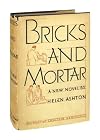
A quiet and straight-ahead novel about a British family before, during, and after WWI. Martin and Letty meet on vacation in their youth and Letty's mother pushes them into marriage. The two create a perfectly comfortable though vaguely unsatisfying life. Martin is an architect, they have two kids, they vacation at the seaside. The children grow up an have their own lives and issues. WWI comes along and changes things, but they come out the other side and continue on.
Even for me, who loves a show more quiet British novel from this time period, it was kind of boring. show less
Even for me, who loves a show more quiet British novel from this time period, it was kind of boring. show less

Sometimes it is worth taking time to look carefully at the shelf of books in the darkest corner of the second hand bookshop. You know the one I mean, the shelves of old 1940’s and 50’s hardbacks with no dustjacket and faded spines, the lettering on which can be hard to read. I love these shelves (and not all second hand shops have them) because for me it is here I am likely to find real unexpected gems. A few months ago on a day out to a National Trust property (I forget which one) I was show more looking around the second hand bookshop. There to the left of the doorway in a cramped little space with stone floor and little light – was my kind of bookcase. At first I didn’t think there was anything of interest – and then I pulled out Yeoman’s Hospital by Helen Ashton. I recognised the name of the author, her 1933 novel Bricks and Mortar is published by Persephone, I read it in August last year and really enjoyed it.
“It was a dumb dark winter’s morning, cold as death and quiet as the grave, with a fog rising from the river to choke the streets of Wilchester town. The young policeman on his beat could scarcely see across the Beastmarket. As he went past St. Blazey’s church he heard six o’clock strike, but he could not make out the face of the clock, or even see the top of the tower; only the gravestones looked white between the trunks of leafless dripping beech trees. When he crossed the road and peered through the railings of Yeoman’s Hospital, the central block with its pillared portico was invisible across the courtyard. There was no light in there except the red tail-lamp of an ambulance parked by the steps and a faint glow through the blind of the porter’s lodge, not bright enough for him to report.”
I seem to remember that Bricks and Mortar is a little slow to start, but that once it did I loved it. Yeoman’s Hospital is similarly slow to start, although I enjoyed the atmospheric first paragraph. For about forty pages or so I thought I was going to be severely disappointed in the novel, I feared it might turn out to be rather dull. The only rating of it on Goodreads I could find was a rather dispiriting 1 star rating – which I am very glad I ignored – maybe they only read the beginning. Soon enough I found myself caught up in the lives of the men, women and patients of Yeoman’s Hospital, Ashton faithfully recreates this world, so that its sights, sounds, smells and voices resonate still, even for the modern reader. In the end I rather loved it.
Yeoman’s Hospital is set in the fictional town of Wilchester (I couldn’t help but think of it as Winchester) at the old hospital of the title during one twenty four hour period in December 1943. As the day starts, a new probationer nurse; eighteen year old Joan Shepherd is beginning her nursing career. Over the course of the day, Joan will face much that terrifies her; there will be moments when the day feels like it will never end. The world of the hospital is endlessly confusing; everyone bustles busily with great purpose, while poor Joan is sometimes too frightened to speak. Around Joan, are staff nurses, sisters and matrons who are sometimes kind, but often sharp, harrying and impatient, there is so much to learn, so many things to remember, and the day is so very long.
hosp wardThere are a host of hospital staff who we meet along the way, and this old 1944 edition comes with a handy who’s who in the front. Dr Shoesmith senior physician has been at Yeoman’s his whole career; he is a thorough committed doctor, who has a difficult professional relationship with surgeon Richard Groom. The resident surgical officer is a Czech refugee doctor, whose name is deemed as unpronounceable and who no one seems to like much. Miss Sophia Dean is the house surgeon, an ambitious talented young woman, who is in the running for the Czech doctor’s job when he leaves shortly, her main competition Dick Groom, the son of Richard Groom snr. Dick Groom is a thoughtless young man, newly engaged to the daughter of a leading figure in the town; Dick’s ambitions appear more social than medical. Squirreled away in the pathology lab on the top floor is Neil Marriner, nephew to Dr Shoesmith, a famously brilliant and irascible young man, with whom Sophia has been having a secret relationship. Neil is ill; suffering from an ulcer he has so far refused to be treated for, Neil prefers the silence and isolation of his laboratory, working long hours in pain, so he can carry out his own research outside of his hospital duties.
On the wards of Yeoman’s Hospital on this particular day me meet, Burgess with his face swathed in bandages, a young boy with a broken leg, and a girl whose initial misdiagnosis results in a dramatic emergency. A shepherd; Mr Pedlar has stomach problems, the weight has been dropping off him and he can’t face his food. Mr Pedlar is waiting for Mr Groom to operate on him, and watches the clock anxiously, asking tremulously whether he can’t just go home. Later his terrified little wife of forty years comes to sit with him following the operation.
“She was like the sheep she had seen in the market place, utterly bewildered and terrified, taken away from the soft fields they knew and driven along unfamiliar roads, with blows and shouting, into a strange cold building which smelt of death. She twisted her bony hands together to stop them shaking, and a tear rolled out of each eye.”
At the end of the day, the day nurses trudge wearily back to the nurses’ home, as the night staff – survival kits of knitting, novels and chocolate stuffed into their bags – take over. Despite the length of their day already the third year nurses must yet sit through a lecture from Dr Shoesmith on pain, while their older more experienced colleagues don dressing gowns, share cups of tea and gossip. As day gives over to the dark and cold of a wartime, winter’s night, the night porter watches a young mid-wife on her way to a delivery, before being called to take a deceased patient to the mortuary. There’s a sense of time moving forward, day after day.
“There was no fog tonight to sting eyelids and noses, but it was a hard frost; the night sky was powdered with innumerable shuddering stars and there was ice on the puddle by the side door, where a leaky pipe had dripped all day on the asphalt. Somebody broke the ice with a delighted scrunch, another cried, ‘oh! Do look at that shooting star. Wish, everybody,’ and they all laughed like a pack of children.”
Helen Ashton tells the story of 24 hours in a 1940’s provincial hospital. There are patients to be cared for, medicine to be carried out, but among the staff there are love affairs, petty squabbles, ambitions and disappointments. Ultimately I found this extremely readable, several small story strands weave together to create the story of one hospital, and the people inside it. show less
“It was a dumb dark winter’s morning, cold as death and quiet as the grave, with a fog rising from the river to choke the streets of Wilchester town. The young policeman on his beat could scarcely see across the Beastmarket. As he went past St. Blazey’s church he heard six o’clock strike, but he could not make out the face of the clock, or even see the top of the tower; only the gravestones looked white between the trunks of leafless dripping beech trees. When he crossed the road and peered through the railings of Yeoman’s Hospital, the central block with its pillared portico was invisible across the courtyard. There was no light in there except the red tail-lamp of an ambulance parked by the steps and a faint glow through the blind of the porter’s lodge, not bright enough for him to report.”
I seem to remember that Bricks and Mortar is a little slow to start, but that once it did I loved it. Yeoman’s Hospital is similarly slow to start, although I enjoyed the atmospheric first paragraph. For about forty pages or so I thought I was going to be severely disappointed in the novel, I feared it might turn out to be rather dull. The only rating of it on Goodreads I could find was a rather dispiriting 1 star rating – which I am very glad I ignored – maybe they only read the beginning. Soon enough I found myself caught up in the lives of the men, women and patients of Yeoman’s Hospital, Ashton faithfully recreates this world, so that its sights, sounds, smells and voices resonate still, even for the modern reader. In the end I rather loved it.
Yeoman’s Hospital is set in the fictional town of Wilchester (I couldn’t help but think of it as Winchester) at the old hospital of the title during one twenty four hour period in December 1943. As the day starts, a new probationer nurse; eighteen year old Joan Shepherd is beginning her nursing career. Over the course of the day, Joan will face much that terrifies her; there will be moments when the day feels like it will never end. The world of the hospital is endlessly confusing; everyone bustles busily with great purpose, while poor Joan is sometimes too frightened to speak. Around Joan, are staff nurses, sisters and matrons who are sometimes kind, but often sharp, harrying and impatient, there is so much to learn, so many things to remember, and the day is so very long.
hosp wardThere are a host of hospital staff who we meet along the way, and this old 1944 edition comes with a handy who’s who in the front. Dr Shoesmith senior physician has been at Yeoman’s his whole career; he is a thorough committed doctor, who has a difficult professional relationship with surgeon Richard Groom. The resident surgical officer is a Czech refugee doctor, whose name is deemed as unpronounceable and who no one seems to like much. Miss Sophia Dean is the house surgeon, an ambitious talented young woman, who is in the running for the Czech doctor’s job when he leaves shortly, her main competition Dick Groom, the son of Richard Groom snr. Dick Groom is a thoughtless young man, newly engaged to the daughter of a leading figure in the town; Dick’s ambitions appear more social than medical. Squirreled away in the pathology lab on the top floor is Neil Marriner, nephew to Dr Shoesmith, a famously brilliant and irascible young man, with whom Sophia has been having a secret relationship. Neil is ill; suffering from an ulcer he has so far refused to be treated for, Neil prefers the silence and isolation of his laboratory, working long hours in pain, so he can carry out his own research outside of his hospital duties.
On the wards of Yeoman’s Hospital on this particular day me meet, Burgess with his face swathed in bandages, a young boy with a broken leg, and a girl whose initial misdiagnosis results in a dramatic emergency. A shepherd; Mr Pedlar has stomach problems, the weight has been dropping off him and he can’t face his food. Mr Pedlar is waiting for Mr Groom to operate on him, and watches the clock anxiously, asking tremulously whether he can’t just go home. Later his terrified little wife of forty years comes to sit with him following the operation.
“She was like the sheep she had seen in the market place, utterly bewildered and terrified, taken away from the soft fields they knew and driven along unfamiliar roads, with blows and shouting, into a strange cold building which smelt of death. She twisted her bony hands together to stop them shaking, and a tear rolled out of each eye.”
At the end of the day, the day nurses trudge wearily back to the nurses’ home, as the night staff – survival kits of knitting, novels and chocolate stuffed into their bags – take over. Despite the length of their day already the third year nurses must yet sit through a lecture from Dr Shoesmith on pain, while their older more experienced colleagues don dressing gowns, share cups of tea and gossip. As day gives over to the dark and cold of a wartime, winter’s night, the night porter watches a young mid-wife on her way to a delivery, before being called to take a deceased patient to the mortuary. There’s a sense of time moving forward, day after day.
“There was no fog tonight to sting eyelids and noses, but it was a hard frost; the night sky was powdered with innumerable shuddering stars and there was ice on the puddle by the side door, where a leaky pipe had dripped all day on the asphalt. Somebody broke the ice with a delighted scrunch, another cried, ‘oh! Do look at that shooting star. Wish, everybody,’ and they all laughed like a pack of children.”
Helen Ashton tells the story of 24 hours in a 1940’s provincial hospital. There are patients to be cared for, medicine to be carried out, but among the staff there are love affairs, petty squabbles, ambitions and disappointments. Ultimately I found this extremely readable, several small story strands weave together to create the story of one hospital, and the people inside it. show less
It is a rare but lovely thing to be able to read a novel without knowing anything about it.
When I found this book all that I could see was the title and the name of a familiar author. As I started to read I realised that I had found a book that told the story of a life.
Caroline Hill was born in 1888, the only child of a comfortably off but not very happy couple. Her mother left when she was still very young, so Caroline barely remembered her, and on the one occasion when they met, many years show more later, she fond that she had nothing to say.
Her abandoned father became reclusive, not because his heart was broken but because his new position in society embarrassed him. The consequence of that was that his daughter had a very sheltered upbringing with a very small social circle. It was lucky that Caroline loved books, and that she had a caring and compassionate governess. She was a lost when the time came for her governess to move on, but her father realised it was time for her daughter to step into the adult world, and he hoped that Caroline would marry well, raise a family and find the happiness that had eluded him.
Sadly it seemed that was not to be. Caroline has an ardent admirer, but try as she might she could feel nothing for him. She was relieved when he left to fight in the Boer Was, but she had the grace to mourn when she heard the news of her death. She was drawn to another young man, but he had no feelings for her, and was horrified when he learned that the woman he thought was old-fashioned and destined to be a perpetual spinster thought that there could ever be anything between them.
It was only when the Great War came that Caroline’s life changed. She wanted to help, she wanted to change her life, and so she took up nursing. She struggled with the work and with the conditions, but it was an emotional awakening and it was her real coming of age.
After the war Caroline accepted an unexpected proposal from an elderly widower. They had been good friends and they had a happy marriage, built not on passion but on shared interests and mutual understanding. Caroline was happy in her new role, marriage suited her and she loved being the mistress of her own home in the country.
Sadly it was not long before Caroline would have to call on her nursing experience as she cared for her husband through a long illness. His death shattered her, and it took a long time to for her to pick up the pieces of her life.
Her husband had left everything to her, but she knew that was because he wanted her to support the son of his first marriage. She understood his strengths and his weaknesses and she did her best for him and for the young woman who would become his wife.
The story ends when Caroline had found peace; content with her own company and with the knowledge that she had good friends and a role to play in the lives of her younger relations.
This is a long book, it is very well written and the story is told at a stately pace. At first I found it difficult to warm to. Caroline’s story rang true but it wasn’t engaging, and I didn’t feel close to it. It felt that I was hearing a story second-hand, that I was being told about the friend of a friend; but as the story progressed I came to appreciate it more and more.
Helen Ashton understood her subject, her life and the world she lived in very well, and she portrayed them with sympathy, empathy and wonderful control. She made her points simply and effectively, and I appreciated that Caroline was the kind of woman, she led the kind of life that isn’t often placed at the centre of a work of fiction.
When it was published this must have seen very old-fashioned. The story is set in the twentieth century but the style is nineteenth century; but that I think that it works.
I admired ‘A Background for Caroline more than I loved it, but I am glad that Caroline’s story was told and I think that the style of the story suited its subject. show less
When I found this book all that I could see was the title and the name of a familiar author. As I started to read I realised that I had found a book that told the story of a life.
Caroline Hill was born in 1888, the only child of a comfortably off but not very happy couple. Her mother left when she was still very young, so Caroline barely remembered her, and on the one occasion when they met, many years show more later, she fond that she had nothing to say.
Her abandoned father became reclusive, not because his heart was broken but because his new position in society embarrassed him. The consequence of that was that his daughter had a very sheltered upbringing with a very small social circle. It was lucky that Caroline loved books, and that she had a caring and compassionate governess. She was a lost when the time came for her governess to move on, but her father realised it was time for her daughter to step into the adult world, and he hoped that Caroline would marry well, raise a family and find the happiness that had eluded him.
Sadly it seemed that was not to be. Caroline has an ardent admirer, but try as she might she could feel nothing for him. She was relieved when he left to fight in the Boer Was, but she had the grace to mourn when she heard the news of her death. She was drawn to another young man, but he had no feelings for her, and was horrified when he learned that the woman he thought was old-fashioned and destined to be a perpetual spinster thought that there could ever be anything between them.
It was only when the Great War came that Caroline’s life changed. She wanted to help, she wanted to change her life, and so she took up nursing. She struggled with the work and with the conditions, but it was an emotional awakening and it was her real coming of age.
After the war Caroline accepted an unexpected proposal from an elderly widower. They had been good friends and they had a happy marriage, built not on passion but on shared interests and mutual understanding. Caroline was happy in her new role, marriage suited her and she loved being the mistress of her own home in the country.
Sadly it was not long before Caroline would have to call on her nursing experience as she cared for her husband through a long illness. His death shattered her, and it took a long time to for her to pick up the pieces of her life.
Her husband had left everything to her, but she knew that was because he wanted her to support the son of his first marriage. She understood his strengths and his weaknesses and she did her best for him and for the young woman who would become his wife.
The story ends when Caroline had found peace; content with her own company and with the knowledge that she had good friends and a role to play in the lives of her younger relations.
This is a long book, it is very well written and the story is told at a stately pace. At first I found it difficult to warm to. Caroline’s story rang true but it wasn’t engaging, and I didn’t feel close to it. It felt that I was hearing a story second-hand, that I was being told about the friend of a friend; but as the story progressed I came to appreciate it more and more.
Helen Ashton understood her subject, her life and the world she lived in very well, and she portrayed them with sympathy, empathy and wonderful control. She made her points simply and effectively, and I appreciated that Caroline was the kind of woman, she led the kind of life that isn’t often placed at the centre of a work of fiction.
When it was published this must have seen very old-fashioned. The story is set in the twentieth century but the style is nineteenth century; but that I think that it works.
I admired ‘A Background for Caroline more than I loved it, but I am glad that Caroline’s story was told and I think that the style of the story suited its subject. show less
Lists
Persephone (1)
Awards

You May Also Like


Associated Authors
Statistics
- Works
- 25
- Members
- 335
- Popularity
- #71,018
- Rating
- 3.5
- Reviews
- 13
- ISBNs
- 25