
Michael Byers (1)
Author of Long for This World: A Novel
For other authors named Michael Byers, see the disambiguation page.
About the Author
Michael Byers is the author of the novel Long for This World, a New York Times Notable Book. He won the Sue Kaufman Prize for First Fiction from the American Academy of Arts and Letters and was a finalist for the PEN/Hemingway Award for The Coast of Good Intentions. He lives in Pittsburgh with his show more wife and two children show less
Image credit: Houghton Mifflin Harcourt
Works by Michael Byers
Not Really [short story] 1 copy
Associated Works
Tagged
Common Knowledge
- Gender
- male
- Education
- Oberlin College
University of Michigan - Awards and honors
- Whiting Writers' Award (1998)
- Short biography
- Michael Byers has taught creative writing at the MFA program of the University of Michigan since 2006. He is the author of The Coast of Good Intentions (stories) and two novels, Long for This World and Percival’s Planet. His stories have been anthologized several times in The Best American Short Stories and The O. Henry Awards, and his novella “The Broken Man” was a finalist for the World Fantasy Award.
- Nationality
- USA
- Places of residence
- Ann Harbor, Michigan, USA
- Associated Place (for map)
- Michigan, USA
Members
Reviews
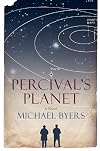
A definition of happiness: finding that my Early Reviewers ARC, chosen on a whim, is a wonderfully satisfying novel! Michael Byers builds Percival's Planet around several historical characters, including the young Clyde Tombaugh who discovered Pluto in 1930. He spends a couple of hundred pages carefully introducing these characters along with some fictional ones to interact with them. Besides Clyde, disappointed because the crop failed that was to send him to college there is V.M. Slipher show more who runs the Lowell Observatory and hires him because he'll work cheaply. Byers created Alan Barber, patterned after his own grandfather, Mary Hempstead, after his grandmother, and Felix DuPrie, a wealthy playboy who funds a dinosaur hunt in the Arizona desert near the observatory. The threads come together as these engaging characters meet at the observatory to seek Percival Lowell's Planet X for as long as his widow Constance will continue to fund the project.
Characters trade good lines, and time and place are brilliantly recreated. The style is easy; even the present tense narration doesn't call attention to itself although I usually despise it. Details are perfectly well-observed and telling: "You pose for photographers whose flash-bulbs smell of scalded tin...." Byers has this to say about writing on his blog (plutovian) which includes fabulous photographs of people, artifacts, and notes: "The deepest purpose of the traditional narrative novel is its reasonably faithful depiction of imaginary people doing imaginary things. That’s the unfashionable reason most people read, after all – to follow along with some imaginary people as they go about their invented lives. And why? Because – happily for the future of our species – the human animal possesses, along with its fierce drive for self-preservation, a helplessly biological tendency to empathize with others of its species, even when those others are imaginary beings."
I'm not convinced that it is a particularly profound work (although I can tell that it will settle quietly in my heart and mind), but I am enriched by the experience of reading it and recommend it heartily! show less
Characters trade good lines, and time and place are brilliantly recreated. The style is easy; even the present tense narration doesn't call attention to itself although I usually despise it. Details are perfectly well-observed and telling: "You pose for photographers whose flash-bulbs smell of scalded tin...." Byers has this to say about writing on his blog (plutovian) which includes fabulous photographs of people, artifacts, and notes: "The deepest purpose of the traditional narrative novel is its reasonably faithful depiction of imaginary people doing imaginary things. That’s the unfashionable reason most people read, after all – to follow along with some imaginary people as they go about their invented lives. And why? Because – happily for the future of our species – the human animal possesses, along with its fierce drive for self-preservation, a helplessly biological tendency to empathize with others of its species, even when those others are imaginary beings."
I'm not convinced that it is a particularly profound work (although I can tell that it will settle quietly in my heart and mind), but I am enriched by the experience of reading it and recommend it heartily! show less
 This review was written for LibraryThing Early Reviewers.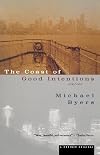
When this collection came out, much was made of the fact that Michael Byers was just 28. It wasn't just the fact that a writer so young could demonstrate such talent, but also that he could write so movingly and insightfully about older characters trying to make sense of their lives after retirement or in the wake of a divorce after a decades-long marriage. At 50, I'm not quite there yet, but I can say I was equally impressed with how well he captured the mindset of people well past his age show more when he wrote this.
Each of these stories reads like a novel - there's no attempt at post-modern techniques or any sort of artsy short-story trickery. There's plenty of subtext in each story, but there's also enough on the surface that you won't have to scratch your head after finishing a piece and ask, "What the heck was that about?" Each piece simply delivers solid story-telling, good characters, an interesting premise that gives us a chance to see how they act under pressure, and effective clean writing that lets the story unfold on its own. The final three stories have a clever thematic link about the power and impact of illusions.
The rain, mountains, and connections to the ocean in coastal towns provide a consistent visual setting for the pieces, all of which are set in the Pacific Northwest.
The 8 stories in the collection are:
1. Settled on the Cranberry Coast - 15 pp - A retired schoolteacher begins to work as a carpenter and is reunited with his high school crush when she hires him to restore her house. A park ranger now, she's raising the grandchild her daughter abandoned. As he gets closer to them both, he welcomes the opportunities for a second chapter to his life.
2. Shipmates Down Under - 26 pp - A couple's young daughter comes down with a severe fever, forcing them to cancel a trip to Australia and exposing the tensions in their marriage.
3. In Spain, One Thousand and Three - 28 pp - A great exploration of the unexpected directions grief can take. Handsome Martin, a former player with the ladies, settled down when he met cello-playing Evelyn. But after they married young, she unexpectedly died of cancer. In his grief, he finds all his old urges have come back. While still thoroughly mourning Evelyn, he's lusting after every woman he sees, a desire that makes him put the moves on someone he most definitely should not. (The title comes from his watching of the movie Don Giovanni and the number of women that player supposedly slept with in Spain.)
4. A Fair Trade - 33 pp - A young teenaged girl must move in with her aunt after her father dies in WWII and her mother is incapable of raising her. Her spinster aunt lives in a remote town outside of Seattle. With few friends her age, sexual fantasies about a neighboring caretaker for an elderly couple are about all the girl has to occupy herself. Still, as she rambles about the house while her aunt works, the girl learns to enjoy a solitary life, thinking she's as independent as her aunt. That preference for being alone ends up influencing her adult life, but years later she gets a few surprises about how her aunt has lived.
5. Blue River, Blue Sun - 22 pp - A 56-year-old geology professor reels from a divorce, not sure what to do with the dull monotony of his days. Left to wonder where it all went wrong, visting malls, with all their hustle and bustle, is one of the few pleasures he finds in life. But then a secretary in his university department, bitter over her own divorce, presents an opportunity for a date. The story has a very powerful conclusion.
6. Wizard - 19 pp - A substitute teacher writes a play for a very small-time theater about Thomas Edison (a personal obsession of his) and his much younger, first wife. The playwright develops a crush on the older woman cast in the role of the wife, and while they're rehearsing the story takes an intriguing sexual twist.
7. In the Kingdom of Priester John - 8 pp - A 17-year-old boy's crazy uncle goes missing, and with insanity running in the boy's family, he wonders about his own future. (Priester John was a mythical world traveler, whose stories of intrigue in unknown worlds fascinated Europeans in the late middle ages. It applies here because during a history exam the boy has to answer a question about the legendary myths that drove European explorers to Africa. It provides a parallel to the boy's uncle who has his own delusions about reality.)
8. Dirigibles - 12 pp - An older couple lives alone on a mountain, with the wife suffering from cerebral palsy. The wife isn't eager for a visit from a man who was a co-worker of theirs on an island ferry. The husband is eager to show old home movies of their younger days, but when the man shows up, both he and the couple have surprises in store for each other. show less
Each of these stories reads like a novel - there's no attempt at post-modern techniques or any sort of artsy short-story trickery. There's plenty of subtext in each story, but there's also enough on the surface that you won't have to scratch your head after finishing a piece and ask, "What the heck was that about?" Each piece simply delivers solid story-telling, good characters, an interesting premise that gives us a chance to see how they act under pressure, and effective clean writing that lets the story unfold on its own. The final three stories have a clever thematic link about the power and impact of illusions.
The rain, mountains, and connections to the ocean in coastal towns provide a consistent visual setting for the pieces, all of which are set in the Pacific Northwest.
The 8 stories in the collection are:
1. Settled on the Cranberry Coast - 15 pp - A retired schoolteacher begins to work as a carpenter and is reunited with his high school crush when she hires him to restore her house. A park ranger now, she's raising the grandchild her daughter abandoned. As he gets closer to them both, he welcomes the opportunities for a second chapter to his life.
2. Shipmates Down Under - 26 pp - A couple's young daughter comes down with a severe fever, forcing them to cancel a trip to Australia and exposing the tensions in their marriage.
3. In Spain, One Thousand and Three - 28 pp - A great exploration of the unexpected directions grief can take. Handsome Martin, a former player with the ladies, settled down when he met cello-playing Evelyn. But after they married young, she unexpectedly died of cancer. In his grief, he finds all his old urges have come back. While still thoroughly mourning Evelyn, he's lusting after every woman he sees, a desire that makes him put the moves on someone he most definitely should not. (The title comes from his watching of the movie Don Giovanni and the number of women that player supposedly slept with in Spain.)
4. A Fair Trade - 33 pp - A young teenaged girl must move in with her aunt after her father dies in WWII and her mother is incapable of raising her. Her spinster aunt lives in a remote town outside of Seattle. With few friends her age, sexual fantasies about a neighboring caretaker for an elderly couple are about all the girl has to occupy herself. Still, as she rambles about the house while her aunt works, the girl learns to enjoy a solitary life, thinking she's as independent as her aunt. That preference for being alone ends up influencing her adult life, but years later she gets a few surprises about how her aunt has lived.
5. Blue River, Blue Sun - 22 pp - A 56-year-old geology professor reels from a divorce, not sure what to do with the dull monotony of his days. Left to wonder where it all went wrong, visting malls, with all their hustle and bustle, is one of the few pleasures he finds in life. But then a secretary in his university department, bitter over her own divorce, presents an opportunity for a date. The story has a very powerful conclusion.
6. Wizard - 19 pp - A substitute teacher writes a play for a very small-time theater about Thomas Edison (a personal obsession of his) and his much younger, first wife. The playwright develops a crush on the older woman cast in the role of the wife, and while they're rehearsing the story takes an intriguing sexual twist.
7. In the Kingdom of Priester John - 8 pp - A 17-year-old boy's crazy uncle goes missing, and with insanity running in the boy's family, he wonders about his own future. (Priester John was a mythical world traveler, whose stories of intrigue in unknown worlds fascinated Europeans in the late middle ages. It applies here because during a history exam the boy has to answer a question about the legendary myths that drove European explorers to Africa. It provides a parallel to the boy's uncle who has his own delusions about reality.)
8. Dirigibles - 12 pp - An older couple lives alone on a mountain, with the wife suffering from cerebral palsy. The wife isn't eager for a visit from a man who was a co-worker of theirs on an island ferry. The husband is eager to show old home movies of their younger days, but when the man shows up, both he and the couple have surprises in store for each other. show less
This novel is about much more than just the search for "Planet X" and the discovery of Pluto. It's a blend of fact-based historical fiction centering on Clyde Tombaugh, the Kansas farm boy who discovered Pluto in February 1930, and a group of fictional characters whose lives ultimately intersect in Arizona at or near the Lowell Observatory. While some characters are hunting planets, another is excavating dinosaur fossils. Another, an almost eerily beautiful young woman, suffers from a show more delusion she knows is odd but can't get rid of. Each of the very likable main characters has an absorbing story which becomes linked to the other characters' stories in an interesting way. The novel explores how difficult it can be to distinguish the real from the unreal, with some people devoting their lives to quests that prove illusory while theories that seem equally ridiculous are later vindicated. The novel takes place during the two years from 1928-1930 as the U.S. teeters on the brink of the Great Depression, so there are strong echoes with our own time.
Although the novel never alludes to astrology, it strikes me that the underlying theme, in which great loss can open the way to a happier life, aligns with the astrological meaning of Pluto, which is associated with death (symbolic or real) and rebirth.
More at www.HistoricalNovels.info show less
Although the novel never alludes to astrology, it strikes me that the underlying theme, in which great loss can open the way to a happier life, aligns with the astrological meaning of Pluto, which is associated with death (symbolic or real) and rebirth.
More at www.HistoricalNovels.info show less
This review was written for LibraryThing Early Reviewers.Michael Byers writes the kind of stories that will appear to you over night and leave you wondering in the morning, which parts were fiction and which parts were dream. Because each of his stories is driven by feelings pure and universal: a husband strengthening his attachment to his children as he looses touch with his wife, a young widow struggling to stifle his physical desires, a content old couple learning to admit their inclinations for novelty, it is impossible not to find yourself in show more one of his stories. On a personal note, what resounded within me most was the relief a character feels when he is finally able to say out loud the things he’s always wanted to apologize for, and Byers’ remarkable mastery at capturing relationships between young children and adults. Byers’ stories are moving, but not entertaining; I wouldn’t recommend them to everyone. For a similar spirit, I would suggest Olive Kitteridge, whose stories interlace and move at a faster pace. Byers’ stories feel like they should be read one at a time, with ones own life happening in between them, in order to be fully appreciated.
- http://unsolicitedaydreams.blogspot.com/ show less
- http://unsolicitedaydreams.blogspot.com/ show less
Awards


You May Also Like


Associated Authors
Statistics
- Works
- 8
- Also by
- 8
- Members
- 411
- Popularity
- #59,240
- Rating
- 3.7
- Reviews
- 20
- ISBNs
- 65
- Languages
- 3
- Favorited
- 1
