
Mark Harris (1) (1922–2007)
Author of Bang the Drum Slowly
For other authors named Mark Harris, see the disambiguation page.
About the Author
Image credit: my photo
Series
Works by Mark Harris
Associated Works
Tagged
Common Knowledge
- Legal name
- Finkelstein, Mark Harris (birth name)
- Other names
- Wiggen, Henry W.
Atkins, Jack
Ingram, Willis J.
Martha, Henry
Washington, Alex
Wright, Jack R. - Birthdate
- 1922-11-19
- Date of death
- 2007-05-30
- Gender
- male
- Education
- University of Denver (MA, English)
University of Minnesota (PhD, American Studies) - Occupations
- novelist
literary biographer
professor (English)
reporter - Organizations
- Arizona State University
U.S. Army
San Francisco State College
Purdue University
California Institute of the Arts
University of Southern California (show all 7)
University of Pittsburgh - Awards and honors
- American Academy of Arts and Letters Academy Award (Literature ∙ 1961)
Guggenheim Fellow in Creative Arts (1965) - Cause of death
- complications of Alzheimer's disease
- Nationality
- USA
- Birthplace
- Mount Vernon, New York, USA
- Places of residence
- Mount Vernon, New York, USA
California, USA
Port Chester, New York, USA
St. Louis, Missouri, USA
Albuquerque, New Mexico, USA
Chicago, Illinois, USA - Place of death
- Santa Barbara, California, USA
- Associated Place (for map)
- USA
Members
Reviews
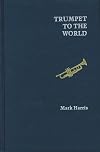
I've been a fan of Mark Harris for 20 years or more, ever since I saw the film, BANG THE DRUM SLOWLY, with Robert DeNiro as a rather dim-witted major league catcher. Narrator Henry 'Author' Wiggen was the other half of the battery, with the fictional New York Mammoths. Bought Harris's book of the same title soon after, devoured it, and over the years have read the other three books of his baseball tetralogy: The Southpaw; Ticket for a Seamstitch; and It Looked Like Forever. And then a few show more years later I found Harris's little-known novel of the WWII era, Something about a Soldier, a sensitive story of a misfit Jewish soldier.
I loved all five of the above books, so when I discovered this novel, TRUMPET TO THE WORLD, which was Harris's very first book, published in 1946, I was curious. I found it to be an absolutely fascinating book, something about a different kind of soldier this time - but maybe not so different after all. Because this is a book about racial hatred and predjudice, both before and during the war, set mostly in the south. And it is told from the point of view of Willy Jim, a black man who grew up dirt poor and unschooled, but through his own native ambition and the love and support of a good woman - a white woman - he educates himself and becomes a writer, who is published and read. Because of racial hatred - and the fact that there's a war on - he ends up in the army, where he finds more of the same, but also finds brotherhood with other black soldiers, and a very few whites, in the segregated ranks.
This is a book that is difficult to describe or pigeonhole. There is a youthful earnestness and idealism reflected throughout, both in the protagonist, and also in the writing style of the very young Mark Harris, who was just 21 when he wrote the book. This is a book that will make you think, because it's more than just an archaic record of the way America used to be. It's a kind of Pilgrim's Progress - about hope and striving and one man's desperate struggle to be the best kind of man he can be, and to help others do the same. Willy Jim is an admirable fictional creation, especially remarkable when one considers the youth of his creator. I couldn't help but wonder if Harris might have patterned him at least a little on Mark Twain's character, "Nigger Jim" - a character much in the news recently, apparently because there are a few politically correct morons who would choose to expunge that descriptive n-word from Twain's masterpiece. There's no Huck in Harris's book, but his modern version of Jim, as personified in 'Willy Jim,' will resonate for a long time in the minds of any readers lucky enough to 'rediscover' this little gem of fiction writing. Trumpet to the World is still relevant, a simply amazing accomplishment. I'm so glad I found it. show less
I loved all five of the above books, so when I discovered this novel, TRUMPET TO THE WORLD, which was Harris's very first book, published in 1946, I was curious. I found it to be an absolutely fascinating book, something about a different kind of soldier this time - but maybe not so different after all. Because this is a book about racial hatred and predjudice, both before and during the war, set mostly in the south. And it is told from the point of view of Willy Jim, a black man who grew up dirt poor and unschooled, but through his own native ambition and the love and support of a good woman - a white woman - he educates himself and becomes a writer, who is published and read. Because of racial hatred - and the fact that there's a war on - he ends up in the army, where he finds more of the same, but also finds brotherhood with other black soldiers, and a very few whites, in the segregated ranks.
This is a book that is difficult to describe or pigeonhole. There is a youthful earnestness and idealism reflected throughout, both in the protagonist, and also in the writing style of the very young Mark Harris, who was just 21 when he wrote the book. This is a book that will make you think, because it's more than just an archaic record of the way America used to be. It's a kind of Pilgrim's Progress - about hope and striving and one man's desperate struggle to be the best kind of man he can be, and to help others do the same. Willy Jim is an admirable fictional creation, especially remarkable when one considers the youth of his creator. I couldn't help but wonder if Harris might have patterned him at least a little on Mark Twain's character, "Nigger Jim" - a character much in the news recently, apparently because there are a few politically correct morons who would choose to expunge that descriptive n-word from Twain's masterpiece. There's no Huck in Harris's book, but his modern version of Jim, as personified in 'Willy Jim,' will resonate for a long time in the minds of any readers lucky enough to 'rediscover' this little gem of fiction writing. Trumpet to the World is still relevant, a simply amazing accomplishment. I'm so glad I found it. show less
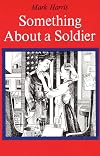
I first read Something About a Soldier more than thirty years ago, shortly after my first tour in the army. Although the book is set during WWII and my army days were the Cold War years, what Harris had to say - about the army, about life, about love and war, and innnocence and experience - was universal, and easy to relate to. Pvt Jacob Epp (aka Epstein) should be a classic character of contemporary literature. With a genius IQ and encyclopedic knowledge, 17 year-old Jacob's absolute show more innocence and inability to connect are nearly heartbreaking. Yet Harris's portrayal of Jacob - and of Joleen and Captain Dodd, who make up an odd love triangle - is laced too with a laugh-out-loud humor. And Harris's pronouncements on war and human nature are every bit as applicable today at they were over a half-century ago. After thirty years, I found the book still full of important insights, many of which I was too young to catch the first time through. I will probably re-visit this book one day. I sincerely hope another generation of readers will discover it one day. show less
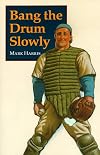
I first read Bang the Drum Slowly as a high school student and it stayed on my mind for several days after I finished it. In fact, it had such an impact on the way that I saw life that I was more than a little reluctant to read it again, fearing that my fond memories of the book would be spoiled. That kind of thing has happened to me several times in the past, but not this time. Bang the Drum Slowly is still the great book that I experienced the first time around.
In the era before free show more agency rules made millionaires out of very mediocre baseball players, even all-star left-handed pitchers had to find work in the off season. Henry Wiggin, star lefthander for what was probably the best team in baseball during the early 1950s, the New York Mammoths, was no exception. Henry took to selling life insurance and annuities to his fellow ball players and he became quite good at his sales job. One of Henry’s customers was Bruce Pearson, a third-string Mammoth catcher who bought an insurance policy covering his life only to later discover that he was dying of Hodgkin's Lymphoma, a disease that was incurable in the 1950s.
Bang the Drum Slowly at its base is a realistic baseball novel told in the words (and with the spelling skills) of a small town boy born during the Depression who had the physical skills to become a major league baseball pitcher. It is an honest look at what goes on off the field and in the clubhouse when athletes spend more time on the road, and with each other, than they spend with their wives and children. There are racial tensions, drinking problems, womanizing and personality clashes that have to be dealt with by management, a baseball management generally interested only in the club’s bottom line.
The heart of this story, however, is the bad break that fate has handed Bruce Pearson. He faces imminent death even in what turns out to be the best season of his career. Henry Wiggin, feeling protective of the naïve Pearson, does his best to keep Pearson’s secret from team management and their teammates. But when word of Pearson’s situation slowly begins to leak, amazing things begin to happen to the New York Mammoths and to Bruce Pearson.
Mark Harris, who passed away just a few weeks ago, will long be remembered for Bang the Drum Slowly, a book that was chosen by Sports Illustrated as one of the Top 100 sports books of all time. This book has something for baseball fans and non-sports fans alike and, even after such a long absence, I enjoyed spending time again with Henry Wiggin.
Rated at 4.0 show less
In the era before free show more agency rules made millionaires out of very mediocre baseball players, even all-star left-handed pitchers had to find work in the off season. Henry Wiggin, star lefthander for what was probably the best team in baseball during the early 1950s, the New York Mammoths, was no exception. Henry took to selling life insurance and annuities to his fellow ball players and he became quite good at his sales job. One of Henry’s customers was Bruce Pearson, a third-string Mammoth catcher who bought an insurance policy covering his life only to later discover that he was dying of Hodgkin's Lymphoma, a disease that was incurable in the 1950s.
Bang the Drum Slowly at its base is a realistic baseball novel told in the words (and with the spelling skills) of a small town boy born during the Depression who had the physical skills to become a major league baseball pitcher. It is an honest look at what goes on off the field and in the clubhouse when athletes spend more time on the road, and with each other, than they spend with their wives and children. There are racial tensions, drinking problems, womanizing and personality clashes that have to be dealt with by management, a baseball management generally interested only in the club’s bottom line.
The heart of this story, however, is the bad break that fate has handed Bruce Pearson. He faces imminent death even in what turns out to be the best season of his career. Henry Wiggin, feeling protective of the naïve Pearson, does his best to keep Pearson’s secret from team management and their teammates. But when word of Pearson’s situation slowly begins to leak, amazing things begin to happen to the New York Mammoths and to Bruce Pearson.
Mark Harris, who passed away just a few weeks ago, will long be remembered for Bang the Drum Slowly, a book that was chosen by Sports Illustrated as one of the Top 100 sports books of all time. This book has something for baseball fans and non-sports fans alike and, even after such a long absence, I enjoyed spending time again with Henry Wiggin.
Rated at 4.0 show less
Started off very slow, and I really wasn't into it. Even contemplated not finishing it for a while, but boy, would that have been a mistake! I don't remember exactly where, but it got a lot better, quite quickly. It's a great story about life and death, and friendships with a baseball backdrop, but you need not be a baseball fan to enjoy it, although it probably would help.
Lists
Awards

You May Also Like


Associated Authors
Statistics
- Works
- 25
- Also by
- 3
- Members
- 989
- Popularity
- #26,037
- Rating
- 3.8
- Reviews
- 25
- ISBNs
- 173
- Languages
- 5
- Favorited
- 3