
Charles O'Brien (1) (1927–)
Author of Mute Witness
For other authors named Charles O'Brien, see the disambiguation page.
Series
Works by Charles O'Brien
Tagged
Common Knowledge
- Canonical name
- O'Brien, Charles
- Birthdate
- 1927
- Gender
- male
- Education
- Columbia University
- Occupations
- historian
author - Relationships
- O'Brien, Elvy (wife)
- Nationality
- USA
- Places of residence
- Williamstown, Massachusetts, USA
- Associated Place (for map)
- Massachusetts, USA
Members
Reviews
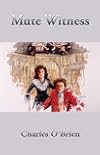
So very obviously written by an academic; author Charles O'Brien should have stuck to essays, as his first attempt at prose is leaden and cliched.
Characters are rigidly divided into class backgrounds - greedy, vane and immoral aristocrats over the honourable, downtrodden bourgeois, who are forgiven their sins for being maltreated - without deviation, and the narrative is leeched of all colour by the author's blandly liberal/politically correct revision of history. 'Heroine' Anne is so show more tedious in her independence/capability/equality that I quickly hoped her confidence would be the death of her, and O'Brien rams the point home again and again - 'This woman was strong!' - instead of letting the reader step into her shoes. Everybody admires her, from the love of her socially enlightened noble hero to the respect of her enemies - not one single character underestimates her, or is disappointed by her failings ... because she has none. Actress, acrobat, teacher, street brawler, gunslinger, and yet still beautiful and modest, Anne is sickening and far from sympathetic - O'Brien might have benefited from a little less bias and a lot more depth with his protagonist.
As expected, the research is accurate, and I was forewarned from Googling every other detail by a previous review, but the dialogue and action are anachronistic and Americanised (Anne shooting her way out of a tight situation, for instance). I appreciated the step back into 1780s Paris, but couldn't care less for the characters or who killed who, and only finished because I paid for this book.
More here: http://madeleinestjust.livejournal.com/6883.html show less
Characters are rigidly divided into class backgrounds - greedy, vane and immoral aristocrats over the honourable, downtrodden bourgeois, who are forgiven their sins for being maltreated - without deviation, and the narrative is leeched of all colour by the author's blandly liberal/politically correct revision of history. 'Heroine' Anne is so show more tedious in her independence/capability/equality that I quickly hoped her confidence would be the death of her, and O'Brien rams the point home again and again - 'This woman was strong!' - instead of letting the reader step into her shoes. Everybody admires her, from the love of her socially enlightened noble hero to the respect of her enemies - not one single character underestimates her, or is disappointed by her failings ... because she has none. Actress, acrobat, teacher, street brawler, gunslinger, and yet still beautiful and modest, Anne is sickening and far from sympathetic - O'Brien might have benefited from a little less bias and a lot more depth with his protagonist.
As expected, the research is accurate, and I was forewarned from Googling every other detail by a previous review, but the dialogue and action are anachronistic and Americanised (Anne shooting her way out of a tight situation, for instance). I appreciated the step back into 1780s Paris, but couldn't care less for the characters or who killed who, and only finished because I paid for this book.
More here: http://madeleinestjust.livejournal.com/6883.html show less
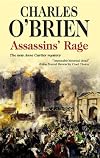
Assassin’s Rage by Charles O’Brien. The storm has finally broken. The previous six books in the Anne Cartier series have described events prior to French Revolution, but the current book opens with the fall of the Bastille on July 14, 1789. As the violence in Paris and its surrounding areas rages over the subsequent weeks, Anne and her husband, Colonel Paul de Saint-Martin of the Royal Highway Patrol, attempt to bring to justice those criminals using the unrest among the people to seek show more revenge and profit. Anne’s case involves the suspicious hanging of a local baker for profiteering while Paul investigates the deaths of members of the old regime. Eventually, they discover a common enemy; one who recognizes the danger they represent to his goals and who is ruthless in his efforts to gain power in the new government.
Paul and Anne’s dual adventures often overlap though her work usually involves civilians and their domestics whereas his concerns the military and government. O’Brien’s use of secondary characters is quite strong with Georges Charpentier, Paul’s adjutant, assisting both husband and wife and teaching Anne the field craft of a royal spy. Anne’s many contacts in Paris’ deaf community through Abbe de l’Epee are another defining aspect of the series. The city scenes, the mansions and palaces and the surrounding countryside are all described quite vividly. My only problem with the series is that things come too easily to the heroes. They seem to travel effortlessly around town and to the neighboring villages; they seem to always find time to dine elegantly at their home; and although their efforts to find justice can be frustrated occasionally by political realities, they never seem thwarted by their enemies. My feeling is that these turbulent times in French history would be a bit more gritty than they are presented in these books. Overall, they are good, relatively quick reads with nice pacing and the unique setting and use of real historical figures make them worthwhile.
For all my book and movie reviews, please visit my blog at http://unsetalarmclock.wordpress.com/ show less
Paul and Anne’s dual adventures often overlap though her work usually involves civilians and their domestics whereas his concerns the military and government. O’Brien’s use of secondary characters is quite strong with Georges Charpentier, Paul’s adjutant, assisting both husband and wife and teaching Anne the field craft of a royal spy. Anne’s many contacts in Paris’ deaf community through Abbe de l’Epee are another defining aspect of the series. The city scenes, the mansions and palaces and the surrounding countryside are all described quite vividly. My only problem with the series is that things come too easily to the heroes. They seem to travel effortlessly around town and to the neighboring villages; they seem to always find time to dine elegantly at their home; and although their efforts to find justice can be frustrated occasionally by political realities, they never seem thwarted by their enemies. My feeling is that these turbulent times in French history would be a bit more gritty than they are presented in these books. Overall, they are good, relatively quick reads with nice pacing and the unique setting and use of real historical figures make them worthwhile.
For all my book and movie reviews, please visit my blog at http://unsetalarmclock.wordpress.com/ show less

Let me start by saying I am slowly losing my taste for cozy murder mysteries but because of the historical setting of this novel I was intrigued.
However, this book did not quite fulfill my expectations. I found the main characters flat and unbelievable. The murder and subsequent investigation came off as too rushed with clues and evidence conveniently being discovered, almost too conveniently. There was not enough historical background which was a key reason why I chose this novel.
The show more author had a good premise but could not seem to take it to the level of other historical murder mysteries a la Victoria Thompson's Gaslight mysteries or Anne Perry. show less
However, this book did not quite fulfill my expectations. I found the main characters flat and unbelievable. The murder and subsequent investigation came off as too rushed with clues and evidence conveniently being discovered, almost too conveniently. There was not enough historical background which was a key reason why I chose this novel.
The show more author had a good premise but could not seem to take it to the level of other historical murder mysteries a la Victoria Thompson's Gaslight mysteries or Anne Perry. show less
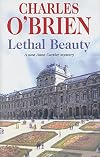
At an exhibit opening in Paris in 1787, noted artist Bouchard unveils his latest painting. He and his audience are shocked to see it has been badly defaced, and Bouchard immediately--and very publicly--accuses his rival, Hamel, of the crime. When Bouchard is found brutally murdered shortly afterward, Hamel becomes the prime suspect. Colonel Paul de Saint-Martin of the French police is placed in charge of the investigation, and, as usual, he asks his wife, Anne Cartier, a teacher of the deaf, show more for help. Anne soon determines that Hamel isn't the only person who might have had reason to deface the portrait or kill Bouchard. With no forensic science, modern investigative tools, or crime-scene teams to call on, Anne and Paul must rely on a combination of intuition and hard work. Eventually, their careful investigation pays off, but nothing has prepared them for the shocking identity of the killer or the tangled, tragic story behind the murders. Deftly drawn characters and a plot that will keep even seasoned mystery fans guessing make this a good choice for historical mystery collections. show less
Awards

Statistics
- Works
- 12
- Members
- 128
- Popularity
- #157,244
- Rating
- 2.3
- Reviews
- 5
- ISBNs
- 40
- Languages
- 1