
Kate Roberts (1) (1891–1985)
Author of Feet in Chains
For other authors named Kate Roberts, see the disambiguation page.
About the Author
Image credit: http://www.gomer.co.uk/
Works by Kate Roberts
The World of Kate Roberts: Selected Stories, 1925-1981 (Border Lines: Works in Translation) (1991) 9 copies
A Summer Day and Other Stories 2 copies
Laura Jones 1 copy
Prynu Dol a Stroiau Eraill. 1 copy
Ffair Gaeaf 1 copy
Associated Works
Tagged
Common Knowledge
- Birthdate
- 1891-02-13
- Date of death
- 1985-04-04
- Gender
- female
- Education
- University College of North Wales
- Occupations
- teacher
short story writer
journalist
novelist
publisher
playwright (show all 7)
Welsh nationalist - Organizations
- Welsh Arts Council
Plaid Cymru - Relationships
- Lewis, Saunders (friend, correspondent)
- Short biography
- Kate Roberts was born in a quarrying village in Wales, where her father worked. She graduated from the University College of North Wales, Bangor and became a Welsh teacher at schools in south Wales. In 1928, she married Morris T. Williams, with whom she purchased the publishing house Gwasg Gee, which she ran after his death for a further 10 years. She became a prominent Welsh nationalist and a member of the political party Plaid Cymru, contributing regularly to its monthly newspaper as well as to Gwasg Gee's Welsh-language weekly Y Faner (The Banner). She began writing short stories and novels after World War I, many of them featuring the region where she was born. Her first published collection was O Gors Y Bryniau (From the Marsh Hills) in 1925. She also produced works for and about children and her autobiography, Y Lôn Wen (The White Lane, 1960). She's now considered one of the most important Welsh-language writers of the 20th century.
- Nationality
- Wales
- Birthplace
- Rhosgadfan, Caernarvonshire, Wales
- Places of residence
- Rhosgadfan, Caernarvonshire, Wales (birth)
Denbigh, Clwyd, Wales (death) - Place of death
- Denbigh, Clwyd, Wales
- Map Location
- UK
Members
Reviews
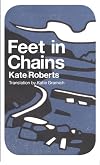
This is the story of a family's struggle to survive in the slate mining community of North Wales in the years between 1880, when the main characters Jane and Ifan are married, and the coming of the First World War. It's quite a short novel to cover such a long time period, but by focusing on a few key incidents Roberts illuminates the whole wonderfully, so that the novel as a whole does not feel rushed. There are no extraordinary or dramatic events, more a day to day struggle to put food on show more the table and keep the children in school.
This isn't a particularly uplifting read, I have to say, not one of those feel good books where everyone is poor but the sense of family and community more than compensate for this. Family members certainly appear at the first sign of illness or death, but more like maurauding crows to feast on the spoils, than with any family feeling.
I loved the opening scene of the novel though, where the entire community is at an outdoor prayer meeting on a hot June day, but rather than focusing on the state of their soul the thoughts of the congregation are on more mundane matters: 'especially amongst the women, whose new shoes were pinching, their new stays too tight, and the high collars of their new frocks suffocating'. Jane is an object of envy at this, her first appearance as a new bride in the community of Moel Arian:
Despite the active political life of the author (she was chair of the Women's Committee of the newly formed Welsh Nationalist Party) this isn't a novel that preaches an overtly political message, although politics are certainly dealt with. Rather it shows a concern for the plight of the slate workers who can do very little to improve their lot no matter how hard they work.
According to the introduction Kate Roberts is considered the most important Welsh female novelist of the twentieth century, although I have to admit that I hadn't heard of her before coming across this novel. This book was originally written in Welsh and I do wish I could read it in its original language. Reading it has brought on one of my periodic thoughts that I should learn Welsh properly, but given the fairly scant amount of Welsh that I know at the moment the likelihood of me actually getting to a standard where I could read a book like this is fairly non-existent! But there are several sections in the book where the anglicisation of words is key to characterisation, and that is clumsily conveyed when the whole book is in English. Feet in Chains reminded my a great deal of Bruce Chatwin's On the Black Hill, although as this novel was written in 1933 perhaps I should say that On the Black Hill reminded me of this. But they both have a similar sparse feel: covering decades in just a few pages. Overall then, a thought-provoking and worthwhile read - I'll be looking out for more by this author. show less
This isn't a particularly uplifting read, I have to say, not one of those feel good books where everyone is poor but the sense of family and community more than compensate for this. Family members certainly appear at the first sign of illness or death, but more like maurauding crows to feast on the spoils, than with any family feeling.
I loved the opening scene of the novel though, where the entire community is at an outdoor prayer meeting on a hot June day, but rather than focusing on the state of their soul the thoughts of the congregation are on more mundane matters: 'especially amongst the women, whose new shoes were pinching, their new stays too tight, and the high collars of their new frocks suffocating'. Jane is an object of envy at this, her first appearance as a new bride in the community of Moel Arian:
'Her waist was one of the smallest among the women in the congregation, as a result of much tugging at the cords of her stays before she started her way to the service. Her bustle was the largest in the field, the satin of her dress was the heaviest and stiffest there, it was she who had the most frills on her frock and the heaviest feather on her hat. Many of the women's eyes were upon her, since very few of them owned a satin dress which could stand up on its own'The contrast between this promising introduction, and the struggle which characterises the rest of Jane's life as the economic conditions of the neighbourhood deteriorate, is a poignant one.
Despite the active political life of the author (she was chair of the Women's Committee of the newly formed Welsh Nationalist Party) this isn't a novel that preaches an overtly political message, although politics are certainly dealt with. Rather it shows a concern for the plight of the slate workers who can do very little to improve their lot no matter how hard they work.
According to the introduction Kate Roberts is considered the most important Welsh female novelist of the twentieth century, although I have to admit that I hadn't heard of her before coming across this novel. This book was originally written in Welsh and I do wish I could read it in its original language. Reading it has brought on one of my periodic thoughts that I should learn Welsh properly, but given the fairly scant amount of Welsh that I know at the moment the likelihood of me actually getting to a standard where I could read a book like this is fairly non-existent! But there are several sections in the book where the anglicisation of words is key to characterisation, and that is clumsily conveyed when the whole book is in English. Feet in Chains reminded my a great deal of Bruce Chatwin's On the Black Hill, although as this novel was written in 1933 perhaps I should say that On the Black Hill reminded me of this. But they both have a similar sparse feel: covering decades in just a few pages. Overall then, a thought-provoking and worthwhile read - I'll be looking out for more by this author. show less

I'm sure this would make a very good TV mini-series, and it would be a worthwhile book to read if you were researching the social history of the welsh slate-quarrying industry. It was an interesting book for me to read in the context of a short holiday in Caernarfon, but it didn't really strike me as a successful novel, at least not in this translation (Katie Gramich, 2012). Obviously it should be read in Welsh to assess it fairly.
A quasi-autobiographical family-saga novel like this - show more without any real plot beyond birth, death, marriage and world events - has to stand or fall on the strength of its characters. In this case, the author seemed to be too preoccupied with telling us about the difficulties of her characters' lives to have a fair chance of making them come alive as people. There are a couple of very striking set-piece scenes, like the ice-sliding and the opening prayer meeting, but somehow the whole thing never really came together.
It's a very 1930s sort of a book, with strong parallels to other socially-concerned authors of the time, but it felt to me like a worthy but not entirely successful pastiche rather than an original new direction - Winifred Holtby without the humour, J.B. Priestley without the magisterial voice, George Orwell without the intellectual force. show less
A quasi-autobiographical family-saga novel like this - show more without any real plot beyond birth, death, marriage and world events - has to stand or fall on the strength of its characters. In this case, the author seemed to be too preoccupied with telling us about the difficulties of her characters' lives to have a fair chance of making them come alive as people. There are a couple of very striking set-piece scenes, like the ice-sliding and the opening prayer meeting, but somehow the whole thing never really came together.
It's a very 1930s sort of a book, with strong parallels to other socially-concerned authors of the time, but it felt to me like a worthy but not entirely successful pastiche rather than an original new direction - Winifred Holtby without the humour, J.B. Priestley without the magisterial voice, George Orwell without the intellectual force. show less
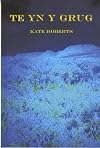
A collection of Welsh short stories. But there's precious little fun to be had here (why are so, so many Welsh books like this?). The first one's miserable as anything, and the next two were short on interest and full of moping and lack of pleasure from the protagonist. Even when someone's relating anecdotes there's a shadow over the story. There's not a mite of fun to be seen, and I gave up at the end of the third story. Good thing too. I just found this on a page about the stage show more adaptation: "Stories of growing up and loss of innocence, of a child striving to understand the complexity of the world and its people, and accepting that disillusionment is part of life." Right barrel of laughs, eh? Life's too short to read miserable books. show less
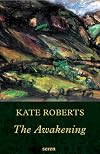
This translation of one of Wales' great writers was a very pleasant surprise to me. Written in a very matter of fact way, this story of Lora Ffennig, young mother and wife to Iolo, begins with her preparing the house and herself for the return of her beloved husband, only to see his boss come to tell her he has received a letter from his clerk Iolo, explaining that he has run away with the boss's housekeeper. This comes as a complete shock to Lora - not to the rest of town, of course.
I had show more expected a tale of misery and troubles, and in a way it is, but the strength and sympathy of the main characters make sure the book never becomes weepy or overly emotional.
As always with Kate Roberts, her characters come to life very quickly and seem to be real people. Combined with her excellent storytelling, this makes for a great read. IIt's not often that a classic goes down so easily show less
I had show more expected a tale of misery and troubles, and in a way it is, but the strength and sympathy of the main characters make sure the book never becomes weepy or overly emotional.
As always with Kate Roberts, her characters come to life very quickly and seem to be real people. Combined with her excellent storytelling, this makes for a great read. IIt's not often that a classic goes down so easily show less
You May Also Like


Associated Authors
Statistics
- Works
- 24
- Also by
- 4
- Members
- 189
- Popularity
- #115,305
- Rating
- 4.0
- Reviews
- 8
- ISBNs
- 58
- Languages
- 2
- Favorited
- 2