
Brenda Cooper (1) (1960–)
Author of Building Harlequin's Moon
For other authors named Brenda Cooper, see the disambiguation page.
About the Author
Image credit: Joe Merkens
Series
Works by Brenda Cooper
Kath and Quicksilver 6 copies
My Father's Singularity 5 copies
In Their Garden 4 copies
The Horses Of The High Hills 2 copies
Free Floaters 2 copies
Visions of the Future 2 copies
Friends Of The High Hills 2 copies
Blood Bonds 2 copies
Iron Pegasus {short story} 1 copy
The Terror Bard — Author — 1 copy
Linda's Dragon 1 copy
Jack of the High Hills 1 copy
Trainer Of Whales 1 copy
Riding In Mexico 1 copy
The Robots' Girl 1 copy
The Ghost in the Doctor 1 copy
Her Black Mood 1 copy
Associated Works
The Year's Best Science Fiction: Twenty-Eighth Annual Collection (2011) — Contributor — 328 copies, 3 reviews
More Human Than Human: Stories of Androids, Robots, and Manufactured Humanity (2017) — Contributor — 62 copies, 2 reviews
Asimov's Science Fiction: Vol. 33, No. 9 [September 2009] (2009) — Contributor — 15 copies, 1 review
Tagged
Common Knowledge
- Birthdate
- 1960-08-12
- Gender
- female
- Nationality
- USA
- Places of residence
- Bellevue, Washington, USA
- Associated Place (for map)
- Washington, USA
Members
Reviews
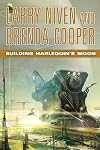
This was my first scifi novel featuring terraforming and thousands of years of time. (Although the main plot is shorter, the idea of more-time-than-a-normal-lifespan is throughout.) I found the idea stimulating and enjoyed watching the moon slowly come to life. Even more, the characters, especially Rachel, come to life over the course of the book. Rachel is a well-developed protagonist and grows to become a capable leader. She slowly realizes that the earth-born's plan to create antimatter show more and leave the moon will effectively be a death sentence to the moon-born, and has to figure out how to reconcile everyone's needs. I definitely found myself rooting for the main characters' success, while also understanding the earth-born characters' need to finish their mission and leave for their destination planet. The tension between the two parties is logical and well-developed, and the results were reasonable, without giving them away. I quite enjoyed this book. show less
Fleeing a rogue AI-infested Earth, the crew and cryogenically frozen passengers of a colonizing starship get stranded in the wrong solar system. Their only hope to reach their destination planet (Ymir) is to terraform one of the many moons of the gas giant Harlequin, so that they can construct a massive antimatter factory for fuel. Instead of using AI and nanotechnology (because this is against the colonists hypocritical principles of preserving humanity without advanced technology), they show more breed generations of uneducated and nearly illiterate "Moon Born" children as their primary workforce.
Slow and clunky to start, the novel soon settled down, providing an interesting scenario that lends itself to an excellent exploration of human nature and morality. What to do with the created slaves once you no longer need them? And what happens when the slaves grow up, start asking questions, and find out they have no future? Also, what reaction will the AI have when it finds out the High Council want to reboot it or delete it? The cast of characters is dynamic, and I enjoyed the terraforming aspects. Cooper and Niven have provided an interesting playground for their characters to explore human responses to fear of advanced technology, something even more relevant today with the impending advances and encroachment of AI development. show less
Slow and clunky to start, the novel soon settled down, providing an interesting scenario that lends itself to an excellent exploration of human nature and morality. What to do with the created slaves once you no longer need them? And what happens when the slaves grow up, start asking questions, and find out they have no future? Also, what reaction will the AI have when it finds out the High Council want to reboot it or delete it? The cast of characters is dynamic, and I enjoyed the terraforming aspects. Cooper and Niven have provided an interesting playground for their characters to explore human responses to fear of advanced technology, something even more relevant today with the impending advances and encroachment of AI development. show less
Trigger warning: suicide
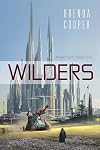
Reading Wilders was a struggle from the get go. It took me three weeks to finish. I haven’t had this much difficulty forcing myself to finish something since my senior English class read Faulkner. I may take Faulkner over Wilders.
The future is divided between the cities and the unincorporated land outside them, intended to be restored to nature and wilderness. Coryn Williams lives in the megacity of Seacouver but is left orphaned after her parents double suicide. show more Her sister Lou leaves her behind to become a ranger, working for an NGO on the outside. On her eighteenth birthday, Coryn is determined to reunite with Lou… so she ventures outside her city, accompanied only by her robot Paula.
I don’t know where to start with Wilders. It’s just got so many problems. I kept trying to think of something positive to say about it and coming up blank. I did eventually hit on one positive: Wilders is well intentioned. It drips with earnestness. Brenda Cooper clearly cares about the ecology and the environment. However, the author’s sincerity was not enough to make Wilders readable.
Wilders starts with a completely unnecessary two page long info dump about the setting. Honestly, that was the first sign I wasn’t going to like this book. Then Wilders starts up the actual storyline about Coryn. This leads me to something that bugged me throughout the entire book.
How the heck is it the city’s fault that Coryn’s parents killed themselves? The narrative keeps asserting that her parents killed themselves because they hated living in the city so much. Here’s the thing. They weren’t trapped in the city. Coryn literally just walks out when she decides to go find Lou. So if they didn’t like living in the city… couldn’t they just leave? From what I can tell, her parents didn’t die “because of the city.” They died because they had mental health issues that I see no way the city was responsible for. This future involves some sort of universal healthcare that appears to be much better than whatever America currently has. Coryn mentions going to the doctor whenever she needs to, not worrying about it. She also mentions her mom was on anti-depressants, so she was getting at least some sort of treatment for her depression. So from everything I can tell, her parents were getting health care coverage and treatment (from the city FYI), so it’s not the fault of the medical system that they killed themselves. The explanation implied by Wilders is that her parents killed themselves because they hated living in the city since “the city’s soulness not like nature” or something along those lines.
I just… this entire backstory makes me so angry. I really don’t like the whole “it’s the city’s fault” line of thought. For one, the city erases many of the social ills our country currently struggle with. Coryn’s family had a guaranteed basic income, housing, and healthcare. That’s more than can be said for many families right now. Secondly, a walk in the woods isn’t going to cure depression. As someone who has been depressed, trust me when I say that reconnecting with nature isn’t going to magically fix your brain attacking itself. I found the plot point of Coryn’s parents suicide incredibly frustrating and to be trivializing mental health issues.
Of course, all of that happens within the first twenty pages or so. There’s still the rest of the book. Coryn’s fifteen when her parents kill themselves, but she’s eighteen for the majority of the book. Unfortunately, she reads more like twelve. I don’t expect eighteen year old protagonists to be completely mature, but I do expect a degree of common sense. Coryn doesn’t tell Lou she’s coming to live with her. She just walks into a completely unknown, potentially dangerous situation. I kept thinking that she was spoiled and bratty. Logically, I know that she lived in an orphanage for three years after her parents killed themselves, but I couldn’t stop thinking of Coryn as “spoiled.” On the bright side, at least I got the impression of a character trait? The cast as a whole was completely cardboard and two dimensional. The characters were little more than names on the page.
There was an attempt at a romance subplot. I would have been annoyed about it, but it was mostly just so bland and half baked that it never even got on my nerves. Truthfully, it was the least of this book’s problems.
For instance, I am still not sure what was going on with the plot. Eco-terrorists are definitely involved, but I haven’t figured out whether or not Lou was one? Lou and some of her ranger friends were planning something, but I am confused as to what they were trying to do. It must have been more than just a protest. Lou and some of the other characters felt sort of like those extreme animal rights people who think anyone who’s not a vegan is a murderer. At one point she calls species extinction “genocide,” although thankfully Coryn comments that the word choice seems a bit extreme. No duh. As terrible as killing polar bears is, it’s extremely offensive to compare it to the Holocaust.
It took me three weeks to finish reading Wilders, and I lost track of how many other books I started and finished during that time. The world building, the characters, the plot… in all regards Wilders was unsatisfying. It’s not a book I would ever recommend.
Originally posted on The Illustrated Page.
I received an ARC in exchange for a free and honest review. show less
Reading Wilders was a struggle from the get go. It took me three weeks to finish. I haven’t had this much difficulty forcing myself to finish something since my senior English class read Faulkner. I may take Faulkner over Wilders.
The future is divided between the cities and the unincorporated land outside them, intended to be restored to nature and wilderness. Coryn Williams lives in the megacity of Seacouver but is left orphaned after her parents double suicide. show more Her sister Lou leaves her behind to become a ranger, working for an NGO on the outside. On her eighteenth birthday, Coryn is determined to reunite with Lou… so she ventures outside her city, accompanied only by her robot Paula.
I don’t know where to start with Wilders. It’s just got so many problems. I kept trying to think of something positive to say about it and coming up blank. I did eventually hit on one positive: Wilders is well intentioned. It drips with earnestness. Brenda Cooper clearly cares about the ecology and the environment. However, the author’s sincerity was not enough to make Wilders readable.
Wilders starts with a completely unnecessary two page long info dump about the setting. Honestly, that was the first sign I wasn’t going to like this book. Then Wilders starts up the actual storyline about Coryn. This leads me to something that bugged me throughout the entire book.
How the heck is it the city’s fault that Coryn’s parents killed themselves? The narrative keeps asserting that her parents killed themselves because they hated living in the city so much. Here’s the thing. They weren’t trapped in the city. Coryn literally just walks out when she decides to go find Lou. So if they didn’t like living in the city… couldn’t they just leave? From what I can tell, her parents didn’t die “because of the city.” They died because they had mental health issues that I see no way the city was responsible for. This future involves some sort of universal healthcare that appears to be much better than whatever America currently has. Coryn mentions going to the doctor whenever she needs to, not worrying about it. She also mentions her mom was on anti-depressants, so she was getting at least some sort of treatment for her depression. So from everything I can tell, her parents were getting health care coverage and treatment (from the city FYI), so it’s not the fault of the medical system that they killed themselves. The explanation implied by Wilders is that her parents killed themselves because they hated living in the city since “the city’s soulness not like nature” or something along those lines.
I just… this entire backstory makes me so angry. I really don’t like the whole “it’s the city’s fault” line of thought. For one, the city erases many of the social ills our country currently struggle with. Coryn’s family had a guaranteed basic income, housing, and healthcare. That’s more than can be said for many families right now. Secondly, a walk in the woods isn’t going to cure depression. As someone who has been depressed, trust me when I say that reconnecting with nature isn’t going to magically fix your brain attacking itself. I found the plot point of Coryn’s parents suicide incredibly frustrating and to be trivializing mental health issues.
Of course, all of that happens within the first twenty pages or so. There’s still the rest of the book. Coryn’s fifteen when her parents kill themselves, but she’s eighteen for the majority of the book. Unfortunately, she reads more like twelve. I don’t expect eighteen year old protagonists to be completely mature, but I do expect a degree of common sense. Coryn doesn’t tell Lou she’s coming to live with her. She just walks into a completely unknown, potentially dangerous situation. I kept thinking that she was spoiled and bratty. Logically, I know that she lived in an orphanage for three years after her parents killed themselves, but I couldn’t stop thinking of Coryn as “spoiled.” On the bright side, at least I got the impression of a character trait? The cast as a whole was completely cardboard and two dimensional. The characters were little more than names on the page.
There was an attempt at a romance subplot. I would have been annoyed about it, but it was mostly just so bland and half baked that it never even got on my nerves. Truthfully, it was the least of this book’s problems.
For instance, I am still not sure what was going on with the plot. Eco-terrorists are definitely involved, but I haven’t figured out whether or not Lou was one? Lou and some of her ranger friends were planning something, but I am confused as to what they were trying to do. It must have been more than just a protest. Lou and some of the other characters felt sort of like those extreme animal rights people who think anyone who’s not a vegan is a murderer. At one point she calls species extinction “genocide,” although thankfully Coryn comments that the word choice seems a bit extreme. No duh. As terrible as killing polar bears is, it’s extremely offensive to compare it to the Holocaust.
It took me three weeks to finish reading Wilders, and I lost track of how many other books I started and finished during that time. The world building, the characters, the plot… in all regards Wilders was unsatisfying. It’s not a book I would ever recommend.
Originally posted on The Illustrated Page.
I received an ARC in exchange for a free and honest review. show less
[This was also published at my website, the Chicago Center for Literature and Photography.]
To be fair, the premise behind Brenda Cooper's new series-starting science-fiction novel Wilders is legitimately pretty great; namely, in a post-ecological-crisis future, the power of nations has fallen apart to be replaced by a return to autonomous city-states, leading to a series of domed socialist paradises comprising former metropolitan areas (our story takes place in "Seacouver," which stretches show more from Seattle to Vancouver and has scooped up all the smaller cities that laid between), where crime and poverty have been conquered through an army of robots and a pervasive surveillance state.
Now these autonomous regions have started venturing back out into rural areas in order to "rewild" them (that is, to remove all the former manmade structures like highways and small towns, leading to a new continental utopia of unspoiled nature dotted here and there by billion-person cities), just to discover that there are way more Tea Party climate-deniers still living out in those areas than they had ever thought, and that they're mighty pissed about the city-slicker libtards abandoning them when everything first went to hell.
Unfortunately, though, the problems with the actual novel itself start early and don't let up. For example, although not a direct ripoff of The Hunger Games, the book's details and overall tone are "Hunger-Gamesish" enough that it will make some readers uncomfortable; the pacing leaves a lot to be desired, with the too-few interesting developments surrounded by literally dozens of pages of filler conversations and meandering rides across the countryside, forgivable if they had led to a deeper understanding of the characters but increasingly intolerable as simple page-count-filling cotton candy (the closer to the end of the book you get, the more you'll find yourself skimming through entire chapters); and the book suffers from "Franchise Building Syndrome" too much as well, very nakedly inserting entire subplots and groups of characters that are quite obviously not going to play a serious role until book 2 or 3, making the book often feel like one of those minor superhero movies that exists only to introduce situations that will eventually play out in the "cinematic universe" team-up blockbuster four years from now.
The most serious crime this book commits, though, is of being a Young Adult novel being marketed as a book for grown-ups; and as regular readers know, CCLaP has sort of taken this on as a political cause in the last couple of years, the fight against the continual infantilization of the American arts that's been happening more and more since the original rise of Harry Potter, including our new policy of no longer accepting books for review at all when the main character is under 18 and the storyline deals mostly with coming-of-age issues. I went ahead and accepted Wilders because it skates just above that cutoff line -- our hero Coryn is officially college-aged in the book, and the marketing material promised that the story would go in dark, adults-only directions as it continued, which combined with publisher Pyr's good reputation made me optimistic.
Unfortunately, though, Cooper sabotages herself by often characterizing the non-minor Coryn not just in Young Adult terms but sometimes even younger than that; the author literally describes the character as someone who "giggles at dogs," thinks she shares a mystical connection with the horse that's been assigned to her out in the wild, and who has a running habit of responding every time her "nanny robot" is being overprotective with a childish pout while muttering, "Silly robot!" These kinds of narrative details may pass by a 12-year-old girl without her making particular note of it; but as a 48-year-old male who's exclusively interested in grown-up science-fiction designed deliberately for adults, such flourishes stuck out like a sore thumb, driving me more and more crazy the more I encountered them, and I have to admit that it's because of this issue alone that I won't be reading any of the other books in this series.
Although its heart is in the right place, I found Wilders only fair to middling, the kind of SF book that only hardcore convention-goers will be able to love. For those people it comes recommended today with reservations; for those looking for only the best in this genre, though, you should skip this entire series altogether.
Out of 10: 7.1 show less
To be fair, the premise behind Brenda Cooper's new series-starting science-fiction novel Wilders is legitimately pretty great; namely, in a post-ecological-crisis future, the power of nations has fallen apart to be replaced by a return to autonomous city-states, leading to a series of domed socialist paradises comprising former metropolitan areas (our story takes place in "Seacouver," which stretches show more from Seattle to Vancouver and has scooped up all the smaller cities that laid between), where crime and poverty have been conquered through an army of robots and a pervasive surveillance state.
Now these autonomous regions have started venturing back out into rural areas in order to "rewild" them (that is, to remove all the former manmade structures like highways and small towns, leading to a new continental utopia of unspoiled nature dotted here and there by billion-person cities), just to discover that there are way more Tea Party climate-deniers still living out in those areas than they had ever thought, and that they're mighty pissed about the city-slicker libtards abandoning them when everything first went to hell.
Unfortunately, though, the problems with the actual novel itself start early and don't let up. For example, although not a direct ripoff of The Hunger Games, the book's details and overall tone are "Hunger-Gamesish" enough that it will make some readers uncomfortable; the pacing leaves a lot to be desired, with the too-few interesting developments surrounded by literally dozens of pages of filler conversations and meandering rides across the countryside, forgivable if they had led to a deeper understanding of the characters but increasingly intolerable as simple page-count-filling cotton candy (the closer to the end of the book you get, the more you'll find yourself skimming through entire chapters); and the book suffers from "Franchise Building Syndrome" too much as well, very nakedly inserting entire subplots and groups of characters that are quite obviously not going to play a serious role until book 2 or 3, making the book often feel like one of those minor superhero movies that exists only to introduce situations that will eventually play out in the "cinematic universe" team-up blockbuster four years from now.
The most serious crime this book commits, though, is of being a Young Adult novel being marketed as a book for grown-ups; and as regular readers know, CCLaP has sort of taken this on as a political cause in the last couple of years, the fight against the continual infantilization of the American arts that's been happening more and more since the original rise of Harry Potter, including our new policy of no longer accepting books for review at all when the main character is under 18 and the storyline deals mostly with coming-of-age issues. I went ahead and accepted Wilders because it skates just above that cutoff line -- our hero Coryn is officially college-aged in the book, and the marketing material promised that the story would go in dark, adults-only directions as it continued, which combined with publisher Pyr's good reputation made me optimistic.
Unfortunately, though, Cooper sabotages herself by often characterizing the non-minor Coryn not just in Young Adult terms but sometimes even younger than that; the author literally describes the character as someone who "giggles at dogs," thinks she shares a mystical connection with the horse that's been assigned to her out in the wild, and who has a running habit of responding every time her "nanny robot" is being overprotective with a childish pout while muttering, "Silly robot!" These kinds of narrative details may pass by a 12-year-old girl without her making particular note of it; but as a 48-year-old male who's exclusively interested in grown-up science-fiction designed deliberately for adults, such flourishes stuck out like a sore thumb, driving me more and more crazy the more I encountered them, and I have to admit that it's because of this issue alone that I won't be reading any of the other books in this series.
Although its heart is in the right place, I found Wilders only fair to middling, the kind of SF book that only hardcore convention-goers will be able to love. For those people it comes recommended today with reservations; for those looking for only the best in this genre, though, you should skip this entire series altogether.
Out of 10: 7.1 show less
Lists
Awards


You May Also Like


Associated Authors
Statistics
- Works
- 46
- Also by
- 65
- Members
- 1,512
- Popularity
- #17,009
- Rating
- 3.6
- Reviews
- 44
- ISBNs
- 99
- Languages
- 2


