
Robert Moss (1) (1946–)
Author of Conscious Dreaming: A Spiritual Path for Everyday Life
For other authors named Robert Moss, see the disambiguation page.
About the Author
Rober Moss is an internationally recognized dream explorer, workshop leader, and bestselling novelist. A former foreign correspondent, history and philosophy professor, magazine editor, and broadcaster, Moss is the author of fifteen books, including, Conscious Dreaming: A Spiritual Path for show more Everyday Life and Dreamgates: An Explorer's Guide to the Worlds of Soul, Imagination, and Life Beyond Death. He has also recorded the popular Sounds True audio series Dreamgates: A Journey into Active Dreaming. (Publisher Provided) Robert Moss is a former lecturer in ancient history at the Australian National University. He is the creator of Active Dreaming, an original method of dreamwork and healing through the imagination. He leads seminars all over the world, including a three-year training for teachers of Active Dreaming and an online dream school. He has written several books on dreaming, shamanism and imagination including Conscious Dreaming, Dreamways of the Iroquois, The Three Only Things, The Secret History of Dreaming, and The Boy Who Died and Came Back. (Bowker Author Biography) show less
Image credit: By Chocolateandsouthseablue - Own work, CC BY-SA 3.0, https://commons.wikimedia.org/w/index.php?curid=22663228
Works by Robert Moss
The Three "Only" Things: Tapping the Power of Dreams, Coincidence, and Imagination (2007) 131 copies, 2 reviews
Dreamgates: An Explorer's Guide to the Worlds of Soul, Imagination, and Life Beyond Death (1998) 121 copies, 1 review
The Dreamer's Book of the Dead: A Soul Traveler's Guide to Death, Dying, and the Other Side (2005) 57 copies, 1 review
Sidewalk Oracles: Playing with Signs, Symbols, and Synchronicity in Everyday Life (2015) 50 copies, 1 review
Dreaming the Soul Back Home: Shamanic Dreaming for Healing and Becoming Whole (2012) 49 copies, 1 review
Dreaming True: How to Dream Your Future and Change Your Life for the Better (2000) 40 copies, 1 review
The Boy Who Died and Came Back: Adventures of a Dream Archaeologist in the Multiverse (2014) 21 copies, 1 review
Tagged
Common Knowledge
- Birthdate
- 1946
- Gender
- male
- Education
- Australian National University
- Occupations
- journalist
dream coach - Organizations
- The Economist
- Nationality
- Australia
- Birthplace
- Melbourne, Victoria, Australia
- Places of residence
- Melbourne, Victoria, Australia
Albany, New York, USA - Associated Place (for map)
- Australia
Members
Reviews
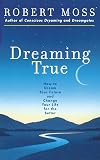
I previously read and reviewed ”Conscious dreaming” by the same author, and found it to be a wonderful, inspiring read. I didn´t find this book to be at quite the same level of excellence, but still I found it to be an absolutely worthwhile, valuable and enjoyable read.
The author informs us that dreaming “gives us direct access to the spiritual realms, and allows our spiritual teachers to speak to us directly”. The dream-world is a real world, more “real” than much of everyday show more life, he says.
A central figure in this work is Harriet Tubman, an escaped slave girl, who lived in the early years of the 19th century and helped other slaves escape by obtaining guidance and directions from her dreams. Harriet´s dreams showed her the specific route she would take, and the houses and barns where she would be given shelter. She flew in her dreams, which thus gave her an aerial map, as well as close-up views of places along the trail.
Harriet had been severely injured on her forehead by her master, and thus had a huge dent there. In the author´s own dreams he often encountered a tiny black woman in “period clothes” and with a dent on her forehead.
Moss tells us that the book is about “finding our way … to fulfilling the secret wishes of the soul – with the help of dreams and the powers that speak through dreams”.
We are advised to keep a dream journal, otherwise we will lose our dreams. If possible, share dreams with a friend.
If we have nightmares, we should try to go back inside the dream and confront our pursuers, if any, or dream the dream onward to resolution and closure. We should ask for help from our dream allies and spiritual protectors. (This is fine, but this requires that we are lucid in our dreams, or “conscious”, as Moss prefers to say.)
We are given some keys to “dreaming true”; 1) Trust our feelings –check whether the dream has to do with a situation in physical reality, whether it is our stuff or someone else´s, and whether we need to do something about it now 2) Reality check – ask ourselves whether it is remotely possible we will encounter the scenes in our dream in waking life 3) Write a personal one-liner, e.g. “I can have more fun at work.” 4) Ask the two basic questions – “What do I need to know?” and “What do I need to do?” 5) Go back inside the dream and look for the character or element that may hold the answer to any question we may have 6) Share the dream with a friend 7) Ask the Consequence tree. This means look for signs or synchronicities in nature or the outside world that may clarify your dream. 8) Look for clues to precognitive elements 9) Study the code of your personal dream symbols, for example, some women dream of fish when someone they know becomes pregnant 10) Determine what action is required and do it.
Moss informs us about precognitive/warning dreams and provides us with absorbing examples from his own dreams and those of his family and clients.
There is also an exciting chapter about “dreaming for others” (though I found all the chapters exciting). Sometimes we pick up messages for other people in our dreams, and sometimes we seem to dream their dreams. We are all connected. “Waking or sleeping, we move through overlapping energy fields and mind fields.”
What was new to me was Moss´ information about how he entered conscious dreams in order to seek information for others. Once he went into a “dark realm on the other side of death” in order to find the missing soul of an 11-year old boy, who had experienced soul loss through sexual abuse by a priest. This astral journey was successful, and the boy-soul was brought back to the adult man, so he could begin to live from his whole self.
In other words, Moss is telling us that we can sit quietly with someone who has lost their joy or their way, and “maybe a chunk of soul” and dream for them. Thus, as he looks at it, you don´t necessarily need to be asleep when you dream. Or rather, Moss´ definition of dreaming differs somewhat from that of most people.
All this is easier said than done, of course. I felt that I could have used more instruction on how I myself can do this entering of a conscious dream in waking state. Also, I feel that Moss has a natural talent for dreaming, including conscious dreaming, entering into dreams and advanced dream work of all kinds, which others do not necessarily possess.
He shares with us how the great Roman orator and statesman, Cicero, who was sceptical about dreams, received forewarnings in his dreams about the circumstances leading to his “most unpleasant” death. However, he chose to ignore these warnings. Hitler, on the other hand, in 1917 in trench warfare had a terrifying dream of his death that guided him immediately to escape from his situation, resulting in his life being saved. Moss remarks that it was a pity that Hitler listened to his dreams, while Cicero did not.
We are instructed on how to find our dream partner, find our dream home, about bringing our dreams to the workplace and into family life.
The author is erudite and articulate, and this book contains references to other dream writers and cultural figures from history, in addition to providing us with a vast quantity of fascinating, personal dream experiences, including the author´s own. All in all, it is an absolutely rich, comprehensive work, since it includes all aspects of dreaming, and so many illuminating experiences. It is wonderfully written and difficult to put down.
Thus, I highly, highly recommend that you read this book. If you are not particularly interested in dreams and dreaming before reading it, you will become so. show less
The author informs us that dreaming “gives us direct access to the spiritual realms, and allows our spiritual teachers to speak to us directly”. The dream-world is a real world, more “real” than much of everyday show more life, he says.
A central figure in this work is Harriet Tubman, an escaped slave girl, who lived in the early years of the 19th century and helped other slaves escape by obtaining guidance and directions from her dreams. Harriet´s dreams showed her the specific route she would take, and the houses and barns where she would be given shelter. She flew in her dreams, which thus gave her an aerial map, as well as close-up views of places along the trail.
Harriet had been severely injured on her forehead by her master, and thus had a huge dent there. In the author´s own dreams he often encountered a tiny black woman in “period clothes” and with a dent on her forehead.
Moss tells us that the book is about “finding our way … to fulfilling the secret wishes of the soul – with the help of dreams and the powers that speak through dreams”.
We are advised to keep a dream journal, otherwise we will lose our dreams. If possible, share dreams with a friend.
If we have nightmares, we should try to go back inside the dream and confront our pursuers, if any, or dream the dream onward to resolution and closure. We should ask for help from our dream allies and spiritual protectors. (This is fine, but this requires that we are lucid in our dreams, or “conscious”, as Moss prefers to say.)
We are given some keys to “dreaming true”; 1) Trust our feelings –check whether the dream has to do with a situation in physical reality, whether it is our stuff or someone else´s, and whether we need to do something about it now 2) Reality check – ask ourselves whether it is remotely possible we will encounter the scenes in our dream in waking life 3) Write a personal one-liner, e.g. “I can have more fun at work.” 4) Ask the two basic questions – “What do I need to know?” and “What do I need to do?” 5) Go back inside the dream and look for the character or element that may hold the answer to any question we may have 6) Share the dream with a friend 7) Ask the Consequence tree. This means look for signs or synchronicities in nature or the outside world that may clarify your dream. 8) Look for clues to precognitive elements 9) Study the code of your personal dream symbols, for example, some women dream of fish when someone they know becomes pregnant 10) Determine what action is required and do it.
Moss informs us about precognitive/warning dreams and provides us with absorbing examples from his own dreams and those of his family and clients.
There is also an exciting chapter about “dreaming for others” (though I found all the chapters exciting). Sometimes we pick up messages for other people in our dreams, and sometimes we seem to dream their dreams. We are all connected. “Waking or sleeping, we move through overlapping energy fields and mind fields.”
What was new to me was Moss´ information about how he entered conscious dreams in order to seek information for others. Once he went into a “dark realm on the other side of death” in order to find the missing soul of an 11-year old boy, who had experienced soul loss through sexual abuse by a priest. This astral journey was successful, and the boy-soul was brought back to the adult man, so he could begin to live from his whole self.
In other words, Moss is telling us that we can sit quietly with someone who has lost their joy or their way, and “maybe a chunk of soul” and dream for them. Thus, as he looks at it, you don´t necessarily need to be asleep when you dream. Or rather, Moss´ definition of dreaming differs somewhat from that of most people.
All this is easier said than done, of course. I felt that I could have used more instruction on how I myself can do this entering of a conscious dream in waking state. Also, I feel that Moss has a natural talent for dreaming, including conscious dreaming, entering into dreams and advanced dream work of all kinds, which others do not necessarily possess.
He shares with us how the great Roman orator and statesman, Cicero, who was sceptical about dreams, received forewarnings in his dreams about the circumstances leading to his “most unpleasant” death. However, he chose to ignore these warnings. Hitler, on the other hand, in 1917 in trench warfare had a terrifying dream of his death that guided him immediately to escape from his situation, resulting in his life being saved. Moss remarks that it was a pity that Hitler listened to his dreams, while Cicero did not.
We are instructed on how to find our dream partner, find our dream home, about bringing our dreams to the workplace and into family life.
The author is erudite and articulate, and this book contains references to other dream writers and cultural figures from history, in addition to providing us with a vast quantity of fascinating, personal dream experiences, including the author´s own. All in all, it is an absolutely rich, comprehensive work, since it includes all aspects of dreaming, and so many illuminating experiences. It is wonderfully written and difficult to put down.
Thus, I highly, highly recommend that you read this book. If you are not particularly interested in dreams and dreaming before reading it, you will become so. show less
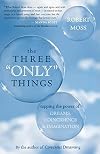
I first saw mention of this book in a catalog that I was only half-heartedly flipping through. Something about it just kind of caught my eye, and in reading the promotional description, I knew it was one of those books I needed to get my hands on as soon as possible. "The Three 'Only' Things" is a book about paying attention to that exact kind of thing, to noting what seems to jump out at you and to acting on your instincts. This is a book reminding us of the wisdom available when we pay show more attention to our dreams, coincidences and imagination, things we are often all too ready to dismiss as "only" nonsense. It really doesn't matter if you think these are messages from some divine source, or at best signals from our own consciousness. There is a rhyme to life and there is a lot to be learned just by being aware of the rhythms around us. Whether you're a skeptic or someone already working with these "only" things, this book is filled with opportunities to stretch your mind and motivate yourself toward making the most of what you have available as well as what you could have if you only knew how to reach for it. This really is a book about playing a better game. show less
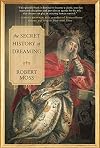
When June Carter gave Johnny Cash “Ring of Fire” to record, country music was confined to a narrow range of instruments that did not include horns or even drums. The night before he was set to record the song, though, Cash dreamed he was singing it with “Mexican bullfighting trumpets” framing the lyrics. This arrangement introduced a brand new sound to country music fans; the song went on to become a huge hit and rocketed Cash to superstardom.
Stories of musicians and other artists show more being inspired by dreams are fairly common. However, this is not the only arena of human experience where dreams have, and still do, play a major role. Moss, a former professor of ancient history at the Australian National University and author of The Three Only Things: Tapping the Power of Dreams, Coincidence, and Imagination, presents a history of dreaming from ancient civilizations to today’s modern society.
In ancient cultures, dreaming was well respected and often viewed as an integral part of life. There were dedicated dreamers in Egypt who counseled the pharaohs, and the Iroquois of North America began each day with a discussion of dreams from the night before, using the messages to direct hunts or treat illnesses. In modern times, athletes often “run movies” in their minds of upcoming games. Bill Russell, a Boston Celtics star and gold medalist at the 1956 Olympics, attributed his ability to execute new and innovative plays on the court to mentally rehearsing games on long bus rides.
This book will appeal most to those with an interest in spirituality, paranormal phenomena, or sociology. It resembles a sociology textbook in the sheer amount of historical information it provides on a wealth of cultures and individuals. However, Moss’ style is engaging and pulls the reader in with chapter openings that read like a novel: “When she lies down on her narrow bed, a man comes to her. When he touches her, all her senses come aflame, though she does not explain this to the priest who arrives every morning to steal her dreams on the pretext of hearing her confession.”
It is imperative that modern society regains a respect for dreams, Moss contends. Years before the conquistadors arrived, dream-seers told Montezuma of visions of mountains moving on water and metal serpents that spewed fire. Rather than listen, Montezuma had them jailed and slowly starved to death. “There is a message for us in Montezuma’s mistake,” Moss warns.
by Christine Canfield
Copyright ForeWord Magazine, Volume 12, no. 1 show less
Stories of musicians and other artists show more being inspired by dreams are fairly common. However, this is not the only arena of human experience where dreams have, and still do, play a major role. Moss, a former professor of ancient history at the Australian National University and author of The Three Only Things: Tapping the Power of Dreams, Coincidence, and Imagination, presents a history of dreaming from ancient civilizations to today’s modern society.
In ancient cultures, dreaming was well respected and often viewed as an integral part of life. There were dedicated dreamers in Egypt who counseled the pharaohs, and the Iroquois of North America began each day with a discussion of dreams from the night before, using the messages to direct hunts or treat illnesses. In modern times, athletes often “run movies” in their minds of upcoming games. Bill Russell, a Boston Celtics star and gold medalist at the 1956 Olympics, attributed his ability to execute new and innovative plays on the court to mentally rehearsing games on long bus rides.
This book will appeal most to those with an interest in spirituality, paranormal phenomena, or sociology. It resembles a sociology textbook in the sheer amount of historical information it provides on a wealth of cultures and individuals. However, Moss’ style is engaging and pulls the reader in with chapter openings that read like a novel: “When she lies down on her narrow bed, a man comes to her. When he touches her, all her senses come aflame, though she does not explain this to the priest who arrives every morning to steal her dreams on the pretext of hearing her confession.”
It is imperative that modern society regains a respect for dreams, Moss contends. Years before the conquistadors arrived, dream-seers told Montezuma of visions of mountains moving on water and metal serpents that spewed fire. Rather than listen, Montezuma had them jailed and slowly starved to death. “There is a message for us in Montezuma’s mistake,” Moss warns.
by Christine Canfield
Copyright ForeWord Magazine, Volume 12, no. 1 show less

Very reminiscent of Flashman, albeit a century earlier. Our hero is a rake from the British-Irish aristocracy who finds himself in North America as a result of a dodgy gamble. He rogers his way through wars between the British, French and Native Americans. He's not such a coward or self-publicist as Flashman, but in many ways cuts a similar figure. The story slows down a bit towards the end, but for much of the book it is fast-moving and interesting.
Lists
Awards


You May Also Like


Associated Authors
Statistics
- Works
- 27
- Members
- 1,782
- Popularity
- #14,447
- Rating
- 3.8
- Reviews
- 15
- ISBNs
- 144
- Languages
- 11