

Andrew Piper (1)
Author of Book Was There: Reading in Electronic Times
For other authors named Andrew Piper, see the disambiguation page.
About the Author
Andrew Piper teaches German and European literature at McGill University and is the author of Dreaming in Books, also published by the University of Chicago Press and winner of the MLA Prize for a First Book and honorable mention for the Harry Levin Prize from the ACLA.
Works by Andrew Piper
Tagged
Common Knowledge
- Gender
- male
Members
Reviews
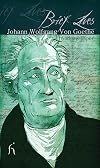
The prose is poorly edited ("ex-patriot") and more cack-handed than any literary scholar's should be, so you're not gonna be reading this as like a skillful and polished biography. More like a lazy and mealy-mouthed hagiography, or an extra-long Wikipedia entry. Since it doesn't take long to get through at 105 pages, there is of course some value to be scavenged here in reviewing the basics of Goethe's position in 18th-century and Romantic letters--influences and influencees, etc.--and I show more suppose in the vital data of a remarkable early modern life. But the life that emerges is so pungently, solipsistically selfish, and venial in self-justification, that Piper loses us; not or not just because he has an unpleasant subject--even at this remove, the charisma and power to inspire that allowed the man to get away with being kind of a shitbag in real life rebounds to his benefit--but because Piper makes excuses for him. Goethe may be long dead and incapable of fighting his own battles, but something there is in the human that does not respect that which needs its acolytes to fight its battles, regardless. Report on his affairs, his illegitimate children, his inward crapulence dressed up as the gigantic melancholies/mirth of the hero artist; but for god's sake don't start trying to explain them away, Pipes. It makes him seem like a douche and you seem like a suck. show less
 This review was written for LibraryThing Early Reviewers.
I received this book as part of the Librarything Earl Reviewers program from Hesperus Press.
This short biography of 105 pages provides a very well-balanced account of Goethe's life. The biography is structured in chronological order, linking Goethe's life to his major works and also to the considerable changes that occurred during the last 10 or 15 years of the 18th century and the first 30 years of the 19th century in Germany and Europe, in regard to philosophy, literature and politics. In show more my view it is a major accomplishment of the author to have achieved such a balanced short biography, which never left me feel that I missed something or that major topics have been left out. I would have liked a "further reading" page at the end though. This however is a very minor point of criticism, because I can recommend this biography wholeheartedly. show less
This short biography of 105 pages provides a very well-balanced account of Goethe's life. The biography is structured in chronological order, linking Goethe's life to his major works and also to the considerable changes that occurred during the last 10 or 15 years of the 18th century and the first 30 years of the 19th century in Germany and Europe, in regard to philosophy, literature and politics. In show more my view it is a major accomplishment of the author to have achieved such a balanced short biography, which never left me feel that I missed something or that major topics have been left out. I would have liked a "further reading" page at the end though. This however is a very minor point of criticism, because I can recommend this biography wholeheartedly. show less
This review was written for LibraryThing Early Reviewers.
Johann Wolfgang von Goethe (1749- 1832) was a great genius of German literature, known for his contributions in literature, drama, poetry, philosophy, and science. He was a man of enormous energy, and unbounded curiosity and creativity, perhaps the last “Renaissance man” whose understanding could span the breadth and depth of European knowledge.
To this day, Goethe is honored as "the German Shakespeare" for his literary contributions, and his great tragic play Faust continues to be read show more and performed. While Goethe’s scientific contributions have not withstood the exacting tests of time, in his day he contributed to fields of anatomy, botany, physics, and mineralogy, and his early insights had a lasting influence on evolutionary thought in late 19th century Germany. Further, his influence in other realms can be traced to his contemporaries Herder and Schiller, as well as to Hegel, Schopenhauer, Schubert, Nietzsche, Jung, Wittgenstein, and Thomas Mann, among others.
In his contribution to the "Brief Lives" series of biographies, Andrew Piper faced the challenge of capturing this gigantic figure in a small book of 100 pages. He does an adequate job, managing to cover points high and low – thus we learn not only of Goethe's literary contributions but his travels, life events, and each of his several love affairs. Regarding the latter, one notes that Goethe's affairs of the heart coincided with periods of particular creativity.
Piper's biography traces the chronology of Goethe's life in 14 chapters: (1) Beginnings (on his parentage, and his childhood and adolescence in Frankfurt); (2) Sentimental Education (at Leipzig and elsewhere); (3) Early Fame (deriving from his 1773 historical drama Götz von Berlichingen; (4) Sorrows, Real and Imagined (referring to his semi – autobiographical epistolary novel The Sorrows of Young Werther [Die Leiden des jungen Werthers]); (5) Weimar: Capital of the 18th Century (where he lived for the rest of his life, and joined the court of Duke Carl August); (6) Longing (his close relationship with Charlotte von Stein); (7) The Italian Journey (of 1786 to 1788); (8) Revolutions (covering the period of the French Revolution and subsequent invasion by France); (9) The Aesthetic Education of Man (covering the decade that encompasses his deep friendship with Schiller); (10) The Demonic Age (covering the production of Faust, the growth of Romanticism, and the Napoleonic invasion; (11) New Science, New Life (Goethe’s work on optics and the physics of light, and his publication of Wilhelm Meister’s Travels; (11) The Heavenly Archive (Faust, Part Two, and the publication of Goethe's collected works); and (12) Goethe without End (his death, and his lasting influence).
For a book of its size, Piper's biography offers a reasonable introduction to its subject. However, readers ought not expect more than a brief description of Goethe's main literary contributions, and nothing in the way of critical analysis. Likewise, Goethe's scientific work gets short shrift, and readers will have to seek elsewhere for a description. Oddly, this book contains no recommendations for further reading; however, this omission is a minor one, when a quick Library Thing search will turn up several. In sum, this small work meets the goals of the Brief Lives series, and should serve to expose a new generation of readers to the life and contributions of this extraordinary historical figure. show less
To this day, Goethe is honored as "the German Shakespeare" for his literary contributions, and his great tragic play Faust continues to be read show more and performed. While Goethe’s scientific contributions have not withstood the exacting tests of time, in his day he contributed to fields of anatomy, botany, physics, and mineralogy, and his early insights had a lasting influence on evolutionary thought in late 19th century Germany. Further, his influence in other realms can be traced to his contemporaries Herder and Schiller, as well as to Hegel, Schopenhauer, Schubert, Nietzsche, Jung, Wittgenstein, and Thomas Mann, among others.
In his contribution to the "Brief Lives" series of biographies, Andrew Piper faced the challenge of capturing this gigantic figure in a small book of 100 pages. He does an adequate job, managing to cover points high and low – thus we learn not only of Goethe's literary contributions but his travels, life events, and each of his several love affairs. Regarding the latter, one notes that Goethe's affairs of the heart coincided with periods of particular creativity.
Piper's biography traces the chronology of Goethe's life in 14 chapters: (1) Beginnings (on his parentage, and his childhood and adolescence in Frankfurt); (2) Sentimental Education (at Leipzig and elsewhere); (3) Early Fame (deriving from his 1773 historical drama Götz von Berlichingen; (4) Sorrows, Real and Imagined (referring to his semi – autobiographical epistolary novel The Sorrows of Young Werther [Die Leiden des jungen Werthers]); (5) Weimar: Capital of the 18th Century (where he lived for the rest of his life, and joined the court of Duke Carl August); (6) Longing (his close relationship with Charlotte von Stein); (7) The Italian Journey (of 1786 to 1788); (8) Revolutions (covering the period of the French Revolution and subsequent invasion by France); (9) The Aesthetic Education of Man (covering the decade that encompasses his deep friendship with Schiller); (10) The Demonic Age (covering the production of Faust, the growth of Romanticism, and the Napoleonic invasion; (11) New Science, New Life (Goethe’s work on optics and the physics of light, and his publication of Wilhelm Meister’s Travels; (11) The Heavenly Archive (Faust, Part Two, and the publication of Goethe's collected works); and (12) Goethe without End (his death, and his lasting influence).
For a book of its size, Piper's biography offers a reasonable introduction to its subject. However, readers ought not expect more than a brief description of Goethe's main literary contributions, and nothing in the way of critical analysis. Likewise, Goethe's scientific work gets short shrift, and readers will have to seek elsewhere for a description. Oddly, this book contains no recommendations for further reading; however, this omission is a minor one, when a quick Library Thing search will turn up several. In sum, this small work meets the goals of the Brief Lives series, and should serve to expose a new generation of readers to the life and contributions of this extraordinary historical figure. show less
Another short introduction to an important writer, philosopher, scientist—an extraordinary polymath who was also human in his everyday dealings with other people and his fear of death. Andrew Piper is careful to highlight the great historical moments and movements that occurred during Goethe's lifetime, including the French Revolution. Interestingly, Goethe was not a political man; that is, he didn't seem to take much interest in the sociopolitical world around him, being much more show more involved with literature, the arts, and science and philosophical questions. He was also interested in women, it seems, from the author's detailing of the various ladies Goethe fell in love with over his long life. I didn't feel this was as well-written a 'Brief Life' as the other two I have read, and could have benefited from a bibliography of Goethe's works at the end, as well as references.
Thanks to Hesperus Press once again for publishing its Brief Lives series, and providing these books for review! show less
Thanks to Hesperus Press once again for publishing its Brief Lives series, and providing these books for review! show less
This review was written for LibraryThing Early Reviewers.Lists
Best Biographies (1)
Awards

You May Also Like


Associated Authors
Statistics
- Works
- 3
- Members
- 240
- Popularity
- #94,568
- Rating
- 3.4
- Reviews
- 12
- ISBNs
- 12
- Languages
- 1
