

Brian Dillon (1) (1969–)
Author of Essayism: On Form, Feeling, and Nonfiction
For other authors named Brian Dillon, see the disambiguation page.
About the Author
Image credit: via Tertulia
Series
Works by Brian Dillon
The great explosion: gunpowder, the Great War, and a disaster on the Kent Marshes (2015) 36 copies, 1 review
Associated Works
Tagged
Common Knowledge
- Birthdate
- 1969
- Gender
- male
- Occupations
- critic
- Nationality
- Ireland
- Birthplace
- Dublin, Ireland
- Associated Place (for map)
- Dublin, Ireland
Members
Reviews
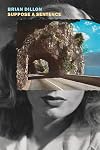
It’s not unusual for writers to become entranced with, enthused by, enamoured of the sentences of other writers. For years, Brian Dillon wrote out sentences that caught his eye in the backs of notebooks. Then, as a project, he sifted through these sentences, selecting his favourites, and tasking himself with writing an essay provoked by each sentence. Some of these essays focused on the grammatical structure of the sentence. Some focused on the unusual word choices. Some spun off into show more flights of imagination about the writer, their life, their other sentences, their many other sentences, their oeuvre. Some fixated on the colons, the semi-colons, the commas. 28 essays in total. A feast of sentences. And some of the loveliest writing about prose styling that you could hope for.
Many, indeed most, of these sentences may not be familiar to you. I had encountered very few of them in prior reading. Yet Dillon’s enthusiasm for the sentence itself and its place within its text, or wider place within the writer’s larger output is infectious. However, I wonder whether I’ll bother going on to follow these up. Unlike other enthusiasts of sentences (yes, the phenomenon is not unique), Dillon doesn’t really lead you past his own essays. Much as I admired his writing, it didn’t draw me to the writers he discussed. I wonder why that was. Perhaps his choices were so singular, so niche, that they never rose above his own prose, his own idiosyncratic engagement with his targets. For example, when he discusses Roland Barthes colons, his own essay (and indeed his essays thereafter) take on a preponderance of colons. His enthusiasm for the sentence fragment tends him towards fragmentary sentences of his own. The close reading of linguistic tics, leads the reader to spot Dillon’s own tics, (eg. “For sure,…”).
I enjoyed all of these essays but rather wish that Dillon were more enamoured with more of the sentences of fiction than of non-fiction. The stylings of essayists can be a delight, and perhaps it is a special delight for a renowned essayist, but it doesn’t always draw me in. And so I’d have to say that I’m probably not the ideal reader of this collection (though I suspect my wife might be).
And thus, only gently recommended (at least by me). show less
Many, indeed most, of these sentences may not be familiar to you. I had encountered very few of them in prior reading. Yet Dillon’s enthusiasm for the sentence itself and its place within its text, or wider place within the writer’s larger output is infectious. However, I wonder whether I’ll bother going on to follow these up. Unlike other enthusiasts of sentences (yes, the phenomenon is not unique), Dillon doesn’t really lead you past his own essays. Much as I admired his writing, it didn’t draw me to the writers he discussed. I wonder why that was. Perhaps his choices were so singular, so niche, that they never rose above his own prose, his own idiosyncratic engagement with his targets. For example, when he discusses Roland Barthes colons, his own essay (and indeed his essays thereafter) take on a preponderance of colons. His enthusiasm for the sentence fragment tends him towards fragmentary sentences of his own. The close reading of linguistic tics, leads the reader to spot Dillon’s own tics, (eg. “For sure,…”).
I enjoyed all of these essays but rather wish that Dillon were more enamoured with more of the sentences of fiction than of non-fiction. The stylings of essayists can be a delight, and perhaps it is a special delight for a renowned essayist, but it doesn’t always draw me in. And so I’d have to say that I’m probably not the ideal reader of this collection (though I suspect my wife might be).
And thus, only gently recommended (at least by me). show less
The Difference between Essays and Journalism
This is an intentionally loosely conglomerated collection of two- to four-page essays on the idea of the essay. Self-contained pieces on individual writers and books alternate with autobiographical pieces on the author's depression and suicidal thoughts.
For long stretches this book reads as a list of my own interests: the idea and problem of writing about essays in an essayistic way; the lure of "essayism"; the nature of lists; questions of style, show more taste, melancholy, the fragment, the detail, aphorisms—those are all the titles of sections. Page after page, the authors Dillon mentions are ones I have read, taught, and written about: Gass, Adorno, La Rochefoucauld, Pascal, Wilde, Sontag, Deleuze, Stein, Derrida, Starobinski, Barthes, Clark, Perec, Browne, Wallace.
He wonders, as I have, what constitutes an essay, and he looks at many of the same sources. (Mine: tinyurl.com/theoriesofessays.) He has some excellent set pieces, which may be among those adapted from previously published reviews, on Maeve Brennan, Cyril Connolly, and Elizabeth Hardwick.
Despite these promising and surprising similarities, the more I read the lonelier I felt. Dillon's treatments of the authors are too quick. If an essay is anything, it's an unspooling of thought. As Montaigne knew, thought wanders. Even in Adorno's very tightly worked essay on the essay, form is deliberately elusive, and excerpts especially unrepresentative. What happens in this book belongs more to the world of journalism, where two to four pages corresponds with a feature or a five-minute read. Dillon surveys each book or author, finding interesting places to pause, raising questions, and then letting them stand as stated. It's like being introduced to interesting people at a party and then walking away while they're still talking. It's a kind of nonstop tour that works best in journalism, where evocation and enthusiasm matter and there may be no promise of slower forms of thought.
He skims over Sontag, mentioning her diaries, but in comparison to books on her (for example Lopate's) his excerpts are inconclusive. He switches rapirdly from Musil to Woolf. He dispenses with Robert Burton in a page-long parenthesis of abbreviated and inconclusive praise. He does not consider the paradoxes or challenges of Adorno's essay. Occasionally the short form is just right, for example in three excellent pages conjuring Gass's "On Being Blue," but usually it's glancing, as in the single page on Sebald or the few pages on Barthes's "Camera Lucida." Reading these I felt lonely: there are many passages that he must have felt adequate for his purposes—conjuring a problem, picking an evocative passage—where I had the impression I was being led away before the interesting questions had even arrived. It's as if we actually read different authors.
I wonder if the real tension in this book is not between "essayism" and the author's depression—a theme he entertains in several passages—but between essays and journalism. Near the beginning he runs through several of the dozens of available definitions of essays. The only odd notes I saw are passages that conjure the idea that essays should have "a sort of polish and integrity" (p. 18), "a smooth and gleaming surface," (p. 32), or be "seamless and well-made" (p. 21). I wonder where those came from, since I haven't run across them in reading essays about essays. Could they be the moments when an ideal of journalism surfaces? Even though Dillon identifies himself as a journalist, who wants "only to make a living" from writing (p. 33), journalism isn't otherwise presented as an ideal separable from essayism—and yet for me, in this book, it is.
A letter to the author
Dear Brian Dillon,
I've always had a bad habit on Goodreads of writing in such a way that I can never show the author what I've written. I doubt you will ever see this—the internet is fabulous at burying people's voices—so let me do the inevitable, impolite thing and suggest my own book, "What Photography Is," a full-length answer to "Camera Lucida." It's far from perfect, but I tried to follow the consequences of some of the questions you raise in regard to Barthes's book, regarding problems caused by theorizing, writing a memoir, and using images, all at once. I am not sure what that book is, but I think of it as being on the far side of journalism.
Postscript
For people who have been following these notes on Goodreads: I have been revising and rewriting these more or less continuously, but this is the first original post for about five years. It's not that I've stopped writing notes on books: it's that I've been reading only two books during that period, "Finnegans Wake" and "Bottom's Dream." If you'd like to join the reader's group on that second book, just send me a message. show less
This is an intentionally loosely conglomerated collection of two- to four-page essays on the idea of the essay. Self-contained pieces on individual writers and books alternate with autobiographical pieces on the author's depression and suicidal thoughts.
For long stretches this book reads as a list of my own interests: the idea and problem of writing about essays in an essayistic way; the lure of "essayism"; the nature of lists; questions of style, show more taste, melancholy, the fragment, the detail, aphorisms—those are all the titles of sections. Page after page, the authors Dillon mentions are ones I have read, taught, and written about: Gass, Adorno, La Rochefoucauld, Pascal, Wilde, Sontag, Deleuze, Stein, Derrida, Starobinski, Barthes, Clark, Perec, Browne, Wallace.
He wonders, as I have, what constitutes an essay, and he looks at many of the same sources. (Mine: tinyurl.com/theoriesofessays.) He has some excellent set pieces, which may be among those adapted from previously published reviews, on Maeve Brennan, Cyril Connolly, and Elizabeth Hardwick.
Despite these promising and surprising similarities, the more I read the lonelier I felt. Dillon's treatments of the authors are too quick. If an essay is anything, it's an unspooling of thought. As Montaigne knew, thought wanders. Even in Adorno's very tightly worked essay on the essay, form is deliberately elusive, and excerpts especially unrepresentative. What happens in this book belongs more to the world of journalism, where two to four pages corresponds with a feature or a five-minute read. Dillon surveys each book or author, finding interesting places to pause, raising questions, and then letting them stand as stated. It's like being introduced to interesting people at a party and then walking away while they're still talking. It's a kind of nonstop tour that works best in journalism, where evocation and enthusiasm matter and there may be no promise of slower forms of thought.
He skims over Sontag, mentioning her diaries, but in comparison to books on her (for example Lopate's) his excerpts are inconclusive. He switches rapirdly from Musil to Woolf. He dispenses with Robert Burton in a page-long parenthesis of abbreviated and inconclusive praise. He does not consider the paradoxes or challenges of Adorno's essay. Occasionally the short form is just right, for example in three excellent pages conjuring Gass's "On Being Blue," but usually it's glancing, as in the single page on Sebald or the few pages on Barthes's "Camera Lucida." Reading these I felt lonely: there are many passages that he must have felt adequate for his purposes—conjuring a problem, picking an evocative passage—where I had the impression I was being led away before the interesting questions had even arrived. It's as if we actually read different authors.
I wonder if the real tension in this book is not between "essayism" and the author's depression—a theme he entertains in several passages—but between essays and journalism. Near the beginning he runs through several of the dozens of available definitions of essays. The only odd notes I saw are passages that conjure the idea that essays should have "a sort of polish and integrity" (p. 18), "a smooth and gleaming surface," (p. 32), or be "seamless and well-made" (p. 21). I wonder where those came from, since I haven't run across them in reading essays about essays. Could they be the moments when an ideal of journalism surfaces? Even though Dillon identifies himself as a journalist, who wants "only to make a living" from writing (p. 33), journalism isn't otherwise presented as an ideal separable from essayism—and yet for me, in this book, it is.
A letter to the author
Dear Brian Dillon,
I've always had a bad habit on Goodreads of writing in such a way that I can never show the author what I've written. I doubt you will ever see this—the internet is fabulous at burying people's voices—so let me do the inevitable, impolite thing and suggest my own book, "What Photography Is," a full-length answer to "Camera Lucida." It's far from perfect, but I tried to follow the consequences of some of the questions you raise in regard to Barthes's book, regarding problems caused by theorizing, writing a memoir, and using images, all at once. I am not sure what that book is, but I think of it as being on the far side of journalism.
Postscript
For people who have been following these notes on Goodreads: I have been revising and rewriting these more or less continuously, but this is the first original post for about five years. It's not that I've stopped writing notes on books: it's that I've been reading only two books during that period, "Finnegans Wake" and "Bottom's Dream." If you'd like to join the reader's group on that second book, just send me a message. show less

This book was pleasant enough, but not at all as delightful as I’d hoped. A collection of very small essays of literary criticism that each look at a single sentence. Dillon does a close reading of a selection of sentences that have caught his attention over the years, by authors well known and (to me, at least) unknown, from Shakespeare and Gertrude Stein to Robert Brenson and Theresa Hak Kyung Cha.
I was puzzled that in his introduction Dillon says there are 27 essays, when in fact there show more are 28, which made me wonder which one was the last-minute addition. None of them seem particularly essential, except possibly the first and last, which frame the collection with “O, o, o, o.” The first is from Shakespeare, but the last is a cheat, in that the “O, o, o, o” in question has nothing to do with the analysis of the sentence that is the subject of the essay other than that it is cited in the book that sentence is from.
In fact, a lot of the essays are cheats, in my opinion, in that Dillon often calls in other sentences: He may put the sentence in the context of its surrounding sentences, or he may discuss the work in which the sentence appears as a whole, or even the body of work by the author who wrote the sentence. None of these would be a crime against his premise if the sentence in question was at the heart of his analysis, or more directly illuminated it, but often it seems to simply be the gateway to discuss the author or their work. show less
I was puzzled that in his introduction Dillon says there are 27 essays, when in fact there show more are 28, which made me wonder which one was the last-minute addition. None of them seem particularly essential, except possibly the first and last, which frame the collection with “O, o, o, o.” The first is from Shakespeare, but the last is a cheat, in that the “O, o, o, o” in question has nothing to do with the analysis of the sentence that is the subject of the essay other than that it is cited in the book that sentence is from.
In fact, a lot of the essays are cheats, in my opinion, in that Dillon often calls in other sentences: He may put the sentence in the context of its surrounding sentences, or he may discuss the work in which the sentence appears as a whole, or even the body of work by the author who wrote the sentence. None of these would be a crime against his premise if the sentence in question was at the heart of his analysis, or more directly illuminated it, but often it seems to simply be the gateway to discuss the author or their work. show less
Fanon’s has this clear and precise vocabulary that is able to convey very delicate yet see thoughts on the French Colonial occupation of Algeria, using their own methods of reason to show the true face of European colonialism that is a not so ancient event.
The dehumanising of the natives, the white man’s burden, manifest destiny, civilising mission, second degree colonists, missionary zeal & western universalism; all achieved through the humane means of terror and warfare, scarring show more generations while at the same time erasing all inconvenient remnants of glorious past civilisation.
Fanon’s criticism stems from racial attitudes for people with just enough melanine to be distinguished from the civilised European Pied-Noirs, that is true for all places where the natives have not been marginalised as a tourist attraction and token tolerance of the aborigines, in Americas, Australia, Asia or Africa. show less
The dehumanising of the natives, the white man’s burden, manifest destiny, civilising mission, second degree colonists, missionary zeal & western universalism; all achieved through the humane means of terror and warfare, scarring show more generations while at the same time erasing all inconvenient remnants of glorious past civilisation.
Fanon’s criticism stems from racial attitudes for people with just enough melanine to be distinguished from the civilised European Pied-Noirs, that is true for all places where the natives have not been marginalised as a tourist attraction and token tolerance of the aborigines, in Americas, Australia, Asia or Africa. show less
Lists
Awards


You May Also Like


Associated Authors
Statistics
- Works
- 15
- Also by
- 1
- Members
- 1,024
- Popularity
- #25,155
- Rating
- 3.8
- Reviews
- 19
- ISBNs
- 48
- Languages
- 3